One Toke Over the Line

Orders like this one are what happen when government officials take a “Damn the law; full speed ahead!” or “FAFO” attitude toward their jobs.
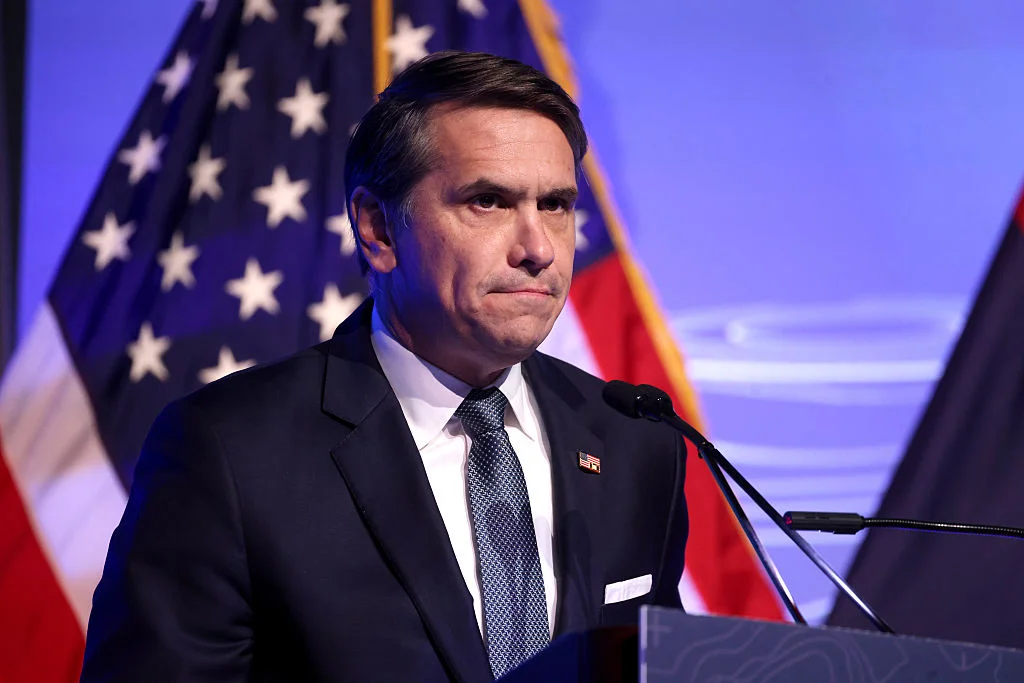
Sometimes the timing of events is instructive. In December 2025, President Donald Trump said that he hoped to make cannabis available by prescription by loosening the federal limitations on its use. On April 18, the president signed an executive order to make it easier for physicians to prescribe hallucinogens such as lysergic acid diethylamide (LSD) as medicine, and he asked the assembled members of his administration, which included Acting U.S. Attorney General Todd Blanche, when cannabis would be available for prescription. Four days later, Blanche issued an order that “immediately” moved cannabis products regulated by a state medical cannabis licensing program from Schedule I to Schedule III of the Controlled Substances Act of 1970 (CSA), thereby allowing physicians to prescribe that drug. The justification , according to the accompanying DOJ Press Release, was that it “allows for research on the safety and efficacy of” cannabis, “ultimately providing patients with better care and doctors with more reliable information.” Blanche also scheduled a June 2026 hearing on this matter.
Blanche’s order encompasses all state cannabis medical regulatory programs, regardless of their scope, size, or seriousness, along with all their licensed wholesalers and retailers, regardless of their qualifications, approving them tout suite. That includes cannabis sold in its plant form, whether as leaves, bulbs, or in already-rolled joints, for users’ convenience, as well as whatever foodstuffs contain delta-9-tetrahydrocannibinol (THC), the psychoactive ingredient in cannabis, such as Alice B. Toklas-like brownies, spaghetti sauce, or candies. States that limit sales to people suffering from severe ailments, such as terminal cancers, as well as states that allow physicians to prescribe cannabis to alleviate the “pain” of a cloudy day, are free to allow physicians to prescribe ganja for whatever ailments they see fit.
As far as public health goes, the order does not distinguish among the rigor, or even seriousness, that state regulatory programs must demonstrate to safeguard public health against adulterants in smokable or edible cannabis. States can analyze 10 percent of the cannabis sold by wholesalers for quality control, or just 0.1 percent—all are included. States can have 10 store inspectors for every 100,000 state residents or 10 for an entire state with millions of residents—all are included. States can require annual evaluations of stores’ compliance, or states can promise to eventually get around to it—all are included. States can conduct background investigations of potential wholesalers and retailers to weed out felons, or states (like New York) can welcome, if not prefer, parties with criminal records, even for cannabis trafficking (perhaps under a “Nothing beats on-the-job-experience” rationale)—all are included. Blanche’s order makes those points clear: “I am hereby ordering that FDA-approved drug products containing marijuana, as well marijuana in any form covered by a state medical marijuana license, be placed in schedule III of the CSA.” (emphasis added) All state medical cannabis programs are hunky dory as far as the Justice Department is concerned.
Orders like this one are what happen when government officials take a “Damn the law; full speed ahead!” or “FAFO” attitude toward their jobs.
The CSA's text, which created a multipart federal scheme to regulate drug distribution, does not justify Blanche’s order. Schedule I is reserved for drugs that have no legitimate medical use, that have a high potential for abuse, and that are unsafe even under medical supervision. The drugs listed in Schedules II-V may be prescribed under decreasingly strict regulatory controls. When Congress passed the CSA, it placed cannabis in Schedule I, along with heroin. Congress did so not because cannabis’ use can lead to an overdose and immediate death; it won’t, because it’s not fentanyl. Congress placed cannabis in Schedule I because the U.S. Food and Drug Administration (FDA) had never found that the plant form of cannabis—virtually the only form then known—is a safe, effective, and uniformly made drug. It was not true in 1970, and it’s not true today.
Nonetheless, since 1970, cannabis aficionados have started battles in the courts, Congress, and the Executive Branch over the proper classification of cannabis. They were unsuccessful in each forum until 2023, when they finally managed to snatch a glimpse of the Holy Land. In 2023, Rachel Levine, Assistant Secretary for Health at the U.S. Department of Health and Human Services (HHS), recommended that then-U.S. Attorney General Merrick Garland shift cannabis from Schedule I to Schedule III, which would allow physicians to prescribe it for treatment purposes. To his credit, Garland refused to endorse HHS’s recommendation, and the Biden Administration passed the baton to Trump 47 without acting on Levine’s recommendation. But last month, Blanche decided “to boldly go where no [AG] has gone before” and approved every state medical cannabis program, without exception.
That was a mistake, for several reasons.
First, the CSA authorizes the Attorney General to reschedule cannabis, but it is not the only relevant statute. The Federal Food, Drug, and Cosmetic Act of 1938 (FDCA) is also critically important. It prohibits, as a federal crime, the distribution in interstate commerce of any drug that the FDA has not found to be safe, effective, and uniformly made (as well as any food that is adulterated). That includes the cannabis plant.
Second, Blanche’s April 22 Order does not address the interplay between the CSA and the FDCA. In fact, the order ignores the FDCA entirely, almost as if to say that no one should pay attention to the statute behind the curtain. The text of the later-enacted CSA certainly does not repeal the earlier-enacted FDCA, and the two statutes serve complementary purposes. The FDCA keeps unsafe, ineffective, and disuniform drugs off the market. The CSA builds on that foundation and then determines whether and how qualifying drugs can be distributed.
Third, the Blanche order contains no finding that the botanical cannabis sold in the states with medical cannabis programs satisfies those requirements. Even if the order contained such a finding, Blanche does not have the authority to make it; that responsibility lies with the FDA. The CSA empowers him to reclassify cannabis from Schedule I to III if doing so is otherwise lawful and justified by the evidence. Yet, the CSA does not authorize the Attorney General to disregard the FDCA or to make safety, effectiveness, and uniformity findings as if he were the FDA Commissioner.
Fourth, Blanche’s order approves the prescription of cannabis “in any form covered by a state medical marijuana license.” The FDA has approved several different pharmaceutically processed ingredients of the cannabis plant for therapeutic uses: Epidiolex (cannabidiol)—for the treatment of seizures—and Marinol, Syndros (dronabinol), along with Cesamet (nabilone) for treatment of chemotherapy-induced nausea and AIDS-related wasting syndrome, respectively. But the FDA has never approved the plant itself for any medical use. Indeed, as I have argued twice elsewhere, the FDA could not approve the cannabis plant as a safe, effective, and uniformly made drug.
Since 1938, no FDA Commissioner has approved the use of botanical cannabis as a legitimate medicine. Dr. Marty Makary, formerly a chaired member of the Johns Hopkins University Medical School and Hospital faculty, is the current Commissioner, and he did not issue a finding contemporaneously with Blanche’s order approving botanical cannabis as safe and effective. The FDA’s silence is quite significant. It is about as good an example as there could be of the telling nature of “The dog that did not bark.”
The upshot is that Blanche exceeded the statutory authority he has under the CSA. What, then, can be said in defense of this order?
It cannot be defended on the ground that the president directed the Justice Department to reschedule cannabis regardless of what the law says. However much the president might want to encourage research or, (more cynically, but also more likely) be seen as allowing parties, particularly those in their 20s and 30s, to use cannabis for so-called “medical” purposes as a vote-getting ploy, his preferences, desires, hopes, and dreams do not permit him to disregard the law.
The Article II Executive Power Clause vests “the executive Power” in the President, and the Article II Take Care Clause expressly provides that he (or she) “shall take Care that the Laws be faithfully executed.” As I (and others) have explained elsewhere, the Executive Power Clause imposes a trust-like obligation on the president to use the powers of that office for the benefit of the public, not himself, his family, his friends, or his political supporters. The term “shall” in the Take Care Clause is the language of a command, obliging the president to carry out the clause’s terms. The clause directs the President to ensure that “the Laws” are “faithfully executed. The term “the Laws” means all of them, not some subset, such as the ones that he likes. The term “faithfully” reiterates the public trust obligation that the president has to implement the laws impartially, without favoring any group by suspending the laws that they dislike, as the Supreme Court has three times recognized.
Here, the biggest hurdle is that pesky FDCA criminal ban on the interstate distribution of a drug not yet found to be safe and effective. FDA Commissioner Makary likely is unwilling to sully his distinguished medical reputation by finding that the cannabis plant is a safe and effective drug across the board, so the game plan is to work around him. As the medical justification, Blanche’s order emphasizes that 40 states have some medical cannabis program. But Congress gave decision-making power over that judgment to the FDA, not the states. Indeed, were this order to be challenged in court, the federal government’s primary defense will not be on the merits of the Order, but will be that no person or organization has Article III “standing” to challenge it, a strategy that is tantamount to saying, “Go ahead. Try to stop me.” That strategy has worked before, and we’re likely to see it used again.
DOJ’s Press Release even makes that point in a backhanded way. It states that the upcoming June 2026 hearing “will provide a timely and legally compliant pathway to evaluate broader changes to marijuana’s status under federal law.” Someone at DOJ missed the obvious irony in scheduling a hearing to decide the legality of an order only after that order is entered and made effective immediately. That sequence is reminiscent of reports published in Pravda about convictions and sentences imposed on defendants who had not yet been tried. Like those trials, any such hearing in this matter will be a sham. Blanche seems unwilling to say “Nyet” to his boss, making the April 22 order a fait accompli.
Someone likely pointed out to an experienced lawyer like Blanche what I have written before he issued his April 23 order. If so, why did he move cannabis from Schedule I to III? The most likely explanation is politics, whether national, personal, or both.
National politics: The midterm elections are only six months away. The party out of power has traditionally done well at such elections, and if, as reports indicate, the Democrats can flip the House of Representatives, the president will have a much harder time pursuing his legislative agenda. Atop that, Trump fears that he will be impeached for a third time if the Democrats take control of the House.
Personal politics: Blanche represented Trump when he was charged with state and federal crimes. Maybe he sees the job of U.S. Attorney General as representing the president, rather than the nation. Or perhaps he just wants to be attorney general. According to the Washington Post, the job of attorney general now “is Blanche’s to lose.”
The president may not disregard the law by dispensing medical cannabis licenses in violation of the FDCA—that is, by handing out “Get Out of Jail Free” cards to cannabis sellers and potential voters. He is not entitled to disregard the law even if the result is that his legislative agenda is frustrated for his last two years in office or he winds up being impeached. That is part of the deal the American public makes with someone we elect as president; it ain’t a half-bad deal, and the public agreed to it in November 2024. We should hold the president to his end of the bargain.
Paul J. Larkin is a Senior Legal Research Fellow in the Meese Institute for the Rule of Law at Advancing American Freedom. I want to thank John G. Malcolm for helpful comments on an earlier iteration of this essay. Any mistakes are mine.

Constitutionalism
Amicus Brief: Hon. William P. Barr and Hon. Michael B. Mukasey in Support of Petitioners
Former AGs Barr and Mukasey Cite Civitas in a SCOTUS Brief
Rational Judicial Review: Constitutions as Power-sharing Agreements, Secession, and the Problem of Dred Scott
Judicial review and originalism serve as valuable commitment mechanisms to enforce future compliance with a political bargain.
.avif)






.png)
.png)
.png)
The Fifth Circuit’s Chance to Expose the Inflation Reduction Act’s Unconstitutionality
Despite the mounting evidence of harm, the Medicare Drug Price Negotiation Program remains law — and the Justice Department continues to defend it in federal court.