The Firestorm Over Congressional Redistricting
.avif)
Both sides have it deeply wrong in Louisiana v. Callais.
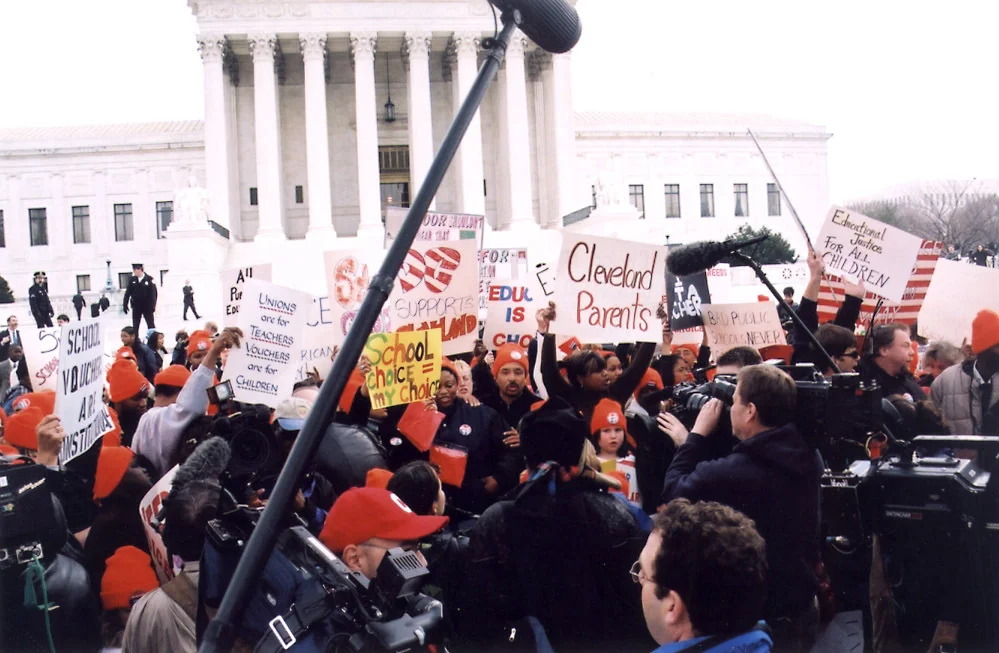
Rarely has any United States Supreme Court decision provoked such strong and contradictory responses as Louisiana v. Callais. There, the six-member conservative majority struck down a district court map that ordered the Louisiana legislature to create a second black district to make the racial composition of the state’s delegation proportionate to its population, such that thirty percent of the state electorate gets to choose two of the state’s six members of Congress.
The question before the Supreme was whether Section 2 of the Voting Rights Act of 1965, as amended in 1982, either requires or prohibits the conscious effort by lower courts to increase the number of safe black districts. The text is sufficiently Delphic to support either reading. The key proposition holds that the provision is violated when political processes are “not equally open to participation of the members” of a given racial group insofar as they “have less opportunity than other members of the electorate to . . . elect members of their own choice.” The provision does not provide any group with a guaranteed seat, no matter how high its numbers, so the question becomes what counts as “less opportunity.” That test surely rules out any disparate treatment of either voters or candidates that sets up different eligibility rules for two classes. However acute the problem was before 1965, the age of differential voting rates for Whites and Blacks is today surely long gone. The decision of Chief Justice John Roberts in Shelby County v. Holder (2013) rightly held that there was no need to have an elaborate preclearance review under Section 4 of the Voting Rights Act for a new local utility district when there was no possibility of historical discrimination that could trigger the higher standard of review.
Today, too, no one quite knows what counts as a lesser opportunity once all the obvious forms of abuse have been ruled out. The current law offers this list.
- Prohibition of Discrimination: It bans both intentional discrimination and practices that result in discriminatory, even if not intentionally enacted, impact.
- Vote Dilution and Redistricting: It is frequently used to challenge redistricting maps that “pack” or “crack” minority voters, reducing their power to elect candidates of their choice, often leading to the creation of majority-minority districts.
- “Totality of Circumstances”: Courts determine violations based on the “totality of circumstances,” assessing whether the political processes are equally open to all groups.
The first and third factors invite one to wander far and wide through the record to find discrimination where none exists. The process here is similar to that adopted under the Federal Communications Act to determine which of many applicants is the most worthy, which has led to endless confusion in evaluating who should prevail at one of these hearings and offers a sobering warning that the extended vetting process is a fool’s errand, but it is far less certain that special race-based remedies are needed to provide equal opportunity, given the countless other pathways that both black and white persons have to enter political markets.
In her impassioned dissent, Justice Elena Kagan did not advance her case with her opening hypothetical of a state with six electoral votes and black voters concentrated in the central district who are then deprived of representation when redistricting divides the whole into six small pieces within the new roster of the majority-white districts. That manipulation is conscious and thus constitutes an intentional form of discrimination covered by the Voting Rights Law. But her fanciful hypothetical is far removed from Callais, which exemplifies the opposite problem of cobbling together a new district out of remote and discordant pieces to create majority-minority districts under the perception that more black members in Congress help not just their own constituents but all black persons vicariously, no matter where they live.
There is, however, no reason to assume that sound political strategy for black groups yields sound social policy if it makes political compromise more difficult within and across House districts. Nor is it sensible to assume that such special provisions are necessary because of the incurable racism of white Americans when extreme positions are held by people of all races on all parts of the political spectrum. Indeed, it is a sheer but dangerous mistake to say that, as the New York Times reporter Richard Fausset suggests, “discrimination against African Americans simply become[s] more subtle, disguised as a web of rules embedded in regular partisan politics,” even after Barack Obama won a general election. Anyone who was raised in the 1950s, as I was, knows the manifold differences seventy years have made in race relations.
So far, Justice Alito’s decision holds up well, but the Kagan opinion draws real blood when she refers to the systematic dangers associated with “cracking” and “stacking” set out in point two, which allows any party to align electoral choices with partisan political preferences, with or without race. Thus, high-powered computers protect the dominant party by cracking the opposition’s votes across districts, rendering those votes irrelevant. It then packs the remaining minority opposition votes into a few districts so that most of those votes are “wasted.” Alito’s position adhered to the catastrophic decision of Chief Justice Roberts in Rucho v. Common Cause (2019), which, as Alito noted in Callais, held that “partisan gerrymandering claims are not justiciable in federal court,” which offers an open invitation for both parties to skew outcomes as is done with gusto in both blue (California) and red (Florida) states. The dominant party asks its dominant electorate to approve the welcome change, which only proves that these partisans believe that they have an inalienable political right to pad their parties’ majority and thus disenfranchise their opponents.
So what is going on with this two-part standard? The Alito approach does not deny that the districts that are created must, as stated in Rucho, be decided in accordance with the basic principles that were applied in the seminal 1962 case of Baker v. Carr, which held that states had to follow a one-person, one-vote principle in order to prevent the massive transfer of wealth from urban to rural districts that could not be corrected by compliant Tennessee courts, which dutifully let the dominant faction prevail. The social justification for treating this demand for districts of near identical size resonated at the time because, as Justice William Brennan noted, all avenues of relief at the state level to correct the massive rural/urban imbalance had long been exhausted.
The doctrinal foundations for Baker, however, were highly shaky. The plaintiffs in 1962 were citizens whose claims properly fell under the Privileges and Immunities Clause of the Fourteenth Amendment, which left all voting control to the states, as held in Minor v. Happersett (1874), now largely overruled in the mists of history. But jumping forward by fiat nearly 90 years has made the Equal Protection Clause the home for all such apportionment cases challenging the erratic voting patterns that Tennessee had tolerated since 1901. Justice Brennan then rejected the claim of Justice Felix Frankfurter that such cases would force the courts into a “political thicket” from which they would never emerge.
In Rucho, the Court’s five-member majority rejected the use of equal protection principles to attack political gerrymandering because it perceived it difficult to decide when such redistricting has gone “too far.” In many contests, as with eminent domain regulation, such as in Pennsylvania Coal v Mahon, (1922), the “too far” concept has fared poorly because there are clear boundaries (like yellow lines in the highways) to make the needed demarcation. With voting districts, no magic formula exists to answer the question. But that difficulty is not insuperable. It can be solved by increments: Start with the easy cases and then move forward with the assistance of computer experts to set up a range of options that could, in time, make abuses easy to detect. One instruction demands that the computer spit out compact district that maximize the ratio of area over perimeter; another method identifies an “efficiency gap” that can be filled to reduce the number of wasted votes. Or independent commissions could use some combination of the above strategies. But proposals were noted and dismissed in Rucho, and just ignored in Callais.
Yet there will be no closure until politics is removed from the process. Case after case will test the Maginot Line set in Callais. Courts will be overwhelmed by fantastical cases born of current judicial deference, in which each side blames the other for litigation excesses. The conservatives may gain something of an advantage in the short run because race-based cases are off the table, but their right-of-center political gerrymanders will substitute in part for that loss. In the end, the Court will enter the political thicket through a side door that never should have been left open in the first place. But deep-seated resentment of liberal groups will continue to fester as a fundamentally skewed system further embroils the political classes in a struggle from which everyone will lose.
Richard Epstein is a senior research fellow at the Civitas Institute at the University of Texas at Austin. He is also the inaugural Laurence A. Tisch Professor of Law at NYU School of Law, where he serves as a Director of the Classical Liberal Institute, which he helped found in 2013.

Constitutionalism
Amicus Brief: Hon. William P. Barr and Hon. Michael B. Mukasey in Support of Petitioners
Former AGs Barr and Mukasey Cite Civitas in a SCOTUS Brief

Rational Judicial Review: Constitutions as Power-sharing Agreements, Secession, and the Problem of Dred Scott
Judicial review and originalism serve as valuable commitment mechanisms to enforce future compliance with a political bargain.
.avif)





.png)
.png)
.png)
The Fifth Circuit’s Chance to Expose the Inflation Reduction Act’s Unconstitutionality
Despite the mounting evidence of harm, the Medicare Drug Price Negotiation Program remains law — and the Justice Department continues to defend it in federal court.