Birthright Citizenship Has a Long Historical Precedent

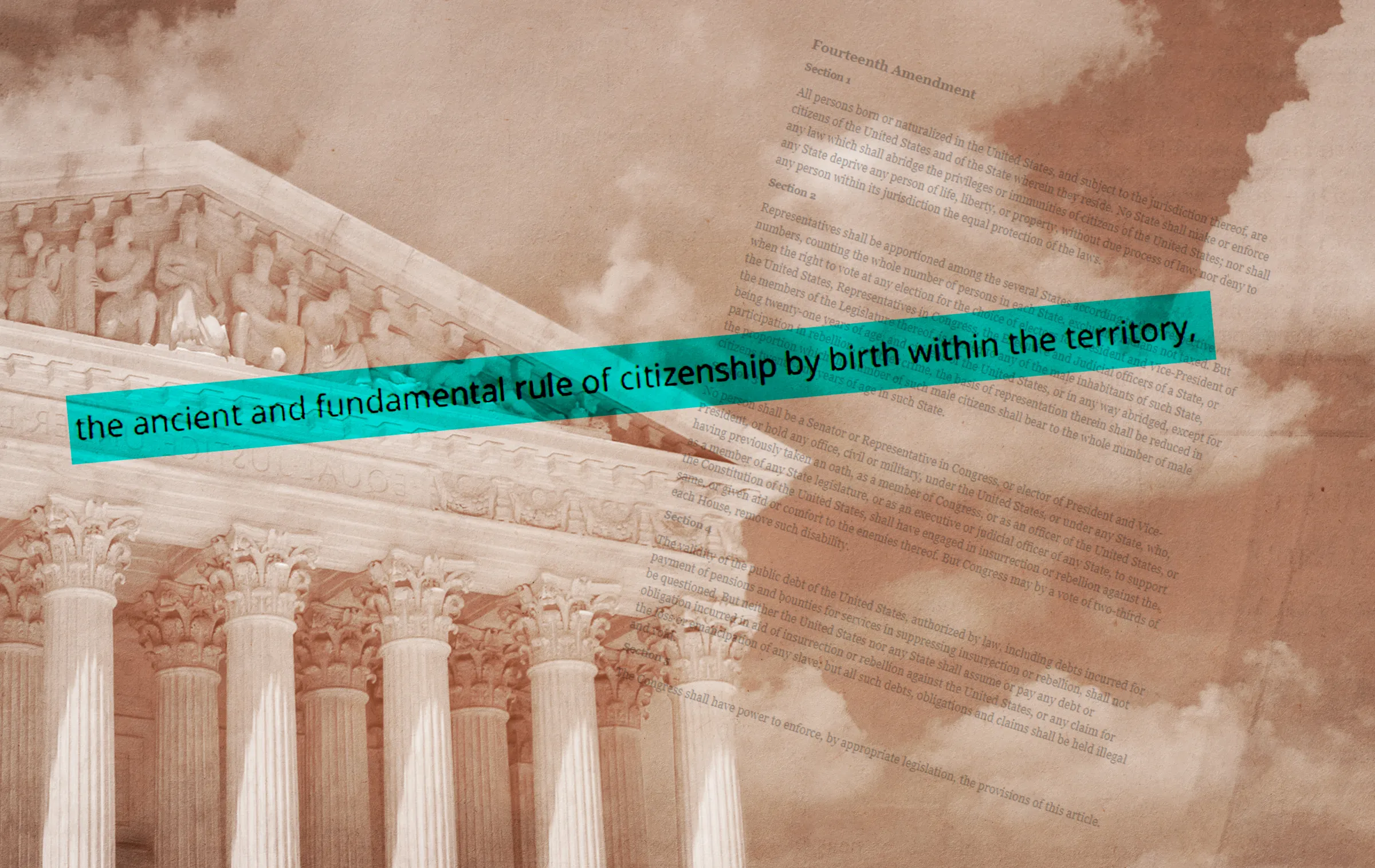
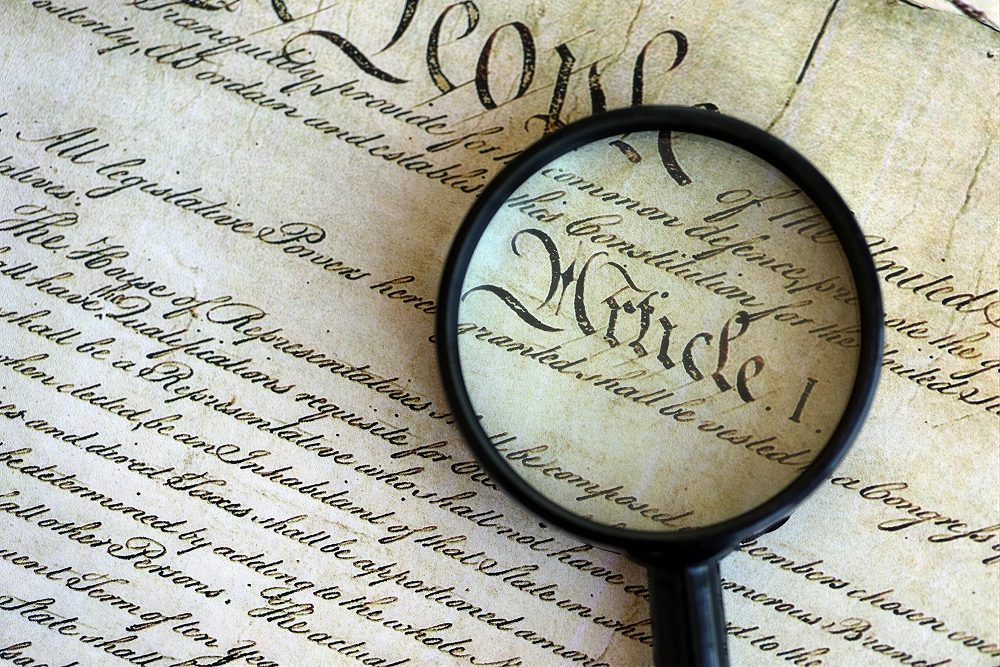
The 14th Amendment’s text supports the idea that those born in our country are citizens.
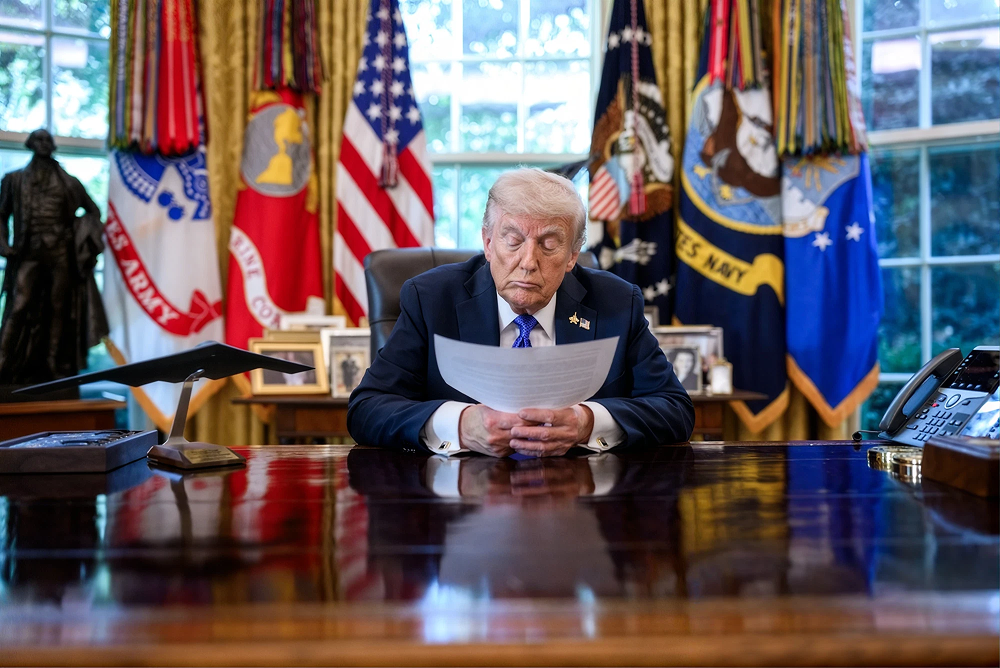
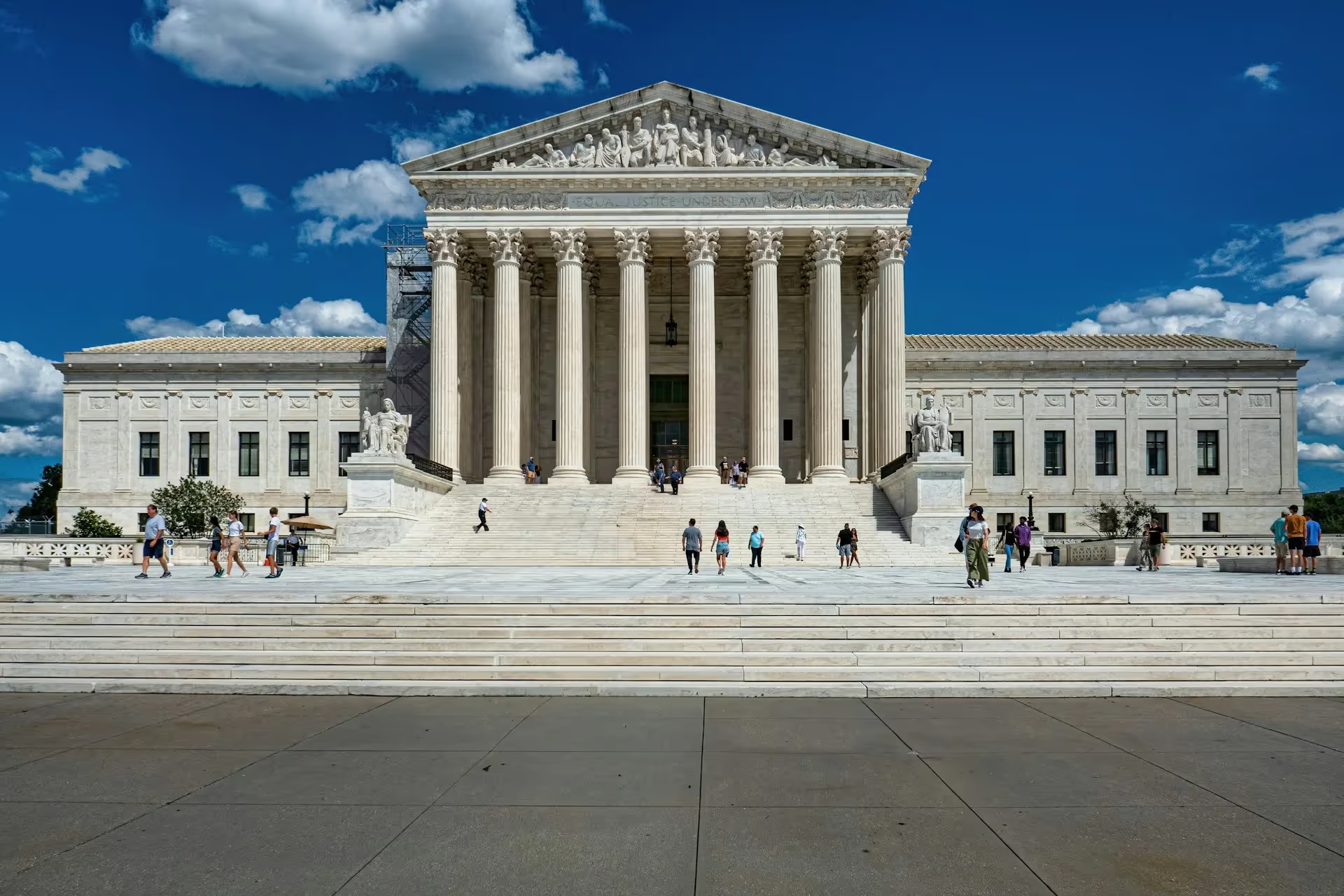
Donald Trump appeared in person for Supreme Court arguments over his executive order ending birthright citizenship on Wednesday, becoming the first sitting president to ever show up in the courthouse. While Trump no doubt has a flair for the dramatic, he must have left disappointed by the careful, reasoned, technical arguments that filled the air: no banging on tables, no surprise witnesses (or witnesses of any kind), no earth-shattering rulings from the judges (those won’t come until June). And the proceedings showed that the outcome will likely also lack drama: The court appears poised to affirm the traditional American rule that anyone born in the United States is automatically a citizen.
While the question sparks fierce debate over immigration policy, it should not be a close call for those who interpret the Constitution based solely on its text and history. The case for birthright citizenship is, at its core, a straightforward one. The text of the 14th Amendment, the historical record of its drafting and ratification, the common-law tradition it incorporated, and 127 years of Supreme Court precedent all support birthright citizenship. No Congress, no president, and no Supreme Court has ever held otherwise. If the current majority of the justices is serious about interpreting the Constitution based on its original meaning, it will follow that history.

Constitutionalism
Amicus Brief: Hon. William P. Barr and Hon. Michael B. Mukasey in Support of Petitioners
Former AGs Barr and Mukasey Cite Civitas in a SCOTUS Brief

Rational Judicial Review: Constitutions as Power-sharing Agreements, Secession, and the Problem of Dred Scott
Judicial review and originalism serve as valuable commitment mechanisms to enforce future compliance with a political bargain.
.avif)








.png)
.png)
.png)
.png)
Farewell to the President’s New East Wing
Both Congress and the President have acted in violation of the public trust doctrine.
The Constitution and Birthright Citizenship: A Rejoinder to Professor Yoo
Foreigners can come to America and become “Americans” not by their mere presence on American soil but by embracing the principles upon which this country was founded.