'Pluribus' Is About More Than 'the Warmth of Collectivism'

‘Pluribus’ explores the eternal struggle between the individual and the tribe.
In the Book of Matthew, Jesus of Nazareth warns his followers against forfeiting their individual souls for earthly things.
“What good will it be for someone to gain the whole world,” the carpenter asked, “yet forfeit their soul?”
That line came to mind as I watched the final episode of the first season of Pluribus, the new show on Apple+ created by Vince Gilligan, the mastermind behind Breaking Bad.
For years, fans observed a libertarian streak in Breaking Bad, including a current of individualism.
Pluribus, which became Apple’s most-viewed drama after its November premiere, offers more than a current. The integrity of the individual is the central theme.
‘We Just Want to Make You Happy’
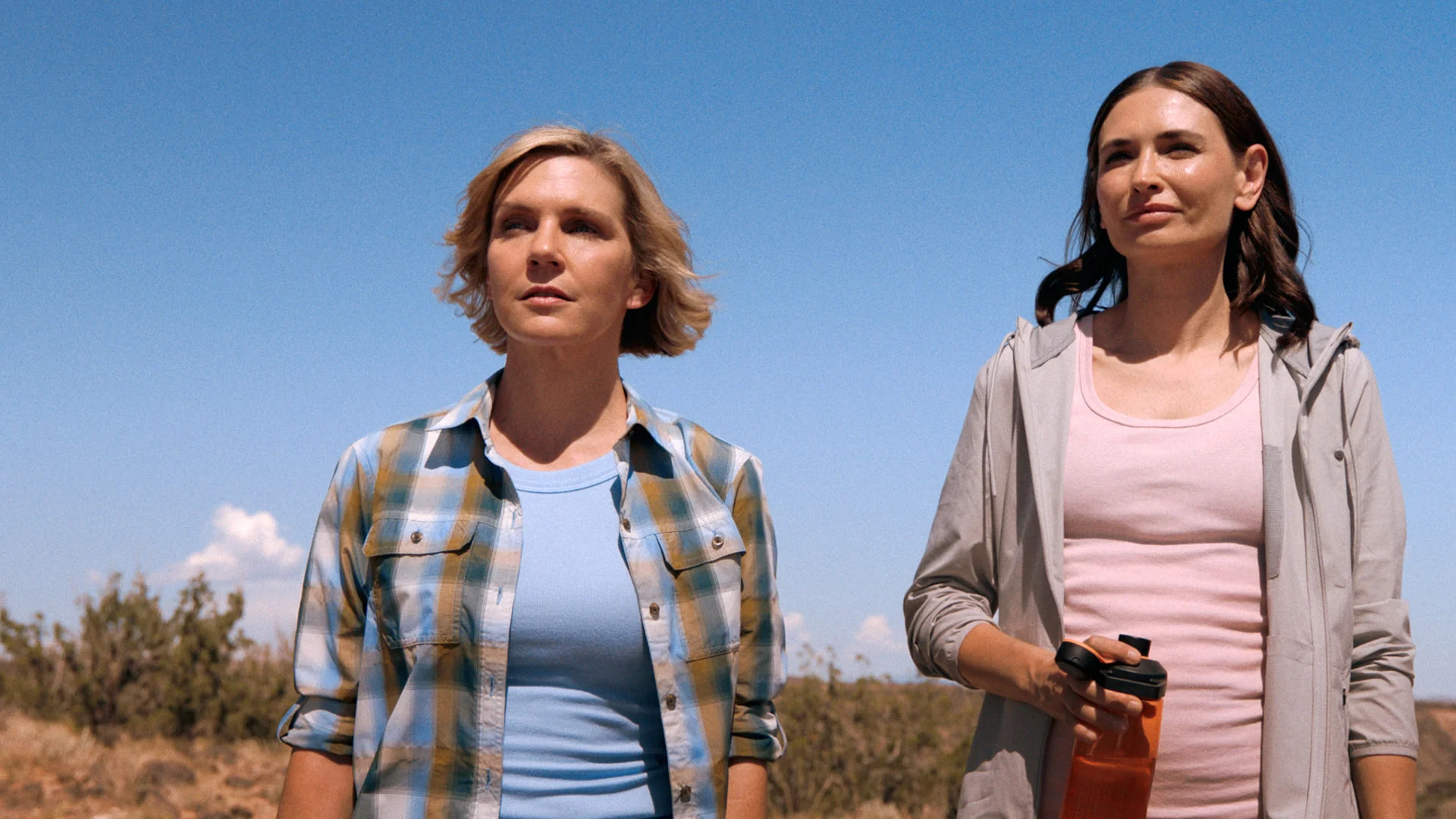
Pluribus revolves around Carol Sturka, a romance novelist played by Rhea Seehorn, who also starred in Gilligan’s Breaking Bad spinoff Better Call Saul.
Carol is a borderline alcoholic living in Albuquerque, New Mexico, with her lover, when an alien brain parasite infects the global population, leaving everyone on Earth—except Carol and 12 others—part of a collective hive mind. The people look the same, but they’re not. Unlike other popular films like Invasion of the Body Snatchers, though, the pod people are not overtly sinister.
Hive members won’t hurt a fly (literally) or even pluck an apple from a tree. They cannot lie, and they won’t convert Carol without her consent. They even help her contact uninfected survivors.
“We just want to make you happy,” Carol is told again and again.
That the hive means well doesn’t render it benign, however. Many people die accidentally during the takeover, including Carol’s partner. Later events reveal the hive is not very good at producing food, a problem for the 8.1 billion people on Earth.
The hive’s well-meaning but clumsy efforts to build utopia call to mind C.S. Lewis’s observation that the worst of all tyrannies is one “exercised for the good of its victims.” After all, the hive might want Carol to be happy, but she’s clearly not. Her lover is dead, her world is gone. The hive’s only “solution” to the problem is for Carol to join it.
To make matters worse, when survivors are allowed to meet privately on an aircraft, Carol discovers the uninfected are not as disturbed as they should be by these events.
“I am not convinced things are as bad as you say,” says a man named Koumba Diabaté. “As we speak, nobody is being robbed or murdered. The color of one’s skin, by all accounts, is now meaningless.”
Diabaté’s words come off as gaslighting, but the scene carries clear parallels to the COVID-19 era, when people were told that the eradication of civil liberties was okay because, well, we were all “in it” together.
The tension between individual rights and collectivist approaches to goods like safety did not begin with the pandemic, of course. It is nearly as old as humanity. And this conflict between collectivism and individualism is the animating force behind Gilligan’s show. (It is there in the title, Pluribus—Latin for “many,” drawn from E pluribus unum: out of many, one.)
When Carol insists that what the hive is doing is not okay and the world must be saved from “the pod people,” she is verbally attacked—not by the hive, but by her fellow survivors. Carol’s failure to comply with the hive, she is told, is getting people killed. (In a previous episode, Carol’s emotional outburst disrupted the hive’s equilibrium, causing many people to die.)
Pluribus explores the tension between individualism and collectivism, and though Gilligan gives the devil his due, it’s not difficult to see on which side he falls. Reviewers have noted the show’s unflattering depiction of collectivism, which includes some not-so-subtle shots at socialism.
“There’s no such thing as ownership anymore,” Carol’s chaperone Zosia explains at one point. “No private property.”
To drive the point home, Zosia takes Carol to a stadium where hundreds of people sleep together, packed like sardines. The warmth of collectivism, indeed.
Nobody Is an Island
It would be easy to read Pluribus as a simple warning about socialism, but this is not a show about economics. Gilligan is doing something more ambitious. The show asks a deeper question: what does it mean to be human?
Carol is tough and independent, but when she learns she has been excluded by the other survivors—who meet regularly without her—she does something deeply human: she cries. The scene is designed to show how much it hurts to be excluded. And though the hive might be awful, Carol discovers something else: she needs it.
When the hive withdraws from Albuquerque after a fallout, Carol is left alone for 40 days. She tries to fill the void—golfing, lighting fireworks, blasting music, drinking—but after weeks of total isolation, Carol breaks and begs the hive to return.
It’s difficult to watch and carries a message: no man (or woman) is an island. Humans are intensely social creatures. Relationships are necessary to us. These bonds, however, ought not come at the cost of personhood, dignity, or a sense of justice.
Unfortunately, this is precisely what the hive demands. To belong, Carol must also surrender reason and the integrity of her mind.
‘John Cena Makes a Fairly Reasonable Case’
Before her isolation, Carol had uncovered a disturbing truth: the hive survives on “human-derived protein”: a euphemism for people. In a darkly comical scene, John Cena explains the system (notice the first-person plural pronouns).
“Hello, Carol. We’re John Cena, and we’re here to address some questions you may have regarding our food supply,” he says. “As you know, we can’t purposely kill, harm, or otherwise interfere with any form of life. That limits what we’re able to consume.”
It turns out that fictional human hives are no better at producing food than actual human hives—the communist regimes of the twentieth century that starved millions of people. Unable to hunt or harvest food, our fictional hive avoids starvation by consuming people (but only those who have died accidentally or of natural causes).
Carol is horrified. She sees the cannibalism as unsustainable and morally grotesque. Diabaté is less troubled.
“I must say,” he says, “John Cena makes a fairly reasonable case.”
The line is funny, but it exposes something dark: the human capacity to rationalize atrocity, especially when convenient.
Diabaté, unlike Carol, enjoys his new life. He is a man of appetite, not ethics, and the hive caters to his James Bond-like fantasies and sexual desires. Even after learning about the horror the hive will inflict, Diabaté has little interest in bringing it down.
Carol is different—or so we think.
The Privilege of Owning Yourself
For most of Pluribus, the audience never doubts that Carol will do the right thing and destroy the hive. Yet near the season finale, circumstances change.
After months of grief, bewilderment, and isolation, in what is perhaps a moment of weakness, Carol forms a powerful connection, emotional and sexual. Suddenly, life in the hive doesn’t seem so bad. Carol has a beautiful and charming partner, and the world’s treasures are at her fingertips. It might all be a lie, but Carol no longer experiences her life alone.
So when Carol is finally joined by a sensible survivor—a loner who traveled thousands of miles to help her destroy the hive—she does something infuriating: she tells him to get lost.
The audience never truly believes our protagonist will sell out, but give Gilligan credit: he shows us the price Carol pays by remaining true to herself. And that’s what Pluribus is really about. It’s a story that shows how precious human individuality is, and also how fragile.
In perhaps the most memorable scene of the show, a young Peruvian girl named Kusimayu gives up her individuality to join the hive. When the goats she once loved and cared for come up to her after her transformation, seeking to be petted, she walks away from them.
Kusimayu’s decision to join the hive is the saddest scene in Pluribus. But it’s something Rudyard Kipling would have understood. Nearly a century ago, in an interview with Reader's Digest, the author observed the human struggle to remain ourselves in a world that despises non-conformity.
“The individual has always had to struggle to keep from being overwhelmed by the tribe,” Kipling said. “If you try it, you will be lonely often, and sometimes frightened.”
Carol Sturka would understand Kipling’s quote, as would anyone who has ever taken a stand against a crowd or a mob. There’s a cost for not conforming. Kipling, however, believed it was a toll worth paying.
“No price,” he said, “is too high to pay for the privilege of owning yourself.”
Jonathan Miltimore is editor-in-chief of The Daily Economy, an online journal published by the American Institute for Economic Research.

Pursuit of Happiness
The Rise of Latino America
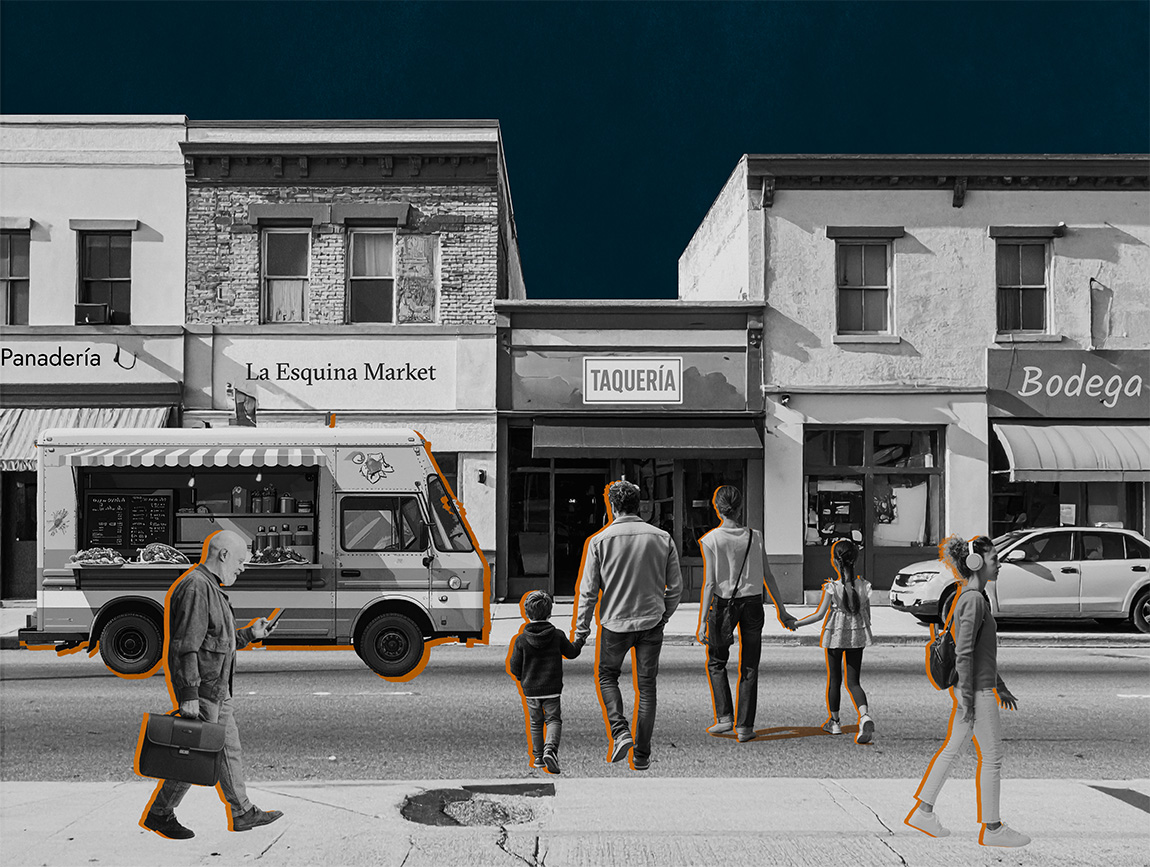
In The Rise of Latino America, Hernandez & Kotkin argue that Latinos, who are projected to become America’s largest ethnic group, are a dynamic force shaping the nation’s demographic, economic, and cultural future. Far from being a marginalized group defined by oppression, Latinos are integral to America’s story. They drive economic growth, cultural evolution, and workforce vitality. Challenges, however, including poverty, educational disparities, and restrictive policies, threaten their upward mobility. Policymakers who wish to harness Latino potential to ensure national prosperity and resilience should adopt policies that prioritize affordability, safety, and economic opportunity over ideological constraints.











Spielberg’s Empty Hope
'Disclosure Day' should have been called 'Hope and Change,' or rather 'Change and Hope.'
.jpg)
Deliberative Republicanism and the Triumph of the American Founding
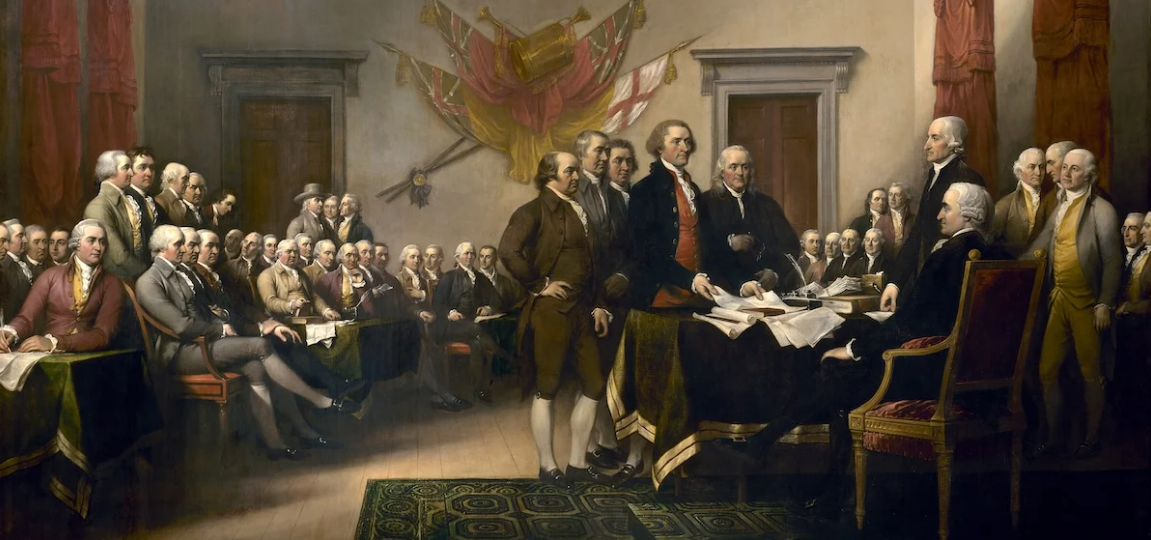
Instead of rejecting the moral urgency of the postliberal right and left, it is fitting and proper that we redirect it through the right kind of education—both formal and informal—that can inspire affection for our Constitution.
.jpg)