God, Creation and ‘The Story of Everything’

A new documentary claims that modern science has reality all wrong.
The most striking feature of “The Story of Everything,” the science documentary that will appear in theaters on April 30, is the sheer nerve of the thing. First it claims that modern science has reality all wrong—and then that we know this because of science itself. By the end of the film’s 97 minutes, you’ll likely find yourself concluding those claims aren’t wrong.
The film opens with 19th-century figures who gave science a purely materialist view of reality. Clips of contemporary scientists show this view remains dominant today. “Science,” biologist Richard Dawkins says, “has now achieved an emancipation” from the idea of a “Creator.” “Existence,” physicist Lawrence Krauss announces, is “a cosmic accident.” Astrophysicist Neil deGrasse Tyson reduces the notion of a Creator to a quaint absurdity. As “The Story of Everything” demonstrates, these scientists haven’t been paying attention.
The documentary presents three basic scientific findings over the past century. The Big Bang comes first. A hundred years ago Einstein himself held to the then-standard belief that the universe had no beginning. Astronomical observations forced him to change his mind. In the 1960s Stephen Hawking demonstrated the Big Bang in theory, while Arno Penzias and Robert Wilson had detected the background radiation that proved decisive evidence of the event.
If the Big Bang produced the universe, what produced the Big Bang? “Any entity capable of causing the universe,” says narrator Stephen Meyer, a philosopher of science, “must be external to, or separate from, the universe itself. It must . . . transcend time and space.” In discovering the Big Bang, in other words, science itself has walked us to the doorstep of what philosophers called the Prime Mover.
“The Story of Everything” then turns to the discovery in recent decades of fine-tuning. The universe possesses a long list of properties, each of which must be just so. If gravity were infinitesimally stronger, all matter would have collapsed back in on itself. But if gravity were infinitesimally weaker, stars and galaxies would never have formed. To support life, Earth itself must lie just the right distance from the sun, project just the right magnetic field, possess just the right gravity to hold in place an atmosphere of just the right density, and on and on.

Pursuit of Happiness

The Rise of Latino America
In The Rise of Latino America, Hernandez & Kotkin argue that Latinos, who are projected to become America’s largest ethnic group, are a dynamic force shaping the nation’s demographic, economic, and cultural future. Far from being a marginalized group defined by oppression, Latinos are integral to America’s story. They drive economic growth, cultural evolution, and workforce vitality. Challenges, however, including poverty, educational disparities, and restrictive policies, threaten their upward mobility. Policymakers who wish to harness Latino potential to ensure national prosperity and resilience should adopt policies that prioritize affordability, safety, and economic opportunity over ideological constraints.











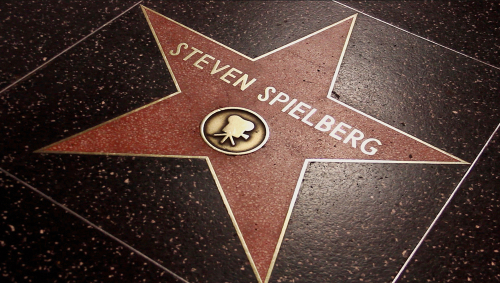
Spielberg’s Empty Hope
'Disclosure Day' should have been called 'Hope and Change,' or rather 'Change and Hope.'
.jpg)
Deliberative Republicanism and the Triumph of the American Founding
Instead of rejecting the moral urgency of the postliberal right and left, it is fitting and proper that we redirect it through the right kind of education—both formal and informal—that can inspire affection for our Constitution.
.jpg)