
The Trump Fund
.avif)
No one can, or should, defend these massive legal abuses.
President Trump announced on May 18, 2026, that his family had reached a settlement with the Internal Revenue Service (IRS) of the blockbuster lawsuit that he, his two sons, Eric and Donald Jr., and the Trump Organization had filed on January 29, 2026. The settlement contained an unprecedented provision whereby the IRS renounced the right to bring any lawsuit against any of the Trump plaintiffs for any claims, whether known or unknown, arising from those previous events. At this point, no one knows the estimated value of any such government waiver. Neither side to this collusive settlement pointed to any statute or regulation that might justify its terms. The entire world, from Jeffrey Toobin on the left to John Fund on the right, was literally aghast.
In a nutshell, the Trumps insisted that the IRS was liable to them because of its faulty supervision of one Charles Littlejohn, ¶ 7, “who was jointly employed by the IRS and/or one of its contractors, illegally obtained access to, and disclosed Plaintiffs’ tax returns and return information to the New York Times, ProPublica, and other leftist media outlets.” That simple sentence contains a clever built-in ambiguity: It never quite commits itself as to whether the nefarious Littlejohn released these papers as an independent contractor—for whom the IRS is not responsible—or as an employee, for whom the IRS is squarely liable. There is no question that Littlejohn was rightly convicted under 26 U.S.C. §7213(a)(1), which imposes criminal liability on IRS contractors and employees alike for the unauthorized disclosure of return information. But, even though the Trump complaint speaks ambiguously of his “staff-like access ¶¶ 96-98 it does not automatically follow that the IRS is responsible for any damages that flowed from Littlejohn’s releases, let alone subject to punitive damages sought ¶ 112, for even though the IRS admittedly failed to prevent Littlejohn’s activities, no officer or employee of the IRS participated in his fraudulent activities.
There is no doubt that there was negligence on the part of the IRS. In their initial lawsuit, the Trumps cited a case brought by the billionaire Kenneth Griffin following the release of his documents to ProPublica in the same data breach—a case that settled, with the IRS formally acknowledging its misdeed. But in that settlement, the IRS offered no financial incentive or inducement to settle. While the documents of many other individuals were released by Littlejohn, none of these individuals received any cash relief at all, let alone a Trumpian jackpot. The key question is just how the Trumps aggregated their claims to obtain this $1.776 billion settlement.
For openers, the Trump plaintiffs never established anything approaching proof of any actual losses. The complaint ¶ 11 contains the standard boilerplate language of “significant and irreparable harm to Plaintiffs, their reputations, and their substantial financial interests.” But there is not a single instance of any event that traces the ensuing harm from those releases, let alone the severe business and financial sanctions that were imposed on the Trump family by the bloodthirsty activities of New York State Attorney General Letitia James, or Manhattan District Attorney Alvin Bragg, which ironically might have propelled Trump to victory everywhere outside of New York State. Absent actual damages from this release (which did not result in any further action against the Trump plaintiffs), Trump should receive only nominal damages at a level that could not support the sweetheart settlement the President has reached with Acting AG Blanch, who had been his own personal lawyer.
The Trump plaintiffs next claimed that ¶111 “[u]nder 26 U.S.C. § 7431, Plaintiffs are entitled to statutory damages of $1,000 ‘for each act of unauthorized disclosure of a return or return information.’” Here, the Trump plaintiffs cited Snider v. United States (2006) for the correct abstract proposition that “Increased culpability warrants increased punishment. Direct disclosures to multiple persons multiplies the harm to the taxpayer.” The strict numerical connection between the number of disclosures and the harm may work for two parties and a few disclosures. But it certainly does not scale so that duplicative disclosures to 1,000 people cause the same amount of harm. Recall that there were no allegations of disclosures to individual persons in this Trump matter. Everything was disclosed through hostile media organizations. The Snider court specifically addressed this very situation—though the Trumps unsurprisingly did not include it in their complaint. Snider, in turn, relied on the earlier case of Miller v. United States (1995), writing “the IRS’s disclosure of return information to a Los Angeles Times reporter, who subsequently published 184,000 newspapers containing the information, represented a single act of disclosure rather than 184,000 acts of disclosure. . . . We agree that the proper limitation of liability is the initial act of disclosure, not secondary disclosures made by others such as the media.” The Trump complaint is indefensible—it makes it appear that the media blasts and the individual case deserve the same treatment.
At this point, the Trump case flops. Without proof of general damages, the case is for at most $1,000 per news blast. A settlement worth more than a pittance, let alone one that includes the unfathomable release, is illegal. Trump and Blanche both hold positions of public trust, which subjects them to prove that the Trump group had provided fair value for the new trust fund moneys, when they supplied nothing of value at all. Accordingly, as the government’s chief law enforcement officer, Acting Attorney General Blanche had to be aware of ABA Rule 1.7 that prevents him from working on a case where his current interest is “directly adverse” to the position of his former client. Working for both parties does not come close to meeting that ethical standard. Without question, Blanche had to step back from this case. His failure to do so, despite his egregious conflict of interest, raises some of the toughest questions if he were nominated for Attorney General. The question is whether any outsider can bring down the settlement. Unfortunately, since its very inception with Massachusetts v. Mellon (1923), the law of standing has been read to block any sensible derivative lawsuit by any citizen or taxpayer, even though in every state in the Union, citizens can challenge as ultra vires (beyond the powers) similar abuses of power by local governments. This is as good a time as any for the Supreme Court to recognize that its power to hear suits in “equity” should be given in its ordinary meaning in this highly charged controversy. Yet old, bad habits die hard.
But other approaches might work. First off, the President’s individual power under the settlement to redirect the wealth in this case through his delegates or businesses means that for both the income and transfer taxes, he is on the hook at both the state and federal levels. Since Lucas v. Earl (1930) was decided, any person who creates a trust with his own wealth is taxed on its income, even if it is paid directly to a third party. The boilerplate disclaimer in the Settlement Art. IV A that the “fund is not taxable income as to Plaintiffs, who receive no economic benefit from this Settlement Agreement,” Art. IV A. is flatly wrong given that Trump had a huge say in the organization of the Fund, and retained the power to remove all of its members, Art. IV. B.
Similarly, once wealth has been placed in trust that remains subject to the grantor’s power to revoke, that wealth is included in the taxpayer’s estate since Burnet v. Guggenheim (1933). In addition, a close look should be given to the state laws that involve the breach of fiduciary duty that are surely broad enough under the authority of such leading cases as Meinhard v. Salmon (1928), which has long held, “A trustee is held to something stricter than the morals of the market place. Not honesty alone, but the punctilio of an honor the most sensitive, is then the standard of behavior,” which should be sufficient to first undo the entire transaction, and then punish every party on both sides of this unwholesome deal. And if lesser means will not work, there may come a time when Congress will think hard about impeachment in response to a set of transactions that all too easily fit the definition of high crimes and misdemeanors, given the blatant abuse of the powers of a public office.
Richard A. Epstein is a senior research fellow at the Civitas Institute.

Politics
%20Richard%20Samuelson%20%20-%20Is%20American%20Nationalism%20Still%20Creed-able_-1.jpg)
Is American Nationalism Still Creed-able?
We are not there now, but there is reason to worry that the United States is in danger, if we are not careful, of ceasing to be a nation with the principles of 1776 at its core.

National Civitas Institute Poll: Americans are Anxious and Frustrated, Creating a Challenging Environment for Leaders
The poll reveals a deeply pessimistic American electorate, with a majority convinced the nation is on the wrong track.
.webp)
%20(1).avif)
.jpg)



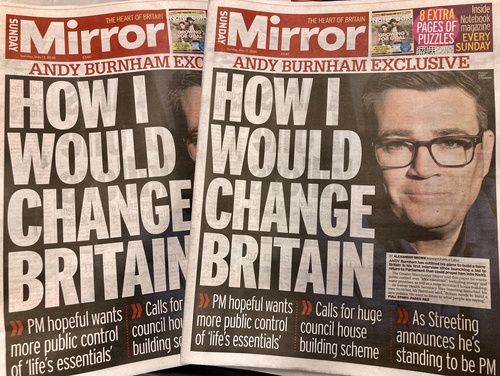
Can Britain’s Next Prime Minister Escape the Net Zero Trap?
Britain has burned through five Prime Ministers and is paying some of the highest electricity prices in the world.
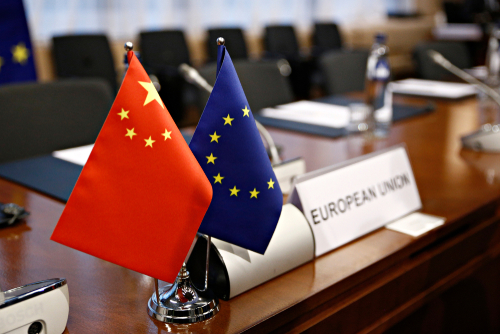
The Scanner at the Gate: Europe’s China Policy Litmus Test
China’s industrial policy is entering Europe through public procurement—and reshaping sensitive markets from within.
Confronting the New Antisemitism
"The postwar effort 'to rebrand Judaism as a religion' has made it impossible for American Jews to understand what they are facing today, because what we are facing today is an attack on the idea of Jewish peoplehood.”
“Democratic” Socialism Is Undemocratic
By promoting class hatred, suppressing private initiative, and seeking enhanced control of our lives, today’s democratic socialists undermine patriotism and individual initiative—two qualities that have long distinguished the United States from other major nations.

