Arthur Brooks’ Pursuit of Happiness

The Meaning of Your Life is Arthur Brooks' best book by far.
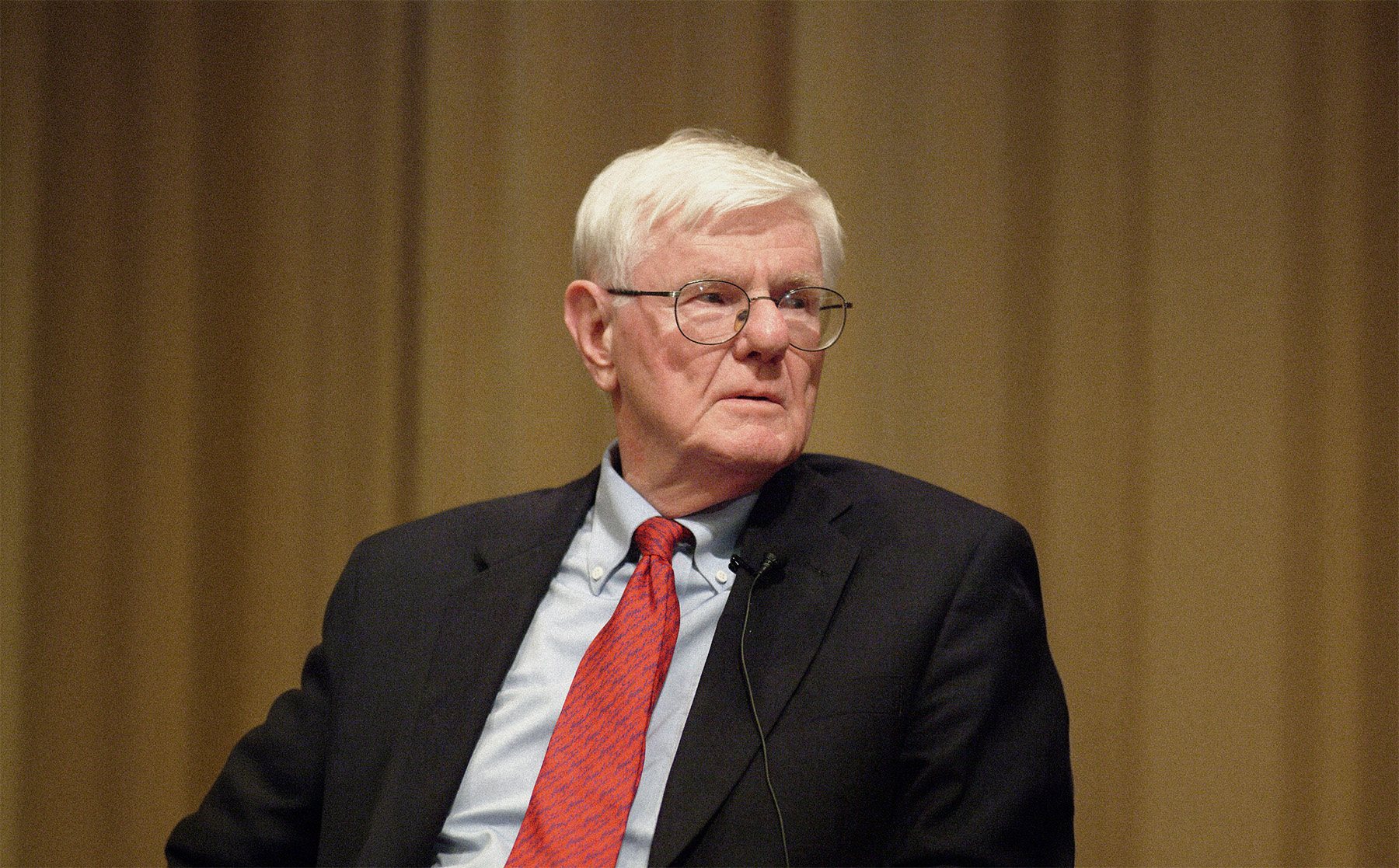
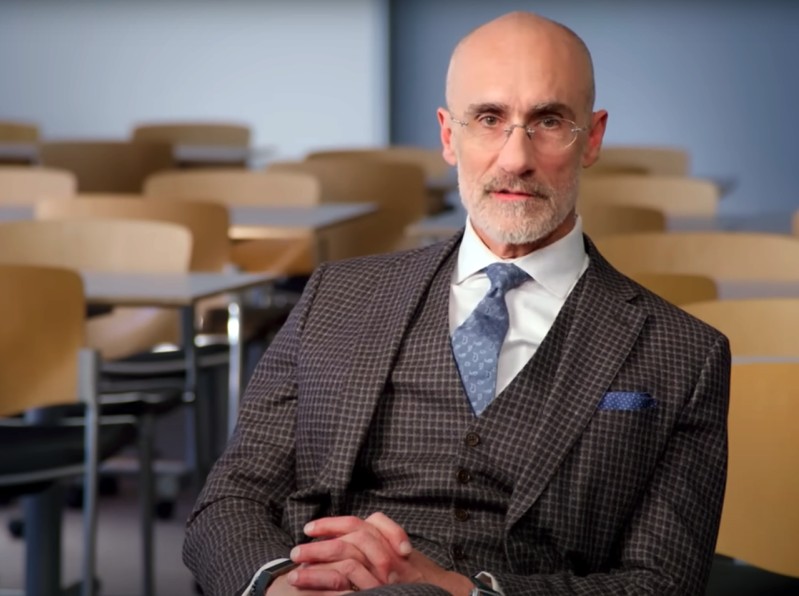
Arthur Brooks is a phenomenon. Trained as a classical musician and French horn player, he developed a taste for public policy issues at the RAND Corporation before teaching at Syracuse University. He rocketed to fame in 2009 when he was named president of the Washington, D.C., think tank American Enterprise Institute, which had been the authoritative voice of free market conservatism since the Reagan administration.
Brooks’s approach to leading a policy think tank was unorthodox, to say the least. One of his earliest guests at AEI was the Dalai Lama. He encouraged research into what he called human flourishing and “the science of happiness.” After leaving AEI, he shocked his former colleagues by teaming up with Oprah Winfrey to write Leading the Life You Want in 2023.
The focus of Brooks’s work, then and now, has been on the seemingly nebulous issue of human happiness. It started with his research on charitable giving, and his discovery that conservatives give 30 percent more to charities that help the poor and suffering than their liberal counterparts—and feel far happier for doing it.
More conventional conservatives scoffed at his work on quantifying and understanding happiness as an object of scientific research. They’re not laughing anymore. It’s not just Brooks’s phenomenal success that has sobered them, including five New York Times bestsellers and nine honorary doctorates. It’s also been the realization that Brooks had put his finger on an important gap in conservative thinking, which endless discussions of the virtues of free market capitalism and civic liberty had left unaddressed: namely, how conservative policies not only help human beings be more prosperous but also happier.
Indeed, almost all his books, including The Meaning of Your Life, center on a simple question that extends far beyond the liberal/conservative divide. Why are some people happy, and others unhappy? Brooks brings to bear a host of external research, including recent advances in neurological studies, to chart this terrain. His answers to this question, again, may seem subjective and over-simplified, but rest (by his telling) on a series of objective factors, from family history and life experience to the kind of society in which we live, as well as the physical makeup of our own brains.
Brooks’s discussion revolves around two key terms, one from modern Germany, the other from ancient Greece. Both in his mind point us toward a moral and scientific understanding of the place and status of happiness in modern life. As the book’s subtitle suggests, “Finding Purpose in an Age of Emptiness,” happiness itself may be an endangered species.
The German word unheimlich refers to something scary or sinister, but it can also literally mean “homeless.” Brooks argues that, paradoxically, many very successful people in our society find their lives unheimlich, lacking any sense of satisfaction and well-being. Psychologically, in fact, “those who were best off” in terms of prestigious degrees and promising careers, “were actually suffering the most.” Brooks sees this systematic maladjustment between status and happiness as a “psychogenic epidemic” spreading through contemporary society, one that demands understanding as well as antidotes.
The understanding comes through the study of neurology. “The modern world of technology is literally changing the way people use their brains,” Brooks argues, “rendering them less and less capable of finding life’s coherence, purpose, and significance”—or, like President Trump’s would-be shooter, finding it in the wrong places.
Overreliance on computers, smartphones, and digital media has resulted in an overreliance on the left brain’s linear processing functions. “Most young adults today have never known any domain other than Left Brain Land.” The result can breed a sense of loss and even despair, reflected in the spread of neuroses and depression among GenZers and others.
The antidote, Brooks argues, lies literally just across the way, in the right brain. Opening the neural pathways and potential there breaks the self-reinforcing sense of boredom and discontent that the left brain breeds. It opens the mind “to the complex, mysterious parts of life that are increasingly absent from the way people study, work, and relax.” It is there in our right brain, which manages our non-verbal communication, intuition, and emotions, that the outline of meaningful happiness can start to take shape.
This is more than an argument for going back to basics—or the usual discussions of right versus left brain dominance. This other realm of the brain is also for Brooks the realm of what the Greeks called aporia, literally no path: a state of puzzlement and confusion that defies easy solutions but also allows us to explore new possibilities and find undiscovered resources, including for our own path in life. “What sets Homo sapiens apart from other beings”—including AI-generated ones—“is not the ability to give answers to increasingly complicated questions,” but rather “the willingness and capacity to wonder and inquire about things large and small that are the essence of our uniquely human consciousness.”
This kind of inquiry inevitably leads to the question of religion. Arthur Brooks himself is living proof of that. He is a devout Catholic following a dramatic personal conversion, and attends Mass every day. But he also recognizes the spark of the divine lies dormant even in those who don’t think about it or even deny it. One of the moving stories in The Meaning of Your Life is about the village in northern Spain where church attendance has all but disappeared, and people dismiss religion as an anachronism of the past, but where the traditional annual celebration of Christ’s Passion at Easter draws huge crowds and an immense outpouring of heartfelt emotion. “The ancient story of their ancestral faith,” Brooks writes, “has transported them from their complicated modern world to a complex, mystical one that triggered deep, primordial feelings.”
The other place aporia leads to is understanding suffering as part of human experience. Brooks has touched on this issue in his other books, but it’s given full scope here in the chapter with the startling title “Don’t Waste Your Suffering.” He quotes Gautama Buddha, “Life is suffering,” and the actor Rainn Wilson, who, after sudden celebrity, learned from the sense of emptiness how to return to the Baháʼí faith of his family, so that today “I’m grateful for every anguish.” As Brooks puts it, in modern life, “suffering is one of the ways we access the mysterious hemispheric complexity of life and learn its meaning.” It’s also those possibilities that an opioid-addicted culture misses out on. He concludes, “Your suffering is sacred and central to your search for meaning. Do not waste it.”
Some would wonder if Brooks is making light of the real physical pain that suffering can entail, with cancer victims or even Holocaust survivors. But I was reminded more of Gustav Mahler’s gigantic Resurrection Symphony, which ends with the quotation from the poet Friedrich Klopstock:
Aufersteh'n, ja aufersteh'n wirst du,
Mein Herz, in einem Nu!
Was du geschlagen,
Zu Gott wird es dich tragen!
(Rise up, rise up,
My heart in an instant!
What you have overcome
Brings you closer to God.)
This is Arthur Brooks’s best book by far. And whatever doubts remain about his method or his message, the questions The Meaning of Your Life arouses will keep the reader occupied for a long time to come.
Arthur Herman is Senior Research Fellow at the Civitas Institute. His most recent book, Founder’s Fire: From 1776 to the Age of Trump, was published in April.

Pursuit of Happiness

The Rise of Latino America
In The Rise of Latino America, Hernandez & Kotkin argue that Latinos, who are projected to become America’s largest ethnic group, are a dynamic force shaping the nation’s demographic, economic, and cultural future. Far from being a marginalized group defined by oppression, Latinos are integral to America’s story. They drive economic growth, cultural evolution, and workforce vitality. Challenges, however, including poverty, educational disparities, and restrictive policies, threaten their upward mobility. Policymakers who wish to harness Latino potential to ensure national prosperity and resilience should adopt policies that prioritize affordability, safety, and economic opportunity over ideological constraints.






.jpg)




Spielberg’s Empty Hope
'Disclosure Day' should have been called 'Hope and Change,' or rather 'Change and Hope.'
.jpg)
Deliberative Republicanism and the Triumph of the American Founding
Instead of rejecting the moral urgency of the postliberal right and left, it is fitting and proper that we redirect it through the right kind of education—both formal and informal—that can inspire affection for our Constitution.
.jpg)