Spielberg’s Empty Hope

Spielberg’s offer of futurism and his revision of the post-War era are nostalgic, yet empty of real feeling.
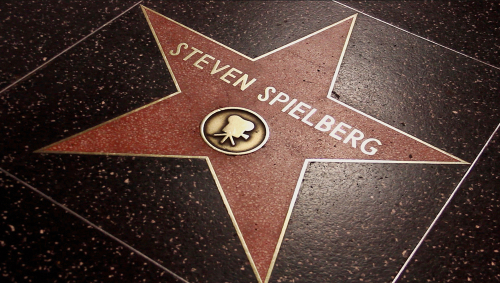
A recent number-one box-office movie was Steven Spielberg’s Disclosure Day, an alien sci-fi thriller that seemed poised to return Spielberg to his early glory days (Close Encounters, E.T.), as the wizard-in-chief of Hollywood, the most talented artist at the dawn of the blockbuster era. But Spielberg’s big openings are ever smaller, around $44 million; the public interest wanes faster, and he has no influence on the culture anymore. The magic is gone, and in fact, it’s getting hard for audiences to remember how impressive Spielberg was. But he has more movies opening at number 1 at the box office than anyone else, 18, over 50 years.
Spielberg, too, knows that America has changed, and he doesn’t like it. Disclosure Day takes place in 2026, but its fictional context is an imminent nuclear war, somehow provoked or occasioned by North Korea—we only learn snippets from TV news shows—and involving Russia. It’s reminiscent of the liberal hysteria that Trump would cause a nuclear war about a decade back, or Reagan, back in the 80s. Of course, it’s also soft on China, another big part of Hollywood liberalism. Why is the nation at DEFCON 2? What do we have to fear? If you have any familiarity with twentieth century Progressive liberalism, you already know the answer: Fear itself.
Gloomy and ridiculous as this sounds, it’s meant with incredible earnestness. Disclosure Day is one of the very rare cases in which Spielberg wrote his own story before bringing in one of his longtime screenwriting collaborators, David Koepp (Jurassic Park, War of the Worlds, Indiana Jones 4), known for writing blockbusters. What did Spielberg feel so strongly about that he would take on writing duties? A story about how the US government has been keeping aliens a secret since 1947 or so, which especially blames Nixon for paranoia, and finally blows the whistle, speaking truth to power. Will liberals ever stop kicking Nixon around?
One of the big speeches in the movie is about 79 years of terror coming to an end. Spielberg is himself 79. One would have expected him to be somewhat more grateful for the greatest career of any director since John Ford. Instead, he gives us a combination of comedy and paranoia. The paranoia centers on the male protagonist, Daniel Kellner, a cyber-security expert and former cyber-criminal—in a nod to figures like Snowden, he steals government info because his conscience won’t let him keep silent and thereby participate in covering up the government’s torture of aliens. He’s accordingly on the run from Wardex, an evil government surveillance company.
The comedy concerns Margaret Fairchild, a TV weather lady in Kansas City who goes from a restless life to saving the world over the two days the movie covers. At first, she’s trying to become a serious journalist, but she discovers she has mind-reading powers and an endless amount of goodwill toward people, helping them make life-altering decisions. This may sound like a guardian angel, but her role is mostly light slapstick. Played by Emily Blunt, one of the very few actresses who can be called a leading lady, this is the only role worth the admission price, and Spielberg himself, who has always loved the clever direction required for comedy and musicals, lavishes everything on her, including a shot in act one that lasts more than 2 minutes and 15 seconds. (The average shot length is around 6 seconds.)
But all of this is wasted. We get at least three set pieces in a TV studio, with clever camera movements suggesting that Spielberg would be better at making TV than the TV people. That’s surely true, but nobody ever asked him, and it’s too late for him to change careers now, because nobody watches TV news anymore! Margaret is supposed to first save the protagonist from the evil corporation, then get him to the TV studio to show people alien videos, as our government and media have been doing in the last couple of years. But in Spielberg’s vision, this is not a suggestion to degrade superstitions in the media—the benediction of TV on our version of ghost stories is meant to teach us all to be happy.
Margaret’s power turns out to be empathy, which is the core of morality for more Progressive liberals and has been since Jean-Jacques Rousseau taught people that the essence of morality is sincerity and compassion. At first, she can read people’s minds and helps them make decisions; then they start seeing in her the image of whoever in their lives they love most and therefore suffer most from losing; and eventually she reassures the whole world through the power of TV that the aliens love us, so we’ll be all right. Margaret got her powers because aliens abducted her and experimented on her as a child. She bravely recovers this suppressed memory and realizes that this was not abuse and that she should love the aliens.
Her fellow victim, Daniel, as an alien abductee, has a different power—mathematics. They represent the two powers of modern liberalism, technology and emotions, which guarantee Progress, forever expanding humanity, both the range of human activity and the number of people included in the empathetic relationships of humanitarianism. Technology and emotions also come together in cinema and TV, but don’t seem to work on social media or digital technology. Everyone seems quite hateful now, as though Progress had failed. So their coming together in Disclosure Day is meant to metaphorically return us to normal.
Normality, of course, would mean including everyone who is excluded, not being mean but being generous, liberating whoever is oppressed. This is how liberals think about illegal aliens and the prospect of mutilating children with irreversible surgery; that used to be called castration; now it’s called gender-affirming care. That’s the best explanation I can think of for “loving the alien,” as opposed to the familiar. To be enlightened rather than prejudiced. Destroying the past for the sake of the future is another way to put it.
The benevolent conspiracy to achieve this normality—release the aliens, save mankind—has a mastermind with the impossibly funny name Hugo Wakefield. This is the Morgan Freeman role, offering magical wisdom and making a couple of speeches about choosing love over fear. Colman Domingo, who has made a prestigious career in civil rights pictures (multiple Oscar nominations), does his best to sell you on the idea that the only thing you should love is aliens. But his exhortation is depressing, flat, and comes off as contrived. I guess this should now be called the Obama role. It goes without saying that the conspiracy is an adequately multi-racial, gender-conscious ragtag of self-sacrificing professionals, you know, DEI hires.
The antagonist, with another too-cute-to-believe name, Noah Scanlon, is played by Colin Firth. He is the head of the secret government corporation. He plays Vader to the other’s Ben Kenobi, an idealist corrupted by power and by the fear that mankind, already violently dangerous, would come unhinged if aliens were suddenly revealed to be real and in possession of superhuman powers. (It’s not clear whether fear or envy would be the apocalyptic motive.) He chases Daniel and Margaret around, always outsmarts them, which isn’t hard; he ruthlessly uses alien powers for psychic invasions of privacy, yet loses at every turn.
Why? Because he has a bad conscience, all liberals do. He has unprocessed trauma from losing his wife. He’s taking it out on the world by denying mankind the existence of aliens. Liberals think this way about everyone who disagrees with them. This is the core issue: the disagreement between the good and evil masterminds is the same as the disagreement between the Progressive and technocrat wings of the liberal movement. Both groups loved Obama, but in the Trump years, they went mad. Some chose the Russia hoax and technological censorship, if they had bureaucratic powers, others chose BLM, if they were less powerful. It’s a class war, in a sense. But nowadays, the technocrats preach abundance and would like less of the political suicide that comes from open borders, race riots burning down liberal cities, transgender extremism, etc. Spielberg is firmly, if gently, on the side of the Progressives.
Disclosure Day should have been called Hope and Change, or rather Change and Hope. It astonishes not only for the sheer waste of talent, but also because it makes it clear that we have moved beyond the Obama consensus on technology and ideology. The promise of social media in the “Arab Spring” era was Progressive domination of opinion, reforming society from marriage to foreign affairs. Instead of Progress, even liberals like Spielberg can only think of the end of the world nowadays, for example, by nuclear war. Spielberg’s offer of futurism and his revision of the post-War era are nostalgic, yet empty of real feeling. For the first time in his career, Spielberg avoids the young in his movies; nor does he have any interest in America’s 250th birthday or any other symbol or emotion that could connect him to his audience. Far from being global entertainment, Hollywood is provincial even in California. Spielberg should have just gone on Joe Rogan’s podcast and talked to him about movies and aliens for three hours. That might actually be popular entertainment.
Titus Techera is the Executive Director of the American Cinema Foundation and a culture critic for think tanks including Liberty Fund and the Acton Institute.

Pursuit of Happiness

The Rise of Latino America
In The Rise of Latino America, Hernandez & Kotkin argue that Latinos, who are projected to become America’s largest ethnic group, are a dynamic force shaping the nation’s demographic, economic, and cultural future. Far from being a marginalized group defined by oppression, Latinos are integral to America’s story. They drive economic growth, cultural evolution, and workforce vitality. Challenges, however, including poverty, educational disparities, and restrictive policies, threaten their upward mobility. Policymakers who wish to harness Latino potential to ensure national prosperity and resilience should adopt policies that prioritize affordability, safety, and economic opportunity over ideological constraints.





.jpg)



.jpg)
Deliberative Republicanism and the Triumph of the American Founding
Instead of rejecting the moral urgency of the postliberal right and left, it is fitting and proper that we redirect it through the right kind of education—both formal and informal—that can inspire affection for our Constitution.
.jpg)
The Declaration Is a Metaphysical and Political Triumph
It is the nature of genuinely lasting great texts that we observe new things in them that fit our moment.