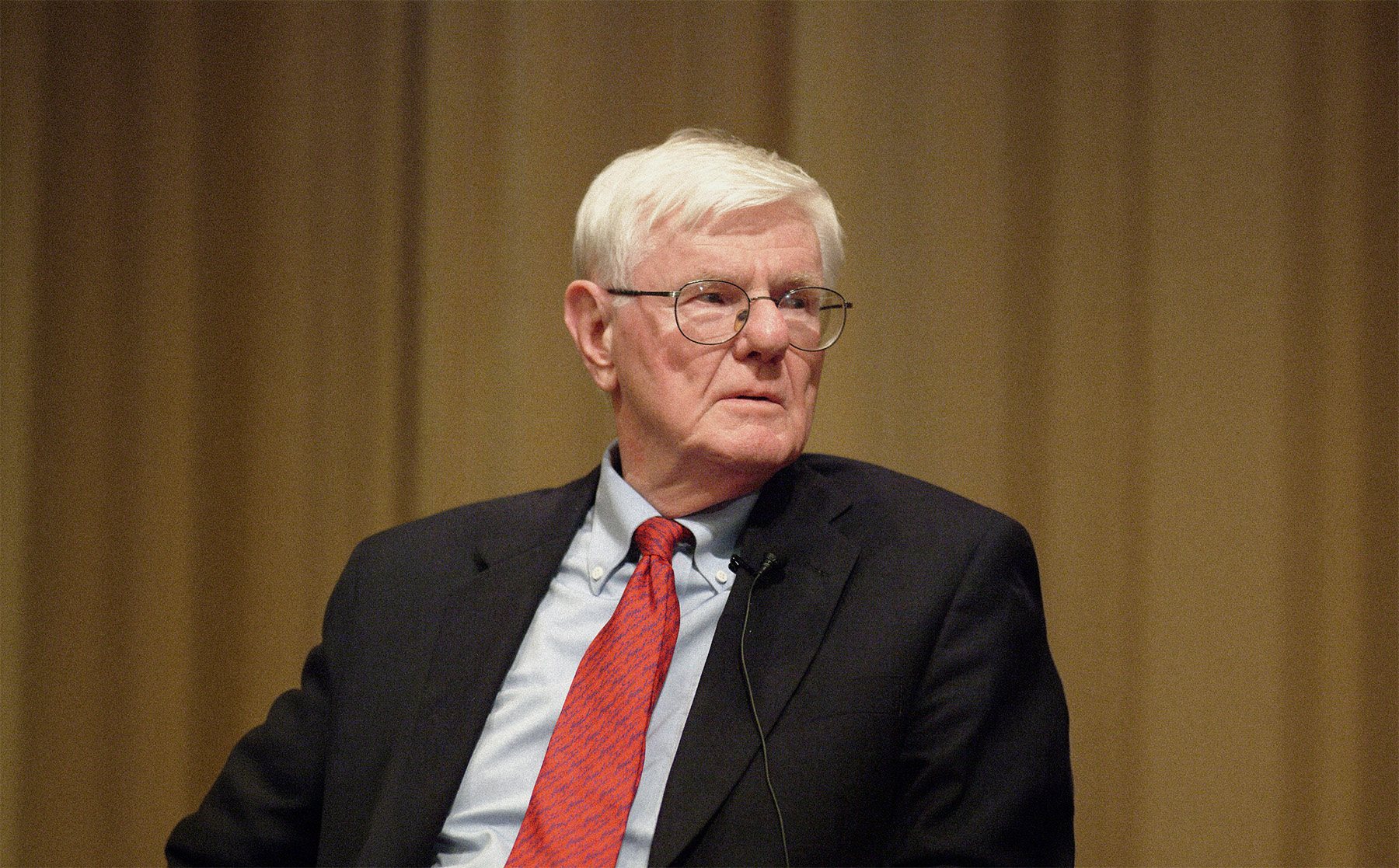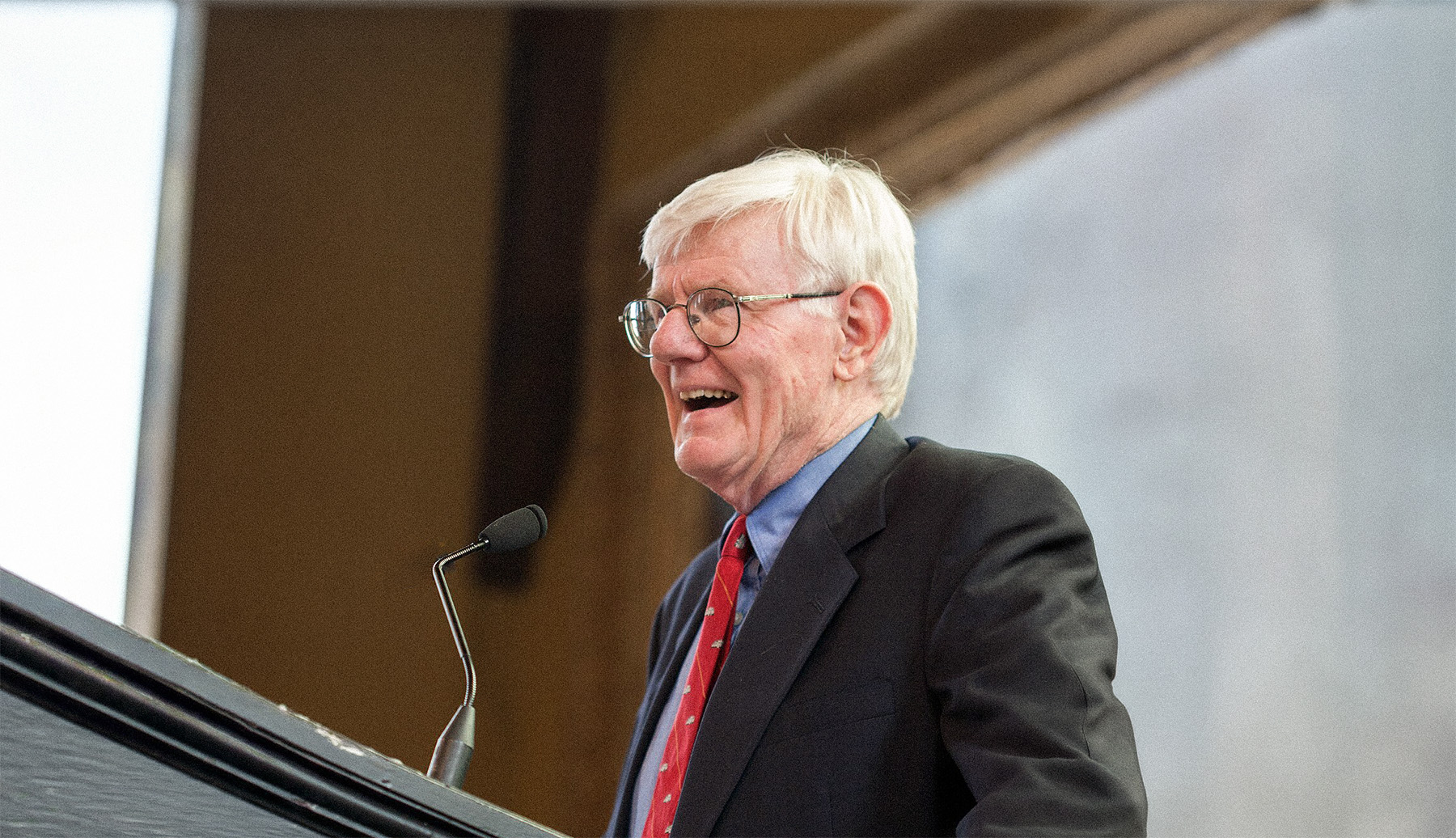
Gordon Wood Told the Truth About America

In recent years Gordon Wood was a welcome public voice of sanity and balance, in addition to being a model of scholarly probity and care.
I want to add my voice to the many that are mourning the death of the irreplaceable American historian Gordon Wood. This is an enormous loss for all of us, especially at this moment, when we are about to commemorate the 250th anniversary of our national independence, an epochal occasion about which he had much to tell us. I wish he were still here to do just that.
In addition to his brilliance as perhaps the most eminent historian of the American founding period, and his magnificent career as a teacher, lecturer, and mentor in his nearly forty years at Brown University, Gordon had become in recent years a welcome public voice of sanity and balance, in addition to being a model of scholarly probity and care, at a time when irresponsible characterizations of our past are given currency by once-eminent institutions. He was one of the historians who weighed in early and decisively against the pernicious falsehoods and misrepresentations of New York Times’s 1619 Project. (It says something sad about that once-eminent institution that it saw fit, in Wood’s Times obituary, to offer a parenthetical denial of Wood’s charges. How utterly graceless.)
It should come as no surprise to anyone who has read his work that Wood was a genial and generous man. You can detect it in his prose, which is unfailingly clear, direct, unfussy, and reader-friendly. His fine qualities of character permeated his writing about the past and illuminated his outlook, enabling him to balance the critical detachment of the professional historian with the unfeigned engagement of a genuine patriot and a true democrat. He warned constantly against the tendency of the present to take a condescending view of the past, and he did so not only out of professional scruple, but out of generosity, out of a sense of equality, out of a belief that the figures of the past deserve the same kind of fairmindedness extended to them that we would want to have extended to ourselves.
He may have spent his life working mainly in the Ivy League, but he was no blueblood. He was an affable, hardworking guy from a working-class family in Concord, and you could hear his origins in his unmistakable Yankee accent. A great historian could also be a regular guy. Although he studied at Harvard under the august Bernard Bailyn and excelled in all he did, he acquired none of the mandarin manners of the higher professoriate but remained himself. His sympathy for the lives and ways of ordinary people informed his most important work and was part of his visceral love of democratic America. His book The Radicalism of the American Revolution was in large measure a tribute to the Revolution’s astonishing achievement in ushering in a genuinely new world, one in which feudalism and monarchy were a dead letter, the elite values of pre-Revolutionary classical republicanism has lost their appeal, and there was a general awareness that, in Jefferson’s famous words, “the mass of mankind has not been born with saddles on their backs, nor a favored few booted and spurred, ready to ride them legitimately, by the grace of God.”
Instead, Wood wrote, America would find its greatness in a new way: “by creating a prosperous free society belonging to obscure people with their workaday concerns and their pecuniary pursuits of happiness—common people with their common interests in making money and getting ahead.”
One other related point. Wood once pointed out in the New York Review of Books, where he was a frequent contributor, that “historical memory is as important to our society as the history written by academics.” He strongly believed in the value of professional history, but he did not believe that the historical profession has the exclusive right to determine what counts as our history. A very generous and sensible way to see things. Yet some of the most eminent historians of our era, like the French historian Pierre Nora, have declared that history is the enemy of memory; or as the British historian J.H. Plumb put it, true history is “destructive,” and “its role is to cleanse the story of mankind from those deceiving visions of a purposeful past.” Wood set himself firmly against such tyranny, and we can be enduringly grateful that he did.
I last saw him this past March, when he came to Hillsdale to lecture. As the date approached, he worried that his vision was playing tricks on him, and he might not be able to read from his lecture notes. So we decided to turn the lecture into a dialogue between the two of us, which proved a sheer joy. He showed few signs of being ninety-two, not in his quickness or mental acuity or his capacity to express himself with his usual directness, or to answer questions from the audience with cogency and a sense of fun. We could have gone on all night. I wish we had.
Wilfred McClay holds the Victor Davis Hanson Chair in Classical History and Western Civilization at Hillsdale College, where is also Professor of History.

Pursuit of Happiness

The Rise of Latino America
In The Rise of Latino America, Hernandez & Kotkin argue that Latinos, who are projected to become America’s largest ethnic group, are a dynamic force shaping the nation’s demographic, economic, and cultural future. Far from being a marginalized group defined by oppression, Latinos are integral to America’s story. They drive economic growth, cultural evolution, and workforce vitality. Challenges, however, including poverty, educational disparities, and restrictive policies, threaten their upward mobility. Policymakers who wish to harness Latino potential to ensure national prosperity and resilience should adopt policies that prioritize affordability, safety, and economic opportunity over ideological constraints.








Spielberg’s Empty Hope
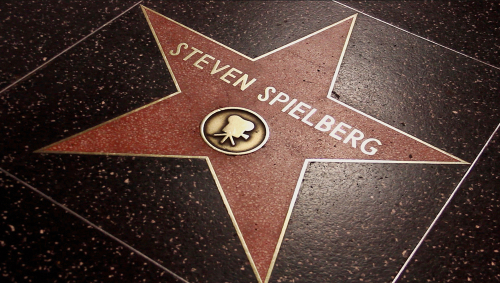
'Disclosure Day' should have been called 'Hope and Change,' or rather 'Change and Hope.'
.jpg)
Deliberative Republicanism and the Triumph of the American Founding
Instead of rejecting the moral urgency of the postliberal right and left, it is fitting and proper that we redirect it through the right kind of education—both formal and informal—that can inspire affection for our Constitution.
.jpg)