Kevin Warsh and the Future of Fed Communication
.avif)
A central bank that makes fewer forecasts could encourage more independent judgment in markets.
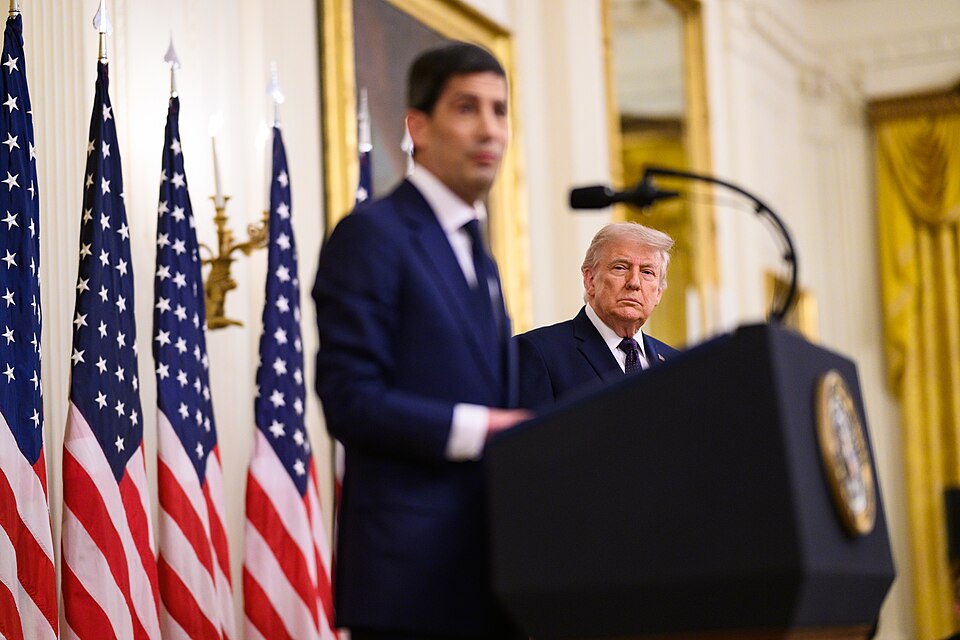
At Kevin Warsh’s first press conference as Chair of the Federal Reserve, attention focused not only on the interest-rate decision but on what his leadership would mean for the institution itself. The question was unusually consequential. The Fed has come under intense political scrutiny in recent years, including repeated criticism from President Donald Trump, while inflation has remained above the central bank’s two percent target. Warsh therefore took office facing two simultaneous tests: whether he could restore confidence in the Fed’s commitment to price stability, and whether he could preserve its independence while changing how it operates.
His first press conference offered early insights. Warsh signaled that his chairmanship may prompt a substantial reconsideration of how the Fed communicates, gathers information, and makes decisions. One indication came from the Fed’s “dot plot.” Four times a year, FOMC participants submit projections for economic growth, unemployment, inflation, and the appropriate path of the policy rate, which the Fed publishes in its Summary of Economic Projections. The projections appear as anonymous “dots” on a chart, with each dot showing where one official thinks the policy rate should be at the end of a given year. At the Fed’s June meeting, there were only eighteen dots from nineteen participating officials. Chair Warsh announced that “I did not submit a dot. For me, it’s not helpful in the conduct of policy.”
Warsh explained to reporters that the projections on the dot plot are written with pencils equipped with “big erasers.” Conditions are uncertain and change quickly. The dots represent officials’ views of the most likely of several scenarios, not outcomes in which they had great confidence. Warsh’s decision not to submit projections may look like a minor dispute over a chart understood mainly by bond traders. It is not. It points toward a fundamental reconsideration of what the Federal Reserve should tell the public and how power should be divided within one of the nation’s most important governing institutions.
Warsh has begun a sort of information experiment at the Fed. His premise is that the modern Fed has become so determined to guide markets that it may have impaired markets’ ability to guide the Fed. That premise deserves serious consideration. A central bank that makes fewer forecasts could encourage more independent judgment in markets. But a central bank that explains less about its decision rules could also create confusion. And if formal projections become less important, markets and the public may rely even more heavily on the chair’s informal interpretation of the committee.
Why the Fed Communicates
The Federal Reserve influences the economy partly by setting a short-term interest rate, the federal funds rate. That rate affects other borrowing costs, including rates on mortgages, business loans, credit cards, and government debt. Higher interest rates tend to restrain spending and inflation; lower rates tend to encourage borrowing, investment, and employment.
Monetary policy works partly through expectations. Longer-term borrowing costs, such as mortgage and business-loan rates, depend not only on the interest rate the Fed sets today but also on what investors expect the Fed to do in the future. By signaling that rates are likely to rise or fall, the Fed can affect financial conditions before it changes its policy rate.
This practice, known as “forward guidance,” is a relatively recent development in the Fed’s history. For much of the twentieth century, the central bank disclosed little about its decisions, much less its plans. It did not announce changes to its target interest rate after every meeting until 1994. Since then, statements, minutes, press conferences, and economic projections have become increasingly important tools of monetary policy. Forward guidance assumed an especially prominent role after the 2008 financial crisis, when short-term rates approached zero and promises about future policy offered another way to influence the economy.
The dot plot, introduced in 2012, is one product of this broader turn toward communication. Four times a year, it displays each FOMC participant’s projection of the appropriate federal funds rate. The dots are formally conditional forecasts, not committee decisions or promises. Yet markets routinely treat their median as the Fed’s expected path for rates, and even small changes can move asset prices.
That influence brings benefits. Clearer communication can make policy more predictable, improve its transmission through financial markets, and strengthen accountability. But the dot plot can give tentative judgments more authority than officials intend. What is meant to convey a range of views can instead create a misleading impression of precision and consensus.
The Fed’s Echo Chamber
Warsh’s deeper point concerns the relationship between the Fed and financial markets. “Financial market prices are probably the most important source of information to guide central bankers,” he explained at the press conference. Bond yields reveal investors’ expectations about growth, inflation, and future interest rates. Stock prices reflect judgments about corporate profits and economic conditions. These prices are valuable because markets aggregate information dispersed among millions of participants.
But the Fed also heavily shapes financial prices. Officials publish forecasts and describe the likely direction of policy. Investors adjust asset prices in response. Because investors care not only about economic conditions but also about what other investors will do, they may give the Fed’s signals more weight than their accuracy warrants. They follow those signals partly because they expect everyone else to follow them. A prominent public signal can crowd out private analysis, making market prices less effective at aggregating decentralized information. The more completely the Fed guides the market, the less independent guidance the market may be able to offer the Fed.
Warsh put the problem directly: “When all the financial markets are doing is reflecting back what we’ve said, then we’re taking the most important source of information and we’re being blind to it.” By reducing forward guidance, he hopes to create a system in which investors and policymakers assess economic data more independently, allowing market prices to bring genuinely new information back to the Fed.
This is a serious argument for reconsidering the dot plot. But it is not an argument for the Fed simply to say less. It matters what kind of communication they reduce. A central bank can communicate at least three different things. It can offer a forecast of where interest rates are likely to go. It can commit to keeping rates on a particular path. Or it can explain its reaction function—the principles governing how it will respond as inflation, employment, and financial conditions change.
The dot plot is officially a set of conditional forecasts, not a commitment. In practice, however, markets often treat its median as the Fed’s promised path for interest rates. Once investors organize their expectations around that path, officials may become reluctant to depart from it for fear of unsettling markets. A tentative forecast can thus begin to constrain policy like a commitment.
That gives Warsh a strong case for reducing the dot plot’s false precision. But eliminating forecasts should not mean obscuring the Fed’s decision rules. The Fed need not predict where rates will be next December, but it should explain what changes in inflation, employment, or financial conditions would make higher or lower rates appropriate. The goal should be conditional clarity rather than silence: fewer predictions about what the Fed will do, and clearer explanations of how it will respond to what happens.
When Formal Guidance Recedes
If the Fed reduces its reliance on standardized communications such as the dot plot and explicit forward guidance, how will markets and the public learn what the committee thinks?
In practice, they may rely more heavily on the chair. A committee formally governs the Federal Reserve. The seven members of the Board of Governors serve alongside presidents of the regional Federal Reserve Banks. This structure is intended to incorporate different perspectives and regions. But the chair has unusual influence. He sets the tone of meetings, helps frame the questions before the committee, builds consensus, and explains the decisions at the press conference.
Formal communications partly constrain that authority by providing a common record of the committee’s views. The dot plot shows the distribution of projections, even if the dots are anonymous. Minutes record areas of agreement and disagreement. Transcripts eventually reveal how arguments developed.
If those forms of disclosure are reduced, the chair’s interpretation of the committee may carry more weight. Investors will listen more closely to his word choice, his characterization of dissent, and his description of the economic outlook. A reform intended to make markets less dependent on Fed signals could therefore make them more dependent on signals from the chair himself.
This possibility does not necessarily make Warsh’s reforms misguided, but it raises the importance of institutional issues surrounding how the committee organizes decisions. Warsh noted that the FOMC considered only one principal policy proposal at the meeting rather than the range of alternatives typically presented. That may focus the discussion, but it also increases the chair’s agenda-setting power. A committee comparing several serious options exercises a different kind of judgment from one asked to accept or reject a single recommended course. A reduction in formal guidance should accompany institutional safeguards that preserve collective decision-making and public accountability.
Accountability Without False Precision
Warsh appears to prefer a straightforward outcomes-based standard of accountability: judge the Fed by whether it delivers price stability. That emphasis is understandable. Inflation has exceeded the Fed’s two percent target for years, and no amount of communication can substitute for achieving the Fed’s statutory objectives.
But outcomes alone are not enough. Monetary policy affects the economy with long and uncertain lags. A poor result may follow a sound decision because of an unforeseen shock, while a weak decision may temporarily appear successful because circumstances turn out favorably.
The public therefore needs to know more than whether inflation stayed close to target. It needs sufficient information to judge whether officials used available evidence responsibly, revised their views as conditions changed, and generally acted prudently. This is especially important for an institution that possesses considerable independence from elected officials.
That does not require preserving every feature of the current communications regime. The dot plot can create a false sense of precision. Forward guidance can become a substitute for independent market analysis. Anticipated disclosure can improve preparation and discipline, but it can also encourage conformity and alter the character of internal deliberation. As Morris and Shin emphasize, democratic transparency is broader than the publication of economic forecasts: a central bank can reconsider the latter without abandoning the former. Warsh is right to question whether practices adopted over the past few decades still serve their original purposes.
But removing one form of communication increases the importance of what takes its place. If the Fed publishes fewer forecasts, it will need to explain more clearly how it interprets economic developments. If it provides less formal guidance, it will need to guard against excessive reliance on the chair’s informal signals. And if internal deliberations become less visible, the committee's final explanation of its reasoning will need to be more informative. The central question is not how much the Fed communicates, but what its communication allows outsiders to understand. Ultimately, Congress and citizens need to be confident that decisions reflect the Fed’s mandate rather than political pressure or unchecked personal discretion.
Warsh’s concern about the information echo chamber is persuasive. A central bank that becomes the dominant source of expectations can weaken the independent market signals on which it relies. The Fed should not tell investors what to think and then treat their response as new information. Yet less guidance will not automatically produce better information. Markets may become more independent, or they may simply devote even greater attention to the chair’s words, manner, and reputation. Volatility may reflect improved price discovery or uncertainty about how the Fed will respond. A quieter institution may be more restrained, but it may also leave more room for personal discretion.
Warsh is right that the Federal Reserve should not speak so loudly that it hears only its own echo. The Fed should abandon overly precise predictions without becoming obscure. If it provides less forward guidance, it should also explain its reaction function more clearly and make it clear that the authority of the chair remains embedded in an accountable institution.
Carola Binder is a macroeconomist and economic historian at the University of Texas at Austin. Her research focuses on monetary policy and inflation expectations. She is the author of Shock Values: Prices and Inflation in American Democracy (University of Chicago Press, 2024).

Economic Dynamism


.jpg)


.jpg)


.jpg)


An AI Commencement Address That Might Not Elicit Boos
Someone has to dare to point the path forward in those communities. We need many more Nehemiahs.

A Tech Republic, If You Can Keep It
Before destroying the sources of American technological dominance, perhaps we should consider what would happen if the U.S. finds itself envying technological advances happening elsewhere