Eating the Rich, Ending Civilization

Many have concluded that what belongs to someone else really belongs to others. The only serious question is how much to take.
There’s something that should unsettle anyone who thinks carefully about a free society, and it has nothing to do with tax rates or revenue projections. It’s the cheerful ease with which large numbers of otherwise decent people have concluded that what belongs to someone else really belongs to others and is, in principle, available for redistribution. The only serious question is how much to take.
I am not primarily troubled by bad tax policy, though there’s plenty of that on offer. I am troubled instead by something deeper: a growing popular instinct that treats the accumulated wealth of others as a kind of commons, a shared resource somehow misallocated to private parties who did nothing to earn it, resulting in a faulty income distribution that needs to be corrected. Watch the polling. Listen to the applause lines. The enthusiasm is real, not reluctant. People are not grimly accepting a necessary evil. They are genuinely excited about the prospect of taking the fruits of what someone else built – what someone else has earned.
This lust for other people’s money should disturb us.
The standard defense of aggressive wealth taxation rests on the empirical claim that billionaires don’t pay their fair share. But it also often rests on a moral claim that their wealth is not entirely theirs, ethically speaking. The first claim is wrong, built as it is on arithmetic that conflates unrealized gains with income and ignores the taxes already paid on the capital that generated those gains. But the moral claim is the more revealing one, because it persists even when the numbers are corrected.
Tell a committed wealth-tax supporter that the Forbes 400 already pay substantial effective tax rates and watch what happens. The argument shifts. The math wasn’t really the point, they insist. The point is that rich people have too much money, and that having too much money is itself an offense that justifies taking it, especially if the funds taken are said to be used for heartwarming causes like raising teachers’ pay or increasing Medicaid funding.
This is where I find myself genuinely uncomfortable because something important is quietly yet dangerously being abandoned.
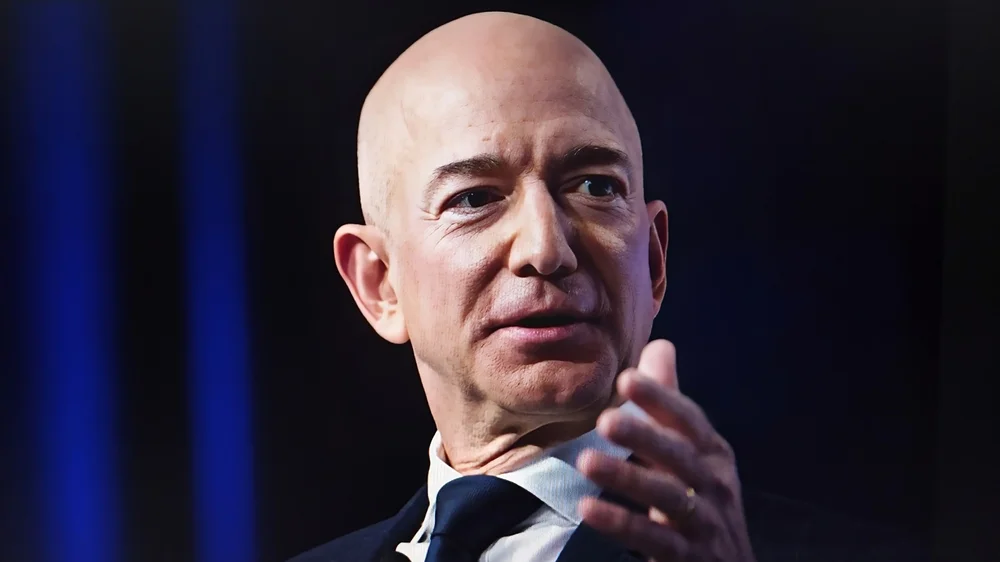
What is being abandoned is the principle that legitimate production creates legitimate ownership. Jeff Bezos did not find his wealth lying in a field. Musk did not inherit a pile of cash. Nor did these men steal their fortunes from others. Their fortunes were built through sustained judgment, risk, and entrepreneurial effort in markets where consumers voluntarily chose to spend (or not to spend) their money. (Or at least mainly so; see below.) The causal chain from effort to wealth is visible and traceable. Yet the popular conclusion is that the endpoint of that chain is somehow provisional, held subject to democratic revision whenever a current majority finds the accumulation distasteful.
A free society cannot function on such logic. Once you establish that democratic majorities may vote to claw back wealth they find excessive, you have crossed a line we had refused to cross before. The same moral grammar that justifies a wealth tax on ten-figure fortunes also justifies, with equal coherence, a wealth tax on seven-figure ones. The argument rooted in “too much” has no natural stopping point, because “too much” is always defined by whoever is doing the taking.
This discomfort is not eased by acknowledging that some large fortunes benefited from government-granted privileges and cronyism. The examples are real and worth naming.
Agricultural conglomerates collect billions in subsidies that their lobbying operations helped design. Elon Musk’s own empire has benefited substantially from federal electric-vehicle tax credits, though they are not behind the company’s success. These are legitimate grievances, in part because they often go to companies that do not need them; anyone serious about free markets should share them.
But the correct response to corporate welfare is to eliminate corporate welfare. It is not to declare open season on every large fortune regardless of how it was built. The logic that moves from “some billionaires benefit from government favoritism” to “all billionaire wealth is therefore available for seizure” is not a principled argument. It allows the people making this argument to skip the hard work of identifying which privileges to eliminate, which regulations enable rent-seeking, and which government programs create the market distortions they claim to deplore. Attacking the wealth that resulted from cronyism is far easier than dismantling the cronyism itself, and it has the added political benefit of being popular.
If the concern is that government-granted privileges create illegitimate fortunes, the answer is to revoke those privileges. End the subsidies. Fill in the regulatory moats. Break government-erected barriers to entrepreneurship. Stop the revolving door between industry and the agencies that are supposed to regulate it. That is a reform agenda worth having. It is also, not coincidentally, the one that the wealth-tax movement shows almost no interest in pursuing.
This discomfort is not eased by the underlying facts. Whatever one thinks of billionaires, they already pay a disproportionately large share of the tax burden, a fact that rarely surfaces in popular debate. Economist Adam Michel of the Cato Institute, arguing at a recent Soho Forum debate against the resolution that billionaires should pay a higher share of federal taxes, laid out the numbers plainly: the top 0.1 percent of earners, roughly 200,000 families, pay more than 16 percent of all federal taxes, nearly double their share of national income, and more than the bottom 70 percent of Americans combined.
The oft-cited claim that billionaires pay an 8 percent tax rate turns out to be a statistical construction that puts unrealized gains, wealth that fluctuates by billions daily and has never been realized as income, in the denominator. When income is measured as the IRS measures it, the wealthiest American billionaires pay an average effective federal rate of 34 percent and a total rate approaching 60 percent when state and local taxes are included. The United States, Michel notes, already has the most progressive tax system in the developed world.
None of these facts, as important as they are, settles the moral argument. But they do suggest that the popular image driving the confiscatory enthusiasm is not grounded in fact. It’s a narrative designed to make voters feel that grabbing what belongs to someone else is not grabbing at all. But, alas, such grabbing is indeed grabbing.
In fact, Frédéric Bastiat called the use of law to accomplish what would be recognized as theft if done without it, legal plunder. What disturbs me about the current moment is that so many politicians advocate for it, and that some in the public seem persuaded that this is a question of justice rather than of appetite. It is dangerous that the framing has shifted so completely that opposing a wealth tax sounds, to many ears, like defending the indefensible.
The honest version of the wealth-tax argument is simple: we want a huge chunk of rich people’s wealth; there are more of us than there are rich people; and so we have the political power they cannot escape. That argument would at least be transparent. But what we get instead is an elaborate moral architecture built to disguise a much older and less flattering human impulse.
I believe in a society where what you build is yours. Nothing more, nothing less. A civilization that forgets this principle does not remain civilized for long.
Veronique de Rugy is the George Gibbs Chair in Political Economy and Senior Research Fellow at the Mercatus Center at George Mason University. She is also a nationally syndicated columnist and contributing editor to Civitas Outlook.

Economic Dynamism


.jpg)


.jpg)


.jpg)


Social Mobility Wins
When people live within an environment offering good jobs, good education, social networks, and a culture of self-improvement and hard work, they experience progress in a way that undercuts the philosophical rationale that socialists need to justify the policies they advocate.
Kevin Warsh and the Future of Fed Communication
Warsh is right that the Federal Reserve should not speak so loudly that it hears only its own echo.