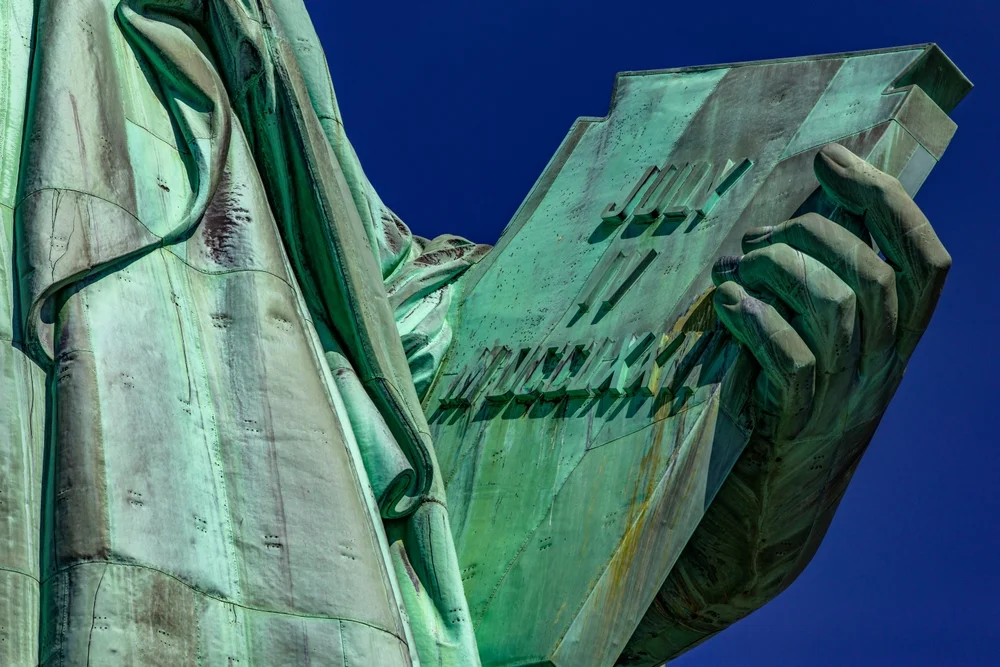
The Declaration and the American Self-Governing Spirit

Matthew Spalding's The Making of the American Mind has many admirable features, but it should be read carefully, in multiple senses of the word.
A visitor to Rome, even in the twenty-first century, will find it hard to avoid the image of the Lupa Capitolina, the she-wolf who supposedly suckled Romulus and Remus in 753 BC on the Palatine Hill. In Switzerland, William Tell’s crossbow and apple hold a similar place, adorning monuments, coins, and exported Swiss goods. Marianne serves this purpose for the French, breast bared and flag thrust skywards, sporting the red cap of the freed slave. Each one expresses something of the identity of the people who embraced it, with Marianne symbolizing the ideals of the French Revolution, and William Tell the rejection of tyranny and the Swiss love of independence and neutrality. The wolf is particularly arresting, as a primal, pre-modern image that fuses Rome’s predatory fierceness with her capacity to build and nurture. The Lupa Capitolina reminded the ancient world how much better it was to be Rome’s friend than her foe.
What stories, symbols, or texts are foundational to American identity? Reflecting on the question, one notices immediately that America’s history is distinctive. We are not, like the Romans, an ancient people, but neither do we take pride, as the French do, in having intentionally jettisoned a traditional past in favor of Enlightenment ideals. Ours was a more conservative revolution, and yet the United States was born in revolution, founded in the deliberate choice of American colonists to risk everything to win the right to govern themselves. But the story has yet another twist. Despite those martial origins, Americans have never viewed our founding primarily through a military lens. Though George Washington is rightly honored, he is, if anything, more revered for his willingness to lay down power (both political and military) than for his genius in exercising it. As the first British colony to win its independence on the battlefield, we nevertheless think of our founding first and foremost as a legislative triumph, the work of politicians, intellectuals, and orators. We are one nation, under God, founded in political theory.
Matthew Spalding’s The Making of the American Mind: The Story of Our Declaration of Independence is also a work of political theory. But it is a pious work, presented not as an original argument but as a patriotic exercise in recollection and recovery. Spalding begins by telling the story of the Declaration’s drafting. He then goes through it clause by clause, providing historical context, textual and linguistic analysis, and philosophical commentary on each segment. These pieces are woven together in a readable style, with a tone reminiscent of a college lecture or documentary. The chapters build on each other, but each one can also be read as an independent essay, an exposition of some fragment of the colonial American mind.
The result is a hybrid of critical commentary and patriotic reflection. The historical component is significant, weaving in military and political history alongside the participants’ own stories. Spalding also illuminates the text by discussing word choices and phrasings, using other documents from the period to capture nuances. We get details on the Convention’s proposed edits to the original draft, and on the debates that followed, which helps readers appreciate the document as an achievement of the entire Continental Congress, not just the product of Jefferson’s own pen. Details of British law and administration are included to expand readers’ appreciation of colonial grievances. Altogether, the book has much to offer from the standpoint of civic education. Spalding is not just a historian, though. His undisguised goal is to invite readers “to join me in falling in love with America again, or perhaps for the first time.” One appreciates his candor: this is a love note to the Founders.
Spalding clearly reads the Declaration as a high-minded document, rich in philosophical content and brimming with noble purpose. It is also, in his mind, the defining work of the American political tradition. He opens the book with a speech from Abraham Lincoln praising the “sacred principles” of the Declaration. The final chapter follows the later lives and contributions of the “Iron Men” of the Continental Congress, another hat-tip to Lincoln, who used that phrase to describe the Revolutionary generation. Spalding believes that America is “a good country, even a great country, perhaps the greatest,” mainly because “it is dedicated to, and constantly aspires to uphold, permanent principles about human liberty that are true.” It’s not dismissive, but merely descriptive, to say that this book embraces the Declaration as a founding myth, the Lupa Capitolina of the American people. Spalding wants to tell Americans who they are.
Myths can be true, of course, and they nearly always contain certain truths along with aspirations and shared loves. What truths, aspirations, and shared loves does Spalding see in the American project? Who does he think we are?
Three key features emerge from the book, which I will mention in descending order of importance. First and most crucially, Spalding argues that Americans are a people grounded in both nature and religious faith. Though these have often been in tension, he argues that the Declaration joined the two together in that highly charged phrase, “the Laws of Nature and of Nature’s God.” Spalding lays the groundwork for this signature point by favorably contrasting the American political tradition with the more radically rationalist French alternative, and also noting the Aristotelian-Thomist foundation of natural law. He then considers that many colonists came to America to escape restrictions on worship; they thus placed a high value on the freedom to worship God as they saw fit. Bringing these pieces together, he credits the Declaration with forging “a practical solution at the level of politics and political morality” to the age-old problem of the Two Kingdoms. “Reason and religion, self-government and religious faith are made friends and allies so that their agreement can guide and support political life.” From there, he moves gracefully into a ringing celebration of equality, rights, and the pursuit of happiness.
After so much high-flown talk, the next segment comes a little closer to earth, as Spalding discusses prudence and good statesmanship, attributing great importance to the choice of prudentia, practical wisdom, and not sophia, wisdom itself, as a central focus of the Declaration. It seems significant to him that the colonies felt it necessary to present reasons for rejecting British rule, beyond a simple desire for self-government. They had concrete complaints against this particular king, which they laid out in some detail, mainly that King George had failed to grant the Americans the rights and protections properly owed to British subjects. It would seem to follow that they were not viewed as subjects, in which case they ought to be permitted to govern themselves. Spalding approves of course, but in praising Americans as a prudent people, he is not just separating us from the imprudent French (though that’s part of it). He is shifting the emphasis of the American founding away from liberty and towards natural right, the core of his political view.
The final chapter of Spalding’s textual analysis, on “Our Sacred Honor,” draws together multiple data points to argue that the framers of the Declaration were devout Christian men acting in good faith and conscience, living out what they clearly saw as a providential purpose. He notes how the Convention beefed up the theological content of the original draft by adding references to God and Providential purpose, scoffing at the notion that this could be viewed as an expression of secular rationalism. He concludes by noting that the Declaration is in many ways a generous document, restraining rage and recrimination and instead emphasizing the colonists’ willingness to restore friendly relations with Britain under appropriate circumstances. The point is clear. American independence was not the achievement of a resentful rabble. These were virtuous men. They were gentlemen.
This is a beautiful view of the American Founding. Is it too beautiful? One hates to ask this question, particularly on the eve of such a momentous anniversary, and even more given the epidemic-level oikophobia in this nation, which is continually spawning new self-loathing initiatives: the 1619 Project, the Zinn Education Project, Ibram Kendi’s Center for Antiracist Research, and so on. One can readily sympathize with his motivations. Against the rising tide of ressentiment, he wants to offer a more elevated and aspirational vision, persuading his countrymen to let go of their grasping resentment in favor of natural law, prudent statesmanship, and magnanimous leadership. I wish him all success in that mission.
One needn’t be an oikophobe, however, to approach such intensely pious narratives with a measure of wariness. People who rightly dismiss men like Zinn or Kendi may still find value in more worthy counterpoints to Spalding’s view of the founding: traditionalists like Russell Kirk, Madisonian structuralists like George W. Carey, or originalist thinkers in the mold of Antonin Scalia. The works of those men might lead readers to reflect on how founding myths, though often beautiful and imbued with meaning, can also be brittle, self-aggrandizing, and vulnerable to malevolent manipulation. Founding myths are a primary wellspring of political ideology, with all its attendant evils, and by now these problems should be familiar to historically literate people. The most obvious arises when a society has changed to the point where a thick founding vision can no longer be robustly realized. That can lead to civic unrest or just despair among those who remain deeply attached to that view. The Constitution, by providing a dynamic mechanism for deliberation and negotiation, offers more resources for moving forward when society is riven by deep disagreement. That’s one good reason for enshrining the Constitution, not the Declaration, as America’s most defining political document.
Another relevant problem arises when an idealized founding myth deters people from wrestling productively with perennial questions that cannot truly be resolved in a single beautiful synthesis, which, however moving, was still bounded in many ways by the concerns of a particular group of people in a particular moment. Spalding’s narrative is highly vulnerable to this kind of critique. Do “Nature” and “Nature’s God” really join hands so readily as he implies, or does that formulation put a deceptive gloss on hard questions that require more attention? Meanwhile, if “prudence” approved American independence, what lessons should we draw from this about national sovereignty more generally, and when or why a particular people should have it? Reflecting on that point, one notices something else. This book says remarkably little about freedom. Is that not among the things that Americans love?
Of course, we need not decide whether to value the Declaration or the Constitution. They are both extraordinary texts, authored in the same period and by many of the same men. Eleven years from now, we’ll get to celebrate the latter, and perhaps we could use this year’s events to set the stage for even greater festivities up the road. Coming to the end of Spalding’s missive, I will simply say: let’s do that.
The Making of the American Mind has many admirable features, but it should be read carefully, in multiple senses of the word. The Declaration of Independence does indeed represent an immense achievement by some fairly extraordinary men. To deliberate in such a deeply serious way, with war in the background and civil unrest simmering through the colonies, was a remarkable feat. The text remains deeply moving to this day, intentional but also ringing with noble purpose; it is fitting for Americans to read it in a pious spirit, not just admiring but actively wanting to be those people. Its issuance represents a great moment in American history. But it remains, in the final analysis, a human event.
Rachel Lu is senior editor at Law & Liberty and a contributing writer at America magazine and National Review. She has a PhD in philosophy and writes on politics, culture, religion, and family life.

Politics
%20Richard%20Samuelson%20%20-%20Is%20American%20Nationalism%20Still%20Creed-able_-1.jpg)
Is American Nationalism Still Creed-able?
We are not there now, but there is reason to worry that the United States is in danger, if we are not careful, of ceasing to be a nation with the principles of 1776 at its core.
National Civitas Institute Poll: Americans are Anxious and Frustrated, Creating a Challenging Environment for Leaders
The poll reveals a deeply pessimistic American electorate, with a majority convinced the nation is on the wrong track.
.webp)
%20(1).avif)


How Occupational Licensing Hurts the Poor and Holds Back Growth in America and Around the World
Occupational licensing hurts the poor and holds back growth in America and around the world.
Why Gloria Romero’s Campaign for Obscure Office Will Change CA GOP
Gloria Romero is California’s 'basta ya' candidate.


.jpg)
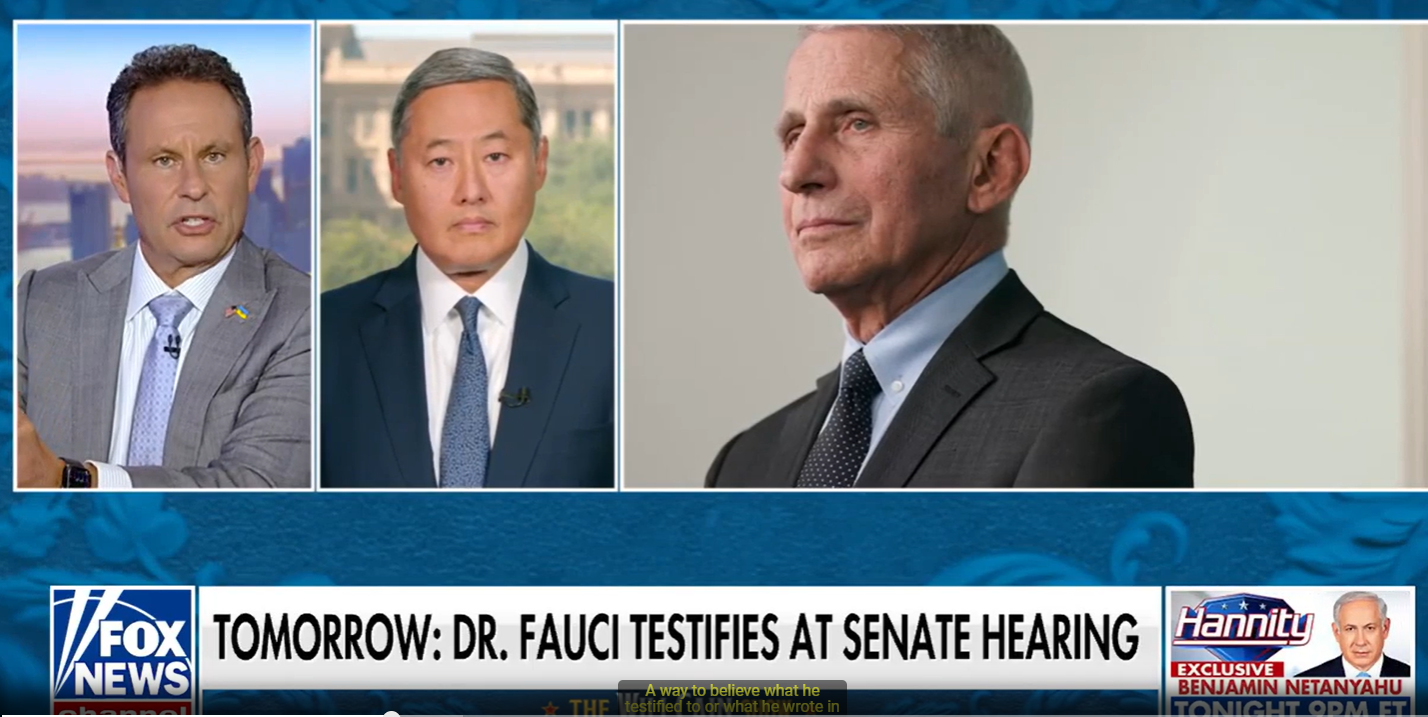
The Fall of Fauci
The greater the scope of authority granted to a single individual, by circumstance or deliberate action, the more important scrutiny and accountability become.
Can Britain’s Next Prime Minister Escape the Net Zero Trap?
Britain has burned through five Prime Ministers and is paying some of the highest electricity prices in the world.