Trumpadelic

Is Trump’s new executive order psychedelic medication or hallucinogenic bait?
On April 18, 2026, President Donald Trump signed an Executive Order (EO) to ease the pathway for potential legalization of hallucinogenic drugs that, under current federal law and medical standards, cannot be prescribed for any therapeutic use because they have not been proved to be safe, effective, and uniform, as required by the Federal Food, Drug, and Cosmetic Act (FDCA). To be sure, the order does not, according to its terms, demand that hallucinogens be legalized. But it essentially directs several federal agencies to clear the runway for the potential approval of hallucinogens as medical treatments, particularly for depression and post-traumatic stress disorder (PTSD).
The EO has the following five major components: First, the Food and Drug Administration (FDA) must provide “National Priority Vouchers to appropriate psychedelic drugs that have received a Breakthrough Therapy designation and are in accordance with the criteria of the National Priority Voucher Program.” Second, the Department of Health and Human Services (HHS) and Drug Enforcement Administration (DEA) must “establish a pathway for eligible patients to access psychedelic drugs” under the Right to Try Act and the research components of the Controlled Substances Act of 1970 (CSA). Third, HHS must provide federal research funds and “technical assistance” to states “that have enacted or are developing programs to advance psychedelic drugs for serious mental illnesses.” Fourth, HHS, FDA, and the Department of Veterans Affairs (DVA) must collaborate with the private sector “to increase clinical trial participation, data sharing, and real-world evidence generation regarding psychedelic drugs.” Fifth, the Department of Justice must consult with HHS regarding the rescheduling of “any product containing a Schedule I substance that has successfully completed Phase 3 clinical trials for a serious mental health disorder, so that rescheduling, if appropriate under [the FDCA], may proceed as quickly as practicable.”
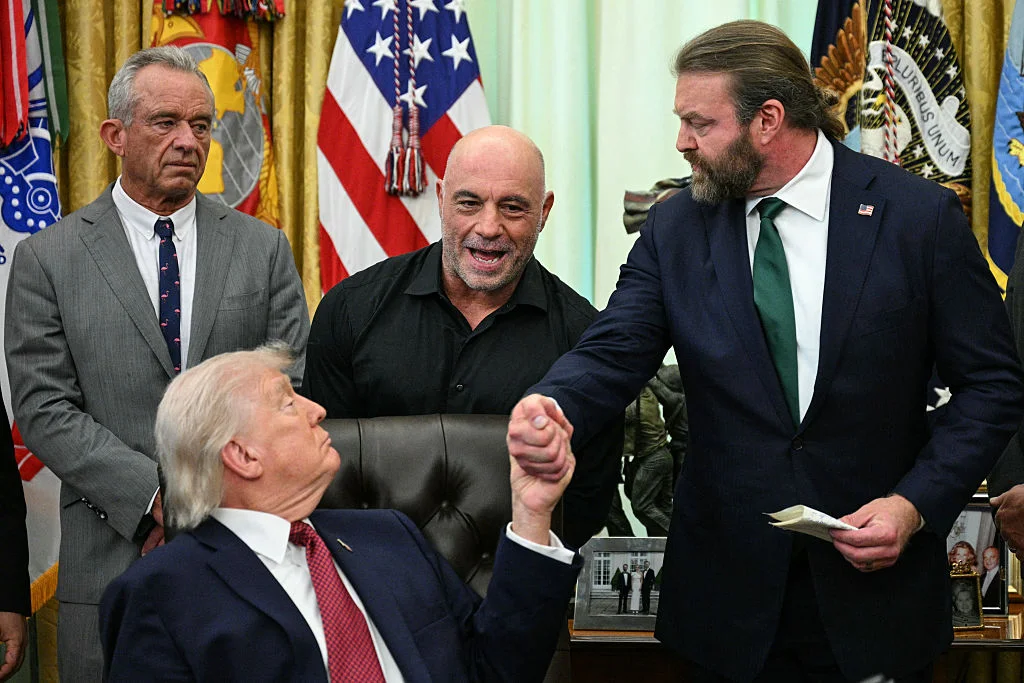
At bottom, the president—someone who is neither a physician nor a scientist, someone who never campaigned on the promise to legalize hallucinogenic drugs, and someone whose poll numbers have dropped precipitously over the last month—has seemingly decided—without first obtaining any public input into the matter—that drugs no physician may prescribe on pain of a criminal prosecution should soon be available to the public at a pharmacy or clinic near you. It is likely no accident that the president signed this EO very shortly after receiving an appeal from popular podcaster Joe Rogan, among others.
The EO does not even mention the fact that, in 2024, the FDA agreed with the overwhelming vote of its Psychopharmacologic Drugs Advisory Committee to reject approval for the drug 3,4-methylenedioxy-methamphetamine (or MDMA, colloquially known as ecstasy) as an adjunct to psychotherapy for treatment of PTSD. The FDA rejected the MDMA petition based on weaknesses in the clinical trials submitted in support of the application—the same evidence that exists today. Perhaps, the FDA is just being ordered to conduct a do-over.
Somewhere, Timothy Leary is laughing.
Psychedelics, a subclass of hallucinogens, have a colorful history. Some are created by plants, such as psilocybin, mescaline, ayahuasca, and ibogaine. Others, such as lysergic acid diethylamide (LSD), a derivative of an ergot alkaloid, made by a fungus that infects rye and other grains, are semi-synthetic compounds. While still others, such as MDMA and ketamine, are wholly synthetic. Hallucinogens are far more powerful than cannabis (which the president also wants to legalize). As two commentators once put it, “Marijuana has been compared to walking a foot off the ground as opposed to the intergalactic voyage produced by LSD.” Hallucinogens distort our brain’s visual, auditory, and tactile senses while reshaping our “‘sensory, self, time and space perception’ in a manner ‘alien to everyday experience’”—which explains why it’s colloquially known as “tripping.” Some investigators characterize acute psychedelic intoxication as a transient psychosis-like state, given the potential for hallucinations, paranoid ideation, and thought disturbance; however, the phenomenology and typical time course often differ from primary psychotic disorders.
In the 1950s and 1960s, Western medicinal researchers studied psychedelics as a treatment for various difficult-to-treat mental disorders, such as schizophrenia, depression, and alcoholism, publishing more than one thousand articles explaining their experimental clinical results. Clinical trials were abandoned, however, not because of the “War on Drugs,” but because many patients deteriorated instead of improving. By the mid-1960s, Sandoz, the primary source of “human-use” LSD and psilocybin, stopped distributing the drug. Clinical trials also were required to adhere to the more scientifically rigorous standards that Congress imposed on the regulatory approval process early in the 1960s. In that decade, the era that gave us the phrase “Turn on, tune in, drop out,” hallucinogenic use became a recreational activity on college campuses. Ultimately, the 1970 CSA prohibited their distribution, including by physicians as a prescribable medication.
Recently, there has been a renewed interest in exploring the usefulness of hallucinogens as a treatment for relentless afflictions such as Major Depressive Disorder (MDD), for which there has been no proven cure, despite the FDA’s approval of dozens of depression-treatment pharmaceuticals since Ike was president. Universities and pharmaceutical companies are conducting those studies. Whether motivated by the prospect of finding an effective treatment for refractory diseases or buoyed by the widespread growth of the so-called “medical” cannabis movement and the hope of finding a new profitable recreational drug, different parties have sought to persuade the FDA that one or more hallucinogens should qualify as legitimate medical treatments. Although the benefits of curing afflictions like MDD would be enormous, there are a host of hurdles that science has yet to overcome, as well as collateral problems that have not received sufficient attention. Below is a sample of them.
● Scientific approval of a proposed drug for medical treatment requires use of “double-blind” studies to assess the drug’s safety and effectiveness, and it is impossible to conduct a double-blind study of a psychedelic because every subject will know if he is hallucinating.
Science treats double-blind drug clinical trials—studies where neither subjects nor physicians know which group receives the new drug or either an already-approved drug or a placebo—as “the gold standard” for evaluating safety and effectiveness. That works in the case of antibiotics, antivirals, and antifungals, but not for psychedelics, which distort perception and cognition. Informed-consent requirements would require physicians running a clinical study on psychedelics to advise subjects that they might receive a drug that induces hallucinations. Accordingly, subjects who spy the same Harvey, a benevolent pooka from Celtic folklore, that Elwood P. Dowd saw, would know that they’re tripping, while the other subjects would know that they’re not, which foils a double-blind test. (It might even generate a nocebo effect in nonrecipients—a felt worsening of their symptoms from disappointment at not receiving the treatment.) The upshot is that we cannot rely on the most widely used test of a drug’s clinical safety and efficacy.
● We lack data on the long-term effects of psychedelics on users.
Diseases like MDD and PTSD are chronic problems for their sufferers. Psychedelic therapy would require a long-term, potentially life-long, course of therapy. Yet, we have no data on the long-term effects of a psychedelic on users. The non-rigorous studies done in the 1950s are of little use, and the subjective vignettes offered by casual users from the 1960s to the present do not substitute for the data that we would need for people who must use psychedelics on a regular basis. Even drugs like ketamine (which the FDA has approved) and psilocybin, which are considered relatively safe, increase a user’s heart rate and blood pressure, and we do not know the potentially adverse side effects, particularly on the cardiovascular system, from long-term use. We also do not know the potential effects of taking psychedelics and illicit drugs on a long-term basis. That includes cannabis, whose consumption has recently been reported to have numerous potentially adverse effects on users, such as weakened working memory and loss of brain volume, among other problems.
The need for long-term data is not a matter of squeamishness. To start with, it is a federal crime to distribute in interstate commerce any new drug that the FDA has not found to be safe and effective. Adopted nearly 90 years ago to safeguard public health, the FDCA's purpose is to filter out drugs that might be unsafe or ineffective, protecting the public from both snake-oil salesmen and people who make good-faith mistakes about a pharmaceutical. That law and policy are applicable here as elsewhere. Indeed, a study finding that the drug MDMA showed value in treating PTSD recognized that long-term investigation is necessary to assess the “durability of treatment.”
The need for proof is also an eminently sensible precondition to the use of hallucinogens for any medical treatment. Consider what Jeffrey A. Lieberman, a former president of the American Psychiatric Association, recently noted about cannabis: “Cannabis is neither harmless nor the therapeutic cure-all that many advocates claim.” He would know, and he certainly is right. As I have explained elsewhere, the FDA could not approve the botanical form of cannabis as being safe and effective for a host of reasons. Given that psychedelics are more powerful than cannabis, approving hallucinogens for treatment without proof that they will not generate long-term harm would be legalizing them on a wing and a prayer. The FDCA prohibits any such action.
In sum, as I have explained before:
Some scholars have concluded that there is little physiological or psychological risk from long-term psychedelic use. Nonetheless, reasonable people could also believe that long-term studies are necessary to learn the dose level that is safe and necessary for repeated treatments to be successful, for determining the appropriate intervals before redosing should be undertaken, and for learning whether such repeated dosing has adverse chronic physical or psychological effects on patients. For example, the FDA has expressed concern that long-term psychedelic drug use could lead to a potentially serious condition involving thickening of the heart valves.
● We do not have a regularized, approved psychotherapy regimen that should accompany any psychedelic treatment.
Ordinarily, psychotherapy accompanies the use of psychedelics. The reason is that, according to Dr. Ben Sessa, the drugs are “non-specific amplifiers,” which means that “any emotion, good or bad, benign or destructive, can be magnified to dramatic proportions.” Psychedelics can disorient, frighten, or panic unprepared users, giving rise to thoughts of remorse, suspicion, delusions of persecution, of being irreversibly insane, or spending an eternity in hell—what in the lingo is known as a “bad trip.” Even proponents of psychedelic treatment agree that psychedelics and psychotherapy should go hand-in-hand. As Rick Doblin, founder and president of the Multidisciplinary Association for Psychedelic Studies, said: “Critically, MDMA taken in isolation, without therapy, does not automatically produce a beneficial effect.” He added that “[i]t’s not the drug—it’s the therapy enhanced by the drug’”—that addresses a patient’s underlying problem.
The quandary is that there is no established, universally recognized, and followed psychotherapeutic regimen to accompany psychedelic use. As I have noted earlier, we have no answer to numerous questions:
For example, it is unclear how the psychoanalysis accompanying psychedelics should proceed because we lack a consensus on its proper role, content, and importance. Is it necessary or merely valuable? If merely valuable, how valuable is it—that is, what is its marginal contribution to the overall treatment package? What counseling should psychotherapists offer patients? How should that counseling be conducted—that is, should therapists be present throughout a treatment in the same room?
In the same article I also noted that there is no certainty regarding the requirements necessary to be a qualified psychedelic therapist:
Who is qualified to serve as a treatment counselor? What is the risk that an inadequately educated and trained psychoanalyst will torpedo the value of psychedelic therapy? How do we guarantee that only qualified individual therapists are involved? How do we ensure that an adequate supply of qualified personnel is available? As yet, we have no answer to those questions.
Someone who uses psychedelics without a qualified therapist close by places himself or herself at risk. That should be a particular concern for public health because we lack a Narcan-like “rescue” treatment for EMTs or lay people to turn off a psychedelic’s adverse effects. This EO doesn’t recognize, or even mention, that these issues need to be resolved before psychedelics can be approved for use.
● No one has addressed, let alone devised a solution to, the collateral problems hallucinogens pose.
Consumption of any FDA-unlicensed drug poses considerable direct risks to the physiological or psychological health of users, and sometimes third-parties. Here there are two such risks.
Consider telemedicine. It would enable a physician in Alaska to treat a patient in Maine, without ever performing a physical examination or even being in the same time zone, let alone meeting face-to-face. The federal and state governments approved telemedicine during the pandemic to allow treatment without the risk of exposure to the Covid-19 virus in waiting rooms or en route to a physician’s office. Allowing physicians to prescribe psychedelics by telemedicine, however, cannot be justified on that ground. Patients might game the system by persuading multiple physicians to write separate scripts for hallucinogens. That happened during the pre-pandemic opioid epidemic, when patients obtained multiple prescriptions for narcotics from different physicians. Telemedicine could deliver the same outcome here. Thus, absent a federal law requiring the collection and sharing of psychedelic prescriptions—perhaps one that resembles the Prescription Drug Monitoring Program now in effect for opioids—some patients will obtain and use more hallucinogens than is safe or might use them at home without any direct medical oversight. And some, like Matthew Perry, might use them in circumstances that prove fatal.
Then, there is the problem of psychedelic-impaired driving. Psychedelic drugs can distort perception for hours. Unless there is a location where people consuming them can remain, perhaps forcibly, for eight or more hours, some users will get behind the wheel of a car while seeing marshmallows pass them by on the highway. Someone in that state has no business driving a car. Yet some will, causing crashes, injuries, maimings, and fatalities. We have not yet addressed the problem of drug-impaired driving in the states that have legalized cannabis for medical or recreational use. Legalizing hallucinogens, even if only for medical use, will only increase the problem—and the workload for coroners.
Arthur Koestler, a well-respected author and journalist, once warned us that “[c]hemically induced hallucinations, delusions and raptures may be frightening or wonderfully gratifying,” but “in either case they are in the nature of confidence tricks played on one’s own nervous system.” It’s bad enough when a pusher at a Grateful Dead concert waxes colorfully about the benefits of listening to and watching the music stream from amplifiers. It’s another thing entirely when a nation’s chief executive offers people “two tickets to paradise” perhaps just to bolster his support prior to the midterm elections. Many people have criticized Richard Nixon’s “War on Drugs” as being too harsh on drug users. Perhaps so, but it would be wrong to go to the opposite extreme by allowing people to drop acid to try to get the stoner vote. Even if that cynical view is wrong and the president truly has the best interests of the public in mind, the issues that ought to be resolved before psychedelics are reviewed and legalized would take this issue well past the end of his term in office.
Think tortoise, not hare. Lives are at stake, not just elections.
Paul J. Larkin is a Senior Legal Research Fellow in the Meese Institute for the Rule of Law at Advancing American Freedom. I want to thank Professor Bertha K. Madras, John G. Malcolm, and Luke Niforatos for helpful comments on an earlier iteration of this essay. Any mistakes are mine.

Politics
%20Richard%20Samuelson%20%20-%20Is%20American%20Nationalism%20Still%20Creed-able_-1.jpg)
Is American Nationalism Still Creed-able?
We are not there now, but there is reason to worry that the United States is in danger, if we are not careful, of ceasing to be a nation with the principles of 1776 at its core.

National Civitas Institute Poll: Americans are Anxious and Frustrated, Creating a Challenging Environment for Leaders
The poll reveals a deeply pessimistic American electorate, with a majority convinced the nation is on the wrong track.
.webp)
%20(1).avif)


The G7 Is Failing To Address Global Imbalances
The G7 was not created to issue an endless procession of carefully calibrated communiqués.

Immigration Alone Won't Solve Canada's Population Decline
Rather than looking abroad for solutions, we should ensure young Canadians have a hopeful future



Can Britain’s Next Prime Minister Escape the Net Zero Trap?
Britain has burned through five Prime Ministers and is paying some of the highest electricity prices in the world.

The Scanner at the Gate: Europe’s China Policy Litmus Test
China’s industrial policy is entering Europe through public procurement—and reshaping sensitive markets from within.

Confronting the New Antisemitism
"The postwar effort 'to rebrand Judaism as a religion' has made it impossible for American Jews to understand what they are facing today, because what we are facing today is an attack on the idea of Jewish peoplehood.”
“Democratic” Socialism Is Undemocratic
By promoting class hatred, suppressing private initiative, and seeking enhanced control of our lives, today’s democratic socialists undermine patriotism and individual initiative—two qualities that have long distinguished the United States from other major nations.

