The Cuba Play

Cold War–like tensions will continue. Cuba remains a key piece of the puzzle.
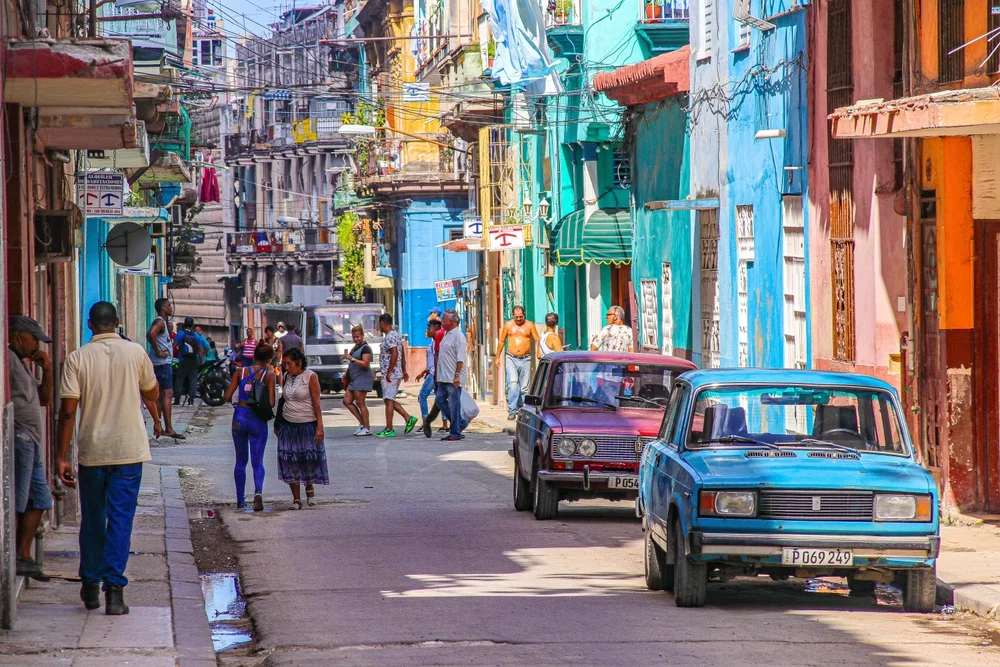
A few weeks ago, a Russian tanker sailed near Cuba, delivering oil and humanitarian aid. This incursion challenges the American blockade on Cuba, which has tightened in recent weeks. The incursion has geopolitical and security implications, but is far from unusual given the situation that has lasted for decades. Not only that, now we have a new actor in these Cold War–like tensions: China.
In past years, following a brief interruption in the 1990s and early 2000s, Russia and China have dramatically increased their presence in the region, not only in Cuba, but also in Venezuela, Bolivia, Ecuador, Nicaragua, and Mexico—as part of the Bolivarian movement—and through interventions in other countries like Peru, Colombia, and Chile. This first group of countries has received technical military aid and financial support. At the same time, the Bolivarian movement functions as a non-state threat, compromising governments and engaging in human, arms, and drug trafficking, money laundering, weaponizing migration through organized crime, sponsoring terrorist organizations, and compromising governments through campaign financing and infiltration (the last elected Peruvian president was a puppet of a Cuban-trained “physician”). Most recently, their influence over Venezuela was apparent since the 32 Maduro guards killed by American forces were Cuban, not Venezuelan.
Most importantly, some of these countries, especially Cuba, have served as espionage hubs in the region and against the US. Also, Cuba is the “head” of the Bolivarian movement. They do not necessarily intervene in operations themselves, but they control the flow of money through money laundering and possess the most advanced intelligence apparatus. In a 2012 statement to the House, Michelle Van Cleave, a former National Counterintelligence Executive under President George W. Bush, said that: “Many other intelligence services have gone to school, literally, on the practices of the KGB. And one of their star pupils, of course, was the Cuban intelligence service, the DGI”.
Now, they are not only cooperating with Russia but also with China. A recent report by the Center for Strategic and International Studies, entitled “China’s Intelligence Footprint in Cuba: New Evidence and Implications for U.S. Security,” states that China operates or has access to several bases in Cuba with SIGINT capabilities. As tensions escalate not only with Cuba but also with other rivals of the US, the 1962 memorandum by the Central Intelligence Agency on “Cuba as a military threat to the US and other American States” seems plausible once again. Cuba, in relation to China and Russia, poses a threat not only because of its spying capabilities, but also due to the risk of weapons deployment or strategic positioning in the event of an attack on the US homeland.
Change of Narrative
Apart from a loosely enforced embargo, for the most part, after the Bay of Pigs Invasion, the US has left Cuba alone, despite the constant flow of spies and incidents over the course of decades. One of the reasons that explains the US attitude towards Cuba is, of course, the Bay of Pigs incursion failure itself. But it is not the only reason.
The US has considered that the reward of intervening in Cuba is lower than the risk of retaliation from Russia and now China. After all, the US also has a presence near those countries, so its stance cannot simply be “this is unacceptable.” Paired with that, Russian or Chinese presence on the island is apparent, but not large enough to be considered an existential threat. On the one hand, reports like “The Russians Are Coming” (Polmar, 2019, for the U.S. Naval Institute) express a recurrent concern in security circles, but this concern has not really materialized. On the other hand, attacking Cuba could trigger a broader reaction from US adversaries.
Another aspect is the support from US liberal activists, media, academia, and members of the Democratic Party for the Cuban rulers, despite US strategic interests. For them, Cuba is a powerless victim of US sanctions. This narrative underestimates Cuba’s capabilities, neglects its alliances, and overestimates the ability of US economic sanctions to inflict damage. According to this view, the island is not poor because of its communist policies. This public support is itself interpreted as proof of infiltration into US institutions and public life.
Yet another reason concerns the trade-off between espionage and counterintelligence. US intelligence can also benefit from Cuban spies. The US may infiltrate Cuban intelligence and learn about China’s and Russia’s plans through them. Since the US does not have a comprehensive counterintelligence strategy toward Cuba—at least not publicly—and is mostly reactive, it is difficult to assess how much the US truly benefits from this trade-off.
Maybe the most important reason, also linked with the first one, is the difficulty of predicting the outcome of a military intervention, especially if it leads to regime change. The US history of military interventions is full of examples where outcomes turned against US interests after “successful” interventions. That is why remarks by Donald Trump about America no longer attempting to operate as the “world’s police” resonated with many people.
Nevertheless, both narrative and actions have changed in recent months. First, China, Russia (and Iran) have continued to expand and consolidate their presence in the region. Russia supports countries like Cuba and Venezuela. China has connections to the fentanyl crisis and money laundering operations. Iran also has a presence in the region through Hezbollah. This presence has expanded to countries like Peru: China now controls electricity distribution in the capital and has built a major port, the largest in the region. The US has explicitly raised concerns about its awareness of these developments.
US reaction has not been limited to Venezuela or Cuba but has also extended to countries like Mexico and Colombia (in relation to narcotrafficking), and Peru, which has recently become a major non-NATO ally of the US. A new military port near Lima is also under construction with US support.
Allegedly, the US (through the CIA) also played a role in the removal of former Peruvian president Castillo in 2022. Just months ago, the new US ambassador in Peru openly tweeted about the “menu change” in the country, from “chifa” (Peruvian-Chinese food) to hamburgers. Days after that, a new Peruvian president (Jeri) was also removed from office, largely due to ties to China. These developments are seen as indications that the US has had enough of Russian, Chinese, and Iranian influence in the region.
Second, there is also a shift in public perception of the US as the “bad guy.” It is now clearer for many that the US frames its actions as protecting its citizens when confronting authoritarian regimes. At the same time, developments in Venezuela suggest that intervention may be easier than expected. The Venezuelan case may also serve as a testing ground for “regime control” rather than the more costly “regime change.” Together, these factors may reduce the perceived cost of a potential intervention in Cuba.
Cuba is the head of the China and Russia-backed Bolivarian movement. This movement poses a threat to the US and the region. If tensions with Iran continue, it is highly unlikely that the US will intervene in Cuba, which is not as central to the global oil system as Venezuela. However, the costs of such an intervention have diminished, making it a conceivable course of action.
One thing is clear: Cold War–like tensions will continue—the US is even sending rockets to the Moon again—and Cuba remains a key piece of the puzzle.
Oscar Sumar is a deputy vice-chancellor for academic affairs at Universidad Científica del Sur and a fellow to the Public Law & Policy Program at Berkeley Law. He is also a founding director of BeLatin.

Politics
%20Richard%20Samuelson%20%20-%20Is%20American%20Nationalism%20Still%20Creed-able_-1.jpg)
Is American Nationalism Still Creed-able?
We are not there now, but there is reason to worry that the United States is in danger, if we are not careful, of ceasing to be a nation with the principles of 1776 at its core.
National Civitas Institute Poll: Americans are Anxious and Frustrated, Creating a Challenging Environment for Leaders
The poll reveals a deeply pessimistic American electorate, with a majority convinced the nation is on the wrong track.
.webp)
%20(1).avif)


.jpg)
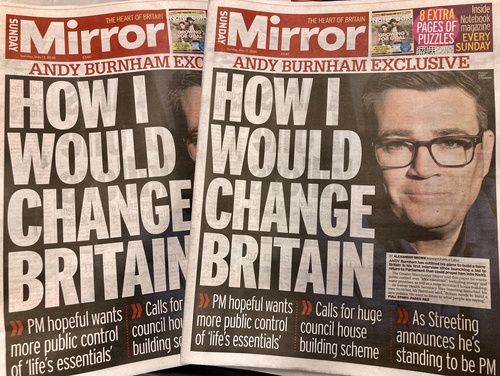
Can Britain’s Next Prime Minister Escape the Net Zero Trap?
Britain has burned through five Prime Ministers and is paying some of the highest electricity prices in the world.
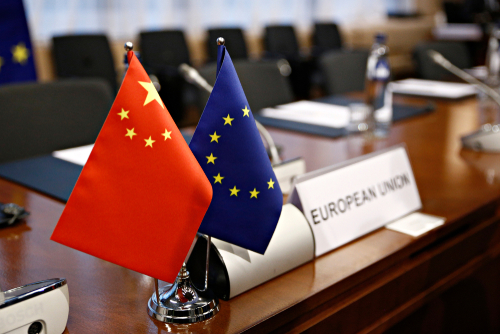
The Scanner at the Gate: Europe’s China Policy Litmus Test
China’s industrial policy is entering Europe through public procurement—and reshaping sensitive markets from within.

Confronting the New Antisemitism
"The postwar effort 'to rebrand Judaism as a religion' has made it impossible for American Jews to understand what they are facing today, because what we are facing today is an attack on the idea of Jewish peoplehood.”
“Democratic” Socialism Is Undemocratic
By promoting class hatred, suppressing private initiative, and seeking enhanced control of our lives, today’s democratic socialists undermine patriotism and individual initiative—two qualities that have long distinguished the United States from other major nations.

