The New Frontier of Capital: What SpaceX’s IPO Tells Us About American Capital Markets

The institutional infrastructure that has made way for enterprise is neither permanent nor self-evident. The SpaceX IPO is as good an occasion as any to take stock of what it took to build it, and what it would mean to let it gradually degrade.
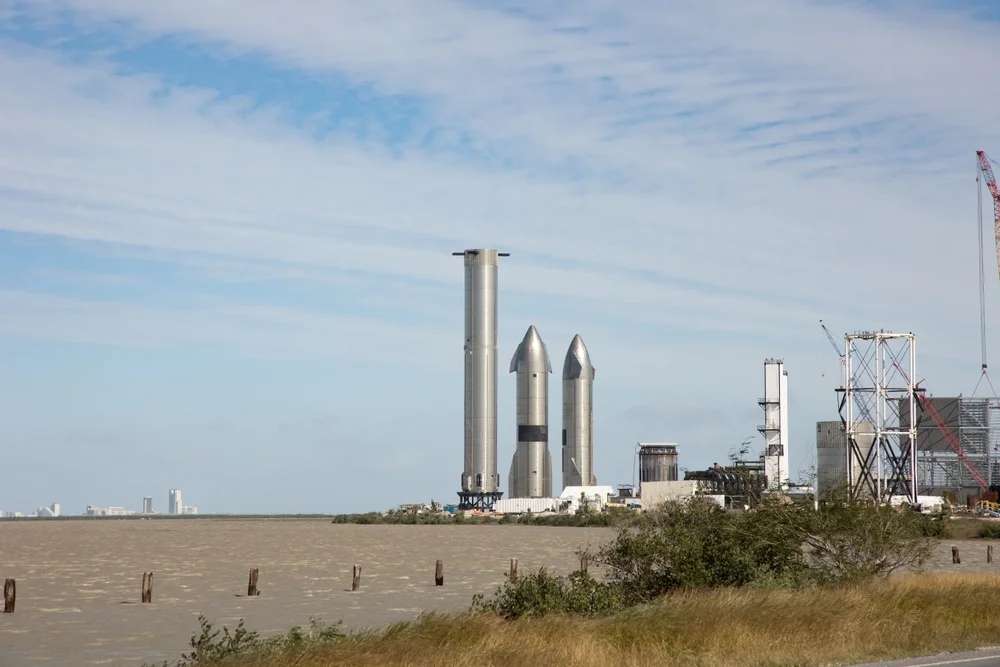
SpaceX’s planned IPO, the largest in market history, is, on its surface, a story about rockets and billionaires. Underneath its flashy exterior, it’s a much more consequential tale about what kind of country produces a moment like this and whether the conditions that made it possible are durable enough to produce the next one. The answer has less to do with individual genius than with the unglamorous institutional infrastructure, contract enforcement, property rights, deep capital markets, and tolerance for failure that convert ambition into enterprise at a scale no other country on earth has matched. That infrastructure is neither permanent nor self-evident, and the SpaceX IPO is as good an occasion as any to take stock of what it took to build it, and what it would mean to let it gradually degrade.
A Valuation Without Precedent
SpaceX is preparing a confidential initial public offering expected in June 2026, with plans to raise up to $75 billion. The valuation attached to that effort, estimated at around $1.75 trillion, places the company in territory few firms have ever reached, let alone at the moment of going public. Placed alongside earlier landmark offerings, the scale becomes easier to grasp: Alibaba’s 2014 debut raised $21.8 billion at a valuation around $168 billion, Facebook, the largest internet IPO in history at the time, entered public markets in 2012 at just above $100 billion, and Saudi Aramco’s 2019 listing, long considered the benchmark for scale, settled near $1.7 trillion. SpaceX, if these projections prove out, would meet or exceed that threshold from the outset.
Yet the business underlying this valuation resists easy classification. Launch services and satellite deployment provide steady revenue, while the Starlink network has grown into a substantial commercial enterprise generating tens of billions annually. These activities sustain a broader set of ambitions that remain difficult to price in conventional terms. Sustained human presence beyond Earth carries genuine technological promise, though its economic return is deeply uncertain. That fact has not prevented capital from gathering around the effort, and has, in some ways, made the undertaking more consequential.
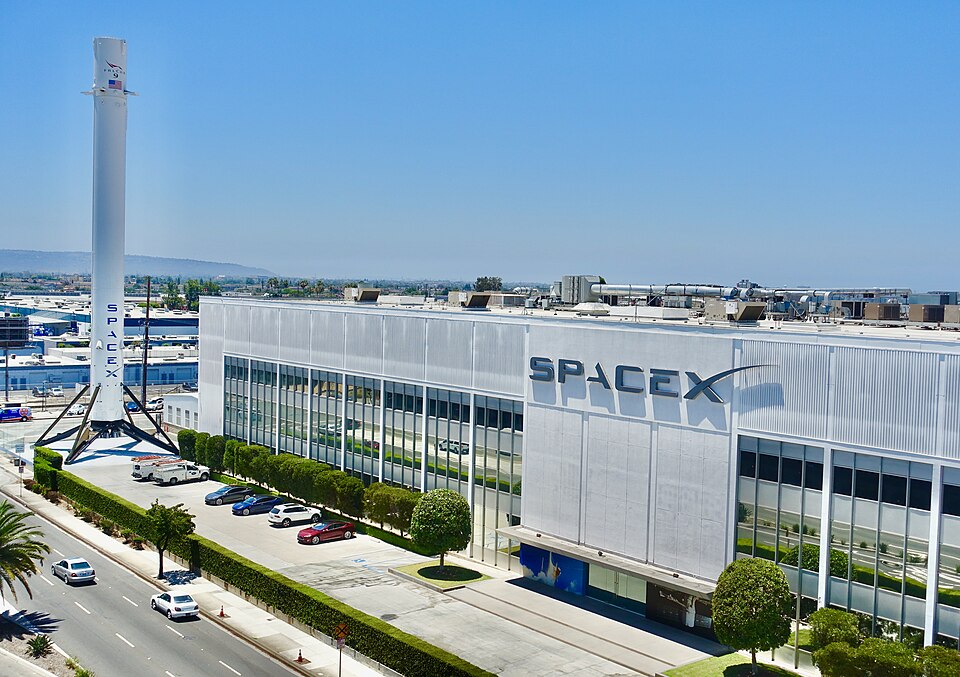
The fashionable response to this kind of wealth concentration, especially given how unconventional the business model is, arrives quickly and predictably: someone got too rich, the system is rigged, and the money should be elsewhere. What that response consistently misses is the much more fundamental and, frankly, interesting question of how and under what conditions a private company founded twenty-four years ago in a rented warehouse in El Segundo, California, reached such a valuation. That figure now exceeds Aramco’s, a company with a ninety-year head start and sovereignty-backed oil fields beneath its feet.
How Institutions and Capital Markets Turn Ideas Into Enterprises
The economic history of large ambitions is, at its core, a history of capital formation moving too slowly to keep pace with people’s vision. The transcontinental railroad, the signature infrastructure achievement of nineteenth century America, was estimated in 1857 to cost roughly $4.4 billion in today’s dollars. Theodore Judah, its most passionate advocate, spent years pitching the project not to London bankers but to ordinary Americans, proposing something close to a crowdfunding campaign, because no single institution could hold that much money. Even after Congress intervened with land grants totaling tens of millions of acres and federal bond guarantees, the railroad still took over a decade to complete. Standard Oil needed decades of capital accumulation before Rockefeller had built something of comparable consequence. Grand transformation required either a generation of private grinding or the full fiscal authority of the state.
What changed was the machinery to pool private ambition. The United States developed, imperfectly, through crises, corrections, and periodic scandals, a capital market architecture sophisticated enough to compress that old timeline considerably and encourage tremendous private capital accumulation. Venture capital, public equity markets, and institutional investors with multi-decade mandates, emerged within a legal system that enforces contracts across parties who have never met and, often, don’t like each other. These financial mechanisms allow a person with a credible vision to quickly secure the equity required to pursue it, something that once took Congress an Act and Rockefeller decades.
The evidence of how rare that infrastructure remains appears in a simple cross-country comparison. The United States hosts roughly 853 active unicorn companies, privately held startups valued at over $1 billion, accounting for more than 53 percent of the global total. India, with a population four times that of the United States and a technically educated workforce that supplies engineers to institutions across the world, has approximately 56. China, the second-largest economy on earth, has 330. The causal link is not where talented people are born; it is whether the place they work gives them a viable path from idea to funded enterprise, whether the contracts they sign will be honored, and whether failure carries a cost so catastrophic that the sane move is never to try.
These unicorn companies do not emerge in the United States by chance; they are the product of an institutional framework that rewards risk-taking. Enforceable agreements across years and counterparties who may never meet. Property rights stable enough that a founder can invest a decade of work without fearing government interference. Capital markets transparent enough that an investor in Boston can rationally back a rocket company in Texas on a prospectus alone. A legal treatment of failure permissive enough that a crashed venture does not end a career. The venture capital firms that seeded SpaceX’s early rounds, the sovereign wealth funds that sustained it, and the banks now underwriting its public debut exist in their current form because that architecture has held. Weaken any significant piece of it, and the conditions that produced this moment become harder to replicate.
The Privatization of Space
That the largest IPO in market history belongs to a company operating in what was, within living memory, an exclusively public sector domain is itself a remarkable statement about the depth of American capital markets and their willingness to price in returns that may not materialize for decades, if at all. Until very recently, space was a government program, not by preference but by economic necessity. The capital requirements of orbital access exceeded what private markets could plausibly mobilize, and the returns were too uncertain and too distant to attract patient private money. NASA’s Apollo program consumed nearly $300 billion in today's dollars, funded entirely by taxpayers responding to geopolitical urgency rather than any expectation of financial return. The space shuttle ran for thirty years at comparable cost and never approached commercial viability.
SpaceX has received over $24 billion in federal contracts since 2008, a figure its critics cite as evidence of public subsidy. The more consequential distinction is how those contracts are written. Under the cost-plus model that governed traditional aerospace contractors for decades, contractors billed the government for expenses and collected a fixed margin regardless of efficiency. SpaceX operates under fixed-price arrangements; it absorbs its own overruns and keeps its own savings. NASA, constrained by annual congressional appropriations, struggles to make cohesive multi-decade capital commitments. Private markets, accountable to investors who accept long-horizon risk, can operate on that timeline. When the potential payoff is a self-sustaining human presence on another planet, that difference matters enormously.
Guarding the Architecture
The institutional arrangements that make this kind of capital mobilization possible are neither permanent nor self-reinforcing; they can be gradually strengthened or eroded, shaping the future of U.S. innovation. Regulatory unpredictability is among the most corrosive forces working against them. When the rules governing a business shift based on enforcement choices that are difficult to anticipate or contest, firms respond rationally by shortening their planning horizons and parking capital in liquid near-term positions rather than committing it to ventures that take years to mature. The U.S. Chamber of Commerce has consistently documented this: regulatory uncertainty ranks alongside competition and economic volatility as a constraint on long-term investment. The stakes extend well beyond any individual company; an NBER study found that weak rule-of-law institutions reduce output per capita by roughly 50 percent across countries, supported by decades of economic development research.
What sustains this system over time depends not only on capital but also on the continued alignment of talent and institutional incentives. The people capable of building what SpaceX has built are not necessarily anchored to any particular country, and in recent years, American scientists have submitted significantly more applications for positions abroad, a trend documented by foreign governments seeing unusually sharp increases in citizenship inquiries. Meanwhile, the financial system faces pressure from two directions: regulatory impulses that direct capital toward prescribed outcomes regardless of market signals, and political pressures that erode the transparency and predictability on which dispersed investors depend. Either tendency, pursued far enough, makes it harder to reconstruct the conditions that produced SpaceX for the next generation of seemingly impossible companies.
Future Frontiers
The ultimate trajectory of SpaceX remains uncertain, a reflection of the inherent nature of progress at the frontier rather than a flaw in the system that produced it. What comes into sharper focus is the durability of the institutional and financial framework that made such a venture possible. The capacity to mobilize capital at scale, to sustain investment over decades, and to tolerate failure without collapse rests on a set of conditions that can be weakened gradually and often unintentionally. When those conditions erode, through unpredictable rules, constrained capital flows, or diminished confidence in the enforcement of agreements, the effects do not appear all at once, but in the absence of the next generation of ambitious attempts. The real significance lies beyond the company itself, in what it reveals about the system that enabled it and the extent to which its future depends on preserving those foundations.
Julia R. Cartwright is a Senior Research Fellow in Law and Economics at the American Institute for Economic Research.

Economic Dynamism


.jpg)



.jpg)




.jpg)


Social Mobility Wins
When people live within an environment offering good jobs, good education, social networks, and a culture of self-improvement and hard work, they experience progress in a way that undercuts the philosophical rationale that socialists need to justify the policies they advocate.

Kevin Warsh and the Future of Fed Communication
Warsh is right that the Federal Reserve should not speak so loudly that it hears only its own echo.