.jpg)
Do Dynamic Societies Leave Workers Behind Culturally?

Technological change is undoubtedly raising profound metaphysical questions, and thinking clearly about them may be more consequential than ever.
This paper is part of our London Symposium series.
Do dynamic societies leave workers behind? By “workers,” I mean the large class of non-university-educated people who remain central to economic life yet seem increasingly alienated from the culture of educated elites. I will leave it to economists to question whether dynamism has failed them materially. What interests me instead is whether workers are being left behind culturally: whether the dominant values and unspoken assumptions of dynamic societies have changed in ways that make ordinary workers feel like strangers in their own countries, and, if so, why.
First, the evidence: poll data show widening differences of opinion between workers and the university-educated on a variety of social issues, especially those that relate to identity categories like race, gender, and national origin. Notably, both groups have trended left on these questions in recent decades — so they are moving in the same direction. But the gap has widened because the opinions of the university-educated have shifted much more quickly than everyone else’s. On this basis, I think we can agree that, empirically, there is a sense in which workers are being left behind culturally.
This widening chasm is where we are waging the culture war, and it is no longer an exclusively American phenomenon, if it ever was. Rapid shifts in elite opinion, and populist reactions to those shifts, are happening in the U.K., in mainland Europe, and as far away as South Korea. These facts raise two important questions. First, why is this happening in so many liberal democracies? Second, why is the culture war so fraught? I suggest that rapid shifts in the moral and political opinions of highly educated people are due in part to their disproportionate adoption of a relatively new metaphysical conception of the person. If I am correct, then it should be no surprise that the culture war is fraught: the participants are really arguing about the essence of humanity itself.
Some observers may doubt that a popular political struggle could be traceable to metaphysics. After all, few people at any level of education think or talk explicitly about metaphysical questions. But anyone who holds broadly liberal political beliefs — and that will be most people who live in liberal democracies — necessarily have some metaphysical intuition about what a person is to which they are committed, because otherwise liberalism makes no sense at all. Liberalism, in general, is the idea of equal freedom for all people. Therefore, anyone who wants to endorse liberalism must have some view about what counts as a person and what does not. We can argue around the edges about corporations, or great apes, for example. This is the case because it is only once we have committed to some view about what a person is that we can face the next question of what it is for a person to have or lack freedom.
What I will call the “old metaphysics” was the one more-or-less shared by the early modern social contract theorists — Locke, Mill, Kant, and even Rousseau — who laid the intellectual foundations for many of our modern states. These thinkers had their metaphysical disagreements, to be sure, but they broadly regarded people, at least for the purpose of political theorizing, as ensouled, morally equal, imperfectly rational animals: fragile, flesh-and-blood creatures with some special capacities, notably the capacity to decide which purposes are worth pursuing and which are not, and the capacity to reflect on how their actions will affect the people around them.
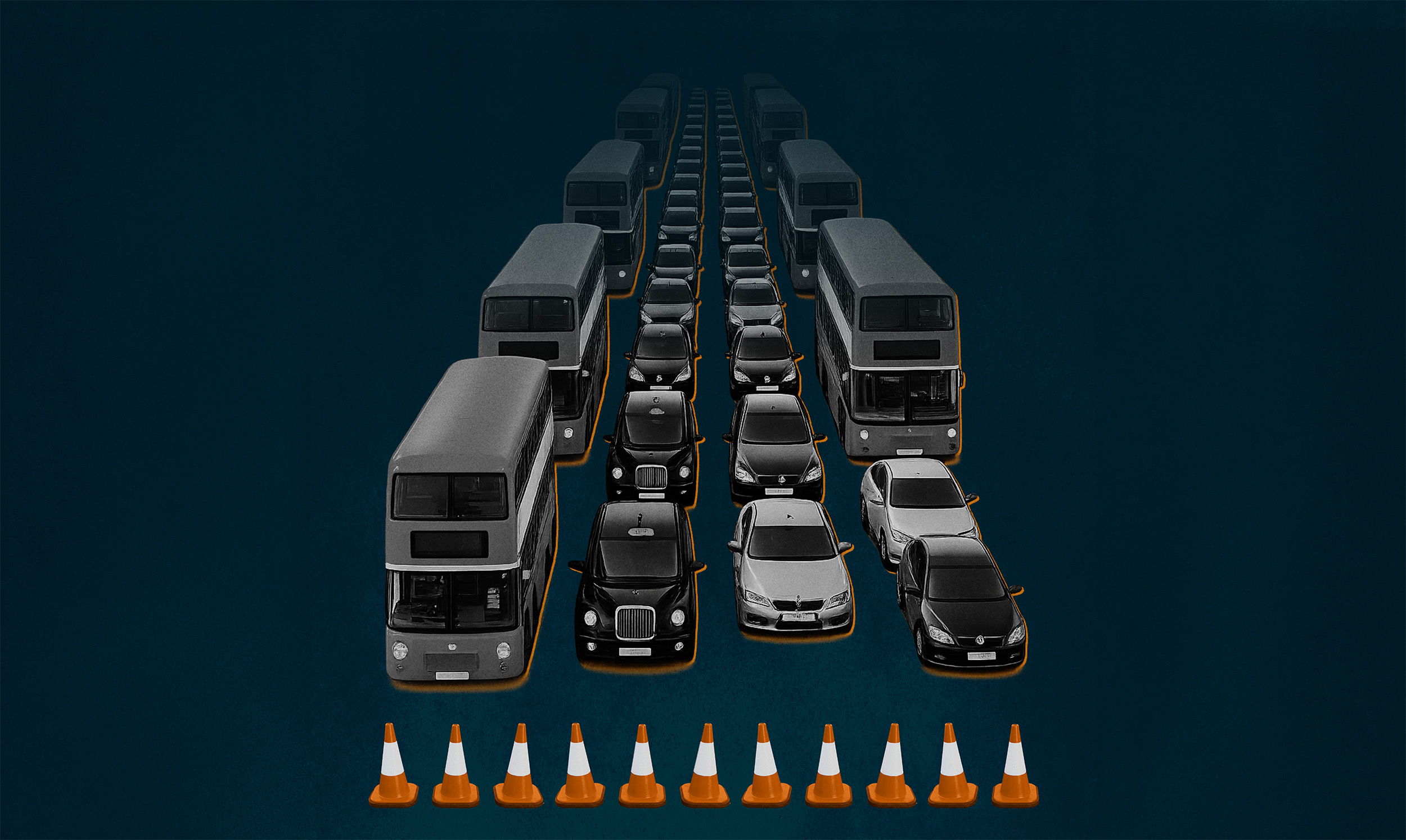
If this is how we see people, then our primary vulnerability to each other is physical — we share space with others who can damage or destroy us — and freedom is, roughly, a condition in which we can exercise our special capacities to choose and pursue purposes unmolested by others. This is why the classical liberal state focused on creating laws of the type that Hayek analogized to traffic rules: aspirationally neutral rules of conduct that enable a bunch of imperfectly rational animals to pursue their chosen purposes without hurting or killing each other. I want to conjecture that most workers in liberal democracies are still tacitly committed to this old metaphysics, whether they know it or not.
Meanwhile, an alternative metaphysics is gaining ground within the highly educated group variously referred to as knowledge workers, symbolic capitalists, the laptop class, the global elite, the people from nowhere, and the terminally online. According to the new metaphysics, a person is not an animal at all. Instead, a person is an idea: a socially embedded identity, constructed through discourse, and largely shaped by powerful social forces. This abstract human subject is a sort of nexus between how we see ourselves and how others see us. It can be considered free to the extent that it can take over the job of shaping its own development as it resists those social forces — similar to what we worry the chatbots are beginning to do. On this view, the human body is not any part of the person with which it is associated. Instead, the body is merely the site or location of the discursive struggle that produces that person. Some of you may recognize this metaphysical view as belonging to the famous postmodernist, Michel Foucault. But I am hesitant to blame Foucault personally for causing the culture war. Most of the laptop class have never read him, and I believe my friend Mark Pennington, a serious scholar of Foucault, when he tells me that Foucault’s critics and his putative allies alike have profoundly misunderstood his politics.
Instead, I think we can identify two more prosaic causes of the rising popularity of the new metaphysics, both of which are themselves products of the late 20th century’s dynamism. The first was unprecedented prosperity. As Stephen Pinker has been eager to prove to us, economic dynamism has produced historically exceptional levels of peace and prosperity in large parts of the world that were far hungrier and more violent only a century ago. And even within rich countries, few people are as thoroughly insulated from violence and deprivation as the laptop class. In 2016, it was credibly alleged that Secretary Clinton’s millennial campaign spokesman, nicknamed Pajama Boy, had never been in a fistfight, and he has probably never gone hungry either. It makes sense that the old metaphysical conception of the person as a fragile animal with special capacities is less than compelling to a class of people for whom physical dangers have become very remote, as is the idea that our physical safety is the central work of the state.
Our prosperity has made the old metaphysics less compelling, but the internet’s rise put the central focus of the new metaphysics — socially embedded personal identity — on steroids. I had front row seats for this as a young policy wonk in Washington, D.C. in the aughties. I did what all my peers were doing at the time, of course, and started my own blog. It was the glorious, amateur ham radio period of blogging, when a clever 23-year-old could go from being totally unknown to having thousands, or tens of thousands, of daily readers around the world, due primarily to the capable crafting of a compelling online persona. Blogging soon became professionalized, and being entertaining online became a career. Facebook democratized online identity development as a hobby, while Twitter put it on steroids for the laptop class.
It should surprise no one that the rise of identity politics accompanied these trends. As a species, we have never been more focused than we are today on how we see ourselves, and on whether other people see us in the way we would like them to. The more time a person spends online, the more intuitive the new metaphysics becomes. If the real “you” is your socially embedded identity, then your body is just the meat-space location to which it happens to be tethered. You can therefore regard your body as a tool for identity development and expression: an avatar designed to convey your identity to others, or perhaps just an aging vehicle that you cannot afford to replace. Instead of awaiting the rapture, the 21st-century laptop class is increasingly waiting to be uploaded.
By contrast, the new metaphysics still mystifies voting majorities in rich world countries, whose jobs still require direct engagement with the physical world, even if they do get into occasional arguments online. People who still regard themselves as imperfectly rational animals have different political priorities. Polls show that workers tend to think that issues like crime rates and economic growth are more important than identarian concerns. According to the old metaphysics, the actions that an imperfectly rational animal has chosen to take over time constitute a person’s character. On the old view, “you are what you do” and should be judged by your actions.
Compare that to something my very online friend Julian Sanchez likes to say: “You are who you pretend to be, so be careful who you pretend to be.” This is not bad advice, because the natural human desire to maintain an identity that meets with social approval is hugely motivating. But the contrast in focus — on actions vs. on how we see ourselves and are seen — is striking. I think it effectively illustrates the tacit metaphysical commitments held by two increasingly alienated social subcultures.
Frankly, workers seem to think that the laptop class has gotten a little daft, and they are not wrong. Don’t misunderstand me: I think Foucault was onto something very important. We all have a socially embedded identity. It is the necessary product of our conjoined efforts at introspection and social integration. It is how we, as reflective, imperfectly rational animals, make sense of our own lives and relationships. And the Internet has been profoundly liberating to millions of people who want to take more control of that project by diminishing the influence of casual stereotypes and intolerant local communities.
But I have become convinced that my socially embedded identity is not literally me. As invested as I am in my pretty well-workshopped social and professional persona, I have noticed that the people closest to me — those who love me the most — love the imperfectly rational animal instead. If you had asked me at the age of 21 what defined me, I would have told you: I am a ballet dancer. That was at the heart of my identity. But when I auditioned for ballet companies that summer, I received clear economic signals that other people preferred that I be something else. I felt shattered, but to the people who truly loved me, I was not broken or dead. I was just unhappy and in need of a new self-image. Moreover, emerging research by Jonathan Haidt and others on the relationship between social media consumption and mental health suggests that it may not be harmless error to mistake the persona for the person. Perhaps many of us, especially the most online, are overindulging in identity development the same way that we overindulge in calories.
So, where do we go from here? As a dynamist, perhaps it is okay for me to admit that I have no idea. But if the new metaphysics is actually maladaptive — if it is not conducive to either ethical conduct or personal happiness — then we may need to find the cultural or institutional equivalent of Ozempic: something that can magically enable us to stop staring at our own navels. As a species, we appear to be on the cusp of at least two enormous real-world endeavors: stabilizing the Earth’s climate and establishing settlements beyond the Earth. Physical projects like these might restore the salience of the early modern idea that a person is a perfect unity of our animal and rational natures. Or, in a darker possible future, perhaps the chatbots will undertake these projects, we will decide that they are people, and Foucault’s victory will be complete. Only time will tell, but technological change is undoubtedly raising very momentous metaphysical questions, and thinking clearly about them may be more consequential than it ever has been before.
Download the Paper
Download a print-friendly version of this paper.

Economic Dynamism
The Wine and Commerce Symposium
The Western tradition’s great thinkers have long recognized wine as a symbol for the beguilement of reason. But if wine warps reason, they recognized how it can also enable reliable reason in our analysis of regimes.

.jpg)


.jpg)



.jpg)


Social Mobility Wins
When people live within an environment offering good jobs, good education, social networks, and a culture of self-improvement and hard work, they experience progress in a way that undercuts the philosophical rationale that socialists need to justify the policies they advocate.