.jpg)
Can Kevin Warsh Save the Fed from Fiscal Dominance?

If Congress continues to avoid hard budgetary choices, the gravitational pull of fiscal dominance will only grow stronger.
With President Trump’s nomination of Kevin Warsh as chairman of the Federal Reserve, familiar questions abound: Will the Fed remain independent under this president’s hand-picked leader? Is monetary policy about to become another arm of partisan politics?
These questions are understandable, but incomplete. The more important one is whether the Fed can be independent from the country’s fiscal reality. And on that front, the answer increasingly seems to be no.
Much of the commentary around Fed independence conflates several distinct ideas. The Fed does enjoy operational independence: the ability to set interest rates and conduct monetary policy without day-to-day interference from the White House or Treasury. That autonomy, restored by the 1951 Fed–Treasury Accord after World War II, has largely held ever since, though imperfectly.
What the Fed has never had is economic independence. How much Congress spends, borrows, and promises has always shaped the boundaries of monetary policy. When government debt is modest, the Fed has room to act forcefully against inflation. As the last few years show, when debt is massive, every rate hike immediately reverberates through the federal budget, raising interest costs. This is why the current moment matters. Federal debt is high and rising. Interest payments already consume a growing share of the budget. In such an environment, tightening monetary policy quickly becomes fiscally painful, creating pressure — explicit or implicit — for the Fed to tread carefully even when the need to tamp down inflation is obvious. That pressure exists regardless of who occupies the Oval Office or chairs the Board of Governors.
President Trump has drawn attention to this dynamic by openly demanding lower interest rates, arguing that high rates are “costing taxpayers trillions.” That logic is troubling, and it deserves criticism. But it is also revealing. Trump is not inventing a new argument. He is making the implicit logic of fiscal dominance — the idea that monetary policy must accommodate fiscal constraints rather than the other way around — explicit.This tension did not begin with Trump, and it will not end with him. Few voices objected when Chairman Jerome Powell urged massive fiscal stimulus during the pandemic and pledged the Fed’s support. Powell was responding to what was widely understood as a national emergency, akin to wartime conditions, when monetary policy alone was insufficient to stabilize the economy. That response was defensible.
The problem is that the Fed’s interventions for fiscal action have not been symmetrical. If it is appropriate for a central bank to favor fiscal support when aggregate demand collapses, it should also be appropriate and indeed necessary to warn us when excessive debt is narrowing the space for monetary tightening, and to call on Congress to engage in fiscal adjustment. That symmetry has largely been missing from the Fed’s recent posture. Independence should not be selective.
That has not always been the case. When Chairman Paul Volcker confronted double-digit inflation in the early 1980s, he made clear that the Fed would not adjust its policy to ease fiscal discomfort. He told Congress directly that disinflation required fiscal decisions “in harmony” with monetary restraint. In the end, fiscal consolidation followed and disinflation stuck.
Today, the alignment Volcker demanded is far harder to achieve. Debt levels are higher, entitlement spending is locked in, and political incentives run toward postponing painful reforms. The temptation to lean on the Fed, ask it to do more, to delay longer, or prioritize financing costs will only intensify.
This is the primary risk to Fed independence: not so much who is the new chair but the slow, structural drift in which monetary policy increasingly serves fiscal needs. Independence erodes less through formal changes to the Federal Reserve Act than through the quiet narrowing of realistic choices.
This is the drift Kevin Warsh points to when he speaks of the need for a new Fed–Treasury accord. His argument is not that the original 1951 accord collapsed, but that it has been weakened by changes in policy, practice, and fiscal conditions its architects never contemplated. The Fed is no longer explicitly pegging rates to support government borrowing, yet its balance-sheet policies have blurred the boundary between monetary restraint and fiscal accommodation.
A contemporary accord, Warsh believes, would restore that boundary by placing clearer limits on balance-sheet policy and reaffirming that financing government spending is the Treasury’s, not the central bank’s, responsibility.
To be sure, a new Fed–Treasury accord may help clarify roles and slow the erosion at the margin. But it cannot substitute for fiscal reform. If Congress continues to avoid hard budgetary choices, the gravitational pull of fiscal dominance will only grow stronger. New accord or not, monetary policy will remain under pressure to accommodate unsustainable fiscal trajectories.
Without fiscal reform, no chairman, Warsh included, will be able to escape that reality for long.
Veronique de Rugy is the George Gibbs Chair in Political Economy and Senior Research Fellow at the Mercatus Center at George Mason University and a nationally syndicated columnist. She is a contributing editor to Civitas Outlook.

Economic Dynamism
The Wine and Commerce Symposium
The Western tradition’s great thinkers have long recognized wine as a symbol for the beguilement of reason. But if wine warps reason, they recognized how it can also enable reliable reason in our analysis of regimes.


.jpg)

.jpg)

.jpg)


Social Mobility Wins
When people live within an environment offering good jobs, good education, social networks, and a culture of self-improvement and hard work, they experience progress in a way that undercuts the philosophical rationale that socialists need to justify the policies they advocate.
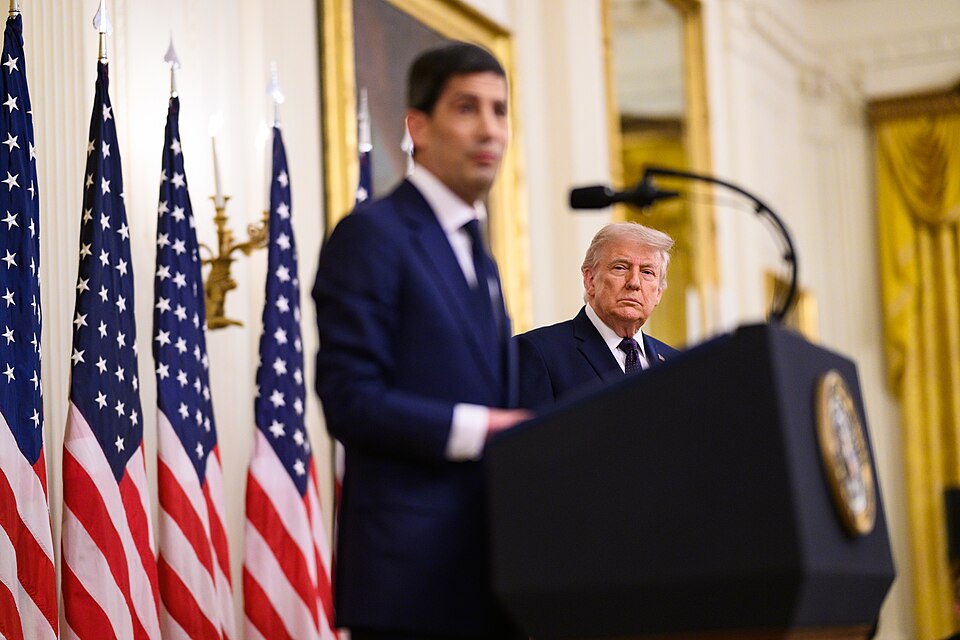
Kevin Warsh and the Future of Fed Communication
Warsh is right that the Federal Reserve should not speak so loudly that it hears only its own echo.