Canada Doesn't Need to Win

Canada and the rest of the world will diversify away from the US faster and build new relationships, possibly with partners we’d rather Canada avoid.
Imagine that your friend has all the coolest toys. Indoor golf simulator, pool table, snowmobiles, jet skis… the works. For years, the two of you have enjoyed one another’s company, shared meals and laughter, and been viewed in the neighborhood as the best of friends. Inseparable, even. One day, though, your friend decides this no longer works for them. Rather than invite you over, they start bullying you and tarnishing your name throughout the community. They still have all the cool toys (for now, at least), but you find yourself no longer wanting to be with them. So you go out and make some new friends, but this only makes your former best friend act out even more toward you.
Unfortunately, this is exactly what is happening with Canada, the US, and China right now.
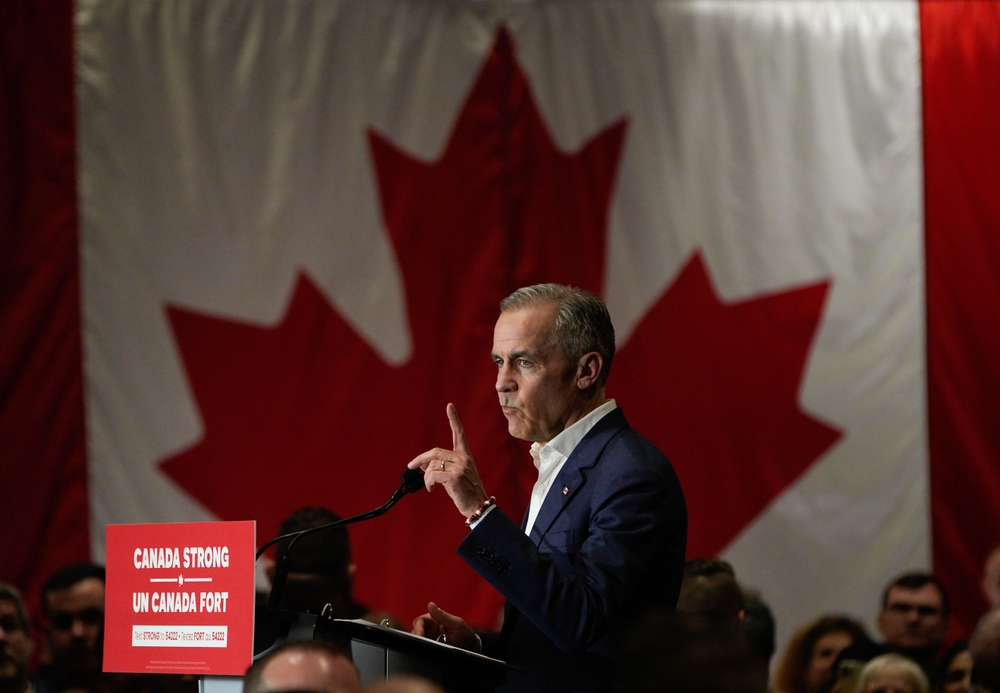
In case you missed it, Canada’s Prime Minister Mark Carney gave a determined speech at the World Economic Forum in Davos. In it, he announced, proudly, that his government had “agreed [to] a comprehensive strategic partnership with the EU,” “signed 12other trade and security deals on four continents in six months,” “concluded new strategic partnerships with China and Qatar,” and they are “negotiating free trade pacts with India, ASEAN, Thailand, Philippines and Mercosur.” But more than that, he urged “smaller powers to unite against economic coercion from the world’s great powers.”
In response, President Trump has threatened new 100 percent tariffs on Canadian goods if they “make a deal with China” and has withdrawn Canada’s invitation to join his“Board of Peace.”
None of this should be a surprise to anyone. The reality is that there are but three economic superpowers in the world right now: the US, China, and the EU. Sure, there are rising powers like India and Brazil, and a few others, but for now, at least, the Big Three superpowers remain far, far ahead. Every other country in the world must choose its dance partners carefully.
“New Right” thinkers would have us believe that this is purely a matter of counting cards. Who has the most leverage and who can impose the most pain? Daniel Kishi notes that the US accounts for 76percent of Canada’s exports, while China accounts for just 4 percent. Geography, he argues, remains close to destiny. And as he says, “a rational Canadian leader would double down on NorthAmerican strength” and “coordinate with the United States.”
But there’s just one problem with this: you can’t “coordinate” with a bully. Coordination implies partnership, respect, and shared goals. What Trump is offering Canada isn’t coordination, it’s subordination. The difference between the two is massive.
Adam Smith understood this 250 years ago. He famously observed that "it is not from the benevolence of the butcher, the brewer, or the baker, that we expect our dinner, but from their regard to their own interest." Most cite this passage as a tribute to self-interest, but that misses Smith’s deeper point. The butcher does not hand over the steak because you’re holding a gun to his head; he does so because he wants yourbusiness today, tomorrow, and for years to come. The entire system runs on voluntary exchange, mutual benefit, and the expectation that both parties will be treated fairly.
Coercion, economic or otherwise, breaks this. As soon as you start threatening trading partners with tariffs, talk of annexation, and withdrawal of security guarantees, you haven’t “won the negotiation.” You’ve ended a relationship.
The Realpolitik crowd treats international trade as if it were a single poker game. Canada has weak cards, the US has strong cards, we win. But trade relationships aren’t a single hand. They’re a decades-long game with the same players. And in repeated games, reputation is everything. Economists call this the “shadow of the future.” When you expect to interact with someone repeatedly, there is a powerful incentive to cooperate, build trust, and play fair. Defecting once might lead to a short-run payoff, but your playing partner remembers, and so does everyone else who’s watching. And they’re forming their own opinions about which countries to partner with.
The message that the Trump administration is sending is being received, loud and clear: America will defect whenever it’s convenient to do so. Security commitments can be withdrawn on a whim. Even your closest ally, a country that has fought alongside you in every major conflict for a century and opened its airports to stranded American planes on September 11th, can be threatened with steep tariffs for the crime of making new friends. All this despite the fact that President Trump himself signed a new trade agreement with them just six years ago.
From a Realpolitik perspective, Canada faces a tough but clear choice: capitulate to the US. But this is the wrong perspective. Kishi, the Administration, and the economic nationalists all assume that Canada is simply trying to maximize GDP. But nations, like people, care about more than money. They care about dignity, autonomy, and not being humiliated on the world stage by a neighbor who once called them “friend.”
Sure, trading with the US is cheaper for Canada than trading with China, Europe, or India. It’s probably also more lucrative. None of this accounts for what happens when trust evaporates.
But what the card-counters are missing is that the rest of the world is watching. Taiwan is watching. South Korea is watching.Japan, Australia, the Philippines, Poland… every country that has hitched its security and prosperity to American partnership is watching and taking notes right now. And while Administration officials might tout the fact that other countries are finally paying their “fair share” for security, the lesson that these countries are learning is not that “America is a tough negotiator.” It’s that America is no longer reliable.
In the past year, the Trump Administration has threatened to abandon NATO unless Europe “pays more.” Trump told Ukraine that aid depends on handing over mineral rights. They’ve suggested repeatedly, and not as a joke, that Canada should become the 51st state. They’ve slapped tariffs on allies and enemies with justifications changing from week to week. First, it was fentanyl; next week, it was trade deficits. But then it became petty. WhenBrazil tried to bring former President Bolsonaro to trial, they faced 50 percent tariffs. When Canada aired a commercial that Trump didn’t like, he raised tariffs on Canadian goods by 10 percent. What justification will be used next? Nobody knows.
Think about the semiconductor manufacturer in Taiwan, whose entire business model depends on American security guarantees.For the time being at least, Taiwan can count on this security as well as exemptions from certain tariffs and trade restrictions. But now, they see how Washington has treated its closest neighbor, NATO partner, and a country with whom it shares the longest undefended border in the entire world. If economic warfare is on the table for them, what’s coming for Taiwan? As a result, we should expect Taiwan to start hedging and creating supply chains that do not depend exclusively on American goodwill. Not because they want to, but because the new reality is that they must.
This is what coercive diplomacy does. Worse, it doesn’t show up in official trade flow data. Threats, tariffs, and bellicose social media posts all erode the network of relationships on which American prosperity depends. We are not rich because we can bully other countries and“hold all the cards.” We are rich because, for just under a century, we have built a system in which other countries have wanted to trade with us, invest in us, and ally with us. Those relationships were easily worth trillions upon trillions of dollars.
Canada is more than a trading partner at this point. They are a signal. And right now, Canada is signaling to the rest of theworld that there is another option.
Self-respect and dignity have value. A country that accepts humiliation once will be humiliated again. Every leader knows this, because deep down, every person does. It’s why Carney’s approval ratings have soared despite everyone warning him about the costs of confronting the US. The Canadian people are not confused about their economic standing. But they’ve realized that somethings matter more than money.
Canada and the rest of the world will remember all of this. They’ll still trade with us, sure, because they must, just like we have to trade with them. But they’ll do so with an eye toward exit. They’ll diversify away from the US faster, hedge a bit more aggressively, and build new relationships, possibly with partners we’d rather they avoid.
Trump asserts that Canada doesn’t have the cards. They might not. But they don’t need to win the hand; they just need to find a new table. And thanks to the Trump Administration’s coercive diplomacy, new tables are opening all over the world. We might win a trade negotiation here and there, but we’ve lost something far more valuable: trust. Sadly, we may not fully understand what this means until it’s far too late to get it back.
David Hebert is a senior research fellow at the American Institute for Economic Research.

Politics
%20Richard%20Samuelson%20%20-%20Is%20American%20Nationalism%20Still%20Creed-able_-1.jpg)
Is American Nationalism Still Creed-able?
We are not there now, but there is reason to worry that the United States is in danger, if we are not careful, of ceasing to be a nation with the principles of 1776 at its core.
National Civitas Institute Poll: Americans are Anxious and Frustrated, Creating a Challenging Environment for Leaders
The poll reveals a deeply pessimistic American electorate, with a majority convinced the nation is on the wrong track.
.webp)
%20(1).avif)


Rail Giants Hate the $71 Billion Merger. The Rest of Us Should Love It
Based on the record, the case for approving the merger is even stronger than when it was first announced.
The Democrats Are a Menace to America’s Jews
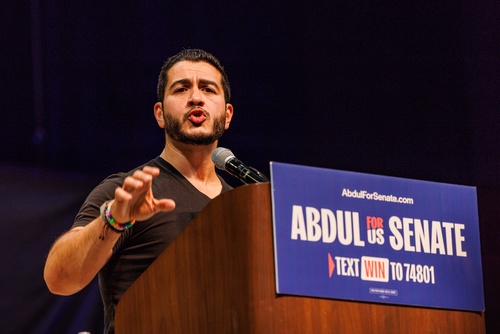
Abdul El-Sayed’s victory in Michigan’s Democratic primary is an ominous sign.



Can Britain’s Next Prime Minister Escape the Net Zero Trap?
Britain has burned through five Prime Ministers and is paying some of the highest electricity prices in the world.
The Scanner at the Gate: Europe’s China Policy Litmus Test
China’s industrial policy is entering Europe through public procurement—and reshaping sensitive markets from within.

Confronting the New Antisemitism
"The postwar effort 'to rebrand Judaism as a religion' has made it impossible for American Jews to understand what they are facing today, because what we are facing today is an attack on the idea of Jewish peoplehood.”
“Democratic” Socialism Is Undemocratic
By promoting class hatred, suppressing private initiative, and seeking enhanced control of our lives, today’s democratic socialists undermine patriotism and individual initiative—two qualities that have long distinguished the United States from other major nations.

