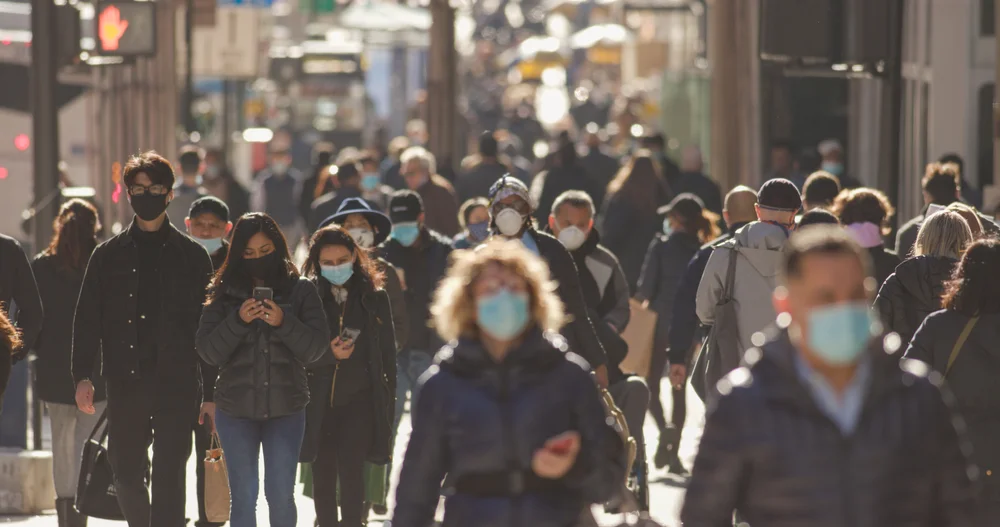
Remembering and Rebuking the Covid Regime

Stephen Macedo and Frances Lee's In Covid's Wake amply documents the consequences of pandemic-era policy and its destructive implications for public health.
On a frigid December evening in 2021, my colleague Ethan Yang called me on my cell phone to report an email that had just arrived in his inbox. Almost a year earlier, we had submitted a Freedom of Information Act request to the National Institutes of Health. It sought the release of public records pertaining to the Great Barrington Declaration (GBD) of October 4, 2020, in which three distinguished scientists presented a brief statement challenging the wisdom and efficacy of the COVID-19 lockdowns.
As Macedo and Lee note in their excellent book In Covid’s Wake, the contents of the Declaration resembled standard public health recommendations for pandemics and were “ultimately…less significant than its reception” in the midst of the pandemic. In the previous year, the GBD and its authors faced a barrage of vilification for simply reiterating the lockdown skepticism and attentiveness to trade-offs found in almost every US government pandemic response plan as recently as 2019. As a supporter of the GBD in the policy arena, I too faced immense backlash, including defamatory personal attacks in a medical journal and even threats of violence. Our FOIA request sought to piece together the government’s role in these events. After months of stonewalling from the NIH, we finally had our requested records.
I was driving from my workplace in Massachusetts to Virginia for the holidays when I received the call. I asked Ethan to summarize the package, and he asked if I could get to a computer right away. I pulled into a rest stop on the New Jersey turnpike, tethered my laptop to my cell phone, and discovered what became one of the most notorious smoking guns of the COVID pandemic. A few days after the October 2020 GBD conference, NIH director Francis Collins emailed Anthony Fauci, instructing the latter to arrange for a “quick and devastating published takedown” of the document. Stunned at what I was reading, I copied the image and posted it on Twitter to share with the world. When I reached Virginia a few hours later, it had been reposted almost 4,000 times.
The Collins-Fauci email directive forms a key episode in Stephen Macedo and Frances Lee’s book. Instead of “following the science,” as they so often claimed in their public messaging, these two leading public health officials enlisted political tools to target and bury dissenting opinions about lockdowns – a policy they had both championed the previous spring, and that was being resuscitated around the world in response to the fall’s “second wave.”
Accompanying records in the FOIA request revealed the inner workings of a media-savvy NIH official’s public relations empire during the COVID era. Fauci implemented the “takedown” of the GBD not by challenging its scientific arguments, but by aggregating opinion articles from the press that reinforced his own policy position. He circulated a hyperbolic attack on the GBD authors from The Nation, a left wing political magazine that had settled into the red-state/blue-state divide over the supposed moral obligation to mask, social distance, and stay home. Additional exchanges revealed Fauci and Collins timing their anti-GBD messaging to the media to maximize its exposure, and maneuvering with Deborah Birx behind the scenes to preempt discussion of the document at a Covid task force meeting. In another email, Fauci distributed a “debunk[ing]” of the GBD from Wired Magazine that insisted lockdowns were a thing of the past, thereby rendering its entire argument moot.
It did not matter that several states would close their schools again and reinstate “emergency” restrictions on public gatherings in the weeks that followed, or that several countries would go back into lockdown by the time that winter hit. Nor did it matter that the GBD reflected longstanding scientific principles on how to balance a multitude of social, economic, and public health considerations during pandemics. Fauci, Collins, and the rest of their NIH team viewed the document as intolerable because it presented a scientific opinion at odds with the policies they advised and implemented. It therefore needed to be buried, and its authors discredited as “fringe epidemiologists” who were drawing too much “attention” to an alternative policy response.
Macedo and Lee’s investigation of the COVID era surveys multiple similar incidents in the United States and abroad. They recount how Scott Atlas, a dissenting member of the US COVID task force who opposed lockdowns, was censured and pilloried by the Stanford faculty senate for his stance. They walk the reader through the debate over COVID’s origins, showing how political considerations privileged a natural outbreak at a Chinese wet market and discouraged investigation into a possible lab-leak incident at a nearby Chinese government facility that studied bat coronaviruses. They explore how scientific journals overstated the evidence for masks, following months of contradictory claims by health officials and an ambiguous scientific literature behind them. The resulting study paints an alarming portrait of scientific collapse during the worst pandemic in a century – one where the normal mechanisms of hypothesis testing, peer review, and, at an even more fundamental level, the ability to voice scientific dissent succumbed to intense political pressures to maintain a uniform professional “consensus” behind a pro-lockdown, pro-mask, pro-mandate policy response.
The book itself is part history of how this policy response came to be, part diagnostic analysis of its failures, and part warning about the dangers that the COVID response portends for a democratic society in future public health emergencies. The authors approach these subjects as political scientists who started from different sides of the COVID issue – one began the pandemic with reservations about the emerging lockdown policies, while the other acquiesced to the initial alarm of “two weeks to flatten the curve.” Both began to notice that something was amiss with the scientific response, particularly as it privileged and embraced an aggressive COVID containment policy that eschewed Western democratic norms and resembled China’s authoritarian governance structure.
I can relate directly to each and have witnessed many of the events they recount as they unfolded in practice. I entered the COVID era as a skeptic of economic central planning – a longstanding focus of my scholarly research. When Fauci and his colleagues unveiled an elaborate system of society-wide “nonpharmaceutical interventions” based on computer modeling, alarm bells went off. I recognized the telltale signs of pandemic central planning and began to question not only the policy response’s scientific merits but also whether it could even be implemented as designed.
In short order, we had an answer. While lockdowns failed to meaningfully stem the pandemic in most Western nations and in most American states that tried them, Sweden took a lighter-touch approach that emphasized voluntary distancing and preventive measures for those at higher risk. By late April, I called attention to the first empirical evidence that the pandemic planners were failing. The disease modeling behind the lockdowns, typified by an influential March 2020 report from Imperial College London, predicted catastrophic death tolls in Sweden in the absence of strict lockdowns, and yet still-open Sweden was posting numbers that were fairly typical of other Western democracies. This discovery put the Imperial College modelers on defense, culminating in a public denial that they had ever made alarmist projections for Sweden, even as those projections could still be easily downloaded from their own website.
Even though Sweden’s natural experiment invalidated one of the main scientific arguments for lockdowns, this turn of events did little to dissuade its advocates from their prescribed policy course. As the backlash against the GBD in the fall that followed revealed, they instead doubled down.
Macedo and Lee survey these and other failures from early 2020, producing a damning account of political path dependency that essentially quashed all attempts to right the ship of scientific inquiry. They review pre-COVID pandemic response plans from the US government, the World Health Organization, and leading research centers such as Johns Hopkins University – all of which cautioned against lockdowns, and were thrown out the window in the spring of 2020 after Italy began shutting down businesses and public gatherings in an attempt to replicate China’s claimed successes with the strategy.
One of the main culprits in the scientific community, they show, was the aforementioned modeling group at Imperial College, which published an influential report predicting catastrophic death tolls if society remained open. The scientific community had every reason to discount the Imperial College report at the time. Its modeling exercises originated some two decades earlier as a heterodox strand in the epidemiology literature, only to be discounted by most public health experts for their extreme imprecision and poor predictive ability. On that latter point, the team’s leader, Neil Ferguson, had a decades-long track record of publishing alarmist predictions of mass casualty events from mad cow disease, mad sheep disease, avian flu, and other outbreaks. He repurposed these same faulty computer models for COVID. But this time, Ferguson’s arguments carried the day, converting Birx and Fauci in the United States, as well as their British counterparts, to the lockdown position. For the next year, if not longer, it became a political taboo to even ask any questions that offered scientific pushback against the modelers’ apocalyptic claims – a taboo that the GBD’s authors ran afoul of, triggering the Collins “takedown” directive to Fauci that fall.
The politicization of science, the authors show, soon settled into a divide along partisan lines in the United States, with blue states extending their spring lockdowns or reinstating them in the fall, while red states reopened. While it is tempting to get drawn into the electoral dimensions of COVID in November 2020, the authors excavate an important nuance to this part of the story. Many of the scientific voices on the left who settled into the lockdown position by late 2020 had urged caution about the disparate social and class impacts of this tool the previous march. One such figure was Yale professor Gregg Gonsalves, who authored a public letter in early March warning of the infringement of constitutional rights posed by mass quarantines and travel bans. By October, the same Gregg Gonsalves was plastering the internet with furious and often profanity-laced denunciations of lockdown skepticism and – as our FOIA request revealed – shaping Fauci’s own attacks on the GBD behind the scenes.
It was but one of many cases in which public figures shifted their messages to fit the pandemic’s political dimensions. Since the pro-lockdown position eventually became synonymous with the American left and since much of their investigation focused on academia’s role in the story, Macedo and Lee tend to highlight examples from these realms. It is important to remember, though, that Covidian flip-flopping was also a feature of the political right. Media personalities such as Steve Bannon and Tucker Carlson began the pandemic as alarmists in early 2020, often pairing their apocalyptic predictions about the novel virus with sweeping calls for international travel bans and similar restrictions that mapped suspiciously onto their own “anti-globalization” political ideologies. These figures and others on the New Right later reinvented themselves as anti-lockdown stalwarts, just as the left coalesced behind heavier restrictions.
As we reflect on the lessons of 2020-21, scholars of science, politics, and history still have many angles to explore. For example, why did lockdowns suddenly emerge as the consensus position in the United States after decades of weathering other public health crises without centralized planning and executive edicts that bypassed democratic deliberation? I suspect institutional factors played a role. In particular, a wave of states adopted policies such as the Model State Emergency Health Powers Act in the aftermath of 9/11 to address bioterror “emergencies.” Elsewhere, governors resurrected long-dormant emergency health powers and repurposed them for COVID to enable decisive action without wading through the inconveniences of the legislative process.
Macedo and Lee have amply documented the consequences of these events and the destructive implications for public health. Preventing a future repetition of this exercise in pandemic central planning will require more than simply learning from the dangers of politicized science, though – it will require taking “emergency” powers away from political authorities who are all too keen to use them as an instrument for imposing an unattainable societal order that they imagine they can design.
Phillip W. Magness is a Senior Fellow at the Independent Institute and the David J. Theroux Chair in Political Economy.

Politics
%20Richard%20Samuelson%20%20-%20Is%20American%20Nationalism%20Still%20Creed-able_-1.jpg)
Is American Nationalism Still Creed-able?
We are not there now, but there is reason to worry that the United States is in danger, if we are not careful, of ceasing to be a nation with the principles of 1776 at its core.
National Civitas Institute Poll: Americans are Anxious and Frustrated, Creating a Challenging Environment for Leaders
The poll reveals a deeply pessimistic American electorate, with a majority convinced the nation is on the wrong track.
.webp)
%20(1).avif)

The G7 Is Failing To Address Global Imbalances
The G7 was not created to issue an endless procession of carefully calibrated communiqués.

Immigration Alone Won't Solve Canada's Population Decline
Rather than looking abroad for solutions, we should ensure young Canadians have a hopeful future


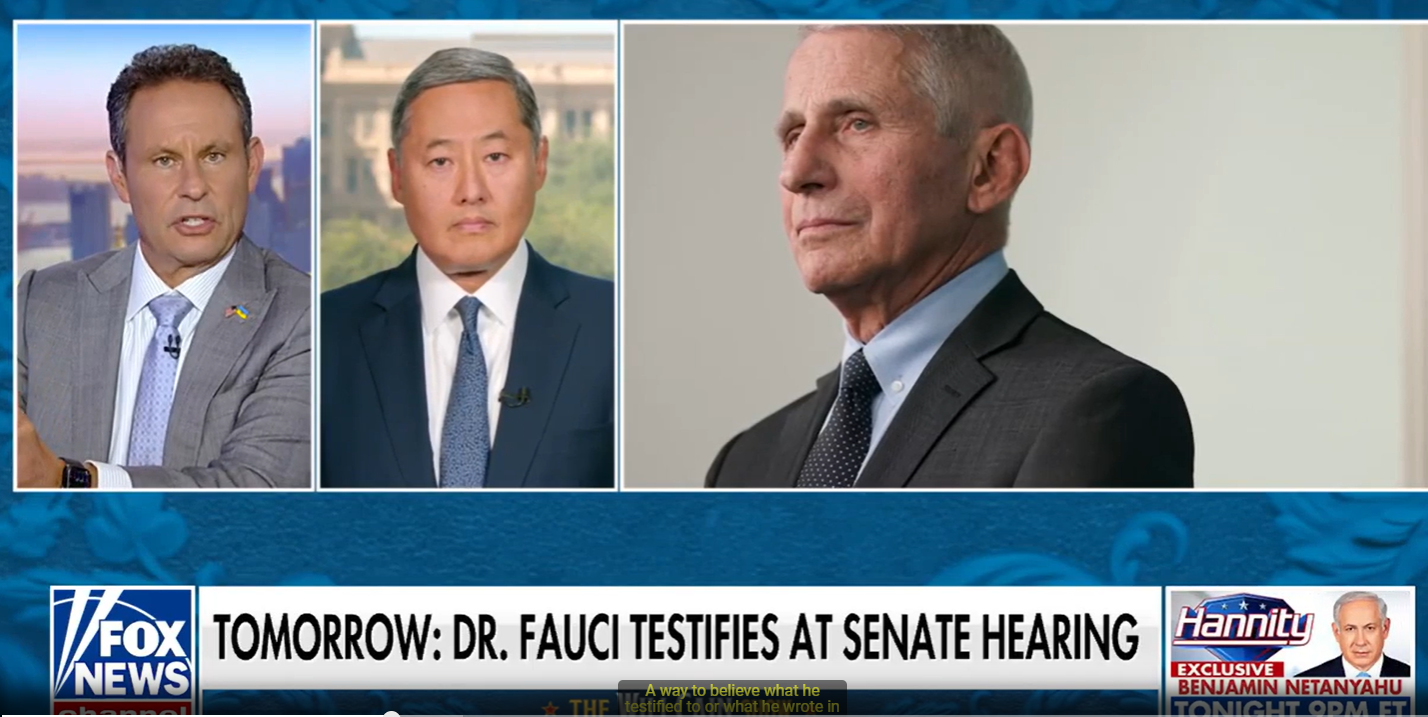
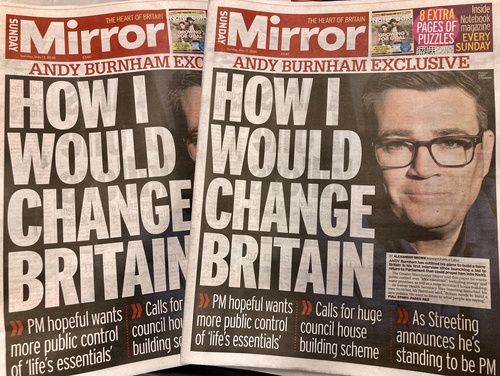
Can Britain’s Next Prime Minister Escape the Net Zero Trap?
Britain has burned through five Prime Ministers and is paying some of the highest electricity prices in the world.
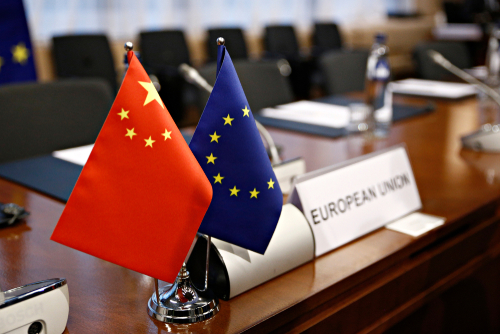
The Scanner at the Gate: Europe’s China Policy Litmus Test
China’s industrial policy is entering Europe through public procurement—and reshaping sensitive markets from within.

Confronting the New Antisemitism
"The postwar effort 'to rebrand Judaism as a religion' has made it impossible for American Jews to understand what they are facing today, because what we are facing today is an attack on the idea of Jewish peoplehood.”
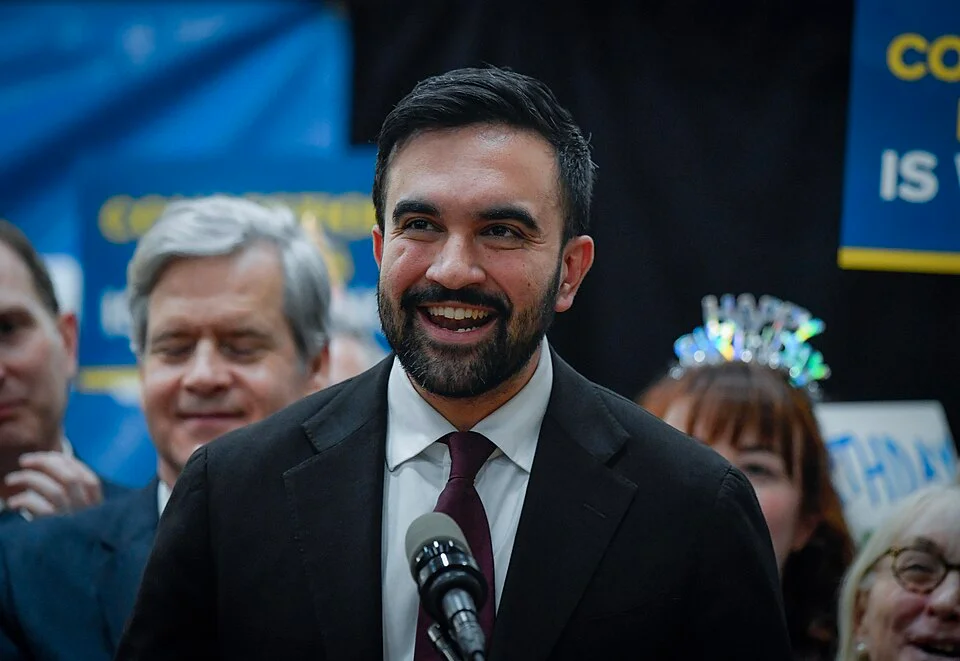
“Democratic” Socialism Is Undemocratic
By promoting class hatred, suppressing private initiative, and seeking enhanced control of our lives, today’s democratic socialists undermine patriotism and individual initiative—two qualities that have long distinguished the United States from other major nations.

