
Make the Gulf Irrelevant Again

After the Strait of Hormuz fiasco, the West needs to get serious about producing its own energy.
Whatever one thinks of the current war in Iran, allowing the fundamentally unstable Islamic Republic power over the world economy is truly a fool’s errand. In many ways, Iran’s attempt to control the Strait of Hormuz and the Red Sea is playing out in waters long shaped by piracy and imperial rivalry.
Rather than seek to placate the potentates, crowned or turbaned, the West should instead focus on making the Gulf irrelevant again. Since the days of the Silk Road, where the area played a critical role as a link between Asia and Europe, few in the period of European ascendancy worried much about these territories – that is, until they discovered huge pools of energy there a century ago. Since then, these countries have, at different times, disrupted global commerce and promoted forms of largely Islamist militancy throughout the world. Even Dubai, arguably the most enlightened of the Gulf monarchies, may not be able to thrive long-term in its awful neighborhood.
This is a lesson we should have learned during the oil embargo after the 1973 Yom Kippur War. The Saudi-led effort drove most of the capitalist world into a deep recession. The embargo hit hard because the energy business had swung, in economist Tyler Goodspeed’s words, from ‘a Gulf of Mexico oil market to a Persian Gulf-centric one’. That trend now shows signs of reversing, even if doing so may hurt the Trump family’s financial interests in the region.
To be sure, it will take years, not months, to unwind this primacy. But both the need and the means are clear. Most significant is the US transition from a mega-consumer of energy to the world’s largest producer of oil and gas – giving it the kind of leverage that did not exist in 1973. This shift predates Trump. Fracking boomed under President Obama. President Biden, facing inflation-driven political pressure, expanded drilling in the Gulf of Mexico and Alaska and approved a new LNG plant in Louisiana aimed largely at supplying Europe.

Politics
%20Richard%20Samuelson%20%20-%20Is%20American%20Nationalism%20Still%20Creed-able_-1.jpg)
Is American Nationalism Still Creed-able?
We are not there now, but there is reason to worry that the United States is in danger, if we are not careful, of ceasing to be a nation with the principles of 1776 at its core.
National Civitas Institute Poll: Americans are Anxious and Frustrated, Creating a Challenging Environment for Leaders
The poll reveals a deeply pessimistic American electorate, with a majority convinced the nation is on the wrong track.
.webp)
%20(1).avif)





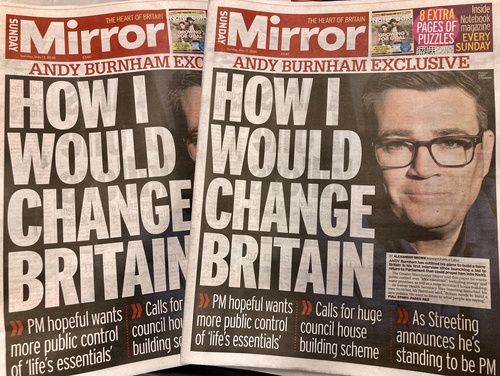
Can Britain’s Next Prime Minister Escape the Net Zero Trap?
Britain has burned through five Prime Ministers and is paying some of the highest electricity prices in the world.
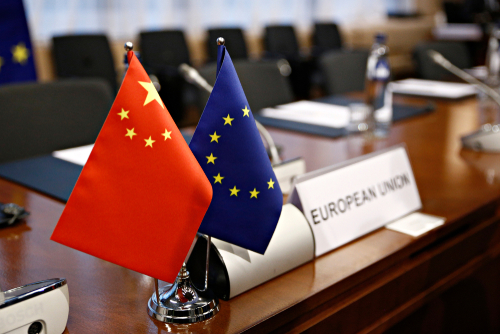
The Scanner at the Gate: Europe’s China Policy Litmus Test
China’s industrial policy is entering Europe through public procurement—and reshaping sensitive markets from within.

Confronting the New Antisemitism
"The postwar effort 'to rebrand Judaism as a religion' has made it impossible for American Jews to understand what they are facing today, because what we are facing today is an attack on the idea of Jewish peoplehood.”

“Democratic” Socialism Is Undemocratic
By promoting class hatred, suppressing private initiative, and seeking enhanced control of our lives, today’s democratic socialists undermine patriotism and individual initiative—two qualities that have long distinguished the United States from other major nations.

