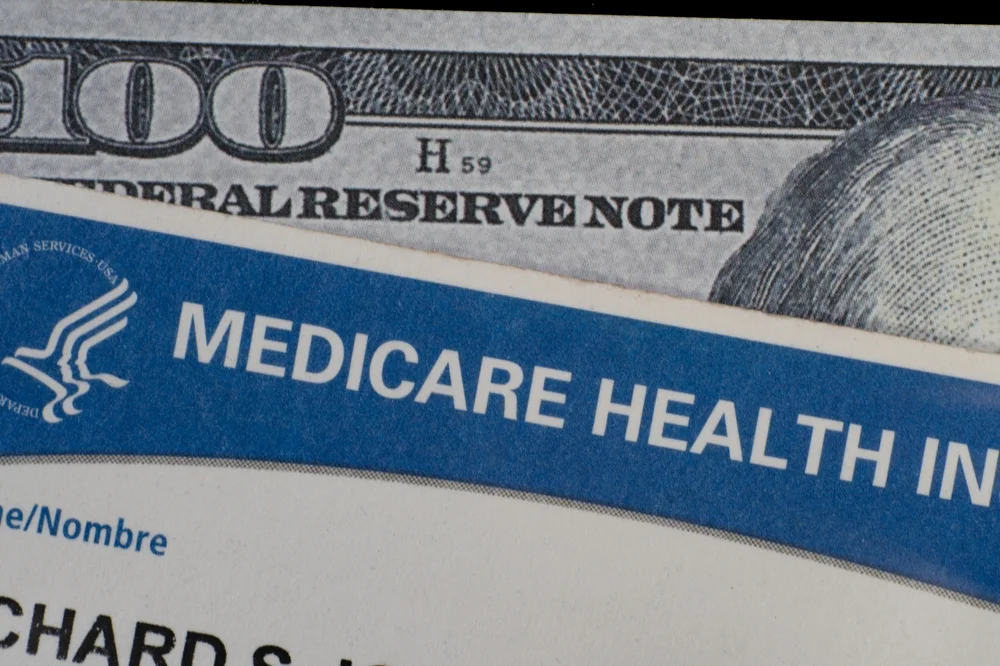
Congress Should Not Exempt Medicare from Budget Scrutiny

Medicare should be treated as a major cause of fiscal pressure and therefore a primary source of required savings.
The federal government’s fiscal position continues to deteriorate, which means Congress might be forced by circumstances to take up deficit-cutting again after a long holiday. When the moment arrives, Medicare should be treated as a major cause of fiscal pressure and therefore a primary source of required savings. There are many promising reforms on the shelf that would reduce its financial burden on current and future taxpayers.
Looking to Medicare for budget savings would mark a return to the bipartisan consensus of the 1980s and 1990s. After the Reagan administration pushed tax cuts and a defense build-up through Congress starting in 1981, federal borrowing soared. In response, both parties pursued a series of budget deals over two decades that closed projected deficits, with Medicare playing a prominent role in nearly all of them, including those struck in 1990 and 1997. The 1997 deal, which contributed to the fiscal surpluses recorded over the period 1998 to 2001, slowed Medicare spending by $385 billion over seven years, equivalent to more than $700 billion in today’s dollars.
President Trump broke with GOP orthodoxy on entitlements when he argued that Congress should leave Social Security and Medicare alone. He contends there are better options for closing fiscal gaps, including new tariffs on imported goods, cuts to the federal workforce, curtailment of fraud and abuse in major programs, and stronger growth through tax cuts and deregulation.
Many Democrats now also believe Medicare savings should go only toward improving the solvency of the Hospital Insurance (HI) trust fund or expanding program benefits. Improving HI solvency might improve the budget outlook, but only if the savings are not used for non-Medicare spending increases, as happened with some of the cuts Congress approved in the Affordable Care Act (ACA) in 2010.
Neither the Trump administration nor Democrats in Congress are offering credible deficit-cutting plans based on their current priorities. The president’s 2027 budget shows annual borrowing slowing down, but only because of an assumption of extraordinarily high real growth, which is well above the consensus, and deep cuts in domestic appropriations, which Congress just rejected for 2026. The Supreme Court’s ruling against the president’s asserted authority to impose emergency tariffs has also closed off a large source of presumed revenue.
For their part, Democrats are focused on securing sufficient political support to increase their power in the coming years, which means they are pushing for expansions of entitlement spending, not cuts.
In February, the Congressional Budget Office (CBO) estimated average annual deficits over the coming decade at 6.1 percent of GDP, up from 2.2 percent over the period 1962 to 2008. CBO’s forecast came before the Supreme Court’s tariff decision and the onset of the war with Iran.
Medicare, the nation’s health insurance program for the elderly and disabled, remains a budgetary giant despite many previously enacted cuts. Spending in 2026 is expected to be $1.3 trillion, or 4.0 percent of GDP, up from 3.1 percent of GDP in 2008. The upward trend is expected to continue indefinitely due to population aging and elevated inflation in the health sector.
Medicare is partly financed with payroll taxes and beneficiary premiums, but much of the burden gets passed on to general taxpayers through automatic annual transfers from the Treasury. This year, the transfer equals 1.9 percent of GDP, up from just 0.3 percent in 1980, and the Medicare trustees expect it to reach 3.0 percent of GDP in 2050. The funds come from general tax receipts or federal borrowing.
Although the administration is not advancing proposed Medicare cuts in Congress, it is aggressively pursuing fraud and abuse it can eliminate through tighter administrative controls. Those efforts are promising and commendable, yet they are unlikely to generate enough savings to fully offset the pressures pushing program spending up rapidly.
Congress has many options to reduce future Medicare spending, starting with changes to Medicare Advantage (MA), which is the program’s private insurance arm. Many independent studies show that MA plans are overpaid. The Trump administration initially proposed to hold MA rates close to a nominal freeze in 2027, which would have produced some savings. However, after industry pushback, much of the expected savings was eliminated in the final rule.
A better approach would be to push new legislation through Congress that switches the basis for MA payments from administratively-determined rates to premium bids submitted by plans for a standardized product. MA plans that charge higher premiums risk losing enrollment to lower-priced competitors. An average 5.0 percent reduction in MA rates would produce hundreds of billions of dollars in savings over a decade and is achievable. Putting the formula in law would be challenging; however, if such a push were successful, it would reduce the opportunity for industry influence over complex administrative calculations.
Medicare continues to allow hospital-owned clinics to charge more than their standalone competitors for the same services. CBO estimates a “site neutral” policy that paid a uniform outpatient rate regardless of clinic ownership would reduce federal expenditures by $157 billion over ten years. It would also lessen the incentive for further consolidation of the industry.
Teaching hospitals get bonus payments from Medicare in excess of their actual resident training costs. Pulling this subsidy out of Medicare and capping its growth would reduce federal spending by over $90 billion over the next ten years.
Beneficiaries should pay more, too. Halting the indexing of the income thresholds used to charge higher premiums to well-off retirees, which start at $109,000 in annual income in 2026, would save $57 billion over a decade. Lower and middle-income seniors could be protected from the change. Rationalizing the program’s cost-sharing rules with a uniform, single deductible, 20 percent co-insurance on all services, and an overall limit on total costs would save an additional $20 billion over ten years.
Medicare is a major purchaser of services and products provided outside of hospital settings and physician offices, such as imaging services, lab tests, and home health care. Each could be procured at a lower cost with competitive bidding.
If both Social Security and Medicare are exempt from budget discipline, the required cuts elsewhere will be excessive. CBO projects 39 percent of non-interest federal expenditures above the nominal level of outlays observed in 2026 will go to Medicare over the coming decade. Social Security gets a similarly large share of planned future spending.
Republicans in Congress are currently discussing how to offset planned spending on the war in Iran and immigration enforcement in a new budget reconciliation bill. If that legislation gains momentum, it is possible Congress will look to Medicaid and ACA subsidies for additional savings beyond what was achieved in the 2025 legislation. While there are still many possible reforms to these programs that would cut costs, some changes to Medicare might yield greater savings with less political fallout.
The federal government’s fiscal gap is too wide to rule out any options, including Medicare. Small adjustments to the program can produce substantial long-term savings, which would translate into less pressure for economically damaging tax hikes and potentially harmful cuts to other programs. When Congress is forced to get serious about deficit cutting again, which could happen relatively soon, Medicare should be at the top of the list of programs receiving a thorough review.
James C. Capretta is a senior fellow at the American Enterprise Institute and the author of US Health Policy and Market Reforms: An Introduction, published by AEI Press in 2022.

Politics
%20Richard%20Samuelson%20%20-%20Is%20American%20Nationalism%20Still%20Creed-able_-1.jpg)
Is American Nationalism Still Creed-able?
We are not there now, but there is reason to worry that the United States is in danger, if we are not careful, of ceasing to be a nation with the principles of 1776 at its core.

National Civitas Institute Poll: Americans are Anxious and Frustrated, Creating a Challenging Environment for Leaders
The poll reveals a deeply pessimistic American electorate, with a majority convinced the nation is on the wrong track.
.webp)
%20(1).avif)

.jpg)



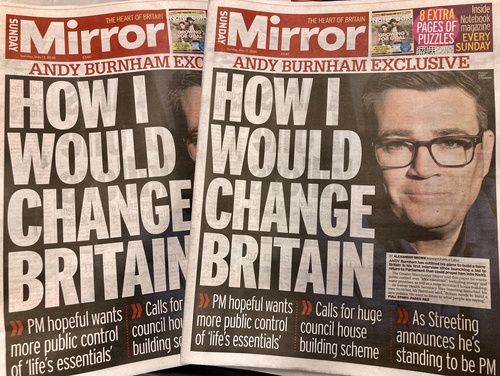
Can Britain’s Next Prime Minister Escape the Net Zero Trap?
Britain has burned through five Prime Ministers and is paying some of the highest electricity prices in the world.

The Scanner at the Gate: Europe’s China Policy Litmus Test
China’s industrial policy is entering Europe through public procurement—and reshaping sensitive markets from within.

Confronting the New Antisemitism
"The postwar effort 'to rebrand Judaism as a religion' has made it impossible for American Jews to understand what they are facing today, because what we are facing today is an attack on the idea of Jewish peoplehood.”
“Democratic” Socialism Is Undemocratic
By promoting class hatred, suppressing private initiative, and seeking enhanced control of our lives, today’s democratic socialists undermine patriotism and individual initiative—two qualities that have long distinguished the United States from other major nations.

