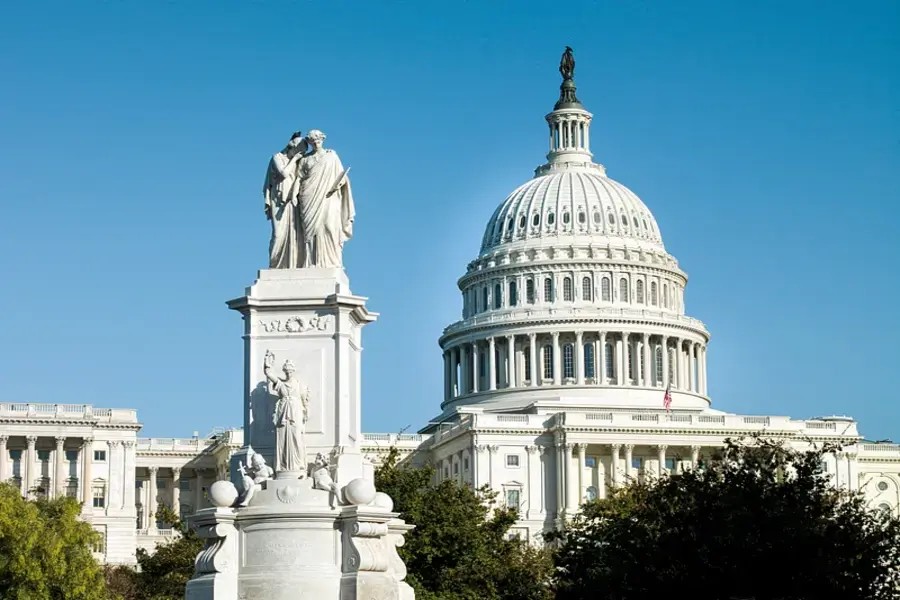
AI Cyber Risks Are Testing the Office Built to Coordinate Them

Congress created the National Cyber Director to solve a coordination problem. AI cyber risks may reveal whether the office has the tools to do so.
Artificial intelligence (AI) models with increasingly sophisticated cyber capabilities are forcing a basic institutional question: Is the federal government prepared to help public and private actors anticipate and respond to the risks those models may create? A review of the administration’s whipsaw approach to AI-related cyber risks indicates that a component of that preparedness—the Office of the National Cyber Director (ONCD)—may not be fulfilling its intended purpose. More specifically, the ONCD does not seem to be leveraging its cyber expertise to inform and coordinate the executive branch’s response to emerging issues.
Though some cyber experts have dismissed panic over frontier models such as Anthropic’s Mythos and OpenAI’s ChatGPT 5.5 as premature and unjustified, several members of the Trump administration have determined that the threats posed by existing models warrant a proactive response. Treasury Secretary Scott Bessent in particular has pushed the administration to take seriously the cyber capabilities of models like Anthropic's Mythos and OpenAI’s ChatGPT-5.5.
The administration’s most concrete action was a draft executive order on cyber resilience and pre-deployment evaluation of sufficiently capable AI models. That order was pulled hours before a planned signing ceremony. Even so, the draft confirms that AI-enabled cyber risk has become a live White House concern. Among other provisions, the order directed several executive branch actors to exercise cyber-readiness authorities, including by deploying resources and expertise to private and public actors that may be especially susceptible to threats introduced by advanced AI models.
The episode raises a harder question than whether one executive order was well-conceived: whether the office Congress created to coordinate national cyber policy is structured to handle the cross-cutting risks that AI now presents.

Politics
%20Richard%20Samuelson%20%20-%20Is%20American%20Nationalism%20Still%20Creed-able_-1.jpg)
Is American Nationalism Still Creed-able?
We are not there now, but there is reason to worry that the United States is in danger, if we are not careful, of ceasing to be a nation with the principles of 1776 at its core.
National Civitas Institute Poll: Americans are Anxious and Frustrated, Creating a Challenging Environment for Leaders
The poll reveals a deeply pessimistic American electorate, with a majority convinced the nation is on the wrong track.
.webp)
%20(1).avif)

.jpg)


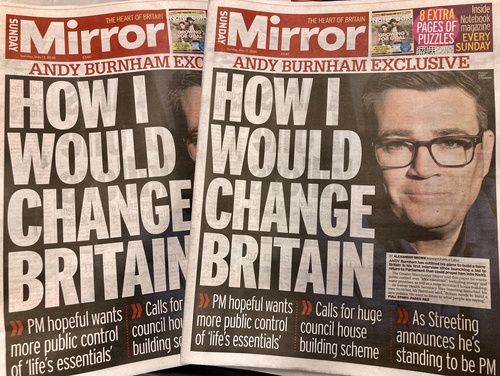
Can Britain’s Next Prime Minister Escape the Net Zero Trap?
Britain has burned through five Prime Ministers and is paying some of the highest electricity prices in the world.
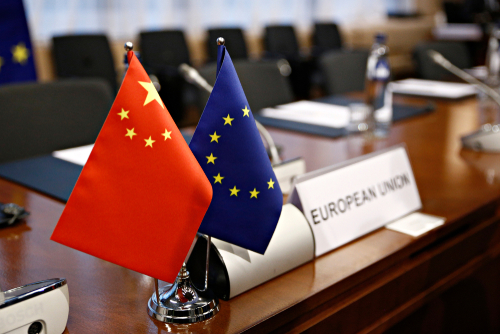
The Scanner at the Gate: Europe’s China Policy Litmus Test
China’s industrial policy is entering Europe through public procurement—and reshaping sensitive markets from within.

Confronting the New Antisemitism
"The postwar effort 'to rebrand Judaism as a religion' has made it impossible for American Jews to understand what they are facing today, because what we are facing today is an attack on the idea of Jewish peoplehood.”
“Democratic” Socialism Is Undemocratic
By promoting class hatred, suppressing private initiative, and seeking enhanced control of our lives, today’s democratic socialists undermine patriotism and individual initiative—two qualities that have long distinguished the United States from other major nations.

