
Yes, President Trump Can Withdraw from NATO

He has the constitutional authority to do so. That doesn’t mean he should.
The Iran war has had the unintended consequence of undermining the West’s preeminent postwar alliance. Disappointed by the refusal of European allies to assist the United States, the Trump administration is floating the possibility of exiting the North Atlantic Treaty Organization (NATO). Critics argue that the president cannot terminate a treaty on his own. But the Constitution is clear: Presidents can indeed unilaterally end U.S. participation in international agreements. If Donald Trump wants to tear up the NATO treaty, he can just do it. And in June, the Supreme Court may even provide implicit support for such an exercise of presidential power.
Just because Trump can take such action, however, doesn’t mean he should.
President Trump has grounds for questioning the loyalty of our European allies. Europeans can claim, correctly, that the Iran war does not fall within the geographic scope of the NATO treaty, just as with the Iraq war. Nevertheless, the United States could reasonably expect support against an Iranian enemy, motivated by religious fundamentalism, that can strike European capitals with ballistic missiles and choke off their oil imports from the Persian Gulf.
But instead of supporting the United States to some degree, Spain barred U.S. military aircraft from its bases and airspace. France denied launching rights for U.S. warplanes bound for Iran and overflight permission for U.S. supply planes bound for Israel; the United Kingdom refused to allow the U.S. to conduct “offensive” operations from bases within British territory; and Italy barred U.S. bombers from landing at its Sigonella airbase in Sicily. While other European nations have quietly assisted, as NATO Secretary General Mark Rutte made clear in Washington, D.C., meetings last week, none have agreed to participate in operations to reopen the Strait of Hormuz or protect civilian shipping.

Politics
%20Richard%20Samuelson%20%20-%20Is%20American%20Nationalism%20Still%20Creed-able_-1.jpg)
Is American Nationalism Still Creed-able?
We are not there now, but there is reason to worry that the United States is in danger, if we are not careful, of ceasing to be a nation with the principles of 1776 at its core.
National Civitas Institute Poll: Americans are Anxious and Frustrated, Creating a Challenging Environment for Leaders
The poll reveals a deeply pessimistic American electorate, with a majority convinced the nation is on the wrong track.
.webp)
%20(1).avif)

.jpg)


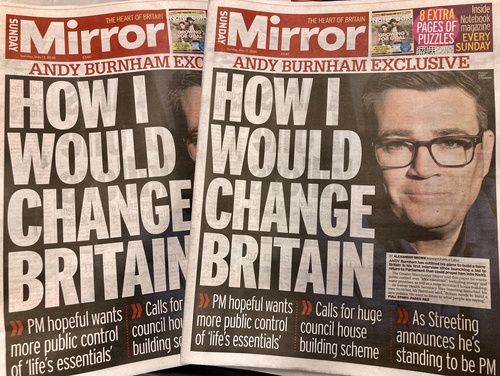
Can Britain’s Next Prime Minister Escape the Net Zero Trap?
Britain has burned through five Prime Ministers and is paying some of the highest electricity prices in the world.
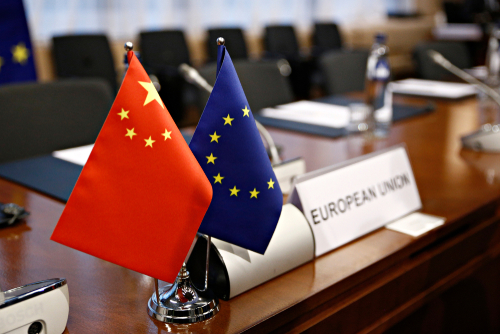
The Scanner at the Gate: Europe’s China Policy Litmus Test
China’s industrial policy is entering Europe through public procurement—and reshaping sensitive markets from within.

Confronting the New Antisemitism
"The postwar effort 'to rebrand Judaism as a religion' has made it impossible for American Jews to understand what they are facing today, because what we are facing today is an attack on the idea of Jewish peoplehood.”

“Democratic” Socialism Is Undemocratic
By promoting class hatred, suppressing private initiative, and seeking enhanced control of our lives, today’s democratic socialists undermine patriotism and individual initiative—two qualities that have long distinguished the United States from other major nations.

