
Why America, Not Iran, Has the Stronger Legal Position in the Current War
.avif)
Efforts to isolate the current Iranian conflict from its historical context undermine the arguments of critics.
There are both long and short time scales for evaluating the current conflict over control of the Strait of Hormuz. Thus, the first question concerns when the war began and who started it. The second addresses how these issues should be evaluated under the principles of international law.
There is now posted online a powerful recent statement filed by over 100 International Law experts on Just Security that minces no words when it attacks the US and Israel on both counts when it concludes “that U.S. Strikes on Iran Violate UN Charter and May be War Crimes.” Their position paper should emphatically be rejected. Its rhetorical approach seeks to isolate the actions committed by the United States (and Israel), introducing a fatal oversimplification of the quarrel within a short time frame, even though these scholars obliquely recognize that there are reasons to be concerned with Iran’s behavior throughout the conflict, which already was condemned on March 11, 2026 by the Security Council (China and Russia abstaining) for an “Egregious Attacks” on its Middle East neighbors.
In dealing with these cases, the key theoretical point is that their interdependent behaviors make an equally interdependent analysis imperative. Just Security’s short-term approach further has the consequence of treating the question of legality as determined solely by actions taken on or after February 28, 2026, as if the prior background does not matter. In part, these signatories do so because of their reading of the UN Charter, which in Article 51 is read to say that the only time force may be used in anticipatory self-defense is in response to an “imminent attack” on a member nation, including the United States.
The overall position is reinforced by a JAG report that states:
Today, just as in 1837, the elements of anticipatory self-defense require an imminent threat that is instant and overwhelming, leaving no moment for deliberation, and requiring a necessary and proportional response.
The ostensible justification for that position is that this view minimizes the risks that such wars will start and spread unless that measure is put into place. But there are always two kinds of error, and what is missing from the current dominant rules on self-defense is an equally hard look at opposite kind of error, which is waiting too long when the danger of some attack is always omnipresent but never imminent, especially in those cases that move so fast on the ground that there will be no chance to respond successfully if the threat must be imminent. Yet it is precisely those unique circumstances present here that demonstrate that the test of imminence increases the risks of the kind of massive increase in hostilities that the rule on imminent attack itself is there to prevent. That kind of danger was not remotely present to justify the U.S. attack on Venezuelan small speedboats sailing the Caribbean, which required no forcible response on the high seas, and capturing these boats, when and if they enter United States waters, would be a sufficient response to these modest criminal incursions. But the Iranian situation is wholly distinguishable.
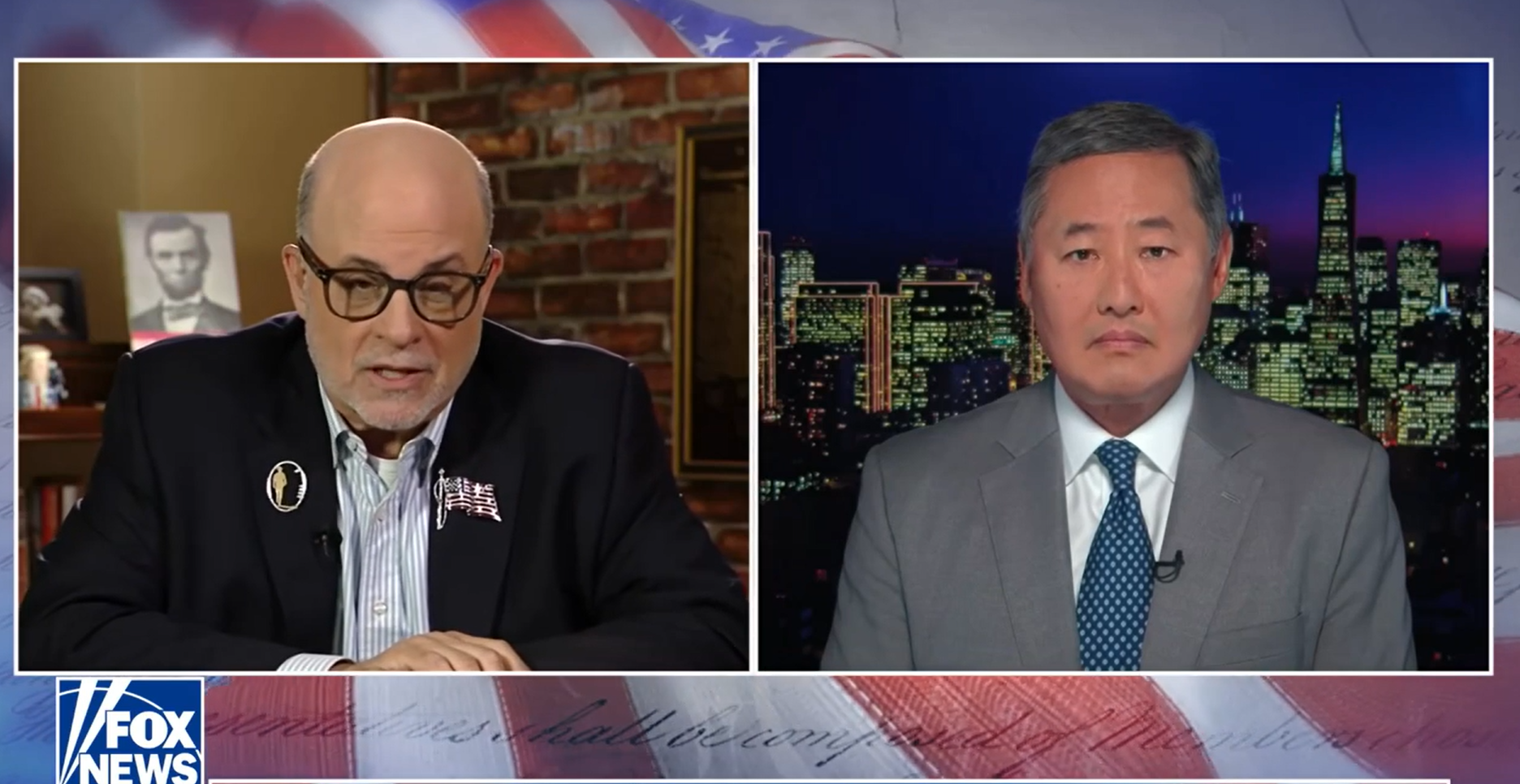
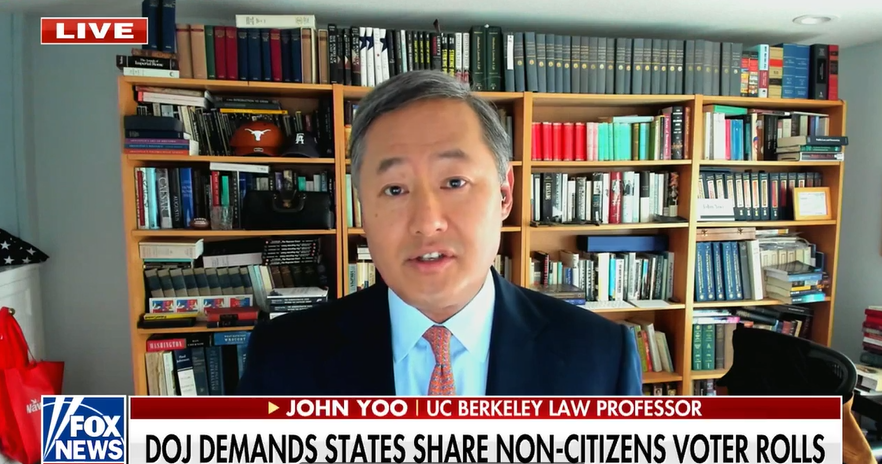
There is no question that some of the rhetorical moves of the Trump administration are appalling in the highest degree, most notably his grotesque claim that US forces could wipe out all vestiges of civilization in Iran. But his constant stream of excesses should not be allowed to obscure the better formulations that a calmer Trump could make of a position that defends the need for a regime, as powerfully urged by John Yoo, change in Iran in order to prevent another pause-like cease fire that thereafter erupts into war with yet another surprise attack, such as Hamas launched on October 7, 2023 against Israel, with devastating consequences that still resonate unresolved to this very day,
To see why this aggressive stance is warranted against Iran, and only Iran, it is necessary to go back in time to place the current events in context. As everyone knows, the American attack did not take place in a void, but followed in the path of a long history that dates back to the ouster of the Shah in 1979, after which the new Iranian regime engaged in an illegal and inexcusable detention of American diplomats as hostages in flagrant violation of international law, for which Iran’s current regime has not once apologized. Since that time, the regime has maintained two cardinal principles, “death to Israel” and “death to the United States.” These cannot be dismissed as rhetorical flourishes, given that Iran acted on that threat multiple times, including the slaughter of US Marines. It is hard to disagree with the general assessment issued by the Trump White House on March 2, 2026:
For nearly half a century, the Islamic Republic of Iran — the world’s leading state sponsor of terrorism — has killed and maimed American citizens and service members through its own forces and proxy militias. (Bold in original.) More Americans have been killed by Iran than any other terrorist regime on Earth.”
That history has not been erased by recent events, which, if anything, have witnessed an intensification of the Iranian efforts to undermine its stated enemies since the events of October 7, 2023. Yet, it has not occurred to the writers of this document that if the Israelis had played nice after October 7, there might not be an Israel to denounce today, as there was no way in which Israel could have survived a war of attrition with its many enemies, all of whom were prepared to absorb massive losses in an effort to wipe it off the face of the earth. Even the learned law professors could deny that Iran and its allies have never had any compunction to carry out their plans if given half the chance.
Nor can the United States be counted as a long-term savior, given the Democratic Party's defection from its defense. So long as that language drives Iranian policy, there is a continuous state of war with Iran, whose larger territory and population could prove decisive in the long run.
Nor is there any reason to think that in the aftermath of the major defeats at the hands of both Israel and the United States, Iran has learned its lesson and now wishes to, for the first time, adhere to the basic principles of international law about when and how to wage war. Yet Just Security never once mentioned the negotiations that preceded the last round of attacks. The United States wanted to impose two constraints on Iran. The first was that it stop now the rhetoric about death to Israel and the United States, which are best interpreted as the latest steps of the ongoing propaganda war, which was an essential continuation of the assault that began in 1979. Next, Iran flatly turned down the United States’s offer to give Iran the same deal that has been accepted elsewhere, namely, to supply free-of-charge nuclear fuel for domestic purposes that could not be enriched. It is well known that without that technical constraint, it is a short path from civilian to military uses, which makes it quite mad for the United States and Israel to remain in a constant but ineffective state of readiness until they see those rockets and bombs loaded into missile silos. Yet it is just that result that the Just Security signatories want to govern this situation. Indeed, they go so far as to insist on three separate occasions.
To look to the criminal law by way of comparison, any version of a clear and present danger test is uniformly rejected, so that criminal conspiracy, and aiding and abetting before or after the act have always been part of the arsenal of the criminal law. As the late Chief Justice Fred Vinson in Dennis v. United States (1951), said:
Obviously, the words [clear and present danger] cannot mean that, before the Government may act, it must wait until the putsch is about to be executed, the plans have been laid and the signal is awaited. If Government is aware that a group aiming at its overthrow is attempting to indoctrinate its members and to commit them to a course whereby they will strike when the leaders feel the circumstances permit, action by the Government is required.
There is absolutely no reason why that criminal law gloss of the term “imminent” should be rejected in international law, just because the stakes are far higher. Without question, the demonstrated actions of Iran should make it a pariah among nations. But the Just Security group never addresses the risks of inaction when action is required.
Instead, they take the following position from the International Humanitarian Law Data Bases: “Attacks on nuclear power plants, even if they have a military purpose, require particular care because of the high risk of releasing radiation and radioactive material and consequent severe harm to the civilian population.” But the aftermath yielded this split verdict:
Rafael Grossi, the director-general of the International Atomic Energy Agency (IAEA), said that “no radiological release has affected the public,” adding, however, that “[Israel’s] attacks on Iranian nuclear sites have caused a sharp degradation in nuclear safety and security.”
The evidence of the former is conclusive, and on the latter, it is an estimation that apparently was not influenced by the actual event, in an analysis that ignores the risks that could ensue from the nontrivial risks that Iran could have done with the bomb, and by the reduced probability of the need for any such attack on facilities by the US and Israel, on the other hand. Like all other UN reports, this one has to be discounted because of the obvious anti-American bias that leads people to overlook the massive risks from the coordinated pattern of excessive force brought on by the Iranian forces.
The most obvious example of that was the instant decision by the Iranian government to attack its neutral neighbors in the Gulf of Hormuz—inflicting serious deaths, injuries, property damage, and massive disruption of the flow of oil through the Strait. Here, there is an on-again, off-again set of ceasefires that come and go regularly. These actions of Iran in each of these cases are flatly illegal, and no beef that they have against the United States justifies these actions, let alone an effort unilaterally to nationalize, at least de facto, that critical body of international water. It is equally clear that if Iran had kept the waters in the strait open to international traffic, the United States would have never decided to impose countermeasures on those nations that did ship traffic through the strait.
Just Security notes the tragic bombing on the first day of the conflict, which, if true, should be condemned as beyond the permissible boundaries of modern warfare. But Israel never sought to justify that action (which was commonplace for all participants in World War II). Indeed, there is no claim that the bombing was deliberate, so it is best for now to treat this as an American or Israeli blunder of the first order. But what about the report from Al Jazeera that “Iran has responded by launching thousands of missiles and drones not just at Israel and US facilities across the region, but also at Gulf neighbors who have tried hard not to get sucked into the conflict.” Its actions are manifestly an overreaction that spreads the conflicts to innocent third parties and warrants the highest condemnation.
Yet the decision of Just Security to look only at Israeli and American misdeeds keeps this issue off the table. The current dithering about firm military action in the face of manifest bad faith by Iran is now leading to an on-again-off-again set of ceasefires that come and go on a regular basis. These actions of Iran in each of these cases are flatly illegal, and no beef that they have against the United States justifies these actions. Nor do they justify an effort unilaterally to nationalize, at least de facto, a critical body of international water. It is equally clear that if Iran had kept international waters in the Hormuz Strait open to international traffic, the United States would have never decided to impose countermeasures on those nations that did ship traffic through the strait.
Those blockaded nations have the right to use force to restore their national integrity and access to the Strait. It is also clear that any alliance these nations have with each other and with other powers can be structured so that the responsive arc of fire extends in ways that place exclusive responsibility on Iran for expanding the war. At this point, the calculus changes depending on how the US gets involved. Thus, it can assist with this war effort immediately, as the attack is not just imminent but actual. That new development makes it clear that no declaration of war is needed to intervene in the midst of hostilities, and that the 1973 War Powers Act is both an unwise and unconstitutional restraint on Presidential Power, even on the blinkered domestic view that this began on February 28, 2026. The maximum power Congress can exercise is at the outset of a foreign interaction. Thus, the Senate consent in Article II, section 2, which requires that the president obtain the advice and consent before he can formally ratify the agreement. But once it is implemented, it may well be subject to breach, modification, or repudiation, and to arbitration, all of which cannot be effected easily by Congress, given the numerous transactions that may be required under many treaties. The same point applies to the use of the war power, where the President, as commander-in-chief should consult with some members of Congress whenever possible and prudent, but where it is, especially in a rapid action and reaction, should never be hardened into a legal obligation. It may be regrettable, but the speed with which the world moves necessarily vests more power in the President, whether Biden or Trump. All these nuances are missed in the analysis offered by Just Security. Its work is so one-sided and narrowly focused that both the president and the Congress would do well to ignore it.
Richard Epstein is a senior research fellow at the Civitas Institute at the University of Texas at Austin.

Politics
%20Richard%20Samuelson%20%20-%20Is%20American%20Nationalism%20Still%20Creed-able_-1.jpg)
Is American Nationalism Still Creed-able?
We are not there now, but there is reason to worry that the United States is in danger, if we are not careful, of ceasing to be a nation with the principles of 1776 at its core.
National Civitas Institute Poll: Americans are Anxious and Frustrated, Creating a Challenging Environment for Leaders
The poll reveals a deeply pessimistic American electorate, with a majority convinced the nation is on the wrong track.
.webp)
%20(1).avif)






Can Britain’s Next Prime Minister Escape the Net Zero Trap?
Britain has burned through five Prime Ministers and is paying some of the highest electricity prices in the world.
The Scanner at the Gate: Europe’s China Policy Litmus Test
China’s industrial policy is entering Europe through public procurement—and reshaping sensitive markets from within.

Confronting the New Antisemitism
"The postwar effort 'to rebrand Judaism as a religion' has made it impossible for American Jews to understand what they are facing today, because what we are facing today is an attack on the idea of Jewish peoplehood.”
“Democratic” Socialism Is Undemocratic
By promoting class hatred, suppressing private initiative, and seeking enhanced control of our lives, today’s democratic socialists undermine patriotism and individual initiative—two qualities that have long distinguished the United States from other major nations.

