Trump’s Tariff Tantrum
.avif)
Trump should have taken his defeat as an opportunity to retreat gracefully from his tariff policy.
In what may be the worst moment of his troubled presidency, Donald Trump viciously lashed out at the six-member majority in Learning Resources v. Trump. In that case, a fractured Court by a six-three majority struck down Trump’s tariff program. Jonathan Adler accurately outlines the various opinions in this space, so I will not review them in detail here. The big new is that this majority, led by Chief Justice John Roberts, struck down Trump’s “Tariff Liberation” program on the ground that it was not authorized under IEEPA (“International Emergency Economic Powers Act”), which covers “any unusual and extraordinary threat, which has its source in whole or substantial part outside the United States, to the national security, foreign policy, or economy of the United States, if the President declares a national emergency with respect to such threat.”
A weak dissent by Justice Brett Kavanaugh took the position that IEEPA’s mandate to “regulate . . . importation” supplied the needed authority. But the point was threadbare. Under the Constitution, the words tariff and regulation are not used interchangeably, especially since the words “regulate . . . importation” take their meaning from the omitted text, which “empowers the President to “investigate, block during the pendency of an investigation, regulate, direct and compel, nullify, void, prevent or prohibit . . . importation or exportation.” Tariffs are not on the full list, and that omission is much more telling given that eight other actions are listed. And if tariffs were included on the list, then the statute is prima facie unconstitutional because Article I, Section 9, Clause 5: “No Tax or Duty shall be laid on Articles exported from any State.” Does the word “exportation” have to be severed from the statute in order to read in tariffs into it?
In his methodical and workmanlike opinion, the Chief Justice dismantled Trump’s overreach, which was a necessary corrective to Trump’s audacious claim that he, as president, has the power to declare whatever emergency whenever he wants, and that such a decision is unreviewable by any court. As the Chief Justice noted, that argument sits poorly with the basic constitutional design that gives to Congress in Article I, Section 8. the “Power To lay and collect Taxes, Duties, Imposts and Excises.” That power may be partially delegated to the executive branch, but that was not done here. Nor is it by any means that this Clause allows the president to unilaterally declare an emergency, which must be found as a matter of fact in order to impose tariffs. Thus, he must show that there is an objective “threat” to which he is then entitled to respond. The last thing that counts as a threat is a set of long-term trade bilateral deficits with some but not all of our trading partners, especially when the best studies suggest that the ultimate burden of the tariffs falls almost entirely on the American consumer. Far from stopping an emergency, Trump is closer to creating one with his erratic trade policy, which is why on the Monday following his announcement, all major stock indexes plummeted. Trump should have taken his defeat as an opportunity to back off gracefully from such an ignorant policy. And yet . . .
He does the exact opposite. An economically illiterate president believes bilateral deficits prove that other nations are “ripping us off.” But the opposite is true. The United States has grown rich under the current regime governing international trade, because the higher the volume of voluntary transactions, the greater the overall gain. How is any nation ripped off when it is home to most of the world’s largest companies and a stock market that is the envy of the world? Why then predict doom from the Court when the market, whose collective views differ decidedly from Trump, smartly moved up the day the Court’s decision was announced — even though it was apparent, first, that Trump would do whatever he could to undermine the decision, and second, that, as Justice Kavanaugh noted in his weak dissent, there would be major problems with respect to whether refunds for the tariffs should be made in consequence of the decision?
Take the first point first. Trump claims that IEEPA was only one tool, perhaps the best tool, with which to impose his position. Indeed, he appears to be taking the position that he does not need to return to Congress to obtain leave for his actions. Now that he has struck out with IEEPA, his next move is to claim that he can impose tariffs as he pleases under Section 122 of the Trade Act of 1974, which he believes allows him to impose uniform surcharges of up to 15 percent for up to 150 days without congressional approval to address a key problem, which Trump still identifies as trade deficits. But that statute does not give the president a blank check any more than IEEPA does:
Richard Epstein is a senior research fellow at the Civitas Institute at the University of Texas at Austin.

Constitutionalism
Amicus Brief: Hon. William P. Barr and Hon. Michael B. Mukasey in Support of Petitioners
Former AGs Barr and Mukasey Cite Civitas in a SCOTUS Brief

Rational Judicial Review: Constitutions as Power-sharing Agreements, Secession, and the Problem of Dred Scott
Judicial review and originalism serve as valuable commitment mechanisms to enforce future compliance with a political bargain.
.avif)




.png)
.png)
.png)
.png)
.png)
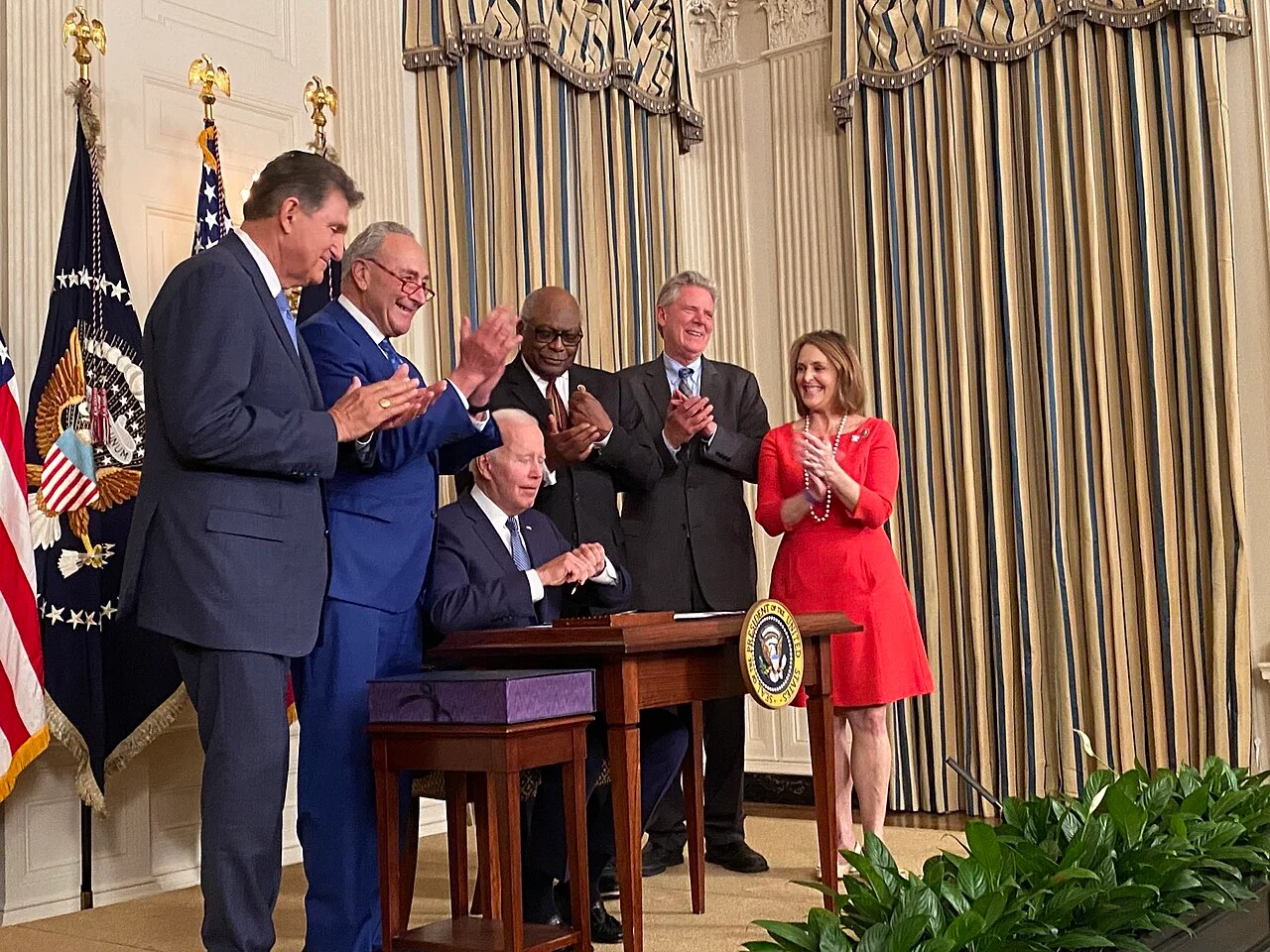
The Fifth Circuit’s Chance to Expose the Inflation Reduction Act’s Unconstitutionality
Despite the mounting evidence of harm, the Medicare Drug Price Negotiation Program remains law — and the Justice Department continues to defend it in federal court.