Struck By Lightning Fifty Years Later: The Court’s Broken Promise on the Death Penalty

Fifty years after Gregg v. Georgia, the Supreme Court’s promise to eliminate “randomness” in capital sentencing has failed.
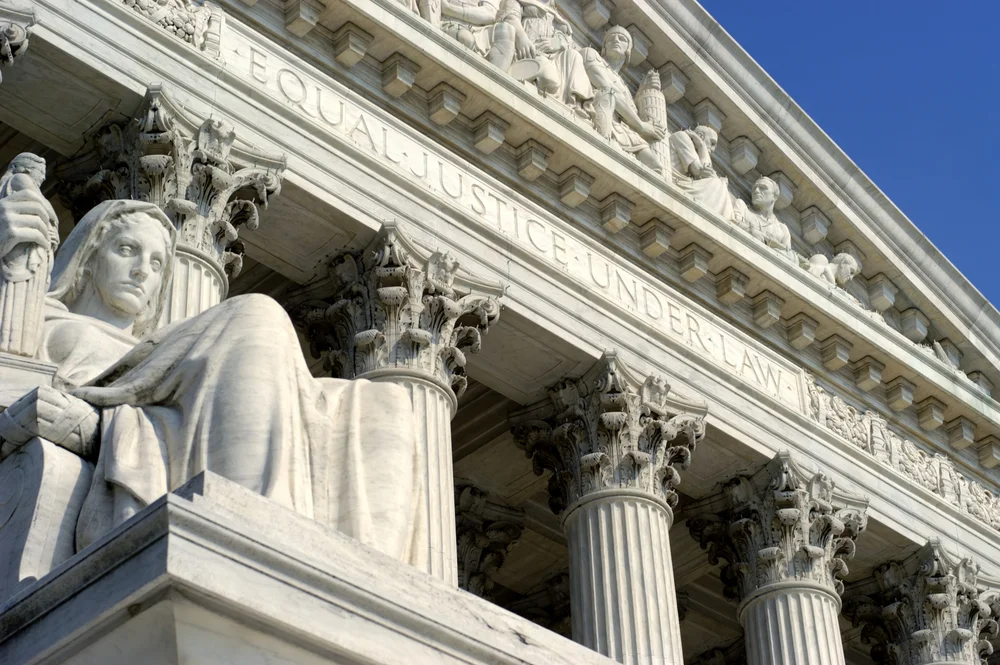
In 1972, when the Supreme Court imposed a moratorium on capital punishment, Justice Potter Stewart wrote that being sentenced to death was as random as being struck by lightning. Four years later, in Gregg v. Georgia, the Court promised to tame the randomness and lifted its moratorium. Now, on the eve of Gregg’s fiftieth anniversary, the Court will decide Hamm v. Smith, a case that reveals how thoroughly that promise has failed. In the name of “evolving standards of decency,” the Court has built a system every bit as arbitrary as the scheme Gregg set out to replace—its randomness now driven not by juries but by Justices in thrall to professional guilds whose policy commitments masquerade as expertise.
Since 1976, over 1,600 people have been executed in the United States. Scholars, politicians, and advocacy groups routinely lament “American exceptionalism” on this score. Such laments betray the parochialism of their authors: Japan, a humane democracy, retains the death penalty, as do China, Singapore, India, parts of Africa, and much of the Islamic world. Among the nations that trace their heritage to Western Christendom, however, America is indeed an outlier—and several Justices’ discomfort with this fact explains much of what follows.
The Court in Gregg countenanced the death penalty largely because of the backlash to Furman v. Georgia, the 1972 decision imposing the moratorium. Congress and thirty-five states had promptly re-enacted death penalty statutes. Sensing the direction and strength of the political winds, the Gregg Court retraced its steps and cautiously approved capital punishment. But it attached conditions that would eventually render the “machinery of death” unworkable, or workable only at staggering cost.
The Court’s chief complaint in Furman was that death sentences were, as Justice Stewart famously put it, as capricious as being struck by lightning. An obvious solution, adopted by several states, was to make death sentences mandatory upon a jury’s conviction of certain enumerated offenses. But in Gregg and, more pointedly, in a companion case decided the same day, the Court declared that capital defendants were constitutionally entitled to an individualized assessment of character and culpability, including so-called mitigating factors. Two lines of precedent emerged. One demanded “rational criteria” to narrow the class of death-eligible offenders. The other demanded unbounded discretion to spare an offender for virtually any reason whatsoever. Justice Antonin Scalia would later skewer “the simultaneous pursuit of contradictory objectives.”
This contradictory doctrine rests on a contested constitutional foundation. The Supreme Court’s authority to police the death penalty derives, at least nominally, from the Eighth Amendment’s ban on “cruel and unusual punishments.” In Gregg, the Court rejected the view, later championed by Justice Scalia, that the Amendment simply forecloses punishments deemed “barbarous” in the eighteenth century. Drawing upon an earlier decision, the Gregg Court construed the Amendment as authorizing courts to prohibit punishments that offend “evolving standards of decency.” The Court promised to ground this amorphous standard in “objective” evidence, primarily the laws enacted by state legislatures. Ominously, the Court reserved the authority to undertake its own independent assessment of whether a punishment accords with “the basic concept of human dignity at the core of the [Eighth] Amendment.”
In retrospect, the “evolving standards” formula concealed a question: whose standards? Gregg gestured to “society,” “the people,” and “contemporary standards.” These abstractions obscured the reality that the public is as divided on capital punishment as on other moral and political issues. Two rival candidates emerged. On one side stand the democratically elected legislatures, backed by consistent majorities in many states, that have authorized capital punishment. On the other side stand the credentialed guilds, including the American Psychological Association (APA), the American Bar Association, and the legal professoriate, whose opposition has been unwavering for five decades.
The Court’s recurring temptation is to defer to “the experts” while paying lip service to democratic consensus. Atkins v. Virginia (2002), which forbids the execution of the intellectually disabled, illustrates this pattern. The Court conceded that most death penalty states had not categorically excluded such defendants, but it pointed to a trend in that direction. More tellingly, it gestured, albeit in a footnote, to “a much broader social and professional consensus” as reflected in amicus briefs from the APA, the European Union, the United States Catholic Conference, and the American Association on Mental Retardation. Since Atkins, the Court has drifted toward more explicit deference to professional experts, culminating in Hamm v. Smith, argued in December 2025 and still awaiting a decision.
The facts illustrate how the Atkins framework operates in practice. In 1997, Joseph Clifton Smith and an accomplice lured their victim to an isolated wooded area—he was rumored to be carrying $1,500—and attacked him with a hammer and a handsaw. A forensic pathologist counted 35 separate blunt-force wounds. An Alabama jury convicted Smith of capital murder in 1998 and sentenced him to death. In the decades since, his case has wound through state direct appeals, state postconviction reviews, federal habeas proceedings in the district court, several Eleventh Circuit appeals, and even a remand from the United States Supreme Court. With the exception of the first direct appeal 25 years ago, none of this litigation concerns whether Smith committed murder (he did), whether the jury was properly constituted and instructed (it was), or whether there were any other procedural irregularities (there were none). The only issue is whether Smith is intellectually disabled.
Not so intellectually disabled that he couldn’t hold jobs in lawn maintenance, landscaping, swimming pool installation, roofing, painting, and offshore rig work. Nor so intellectually disabled that he couldn’t lure a victim to a secluded place, beat and rob him, pawn stolen items for $200, and concoct an alibi. No—intellectually disabled as revealed by relatively low IQ scores (75, 74, 72, 78, and 74).
Enter the psychologists. Their first move was to observe that the lowest test score had a margin of error of 3 points in either direction, meaning his true IQ on that occasion could have been 69, one point below the conventional threshold for intellectual disability. Their second move was to invoke the DSM-5, which now favors a more holistic diagnosis that accounts for deficits in “adaptive behavior.” An expert in Smith’s federal habeas proceedings pointed to his “reckless behaviors,” noted that he “didn’t seem to cook food [or] buy groceries,” and described him as “a follower” who “did not work consistently” and “had difficulties in school.” Such, apparently, is the stuff of expertise. A federal district court deferred. So did the Eleventh Circuit.
At the Supreme Court, the APA made its predictable appearance. Its amicus brief was studiously technical, invoking a “scientific consensus” on diagnosing intellectual disability while concealing the organization’s ideological commitments. Those commitments are no secret. A former APA president has declared that abolishing capital punishment is “the moral and ethical thing to do,” because “retribution is founded in the unscientific belief that behavior is the result of free will.” At a recent meeting, APA members voted 161-7 to brand the execution of anyone under 21 “morally abhorrent,” citing immature “key brain systems” that impair decision-making. The pattern is not confined to capital cases. This same organization once assured the Court that “there is no empirical evidence to suggest that adolescents as young as 14 are less competent to consent to abortion than adults”—and that now insists that some young people possess sufficient “emotional and cognitive maturity” to consent to gender reassignment.
In response, America First Legal filed an amicus brief ridiculing the deference courts accord to advocacy dressed up as expertise. Nineteen state attorneys general filed their own brief, urging the Court to jettison the “evolving standards” approach altogether. An originalist reshaping of Eighth Amendment jurisprudence seemed possible.
The oral argument dashed those expectations. The doctrine that had spawned this tangle of precedents—"evolving standards of decency”—came up only once, in passing. Instead, the Court spent the better part of two hours on psychometric testing, statistical measurements, the limits of habeas corpus review, and whether Alabama had forfeited some arguments by failing to press them in the district court.
Judging by oral argument, the Court will issue a narrow decision, probably reversing the Eleventh Circuit and reinstating Smith’s death sentence. The saga will continue. Smith, confined for 29 years, can next argue that the “excessively long” time on death row is itself “cruel and unusual,” a claim some Justices have credited. Then expect the argument that Smith is too elderly and infirm to appreciate the punishment—an argument the Court accepted in 2019. Perhaps Smith will, like a recent murderer, be executed at the age of 83.
The deepest irony is not that Gregg failed to fix the randomness Justice Stewart described. It is that the Supreme Court has become the source of the very arbitrariness it set out to eliminate.
Craig S. Lerner is Professor of Law at the Antonin Scalia Law School at George Mason University.

Constitutionalism
Amicus Brief: Hon. William P. Barr and Hon. Michael B. Mukasey in Support of Petitioners
Former AGs Barr and Mukasey Cite Civitas in a SCOTUS Brief

Rational Judicial Review: Constitutions as Power-sharing Agreements, Secession, and the Problem of Dred Scott
Judicial review and originalism serve as valuable commitment mechanisms to enforce future compliance with a political bargain.
.avif)








.png)
.png)
.png)
.png)
An Unsurprising Term from an Unsurprising Court
The Supreme Court decided almost every case as observers predicted.
.png)
Farewell to the President’s New East Wing
Both Congress and the President have acted in violation of the public trust doctrine.