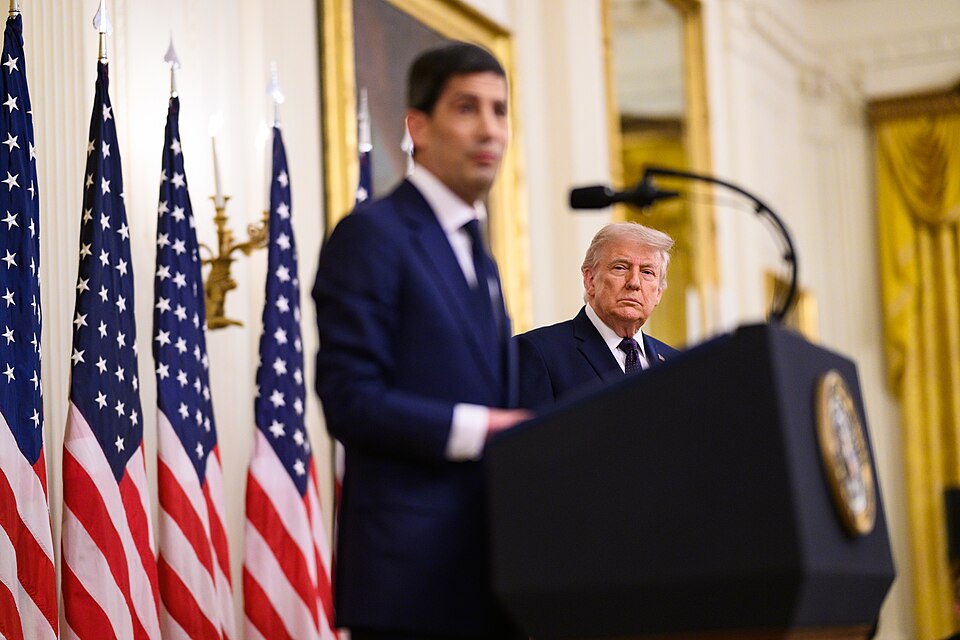
Proxy Advisors Vote “No” on Texas

Early evidence shows that Glass Lewis and ISS have crystallized their opinion against corporate moves to the Lone Star State.
Ahead of Exxon’s annual meeting next week, proxy advisory giants Glass Lewis and Institutional Shareholder Services (“ISS”) are urging shareholders to reject the company’s plans to redomicile in Texas.
Exxon’s relocation should have been a no-brainer for the proxy firms, which are hired by pension funds and other large institutional investors to advise them how to vote on company proposals. The move gives the oil and gas major a better regulatory environment without touching shareholder rights.
That wasn’t good enough for Glass Lewis and ISS for a simple reason: the proxy firms are unwilling to admit that Exxon chose Texas.
For over a century, businesses flocked to Delaware to establish their legal domiciles, attracted by the state’s reputation as a corporate-friendly jurisdiction where the courts wouldn’t relitigate risky or otherwise bad business bets absent extraordinary circumstances. After several widely publicized cases called into question the impartiality of the Delaware courts, however, states including Texas began competing for corporate registrations. A lot more than bragging rights are at stake. Delaware rakes in over $2 billion in annual franchise tax revenues from the companies incorporated there.
The Lone Star State’s pitch for more corporate listings boils down to predictability and choice. To convince companies that there would be no judicial surprises once they relocated, lawmakers codified the “business judgement rule” — the principle that courts won’t second-guess corporate actions made in good faith — and stood up specialized business courts staffed with respected jurists hand-picked by Governor Greg Abbott, a former state supreme court justice and attorney general who has presided over a period of massive economic growth as Texas’s chief executive.
On shareholder rights, Texas offered companies a broader menu than Delaware, which led to Tesla’s departure after an investor with just nine shares brought a lawsuit that invalidated Elon Musk’s pay package. Musk’s compensation was later reinstated, but the ordeal raised obvious questions about whether activism by small shareholders is always in the interests of all investors, particularly where, as in Tesla’s case, the company had generated tremendous stock returns and the trial attorneys representing the small investor egregiously demanded $5.6 billion in legal fees from the company.
The Texas legislature’s answer was to allow companies to set a three percent ownership threshold for shareholder actions. Three percent of the shares of a large public company is no small chunk of change, but the requirement is a ceiling, not a floor. The law leaves it to companies and their investors to strike the right balance between protecting shareholder rights and avoiding frivolous litigation.
The companies that have relocated to Texas have taken a variety of approaches to the state’s optional threshold for shareholder actions. Some, like Dillard’s and Eightco Holdings, have raised the bar to the statutory limit. Others, like Exxon, have kept existing shareholder rights in place.
Yet the response from the proxy firms has been uniform resistance. Glass Lewis and ISS have together weighed in on eight Texas re-domiciles proposed after the optional threshold took effect last May. They have come out against every one of them regardless of the industry of the company seeking to relocate, its market cap, the rationale for the move, and the proposed terms for shareholder actions. That’s sixteen straight recommendations by the two firms against Texas reincorporations (or seventeen if you include ISS’s vote against Voyager Technologies, whose proposed move is up for a shareholder vote next week and has yet to receive input from Glass Lewis).
The categorical opposition to corporate migrations to Texas has a strong whiff of bias and contradicts the proxy firms’ public commitments to assess every shareholder proposal on its merits. It suggests that the proxy advisors are trying to prevent capital from flowing to the most favorable forum and are abusing their role as supposedly neutral arbiters by prioritizing their own progressive vision of capitalism over the financial interests of retirees who depend on pension fund returns.
Consider a few recent examples, starting with Texas Capital Bancshares, the parent of Dallas-based Texas Capital Bank, which sought shareholder approval in March to reincorporate in Texas, proposing a one percent threshold for shareholder lawsuits. ISS and Glass Lewis both recommended against the proposal, and it failed. The company publicly pointed to opposition from ISS and Glass Lewis as a contributing factor.
Logistics company ArcBest requested shareholder support for Texas reincorporation and drafted new corporate bylaws that would prohibit the company from adopting the Lone Star State’s optional increased thresholds for shareholder proposals and derivative lawsuits. Even so, both ISS and Glass Lewis recommended against the redomiciling proposal, claiming it would erode shareholder protections.
Finally, there’s Exxon, the highest-profile Texas redomiciling proposal this proxy season. Exxon chose not to adopt the voluntary Texas thresholds for shareholder actions. Nonetheless, Glass Lewis and ISS recommended shareholders vote against Exxon’s proposal, stating that the company could have gone further by explicitly opting out in the proposed Texas incorporation documents. But ArcBest took this approach, and the proxy advisors still opposed the redomiciling.
If Glass Lewis and ISS are categorically opposed to Texas redomiciling, they should say so and explain why. Their reasons might be news to investors. Since Exxon announced the proposed move, the company’s stock has performed “like its peers, the announcement-day gap was ordinary, and large negative governance effects are ruled out by the data,” according to SMU’s Shane Goodwin.
While flying mostly under the public’s radar, the major proxy firms are no strangers to controversy. Despite being blasted as “corporate terrorists” by Elon Musk and blamed for “driving companies out of the public market” by Jamie Dimon, Glass Lewis and ISS still manage to exercise considerable sway over publicly-traded companies. That’s because the two firms control over 90 percent of the advisory market, and some large shareholders “robovote” in lockstep with their recommendations. Research has shown that ISS support for a proposal adds 15 percentage points to the shareholder vote.
The problem for the proxy advisory firms is that the corporate march to the Lone Star State won’t end with Exxon. Six public companies, including Dream Finders Homes, Natural Gas Services Group, and Irish company Weatherford International, are scheduled to hold shareholder votes in June on reincorporating in Texas. Any recommendation “against” these corporate moves should encourage institutional investors to ditch the proxy firm duopoly and advocate for shareholder value.
Michael Toth is director of research at the Civitas Institute at the University of Texas at Austin.

Economic Dynamism

The Wine and Commerce Symposium
The Western tradition’s great thinkers have long recognized wine as a symbol for the beguilement of reason. But if wine warps reason, they recognized how it can also enable reliable reason in our analysis of regimes.


.jpg)


.jpg)



.jpg)


We Can’t Tax Our Way Out of the Entitlement Hole
When it comes to budgeting, Congress has two problems.