When Can a Crass Political Remark Be Deemed an Indictable “Threat of Violence”?

The indictment of Comey for posting “86 47” comes perilously close to suggesting that the president sees no limitations on his domestic Article II powers.
Interesting question. Let me get back to you on that. Before answering it, I need to explain why the federal government charged James Comey, a former Deputy U.S. Attorney General and former FBI Director, with threatening the president’s life. To do that, I must first discuss what this matter involves.
What Is the Offense?
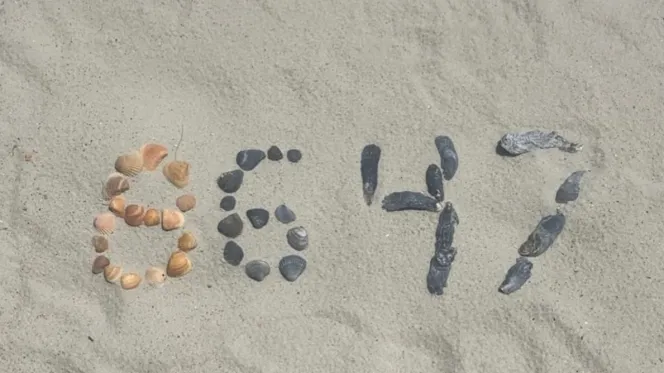
This matter arises because of a pickle that Comey put himself into that, unfortunately for him, involves the president. According to the New York Times, on April 28, 2025, while on a beach in North Carolina during a vacation, Comey “posted a photograph on social media showing seashells arranged to say, ‘86 47.’” Later the same day, Comey took down the post after commentators, including Trump’s son Donald Jr. and two senior Trump Administration officials, criticized Comey for implying that someone should kill the president. Comey said that he never intended to imply the use of violence.
Criticizing our presidents, current or former, is hardly avant garde, and the combination of “86” and “47” was not Pulitzer-Prize-winning material. In fact, Comey’s reward was a two-count felony indictment for threatening the president’s life and transmitting that threat in interstate commerce, in violation of 18 U.S.C. §§ 871(a) and 875, respectively.
Trump is apparently unaware of the Biblical admonition (Matthew 6:14-15) that forgiving others for their trespasses is a prerequisite to being forgiven for one’s own. By contrast, he appears to live by the aphorism, attributed to Lavrentiy Beria, Stalin’s long-serving secret police chief: “Show me the man and I’ll find you the crime.” That’s bad for Comey because Trump is not a fan of his. When he fired Comey in 2017 as FBI Director, Trump described Comey as “a ‘grandstander’ and a ‘showboat.’” More recently, Trump called Comey “a dirty cop,” “a very dirty cop,” and “a crooked man.” While answering media questions in the Oval Office, Trump said that “if anyone knows anything about crime,” the term “86” is a “mob term” for “kill him.” When “[t]he mob wants to kill someone,” he stated, “they say, ‘86 the son of a gun.’”
Today’s Justice Department is nothing if not obedient. The U.S. Justice Department has tried to convict Comey of something since Trump began his second term. In fact, in 2025, as Time magazine reported, Trump publicly complained to then-Attorney General Pam Bondi about people whom he deemed enemies, saying: “‘They’re all guilty as hell, but nothing is going to be done,’” adding: “‘We can’t delay any longer, it’s killing our reputation and credibility. They impeached me twice, and indicted me (5 times!), OVER NOTHING. JUSTICE MUST BE SERVED, NOW!!!’” Not surprisingly, later that month, the Justice Department indicted Comey for making a false statement to Congress. Two months afterward, however, a judge (sitting by designation) on the U.S. District Court for the Eastern District of Virginia dismissed that charge, ruling that the president’s hand-picked, former personal lawyer and White House aide, Lindsey Halligan, was not properly appointed as interim U.S. Attorney for the Eastern District of Virginia.
Undaunted by that setback and perhaps seeing Bondi’s then-recent firing as a signal to get results against people like Comey, Acting U.S. Attorney General Todd Blanche, and W. Ellis Boyle, the U.S. Attorney for the Eastern District of North Carolina, persuaded a federal grand jury to return an indictment based on Comey’s posting of seashells forming the now well-known “86 47.”
Really? Seashells? On the beach? Arranged to form two numbers? A photo that did not express Comey’s intent to harm the president or his endorsement that someone else should do so? A photo that would have been ignored by 99 percent of the people who saw it and that no reasonable person would have deemed a threat of violence against the president when posted by a former FBI Director, even one that Trump had fired? The facts in the indictment certainly don’t look like an ordinary threat of violence.
On a recent edition of NBC’s Meet the Press, Blanche made two interesting statements. One is that there is additional evidence of Comey’s guilt that he did not disclose. The other is that the “86 47” phrase “is used constantly,” and “[e]very one of those statements do [sic] not result in indictments.” Comey’s case is different, Blanche said, because of the undisclosed evidence.
Perhaps the government will argue that the multiple assassination attempts on this president’s life, the last one occurring less than a month ago, make any potentially threatening statement a crime, even if that statement would not be deemed a threat when made at another time, when made in connection with a different, nonincumbent president, or when made by someone else. After all, three people have attempted to kill this president. Those attempts are true—and appalling—facts. They are attributable, in part, to the provocative language used by Trump’s critics in public discourse in today’s uber-polarized times, such as accusations that he is a “fascist.” Incessant repetition of a provocative term like that one can influence listeners who are inclined to credit a speaker (“He’s on television, so he wouldn’t say that if it weren’t true!”) or who want to believe what has been said because they hold the same opinion (“See, I’m not the only one who feels that way!”).
All we know now is what is set forth in the short (maybe, a page-long) and terse (extraordinarily so) factual statement in the indictment; we don’t know what the remainder of the government’s proof will be. Conceivably, there are damning intercepted electronic communications that reveal Comey’s intent and plan. (But if so, why did it take nearly a year to seek this indictment, the second one brought against Comey, after a failed first effort?) But it’s highly unlikely that Comey has been plotting an assassination of the president. So, let’s consider the facts that we do know, the ones set forth in the charges.
Comey posted to Instagram a photograph of seashells forming “86 47.” What does that mean? Well, Trump is the 47th president of the United States—it’s even on the baseball caps that he is fond of wearing—so “47” certainly refers to him. That leaves “86,” considered by itself and accompanying “47.” What does the number “86” mean?
According to the Merriam-Webster Dictionary, the etymology of the term is unclear, but it likely originated as “1930s soda counter slang meaning that an item was sold out.” Walter Winchel once wrote that “‘Eighty-six’ means all out of it.” In The New York Herald Tribune, Will Cuppy explained that “[w]hen a soda popper says the tuna fish salad is eighty-six, he means there isn’t any more.” Anecdotal evidence varies, but the most common explanation for why “86” acquired that meaning was that it rhymed with the term “nix.”
Once the term became a part of the lingo, as Merriam-Webster also notes, “86” acquired use as a verb, initially meaning “‘to refuse service to,” later meaning “‘to get rid of; to throw out,’” where it was “especially used in reference to refusing further bar service to inebriates.” At the website History.com, Lesley Kennedy wrote that while the exact origins of “86” are “murky,” its use dates from the 1930s, and since then “has woven its way into American slang, typically meaning to get rid of or refuse service.” In a 2019 issue of St. Louis, George Mahe offered a long list of different explanations for the provenance of “86,” none of which encouraged violence.
According to Alan Dundes, an American folklorist and professor at the University of California at Berkeley, the provenance of the term “86” is uncertain, but its historic uses had nothing to do with violence. As he explained, the term originated in the 1920s in bars and restaurants. A 1944 biography of actor John Barrymore used it to refer to “a spring day in 1925,” when it was a label used for Barrymore to signal that he was an unwelcome customer “at the bar.” In the patois of the day, it would be used to refer to an unwelcome patron who should be denied service, perhaps because he was inebriated or had not been paying his bills. Even then, “[t]here is no suggestion,” Dundes noted, “that it [“86”] connoted any act of forcible ejection of that unwelcome customer.” The number would also be scrawled on a kitchen blackboard next to any item no longer available.
Finally, the term “86” has been used in cinema for its two original meanings. In the 1972 film The Candidate, a media advisor tells Robert Redford’s character, “O.K., now, for starters, we got to cut your hair and eighty-six the sideburns.” The advisor did not mean that Redford should be beheaded. In the 1960s, the comical television series Get Smart did not use 008 as the call sign of its stumblebum hero, Agent Maxwell Smart, as an homage to James Bond. No, he had “86,” perhaps to indicate that he was “‘out of it,’ an unwitting hero whose success is more often than not unintentional.”
To be sure, Merriam-Webster acknowledges that, more recently, the term “86” has been used in the darker, sinister sense of killing someone. The 2005 edition of Cassell’s Dictionary of Slang also mentions the traditional meanings (“to throw out, to get rid of; thus, an unwanted item”) along with the new, additional connotation of “to kill, to murder; to execute judicially.” This more recent usage, however, remains a minority view. Merriam-Webster described it as “a logical extension of the previous ones,” such as to “get rid of,” but Merriam Webster decided “not [to] enter this sense, due to its relative recency and sparseness of use,” stating that “[t]he most common meaning of eighty-six encountered today is the one that is closer to its service industry roots (‘to refuse to serve a customer’).”
The Merriam-Webster Dictionary is not the only one to stand alone in this regard. The Oxford English Dictionary (OED) states that “[t]here is one meaning in OED’s entry for the noun eighty-six,” and that meaning is not to kill someone. “In restaurants and bars,” “86 is “an expression indicating that the supply of an item is exhausted, or that a customer is not to be served.”
Although “86” originally had an entirely nonviolent meaning, the evolution of a term’s connotations is commonplace. For example, according to Merriam-Webster, “nice” originally meant “trivial; foolish or stupid” and did not acquire its meaning of “pleasant or agreeable” until the nineteenth century. “Bully” originally meant “sweetheart”; now it means “harasser.” “Prestigious” once referred to something “relating to, or marked by illusion, conjuring, or trickery,” while it now means “illustrious” or “esteemed.” So, where does that leave us? “86” has always been a slang term, and its original meanings did not imply the use of violence. Over time, however, due to the dynamic nature of language and the gradual, albeit limited, acceptance of a new connotation, the term has acquired an additional, subsidiary meaning: killing someone.
How, then, should this “86” be interpreted today? Should it be given its original, primary meaning or its more recent (and ominous) minority connotation? Which one controls? That problem is akin to the one that Ludwig Wittgenstein described in Philosophical Investigations. Words can have core and peripheral meanings, so which one a speaker intended can sometimes be a difficult matter of interpretation. Just as Wittgenstein’s teaching is relevant to the proper interpretation of a statute (Justice Samuel Alito and Judge Frank Easterbrook once thought so), it is relevant to deciphering everyday discourse, which also consists of words.
Two factors are critically relevant here: it is a crime to make a legitimate threat of violence against the president’s life, but political speech criticizing him—even when hyperbolic in form, even when calling for his removal from office via the impeachment process, which has already happened twice to this president—is constitutionally protected. The Supreme Court is aware of the necessary line-drawing problem. To avoid a “chilling effect” on protected speech from an overbroad interpretation of criminal threat statutes, the Supreme Court held in 2023 in Counterman v. Colorado that the government must prove that (1) the defendant uttered a “true threat,” and (2) he knew, or was reckless in not knowing, the threatening nature of his statements.
The second factor might require most cases to go to trial to determine a defendant’s state of mind, which ordinarily is a question of fact. But no trial is necessary if the validity of the first element can be decided as a matter of law—which, as shown below, is a job for the courts—and that is the case if what a speaker uttered is not in dispute and if that statement clearly is not a “true threat of violence.” That can be done here; Comey posted “86 47,” and it is not a true threat. Indeed, Supreme Court precedent directly on point requires dismissal of this indictment without a trial because, objectively viewed, Comey’s statement was not a legitimate threat of violence against the president’s life.
The Supreme Court confronted this issue in 1969 in Watts v. United States. At a small anti-war rally, a protester said the following:
They always holler at us to get an education. And now I have already received my draft classification as 1-A and I have got to report for my physical this Monday coming. I am not going. If they ever make me carry a rifle the first man I want to get in my sights is L.B.J. [¶] They are not going to make me kill my black brothers.
The Court credited the speaker’s factual claim that “both [the speaker] and the crowd laughed after the statement was made.”
The Supreme Court ruled that, when “[t]aken in context,” the statement was only “a kind of very crude offensive method of stating a political opposition to the President,” and not a true “threat” of violence. The Court added that, when “[t]aken in context, and regarding the expressly conditional nature of the statement and the reaction of the listeners, we do not see how it could be interpreted otherwise.” The Supreme Court therefore directed the trial judge to enter a judgment of acquittal.
Also relevant is the Court’s 1987 decision in Rankin v. McPherson. There, after hearing about the attempted assassination of President Ronald Reagan, Ardith McPherson, a clerical employee in a state constable’s office, said to a fellow employee, “If they go for him again, I hope they get him.” The constable fired her for that utterance, which she argued was First Amendment-protected speech. The Supreme Court agreed with her. In the Court’s words: “While a statement that amounted to a threat to kill the President would not be protected by the First Amendment, the District Court concluded, and we agree, that McPherson’s statement did not amount to a threat punishable under 18 U.S.C. § 871(a)” or “could properly be criminalized at all.”
The facts stated in the Comey indictment are not materially different from the ones in those cases. Watts’s statement was far more explicit than Comey’s regarding what he would do with a “rifle,” an obvious tool for committing an “act of violence”: namely, “the first man I want to get in my sights is L.B.J.” By contrast, given Comey’s background as the former Deputy AG and former FBI Director, both of which are judicially noticeable facts, the point that Comey made is far better understood to mean that Trump should be impeached and removed from office rather than murdered. To most people, “86ing someone” means throwing him out, and that can happen to the president by impeachment.
Getting the president in your rifle sights is, quite clearly, a horse of a different color, even if it generates laughter, yet that statement was insufficient in Watts. McPherson used a crude way to express her dislike for Reagan, but the Supreme Court ruled that her remarks were not a federal crime. Indeed, the indictment charges Comey with violating Section 871(a) of Title 18 (and using interstate commerce to do so)—the same statute that the Court expressly held in McPherson could not be used to prosecute the same type of statement seen here. Watts’s and McPherson’s statements were constitutionally protected hyperbole, not legitimate threats to assassinate the president, and the Watts and McPherson decisions require dismissal of the Comey indictment.
Why did the Justice Department bring this case?
When considering that issue, it is important to keep in mind a point first made by Chief Justice (and former president) William Howard Taft in 1922, reiterated by Justice Felix Frankfurter in 1969, and restated (in gender neutral form) by Justices Neil Gorsuch and Sonia Sotomayor in 2020: “There comes a point where we should not be ignorant as judges of what we know to be true as citizens.” That principle has considerable purchase here.
Trump is a controversial figure. He clearly has opponents who hate him, and he hates them back, as he told us only last year. I believe that the Russiagate scandal—which, sadly for him and our nation, befouled his first two years as president—was manufactured to tarnish his electoral victory, to keep him from accomplishing his goals, and to harass him personally. I also believe that, during the four years between his terms in office, Trump was again a victim, this time of a series of unjustified state and federal criminal prosecutions and civil lawsuits brought by people who hoped to convict him of made-up crimes and destroy his reputation or bleed him financially dry with civil judgments and attorneys’ fees. His opponents used what is known as “Lawfare” to punish him for having had the temerity to defeat Hillary Clinton in the 2016 presidential race, as well as to advance their own legal, judicial, or political careers. He has a right to be furious, even bitter, at the mistreatment certain people forced him to endure, although forgiveness would be a far better course for him and the nation than vengeance.
The president wants a reckoning, not in the hereafter, but now. As I explained above, the president made it clear to then-AG Pam Bondi that he wants certain enemies to be charged with a crime and suffer, just as he was and did. One of those people is Comey. Bondi tried but failed to find an indictable offense that would go to trial, which was likely a factor in her dismissal. Acting Attorney General Blanche has replaced Bondi, and Comey has been charged with two federal felonies that should not withstand a motion to dismiss on free-speech grounds.
It appears that Blanche sees his role as that of an apparatchik or “fixer” —viz, someone who carries out the orders and wishes of a superior, here, the president—regardless of their legality or wisdom. Not every attorney general would see the job that way. I have personally known three Attorneys General: Griffin Bell, Jeff Sessions, and Bill Barr. None, I believe, would have sought this indictment. Each one likely would have concluded that the Free Speech Clause bars it. More importantly, each one would have believed that it is unwise and illegitimate to charge someone with a crime merely to inflict pain by making the process the punishment. This is especially the case if the initially wronged person and later wrongdoer is the president of the United States, because he is almost entirely immune from civil suit or criminal prosecution.
The courts should dismiss the indictment because two U.S. Supreme Court decisions—Watts v. United States and Rankin v. McPherson—ruled that conduct materially indistinguishable from what Comey did was not a threat to the president’s life. But that leaves this question open: May the government charge someone with a crime when the justification, either in whole (which I think is likely to be the case here) or in part (which is doubtless true in this case), is that the president personally hates that individual? I certainly think (and fervently hope) that the answer is a clear and resounding, “No!”
Prosecutors have broad charging discretion that is, and should be, generally afforded considerable deference by the courts. The government knows far more than a judge about the entire range of criminal conduct that it seeks to deter and the extent to which a particular case will advance legitimate criminal justice purposes. Legal education and training do not teach judges how to make large-scale and sometimes subjective judgments about which crimes and offenders are worth pursuing. They are policy or small “p” political judgments. Moreover, elections influence those judgments because the public can make its opinions felt by voting out incumbents, thereby changing enforcement priorities. Atop that, making those judgments does not involve skills that judges are good at, such as interpreting contracts, wills, trusts, statutes, regulations, other legal documents, and judicial decisions. The only relevant skill that a judge has is discerning the rationale, the “why,” that the government has for bringing a particular case. Judges are good at ferreting out a person’s motivation or rationale because uncovering someone’s intent or motive is what criminal trials are all about.
Sometimes, the law requires that inquiry. The Fourteenth Amendment’s Equal Protection Clause, along with the equal protection principles embedded in the Fifth Amendment’s Due Process Clause, forbids the government from bringing criminal charges for an illicit reason. That allows a defendant to smoke out an illegitimate justification for a particular charge against a specific defendant when there is more than a waft of malicious intent on a prosecutor’s part. The classic example of an impermissible prosecution is one based, even if only in part, on the basis of the defendant’s race. The Supreme Court made that clear in 1886 in Yick Wo v. Hopkins and reaffirmed the principle a century-plus later in United States v. Armstrong. Other grounds, such as a person’s sex or legitimacy at birth, are also verboten bases for making a charging decision. Accordingly, there are limitations on a prosecutor’s charging discretion.
The question is whether the president’s personal hatred of someone falls within the category of prohibited motives. The Supreme Court’s 1935 decision in Berger v. United States is instructive in that regard.
The government indicted Berger and others for counterfeiting federal reserve notes. One issue in the case was whether the prosecutor had engaged in professional misconduct during the trial, and the Court unanimously held that he did. The Court’s words, the prosecutor “overstepped the bounds of that propriety and fairness which should characterize the conduct of such an officer in the prosecution of a criminal offense.” Among them were the following: he implied that he knew of evidence not adduced at trial that proved the defendants’ guilt; he misstated facts during cross-examination; he bullied witnesses; he argued to the jury in an “undignified and intemperate” manner, one “containing improper insinuations and assertions calculated to mislead the jury”; and, generally speaking, he “conducted himself in a thoroughly indecorous and improper manner.” The Court then described the proper role for a prosecuting attorney as follows:
He may prosecute with earnestness and vigor—indeed, he should do so. But, while he may strike hard blows, he is not at liberty to strike foul ones. It is as much his duty to refrain from improper methods calculated to produce a wrongful conviction as it is to use every legitimate means to bring about a just one.
It is a “foul blow” to charge someone with a crime simply to force him to defend himself against a charge that would not have been sought but for the malice held by the prosecutor—or, as here, by the prosecutor’s boss. I do not mean to imply that all the president’s enemies are innocent; some of them might have committed serious crimes and deserve to be prosecuted. This case, however, is not one of them.
Defending oneself against a felony charge is no trifling matter. It is financially very costly because criminal defense lawyers are expensive. There might even be a need for multiple lawyers to be involved, as well as a defense investigator and expert witness(es). A defendant might need to sell his home to pay for his defense; Michael Flynn did. Also, the time spent defending oneself against a never-should-have-been-filed charge is time lost forever, because even a dismissal or not-guilty verdict cannot return the days spent achieving it or undo the damage done to one’s reputation. Remember what Ray Donovan, Reagan’s Secretary of Labor, said after being charged and acquitted: “Which office do I go to to get my reputation back?” The psychological burden of facing the prospect of conviction, the public obloquy that a charge or conviction brings, a sentence of imprisonment, and the guilt an unjustly charged defendant bears from seeing the pain suffered by his (or her) family—all that weighs someone down as the albatross hung around the ancient Mariner’s neck. Just as a prosecutor cannot befoul a trial by going over the line, so, too, neither a prosecutor nor his boss should be free to corrupt the charging process.
In some ways, an evil-minded charge is even worse than the misconduct that the Court correctly denounced in Berger. That prosecutor’s misconduct occurred in open court in plain view of the jury, the judge, and whoever was watching the trial. Here, the action taken by the government—namely, the decision to seek an indictment—was made in private, in an office or over the phone, in a discussion among attorneys that the government (with justification) will argue is privileged. The result is that it is difficult for a defendant even to find proof that the charges against him were the product of a search-and-destroy mission designed to inflict pain. Ordinarily, that is how it should be. Prosecutors are presumed to have acted properly, and defendants are not entitled to investigate the government’s internal decision-making processes based only on a whim. But this president has made it clear to the world that he will use every tool available to him to make his enemies feel the pain that they inflicted on him. His “Vengeance Tour 2025-2026” makes the proof of that fact easy in Comey’s case.
This imbroglio should never have occurred. Comey showed a lack of street smarts. He doubtless knew that the president was on the prowl for his enemies and that the president saw him as one of them. He likely now wishes that he had not posted a symbol that will now haunt him as long as Trump is president. Doing so has besmirched his reputation; it has embroiled him in an expensive attempt to defend himself against a charge that should not have been brought; and it has burdened his family.
Trump also showed poor judgment. He gave an interview to the New York Times in January 2026 in which he was asked what, if any, limitations there are on his Article II powers as commander-in-chief. He replied, “Yeah, there is one thing. My own morality. My own mind. It’s the only thing that can stop me.” The indictment of Comey for posting “86 47” comes perilously close to suggesting that the president also sees no limitations on his domestic Article II powers. Much of the public has certainly drawn that conclusion.
We learned more than a century ago that “[n]o man in this country is so high that he is above the law.” The Supreme Court wrote that sentence in the case of United States v. Lee. That case stemmed from the federal government’s unlawful seizure of Robert E. Lee’s family estate in Arlington, Virginia, as a punishment for turning down a proffered commission as General of the Army of the Potomac and instead taking up the position of General of the Army of Northern Virginia. The Court applied that principle even when confronted with the military leader of a revolt that cost the nation more than six hundred thousand lives and almost sank the Union. “All the officers of the government, from the highest to the lowest, are creatures of the law and are bound to obey it.” The reason is that “[law] is the only supreme power in our system of government, and every man who by accepting office participates in its functions is only the more strongly bound to submit to that supremacy, and to observe the limitations which it imposes upon the exercise of the authority which it gives.”
So, when can a crass political remark be deemed an indictable “threat of violence”? When those charged with recognizing the law’s “supremacy” and the “limitations” on their authority disavow both principles.
Paul J. Larkin is a Senior Legal Fellow, Meese Institute for the Rule of Law, at Advancing American Freedom. I want to thank John G. Malcolm, Richard Reinsch, and Abigail Wagner for helpful comments on and research for an earlier iteration. Any mistakes are mine.

Constitutionalism
Amicus Brief: Hon. William P. Barr and Hon. Michael B. Mukasey in Support of Petitioners
Former AGs Barr and Mukasey Cite Civitas in a SCOTUS Brief
Rational Judicial Review: Constitutions as Power-sharing Agreements, Secession, and the Problem of Dred Scott
Judicial review and originalism serve as valuable commitment mechanisms to enforce future compliance with a political bargain.
.avif)



.png)
.png)
.png)
.png)
.png)
The Fifth Circuit’s Chance to Expose the Inflation Reduction Act’s Unconstitutionality
Despite the mounting evidence of harm, the Medicare Drug Price Negotiation Program remains law — and the Justice Department continues to defend it in federal court.