
Roberts Gets the 14th Amendment Wrong
.avif)
In the 1860s, citizenship was not only extended but defined more narrowly than the chief justice acknowledges.
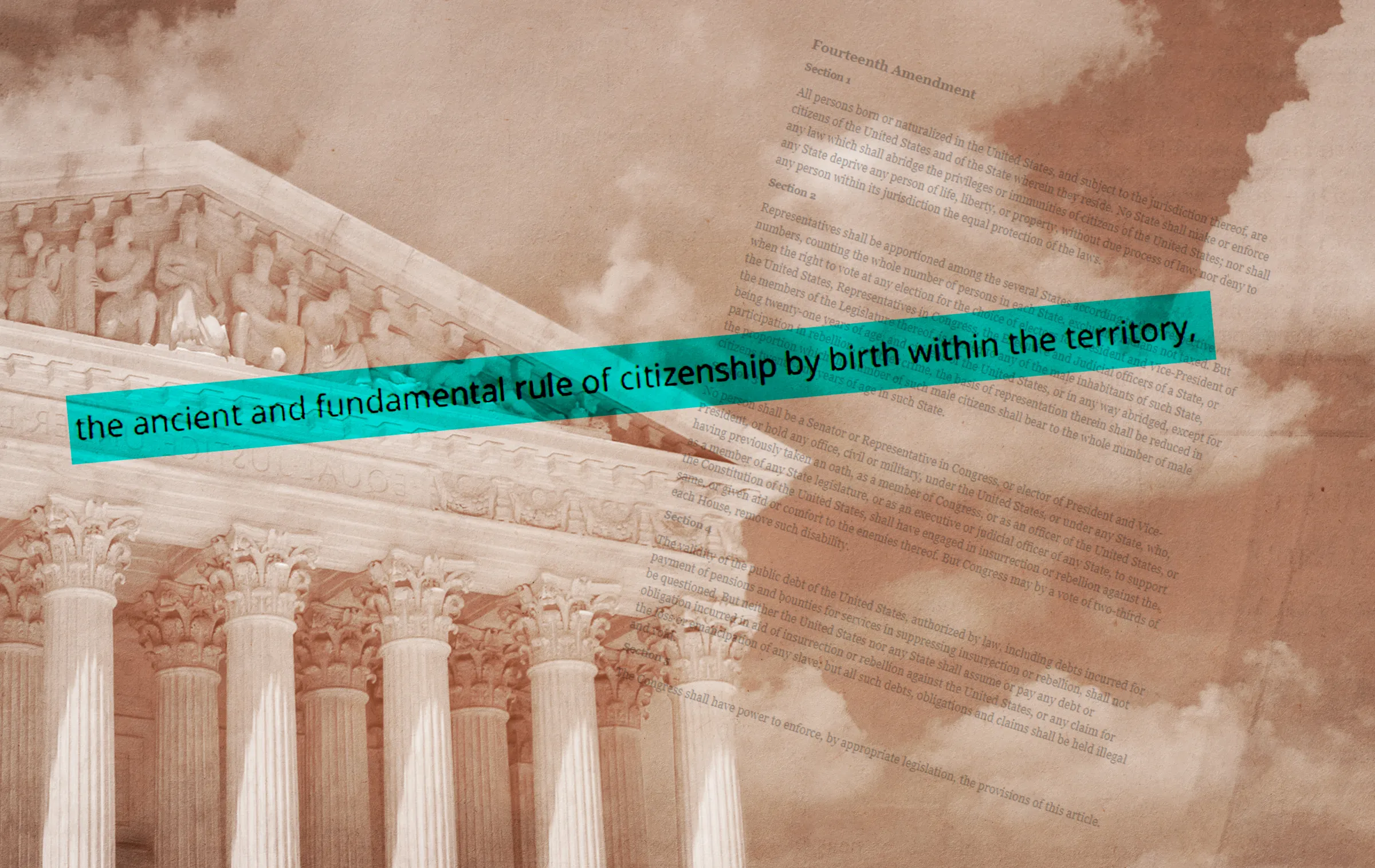
In Trump v. Barbara, Chief Justice John Roberts screams from the rafters that the framers of the 14th Amendment affirmed “citizenship, then as now, was the right to have rights—freely to participate in our community.” That’s contrary to history. The framers made sure that the newly freed black citizens didn’t get the vote, because if that benefit had been included, the amendment wouldn’t have passed.
It took the 15th Amendment, ratified more than 1½ years later, to enfranchise black Americans. And that still didn’t extend the franchise to all adult citizens. In Minor v. Happersett (1874), the Supreme Court unanimously held that although women were citizens, the 14th Amendment didn’t confer on them the right to vote. The justices applied the then-standard definition of citizenship as an exchange of protection by the sovereign for loyalty of the citizens. It took the 19th Amendment to enfranchise women as a matter of constitutional right. In the meantime, voting was left exclusively to the states. The Civil Rights Act of 1866 covered only the private rights to contract, testify and make wills. No political rights were involved.

Constitutionalism
Amicus Brief: Hon. William P. Barr and Hon. Michael B. Mukasey in Support of Petitioners
Former AGs Barr and Mukasey Cite Civitas in a SCOTUS Brief

Rational Judicial Review: Constitutions as Power-sharing Agreements, Secession, and the Problem of Dred Scott
Judicial review and originalism serve as valuable commitment mechanisms to enforce future compliance with a political bargain.
.avif)







.png)
.png)
.png)
.png)
Farewell to the President’s New East Wing
Both Congress and the President have acted in violation of the public trust doctrine.
The Constitution and Birthright Citizenship: A Rejoinder to Professor Yoo
Foreigners can come to America and become “Americans” not by their mere presence on American soil but by embracing the principles upon which this country was founded.