Fauci without the Fifth
.avif)
There is no reason an expert who takes one side of a debate should be able to override his adversaries’ judgment.
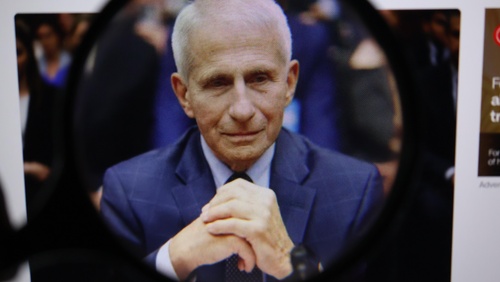
Dr. Anthony Fauci’s decision to take the Fifth Amendment over one hundred times in the face of fierce questioning from his sworn enemy, Senator (and doctor of ophthalmology) Rand Paul, has provoked mixed emotions from all sides of the political spectrum. Without question, the release of his diary has triggered a harsh reevaluation of Dr. Fauci’s place in history. He was once thought of as a leading medical expert of his generation, a renowned public figure who held sixty-two honorary degrees and was a member in many honorary societies. There are some, like Amy Davidson Sorkin, who bemoan Dr. Fauci’s decision to stay silent in the face of a hostile interrogator. Others, like Senator Dick Durbin, lavished unbound praise, calling Dr. Fauci “a deeply caring physician, a brilliant scientist, an extraordinary public servant, a humanitarian and a patriot.” More critically, Peggy Noonan chastised Dr. Fauci for hiding behind the Fifth Amendment. But the one commentator who got it right was Alex Berenson, who labeled Dr. Fauci as a “bad scientist,” without going into the details of his indictment.
This short essay cannot address the many decisions Dr. Fauci made during the COVID-19 pandemic, including contradictory messages on masking, closing schools and businesses, and of course his defense of the mRNA vaccines. On each of these issues, I have written that Dr. Fauci has been on the wrong side. For present purposes, I will address only one issue of immense importance: whether randomized control trials should be required to establish the safety or effectiveness of new drugs put on the market or old drugs being repurposed for “off-label” uses. Dr. Fauci’s grave error was ignoring the available evidence for both Hydroxychloroquine (HCQ) and Ivermectin in treating COVID over decades.
One incident that helps define Dr. Fauci’s role in this debate occurred at a March 2020 press conference. A diffident President Donald Trump noted that he had heard that HCQ might prove valuable to those who took it before the virus was entrenched. Within a split second, Dr. Fauci, who was usually one of the backbenchers to a presidential speech, leapt forward to correct President Trump for the medical heresy of relying on anecdotal evidence. For Dr. Fauci, anecdotal evidence is the product of anything short of a full-scale double-blind randomized control trial (RCT), in which neither the randomized group of patients nor any of their treating physicians knows which patient trial arm is receiving the drug and which is receiving a placebo or the current standard treatment. On this issue, Dr. Fauci represents the medical orthodoxy that treats these RCTs as the gold standard for medical research.
But Dr. Fauci has never been a practicing physician; he has never had to develop a nose for dealing with the off-the-cuff clinical judgments novel situations require when there is no time to conduct an RCT In such a context, the collection of anecdotal data is always untidy, and the data spreads in multiple ways. Health-care professionals swap stories amongst themselves; “detail men,” who represent the drug manufacturers, often coordinate and diffuse the data. The obvious conflicts of interest are in the ordinary course of business disclosed to the professionals with whom these detail men deal. Off-label uses are exceedingly common in dealing with deadly diseases, including cancer. These institutional decisions are not irrational. The fact that doctors have long used a drug for treating other conditions tends to rule out the risk of undisclosed harmful side effects, which is an important element in the battles over HCQ and Ivermectin. The continuous practice generates a huge number of additional data that can then be evaluated ex post, so that decentralized learning from meandering but continuing operations increases the available information that in turn independent reviews of the new data can evaluate.
Because double-blind studies have serious, inherent limitations, especially with newly emerging and rapidly changing diseases, these informal practices continue to thrive. For a disease like COVID, which changed rapidly over time and appeared in multiple strains in short succession, including Alpha, Beta, Delta and Omicron, an RCT that evaluates a drug’s efficacy in preventing or treating one strain tells us very little about the drug’s effectiveness when faced with the next strain. Thus, RCTs are most effective for evaluating treatments for conditions such as high cholesterol or high blood pressure, where the relevant populations are large and the conditions are usually stable. But with viruses, an RCT’s success depends on administering the relevant drugs or combination of drugs at just the right time, at just the right dosages, in just the proper manner to just the proper patient population, often at multiple sites in very short time periods. It is easy to go astray. Indeed, in June 2020—just before the FDA removed HCQ and Ivermectin from the market—two major studies, one in The Lancet and the other in The New England Journal of Medicine, both concluded that HCQ was ineffective. Within days both drugs were no longer authorized for ordinary use (here and here).
The critical mistake is to confuse an existing drug’s effectiveness in treating an off-label condition with the possible harm of doing so. For drugs already in common use, safety is not an issue. Repeated uses over the years to treat a variety of disease conditions would have quickly revealed whether drugs like HCQ and Ivermectin had significant side effects. Based on that information, limitations would have been imposed on their uses, say in pregnancy or for people with other conditions. In short, contra Dr. Fauci, no new RCT is needed to establish whether these drugs are safe to use in treating a new illness.
Drug effectiveness in treating a specific condition may be most robustly determined using an RCT, but given the situational constraints of a raging pandemic, Dr. Fauci’s single-minded focus on them was sadly misplaced. A one percent safety risk could be fatal for many common drugs, but a but a one percent effectiveness rate does not generate sufficient gain to justify any company making or selling the product. Hence, various health-care plans demand to see much larger positive effects on their own targeted patient populations. There is accordingly no reason for the FDA to worry about the effectiveness angle, which market forces will handle.
In such a context, experimentation can and must be freely allowed to determine existing drugs’ effectiveness. Yale University’s Dr. Harvey Risch defended, in both academic journals and in popular publications, HCQ’s effectiveness when used in combination with Azithromycin and Zinc for the treatment of early-stage COVID-19. He noted ruefully that in too many instances those physicians championing these treatments faced disciplinary proceedings for breaking from the orthodoxy. In turn, the medical establishment has sharply attacked Dr. Risch on the ground that his non-systematic evidence does not establish HCQ’s effectiveness in treating COVID. But Dr. Fauci, in railing against HCQ and Ivermectin’s use in treating COVID because it had not been validated through R.C.T.s, proved too much. How could he suggest that the drugs were ineffective without himself having gold-standard RCT proof? Moreover, even supposing ineffectiveness were proven for a global population does not remove the possibility that it could work for some identifiable subgroup. And none of the effectiveness evidence could show that the drug had done harm, which is highly unlikely given their extensive use.
Thus, the insistence on RCTs ignores a hugely valuable information source in the hundreds of millions or billions of cases in which these drugs had been used, in the name of preventing a theoretical harm that is extremely unlikely to materialize. Recall that both drugs have been in extensive use to treat a whole variety of parasitic illnesses. HCQ entered the market in 1956. Ivermectin, first used in Japan in 1987, has a similar history, and has been described since then as a “wonder drug,” with beneficial effects in the treatment of various kinds of parasites.
The F.D.A.’s decision—with Dr. Fauci’s blessing—to revoke HCQ’s temporary use authorization in June 2020 made only vague references to cardiac complications, without tracking down these incidents. Yet ironically, within ten days after those two flawed studies were exposed, the F.D.A. withdrew the emergency use authorization that it had granted on March 28, 2020, to HCQ and its predecessor drug chloroquine phosphate. Yet there could not have been any substantial new data collected in that period, which made this decision legally questionable because of the general rule that once the FDA approved a drug for one use, it could not block off label uses, which Fauci continued to denigrate in 2021 for the want of a double-blind trial. He publicly warned the public “Don’t do it,” meaning don’t take Ivermectin. The FDA offered similar condemnation. And yet, there are many people, often on their own physician’s advice, who believe that either or both drugs do have the desired therapeutic effects.
The hard question is why Dr. Fauci’s paternalism should take precedence over these individuated judgments. It is not as though Dr. Fauci’s judgment has won over the entire medical profession. Indeed, just he was intent on removing these drugs from the market, Ivermectin was being stoutly defended for its “robust” clinical effects across a wide range of situations. There is no reason an expert who takes one side of a debate should be able to override his adversaries’ judgment. Concentrated power leads to information suppression. Of course, people are entitled to listen to Dr. Fauci, but they are also entitled to disregard him.
Even in the absence of RCTs, we can look to natural experiments after the fact for indications of effectiveness. Africa did not heed Dr. Fauci’s or the FDA’s advice. According to one study:
The low frequency of cases and deaths from the SARS-CoV-2 COVID-19 virus in some countries of Africa has called our attention about the unusual behavior of this disease. The ivermectin is considered a drug of choice for various parasitic and viral diseases and shown to have in vitro effects against SARS-CoV-2.
Should we ignore this field evidence as well?
Richard A. Epstein is a senior research fellow at the Civitas Institute. He is also the inaugural Laurence A. Tisch Professor of Law at NYU School of Law.

Constitutionalism
Amicus Brief: Hon. William P. Barr and Hon. Michael B. Mukasey in Support of Petitioners
Former AGs Barr and Mukasey Cite Civitas in a SCOTUS Brief

Rational Judicial Review: Constitutions as Power-sharing Agreements, Secession, and the Problem of Dred Scott
Judicial review and originalism serve as valuable commitment mechanisms to enforce future compliance with a political bargain.
.avif)






.png)
.png)
.png)
The Fifth Circuit’s Chance to Expose the Inflation Reduction Act’s Unconstitutionality
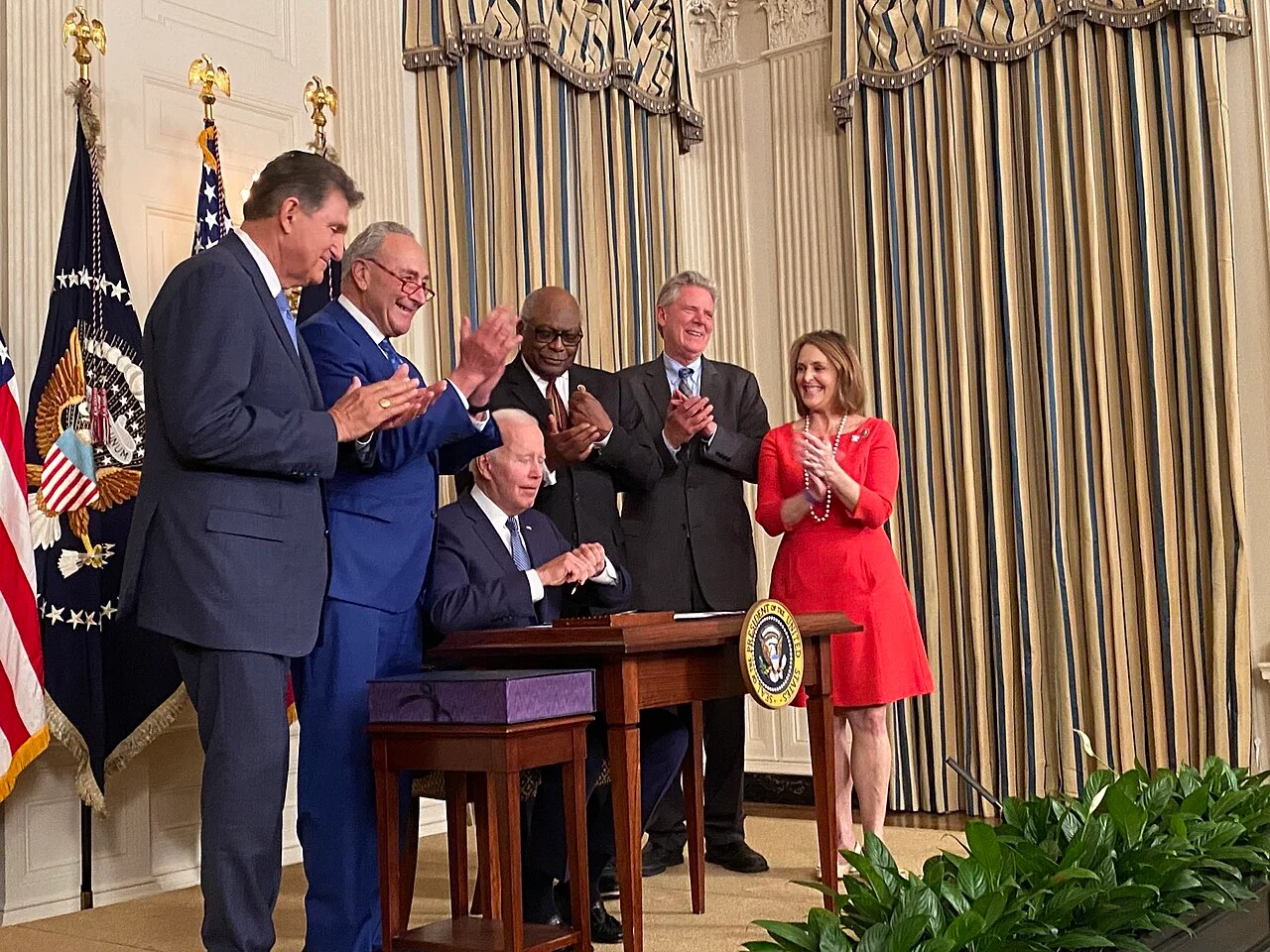
Despite the mounting evidence of harm, the Medicare Drug Price Negotiation Program remains law — and the Justice Department continues to defend it in federal court.