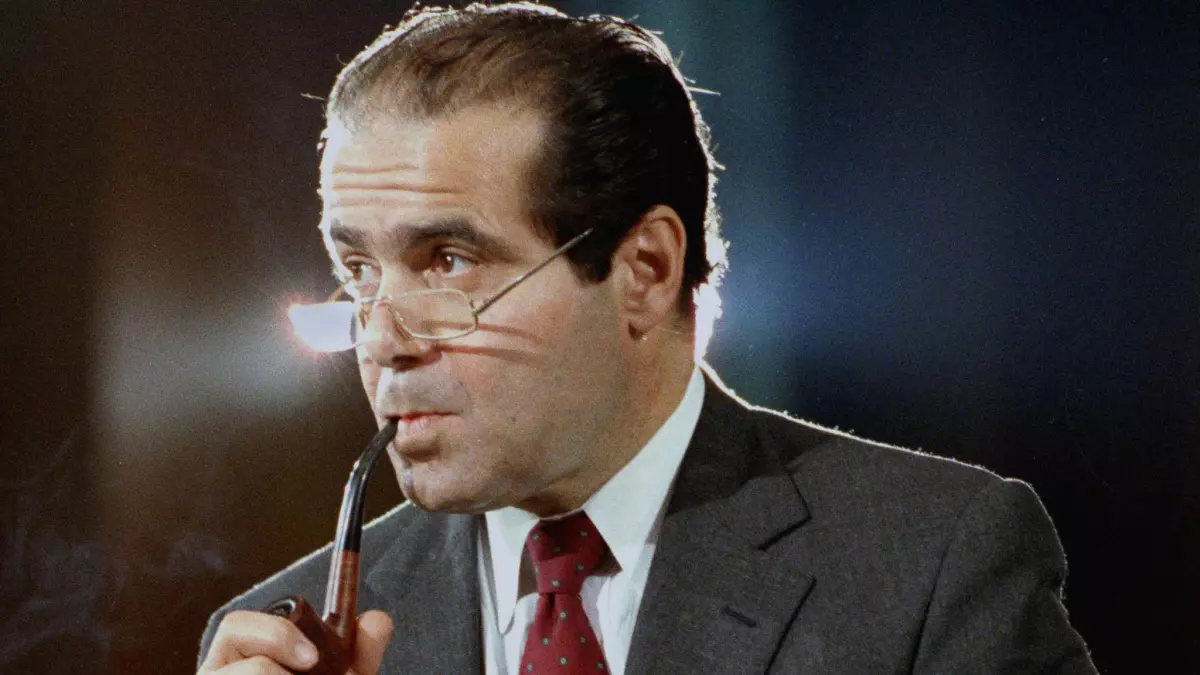
Scalia’s Revolution

James Rosen's Scalia: Supreme Court Years 1986-2001 offers readers a fuller appreciation of Scalia as both a man and a jurist.
Coming of age as a conservative interested in the law, I and everyone in similar circles wanted to be Justice Antonin Scalia. What an intellect, what courage, and man, what writing! We admired his penchant for cutting to the heart of his opponents’ arguments and then cutting them out. He would always do so with an extra dose of common sense—and with fearlessness in identifying his colleagues’ frequent absence of it.
Lee v. Weisman was the case that hooked me. It concerned a nonsectarian benediction at a public high school graduation, which the Supreme Court ruled violated the Establishment Clause because all students were obligated to “maintain respectful silence” throughout. The five-justice majority held that this amounted to religious coercion. Scalia’s dissent embodied everything we loved about him.
“The history and tradition of our Nation are replete with public ceremonies featuring prayers of thanksgiving and petition,” Scalia wrote. Even Thomas Jefferson, the lead architect of the wall separating church and state, prayed in both his inaugural addresses, from which Scalia quoted. How could continuing that tradition suddenly violate the Constitution? It couldn’t. Yet the Court’s violation of common sense was even more flagrant, he inveighed:
The Court’s notion that a student who simply sits in “respectful silence” during the invocation and benediction (when all others are standing) has somehow joined—or would somehow be perceived as having joined—in the prayers is nothing short of ludicrous. We indeed live in a vulgar age. But surely “our social conventions”… have not coarsened to the point that anyone who does not stand on his chair and shout obscenities can reasonably be deemed to have assented to everything said in his presence.
The dissent is a masterclass, and in hindsight, we can see that it had its intended effect. Lee was a nadir of First Amendment jurisprudence, indeed of the misadventures of the twentieth century Court. Things got better in the decades after, and that’s no coincidence. With a changing composition on the Court and the intellectual triumph of Scalia’s methodology, our judiciary has gone from a source of massive social upheaval to a champion of the rule of law. Scalia, as an academic, judge, and public figure, led the revival. He had mastered his craft and clearly enjoyed every second of it.
At the same time, Scalia’s jurisprudence can be seen as losing ground. Originalism and textualism have won the day, but not necessarily Scalia’s “faint-hearted” brand. On the right, moral readings of the law compete with original intent, original public meaning, and within the latter camp, arguments over what the relevant “public” even is. Has Scalia’s moment come and gone, or does he speak as emphatically as ever?
A fuller appreciation of Scalia the man and the jurist can help us see that we still live in Scalia’s judicial universe. That’s just what we get with James Rosen’s splendid new biography. Scalia: Supreme Court Years 1986-2001 comes on the heels of Rosen’s Rise to Greatness, which chronicled Scalia’s influences, upbringing, and formation. The first installment in the series received effusive plaudits from across the political spectrum. Perhaps channeling Scalia, I approached the sequel with a contrarian eye. I did not think it could live up to the hype. It does: fun to read, informative, analytical, combining cinematographic depictions of disputes between robed scions in the marble palace with concise summaries of the above-surface arguments in hundreds of Supreme Court decisions. Telling a human-interest story while giving accurate yet accessible descriptions of often-abstruse subject matter is no small feat.
Supreme Court Years is worth buying for the newly unearthed notes that once circulated only among justices and clerks. Justice Harry Blackmun, whose last claim to consequentiality evaporated in 2022 when his beloved Roe v. Wade was overturned by Scalia-influenced originalists on the Court, was a bitter and bigoted man who assigned numeric ratings to the lawyers before him and seemed to find Scalia’s Italianness unbecoming. His clerks were bitter, too, and passed snide notes about Scalia, his clerks, and their supposed revanchism. Rosen expertly weaves these juicy findings into the unfolding legal drama to phenomenal effect.
The Blackmun clerks—among them some prominent left-wing intellectuals—derided what they saw as Scalia’s old-fashioned approach to social questions. Rosen takes pains to emphasize that Scalia was a traditionalist from the beginning. Criticizing Roe in the 1970s, Scalia argued that a right to abortion could be constitutionalized only if it had some “historical justification,” that is, a history of being treated as a constitutional right, or the “consensus of modern society” that it was treated as such. Rosen also revives Scalia’s forgotten decision in In re the Reporters Committee for Freedom of the Press, from the justice’s first term on the bench. “Where a legal text was ambiguous, making its original meaning difficult to discern,” Rosen summarizes, “Scalia prescribed another method…In the absence of clear constitutional text or precedent, he wrote, the judges should consider ‘historical tradition.’”
Here is the proof that Scalian jurisprudence lives. Originalism has become so developed, so well-theorized, that the Supreme Court now decides only the hardest interpretive questions—those where the text and precedent have run out. And in those cases, time after time, today’s justices—whether self-styled Scalian disciples or not—land on the same conclusion Scalia did when originalism was just getting off the ground; as Justice Brett Kavanaugh put it in his survey of the topic in United States v. Rahimi, “absent precedent…history guides the interpretation of vague constitutional text.” Nearly all the justices on the current Court have written opinions that make use of longstanding American practices in this way. Even Justice Sonia Sotomayor has applauded the use of “a historical inquiry” about the precise boundaries of rights and state powers “calibrated to reveal something useful and transferable to the present day.”
Scalia’s commonsense appreciation for the role of history and tradition in the law was not always conventional wisdom. It is now. That is salutary for the rule of law—a notion that greatly animated Justice Scalia—because it prevents activist judges from wresting popular practices from a recalcitrant public or forcing unpopular ones upon them. Tracing this development across Justice Scalia’s years on the Court is a treat, and Rosen brings it to life with keen appreciation for its quiet revolutionism.
But more profoundly, Rosen’s book allows us to perceive and honor Scalia’s character and temperament. Declassified FBI files from his pre-nomination background investigation describe Scalia with only superlatives: “erudite…competent…delightful…friendly, witty, lively…even-tempered and totally in control of all aspects of his life…of unimpeachable character.” Those characteristics come to life time and again throughout the quarter-century Rosen covers in this volume. Scalia encountered unfair press, bad-faith criticism, and even outright personal hostility from other justices, and returned only magnanimity and principle. Always prepared, never flustered, “totally in control”—that was the recipe for Scalia’s personal and professional successes.
Rosen’s strong implication is that Scalia’s jurisprudence and personality were inextricable. This was tied to his intuition that judges cannot interrupt tradition, rooted in a profound understanding that we live amidst a miracle. The modern liberal-democratic-capitalist West is a wonderful place to be human, offering more to the human spirit than at any other time or place. Scalia’s unflagging desire to play a major role not just in enjoying it but in stewarding it—that’s what it meant to live life to the fullest. A bon vivant, uxorious husband, father of nine (nine!), musician, theater aficionado, traveler, insatiable reader, prolific public intellectual, and a man who left his unmistakable mark on the West, Scalia identified the life well-lived and went for it without hesitation or apology. We who grew to admire him as we first explored the world of ideas knew to consider him a role model for his erudition, logical dexterity, and wit. What we may not have appreciated is that we should all try to live more like him.
Having examined the opposition Scalia (and everything he stood for) encountered when he first donned his robe, the feeling Rosen’s book imparts is exhilaration. In the grand narrative of the American republic, this subplot is a rare instance in which we get to see the good guys win. The unabashed patriots, the champions of our Constitution and the fundamental decency of American life, have utterly trounced those who bitterly clung to living constitutionalism and make-it-up-as-you-go-along jurisprudence. Rosen’s biography gives a terrific window into how that victory was achieved, idea by idea, word by word, and argument by argument, and how grateful we ought to be that we ever got to enjoy a man like Antonin Scalia engaging his craft and serving as a role model to us all.
Tal Fortgang is a contributing editor to Civitas Outlook and Legal Policy Fellow and Advisor to the President at the Manhattan Institute.

Constitutionalism
Amicus Brief: Hon. William P. Barr and Hon. Michael B. Mukasey in Support of Petitioners
Former AGs Barr and Mukasey Cite Civitas in a SCOTUS Brief
Rational Judicial Review: Constitutions as Power-sharing Agreements, Secession, and the Problem of Dred Scott
Judicial review and originalism serve as valuable commitment mechanisms to enforce future compliance with a political bargain.
.avif)






.png)
.png)
.png)
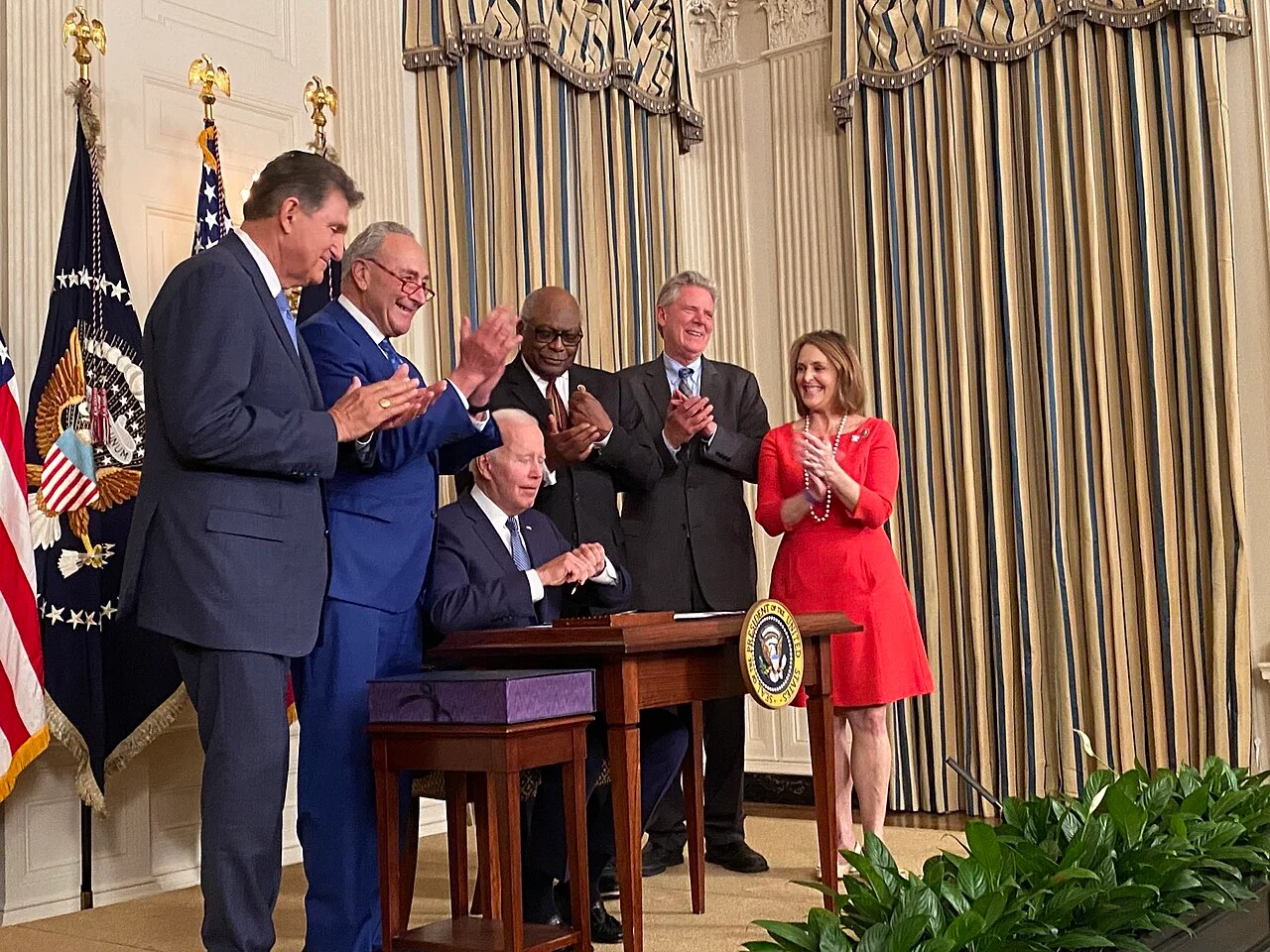
The Fifth Circuit’s Chance to Expose the Inflation Reduction Act’s Unconstitutionality
Despite the mounting evidence of harm, the Medicare Drug Price Negotiation Program remains law — and the Justice Department continues to defend it in federal court.
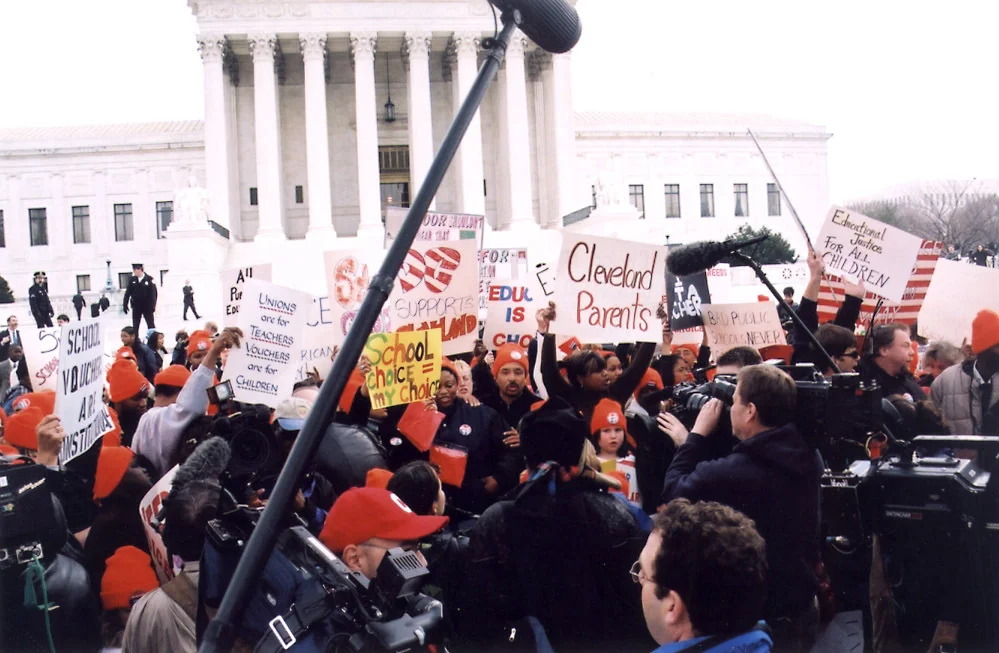
How the Zelman Decision Revitalized Religious Freedom
'Zelman v. Simmons-Harris' catalyzed a judicial recovery of the founding vision for the Establishment Clause and, more broadly, the relationship between church and state.


