Originalism and Its Adversaries

Originalism helps to make sure that those who participate in our democracy don’t change the rules in the middle of the game to give an overwhelming advantage to one of the participants.
I am delighted to be with you this evening at the New Whiggery dinner. I was given carte blanche this evening to speak to you about “any topic on classical liberty.” Being a lawyer who has the privilege of directing an institute named after one of the champions of originalism — former Attorney General Edwin Meese — I thought I would talk to you tonight about “originalism and its adversaries.” I will discuss this, however, from a position of strength since I think that originalism is ascendant and that its best days lie ahead. I would note, though, that I am notoriously bad at predicting the future, and, as Yogi Berra once said, “The future ain’t what it used to be.”
Why is originalism important? For that, we can turn to some old Whigs.
The Whig Party was started, as you know, by people who feared that Andrew Jackson would rule as a dictator, doing what he pleased and ignoring the safeguards built into the Constitution. Indeed, in 1832, Andrew Jackson defied the Supreme Court by refusing to use federal power to enforce the Court’s opinion in Worcester v. Georgia (1832), in which the Court held that Georgia laws extending state authority over Cherokee lands were unconstitutional. This ultimately resulted in the forced removal of the Cherokees along the infamous Trail of Tears. There is an apocryphal story, likely untrue, that after the Court issued its ruling, Jackson said, “John Marshall has made his decision; now let him enforce it.”
Daniel Webster, a prominent Whig and perhaps the greatest Supreme Court advocate ever (no disrespect intended to my friend Paul Clement), said, “It is hardly too strong to say that the Constitution was made to guard the people against the dangers of good intentions. There are men in all ages who mean to govern well, but they mean to govern.” He added, “I am committed against every thing which in my judgment, may weaken, endanger, or destroy” the Constitution. And Abraham Lincoln, another prominent Whig, said, “The people of these United States are the rightful masters of both congresses and courts, not to overthrow the Constitution, but to overthrow the men who pervert that Constitution.”
For the non-lawyers who are here, originalism is the theory of constitutional interpretation that contends that the words and phrases in the Constitution should be interpreted in accordance with how they were understood by the public at the time those provisions were debated and ratified. If the people want to amend the Constitution, it should be done by the process set forth in Article V of the Constitution and not under the pretense of constitutional interpretation by nine — just five, really — robed Solons sitting on the Supreme Court.
And originalism prevailed among the judiciary, that is, until the Progressive Era in the early twentieth century, when, all of a sudden, this approach to judging proved inconvenient to those who came to power who had a radically different vision of what the role of government ought to be in our lives. The leaders of the Progressive Era had no use for originalism or the checks and balances that were built into the Constitution. These were, as they saw it, outmoded, needless impediments to address the needs of a modern industrialized society, and they believed the Constitution, like everything else, must simply adapt to the times, or, as some people say today, it should “meet the moment.” John Dewey, sometimes referred to as the father of progressivism, said, “Historically the great movements for human liberation have always been movements to change institutions and not to preserve them intact.”
An early adopter and strong proponent of progressivism was our 28th president, Woodrow Wilson. Just before assuming the office, Wilson wrote that, “[t]he makers of our Federal Constitution” thought it “was founded on the law of gravitation. The government was to exist and move by virtue of the efficacy of ‘checks and balances.’” He said:
The Trouble with the theory is that government is not a machine, but a living thing. It falls, not under the theory of the universe, but under the theory of organic life. It is accountable to Darwin, not to Newton. It is modified by its environment, necessitated by its tasks, shaped to its functions by the sheer pressure of life. No living thing can have its organs offset against each other, as checks, and live.
He added:
There can be no successful government without the intimate, instinctive co-ordination of the organs of life and action. This is not theory, but fact, and displays its force as fact, whatever theories may be thrown across its track. Living political constitutions must be Darwinian in structure and in practice. Society is a living organism and must obey the laws of life, not of mechanics; it must develop.
This was the birth of living constitutionalism — the view that the Constitution’s broad principles and vague terms should be interpreted in light of evolving societal values and contemporary needs, and that we should not be bound by past precedents or by the cold, dead hands of the Framers of our Constitution or the people who ratified it. Progressive legal academics, the so-called legal realists, began teaching in law schools that judges had always “made” law rather than interpreted law and that this was a good thing. This view eventually came to dominate the faculties at major law schools, where it still holds sway.
Many modern progressive scholars now argue that judges make bad historians and that historical sources frequently don’t provide clear answers, so that it is impossible to figure out in many cases what the original public meaning of the Constitution’s words and phrases was. Moreover, they argue that while the Framers intentionally made some passages of the Constitution very specific, they intentionally made others vague. Yale Law Prof. Jack Balkin, for instance, argues that, “They spoke in general terms because they expected that people who came along later would have to do their part.” The late Ronald Dworkin also espoused this view, arguing that the Framers used vague language precisely because they expected judges to apply their own moral judgments when interpreting it to suit the times. In this same vein, Harvard Law Prof. Lawrence Tribe has argued that the written Constitution is “only a small part of what Americans think of as the Constitution,” although he wrote this many decades after the Supreme Court had abandoned originalism and had been issuing living constitutionalist opinions. Yale Law Prof. Reva Siegel argues that “The Constitution is neither an agreement that was made by persons long dead, nor is it something that simply reflects the understandings of living Americans. In fact, it’s a living tradition that links the struggles, commitments and beliefs of Americans past, present and future.” And Berkeley Law School Dean Erwin Chemerinsky stated in his latest book, No Democracy Lasts Forever, that the Constitution, at least as interpreted by originalists, “now itself threatens American Democracy.”
An undercurrent to all this, although rarely stated as such, is that we should not concern ourselves in any way with a bunch of long-deceased white men, many of whom owned slaves, who wrote at a time when women and other minorities had no rights or any real voice in crafting the Constitution. Mind you, some do state it. For example, Georgetown Law Prof. Rosa Brooks lamented in 2022 that “we are essentially slaves to a document that was written more than 230 years ago by a tiny group of slave-owning men.” This argument still resonates with many young people and people of color.
Living constitutionalism also crept into, and ultimately dominated, the judiciary, reaching its high-water mark during the Warren and Burger Courts. Alexander Bickel, a close friend of Robert Bork’s on the Yale Law School faculty, said that Chief Justice Earl Warren was always fixated on “Is it right? Is it good?” rather than “Is it constitutional?” Living constitutionalism was espoused by almost every member of the Supreme Court at that time, including Republican appointees such as Earl Warren, William Brennan, Harry Blackman, and John Paul Stevens. A majority of the justices on the Warren and Burger Courts fell right in line with Justice Thurgood Marshall’s espoused legal philosophy: “You do what you think is right and let the law catch up.” Time after time, the Court creatively interpreted the Constitution to achieve social ends that the majority considered desirable, barely mentioning the Constitution’s text, much less its original meaning.
Originalism’s resurrection owes much to the work of four individuals — William Rehnquist, Robert Bork, Ed Meese, and Antonin Scalia. Rehnquist, who earned the nickname “The Lone Ranger” while he was an Associate Justice, wrote a slew of solo dissents to living constitutionalist opinions that his fellow justices were writing. Starting in the early 1970s from his perch at Yale Law School, and later as a judge on the D.C. Circuit, Robert Bork was one of the first to remark that judges appeared to have lost their way. Contrary to what the legal realists were saying, Bork argued that it was possible for judges to “take from the document rather specific values that text or history show the framers actually to have intended and which are capable of being translated into principled rules.”
Several years later, Ed Meese, who was the 75th U.S. Attorney General during the Reagan Administration and is the namesake of the Institute that I direct at Advancing American Freedom, started a firestorm when he gave a speech in 1985 at the American Bar Association’s national convention in which he spoke about a jurisprudence based on original intent. He said:
What, then, should a constitutional jurisprudence actually be? It should be a Jurisprudence of Original Intention. By seeking to judge policies in light of principles, rather than remold principles in light of policies, the Court could avoid both the charge of incoherence and the charge of being either too conservative or too liberal.
A jurisprudence seriously aimed at the explication of original intention would produce defensible principles of government that would not be tainted by ideological predilection. This belief in a Jurisprudence of Original Intention also reflects a deeply rooted commitment to the idea of democracy. The Constitution represents the consent of the governed to the structures and powers of the government. The Constitution is the fundamental will of the people; that is why it is the fundamental law. … A constitution that is viewed as only what the judges say it is, is no longer a constitution in the true sense.
Those who framed the Constitution chose their words carefully; they debated at great length the most minute points. The language they chose meant something. It is incumbent upon the Court to determine what that meaning was.
Meese was surely channeling James Madison, who said that when it came to giving the Constitution a “just construction,” he “entirely concur[red] in the propriety of resorting to the sense in which the Constitution was accepted and ratified by the nation.” He added, “In that sense alone it is the legitimate Constitution. And if that be not the guide in expounding it, there can be no security for … a faithful exercise of its powers.”
The issue might have died there, except that Supreme Court Justice William Brennan felt compelled to respond. In a speech at Georgetown Law School, Brennan declared that a judicial philosophy of original intention was the height of arrogance and that it was impossible to discern what the Framers would have intended when confronting a case in the modern era. He stated:
We current Justices read the Constitution in the only way that we can: as twentieth century Americans. … [T]he ultimate question must be, what do the words of the text mean in our time? For the genius of the Constitution rests not in any static meaning it might have had in a world that is dead and gone, but in the adaptability of its great principles to cope with current problems and current needs.
Brennan’s philosophical claim that judges should, indeed, can only read and interpret the Constitution as if those words were written today is highly debatable, but his point about the Framers’ intentions was a good one. How were judges supposed to divine the intent of the Framers themselves? The delegates to the Constitutional Convention, after all, were not unanimous in their views.
At that point, Justice Antonin Scalia, who was appointed to the Court by President Reagan in 1986, entered this intellectual debate and stated that rather than focusing on the original intent of the Framers, the focus should be on the original public meaning of the Constitution, that is how those words and phrases were understood by those Americans who drafted, considered, and, after much debate, ultimately ratified that language. While it is not always easy to determine the original public meaning, which Scalia acknowledged was the biggest defect with originalism, it is not impossible. Judges can consult original sources to discern their meaning, such as dictionaries in use at the time; comparable provisions in state constitutions; the Federalist and Anti-Federalist Papers, essays widely read and discussed during the ratifying conventions in the states; and other contemporary newspapers and pamphlets.
Scalia also provided the most robust intellectual defense of originalism. He was concerned about democratic legitimacy and believed that “the main danger in judicial interpretation of the Constitution or, for that matter, in judicial interpretation of any law is that the judges will mistake their own predilections for the law.”
Scalia once said that the Constitution is “dead, dead, dead.” Realizing this might have sounded a tad too harsh, he said that he meant that while the Constitution may not be living or, as he once put it, “one that morphs,” it was meant to be “enduring.” It is its fixed meaning that gives it stability while also constraining judges so that they act like judges and not all-powerful super-legislators. After all, as Robert Bork once said, when it comes to ruling on constitutional questions, “The truth is that the judge who looks outside the Constitution always looks inside himself and nowhere else.” As Scalia put it during his Senate confirmation hearings, if we want constitutional change, we should go through the people: If the Constitution needs updating, “amend it.” If a statute needs changing, he said, “ask Congress to add it.” If you can’t convince your fellow citizens that the law should change, he said, “why should you be able to get your way through judicial fiat instead?”
Were the Framers flawless people? Of course not. But they were authorized by the people to establish a Constitution through a democratic process. And if we don’t like the values that they embedded in the Constitution, we can change them democratically through the amendment process. While ruling by judicial fiat can be liberating and exhilarating for a judge, democratic self-governance requires judges to remain disciplined and to faithfully interpret the Constitution as it is written and as it was understood at the time it was ratified, not what they would like it to say or mean today, even if the results in an individual case seem harsh or unjust.
Scalia acknowledged, of course, that originalism was not perfect. It was the “lesser evil” compared to living constitutionalism, which substitutes the rule of unelected judges for the rule of law. As he once said about originalism, “I don’t have to prove [it’s] perfect. The question is whether it’s better than everything else.”
While living constitutionalists on the left remain deeply involved in the fight against originalism, some prominent figures on the right have joined that fight. Some of these attacks have come from President Trump and some of his supporters. In December 2022, Trump used a Truth Social post to argue that because of massive election fraud in the 2020 election, the results should be overturned, and he should be reinstated as president. He wrote: “A Massive Fraud of this type and magnitude allows for the termination of all rules, regulations, and articles, even those found in the Constitution.” When some of the judges whom he appointed started ruling against him, which was inevitable given the aggressive legal positions that he was espousing, Trump blamed Leonard Leo, who had recommended some of these judges, and the Federalist Society. He called Leo a “sleazebag” who “probably hates America,” and that the Federalist Society gave him “bad advice” on many judicial nominations. After the recent tariff ruling, President Trump said that Justices Neil Gorsuch and Amy Coney Barrett — two of the justices he appointed — were “an embarrassment to their families.”
Now that he is back in office, the president has said he will rely on his senior staff and influential outsiders to vet judges. One of those influencers, Mike Davis, who runs the Article III Project, says that his organization “bucks the FedSoc trend of weak judicial selections in favor of those who will be bold and fearless in defending the Constitution.” But to hear the president’s supporters speak, one gets the impression that unstinting loyalty to Trump, something the president talks about all the time, is more important than fidelity to the Constitution or traditional conservative credentials.
These are some of the more blatant arguments from so-called post-liberals who, like progressives, see originalism as an impediment to achieving what they see as greater, more important goals. Post-liberals are tired of traditional conservatives, which would include the new Whigs in this room, being the only ones who play by the rules. They are tired of what they perceive to be unilateral disarmament in the face of the radical left.
The leaders of this movement include Patrick Deneen and Adrian Vermeule. In a 2022 Intercollegiate Student Institute speech, Deneen said: “We don’t need a return to the founding.” Instead, “conservatives and Americans should undo the destruction that has been wrought by a highly tendentious and abstract understanding of America that rests on libertarian wish-casting about the founding.” And they should do so by focusing on “the common good,” which, they believe, is comprised of objective, moral law and truth.
This will require, as Deneen said at the 2021 NatCon convention, “a new American revolution.” Thankfully, in a 2024 podcast interview, Kevin Roberts of The Heritage Foundation, my former employer, reassured us that this “Second American Revolution,” which will involve taking “power back from the elites and despotic bureaucrats,” will be “bloodless if the left allows it to be.” In a recent article in Chronicles, John Howting called the Constitution “an old list of laws and political compromises” that can largely be ignored by “true conservatives,” who ought to focus instead on loyalty, family, Christianity, and Western identity and values.
Such sentiments are part and parcel of this movement. Post-liberals think they “know what time it is.” They contend that we are in the midst of an existential war for the soul of the nation, and that we are perilously close to losing that war if we don’t seize control of the levers of power and take immediate and radical action, which may include chucking originalism and such quaint notions like separation of powers.
Harvard Law Professor and former Scalia law clerk, Adrian Vermeule, argues that while originalism was useful as a political strategy against a leftist march through our cultural institutions, it is now merely “a useful rhetorical and political expedient” that has outlived its usefulness. Vermeule believes that because historical evidence is mixed and that even diehard originalists disagree about outcomes, originalism does not really constrain judicial decision-making. He contends that “our public law now oscillates restlessly and unhappily between two dominant approaches, progressivism and originalism, both of which distort the true nature of law and betray our own legal traditions.” Both, he believes, should be replaced by a tradition that he says is even older than originalism, a theory he says is based on natural law and which he calls “common good constitutionalism.”
Vermeule espouses what he refers to as “the classical legal tradition,” a “classical European synthesis of Roman law, canon law, and local civil law.” This approach, he says, “should take as its starting point substantive moral principles that conduce to the common good, principles that officials (including, but by no means limited to, judges) should read into the majestic generalities and ambiguities of the written Constitution.” To achieve this utopia, he emphasizes “the authority of rule and rulers” and “the hierarchies needed for a society to function,” who can act boldly “in the interest of attaining the common good.”
Vermeule argues, essentially, that judges should apply the same principles of living constitutionalism to support conservative, rather than progressive, goals. He contends that “law should be seen as a reasoned ordering to the common good,” and that its purpose is to promote the requirements of a flourishing political community, that is, peace, justice, abundance, health, and safety.
Unlike, say, Ronald Dworkin, Vermeule’s vision of the common good is not focused on maximizing individualistic autonomy. It is on what is the highest good for the community and the moral well-being of individuals, even when those individuals are hell-bent on hedonistic self-destruction. Oh, Vermeule acknowledges that people may not like it at first, but that they will eventually come around and thank their rulers for making them better versions of themselves and serving the common good.
Vermeule is focused on his vision for a just and well-ordered society, and believes that “all officials have a duty, and corresponding authority, to promote the common good.” This would include a powerful president and a powerful bureaucracy, who should aggressively use all the tools at their disposal and who should be shown substantial deference by the courts. Indeed, Vermeule, an administrative law expert, puts a lot of faith in administrative agencies, hinting that administrative law has a certain “internal morality” and that agencies will, therefore, lean towards the common good when acting “to protect the populace from the vagaries and injustices of market forces ….”
In words that could have been written by Woodrow Wilson, Vermeule writes, “under contemporary conditions of extreme economic and social complexity, bureaucracy properly and intelligently deployed is an engine of unsurpassed power for promoting the common good.” In fact, Vermeule acknowledges that “Common-good constitutionalism is methodologically Dworkinian, but advocates a very different set of substantive moral commitments and priorities from Dworkin’s, which were of a conventionally left-liberal bent.”
In that respect, Vermeule shares the same post-liberal views, with a nod towards authoritarianism, that seem to be held by some people in Trump world. They, no doubt, would say that they are also acting in support of the common good. Vermeule’s view of the common good is heavily influenced by natural law theory and Catholic integralist principles, something about which I claim no expertise. Although it is safe to say that it is not a coincidence that Vermeule converted to Catholicism a decade ago, church leadership has also voiced concerns that he and other post-liberal thinkers risk “idealization of the past” and “authoritarian temptation.”
Not surprisingly, Vermeule’s views have been criticized on both the right and the left, as well as by originalists.
People on the left called common-good constitutionalism an argument in favor of authoritarianism and Catholic extremism. They were joined by people like George Will, who call it “Christian authoritarianism — muscular paternalism, with government enforcing social solidarity for religious reasons.” Others pointed out that Vermeule’s theory would also do little to constrain judges, who could reach wildly different conclusions about what constitutes the “common good” based on their moral worldviews and their views of the philosophers and theologians whom Vermeule relies upon for that purpose.
Moreover, Vermeule’s theory is not about constraining government power to protect individual liberty. It is about justifying the use of government power to achieve the common good, often at the expense of individual liberty. Randy Barnett described common-good constitutionalism as dangerous to individual liberty and America’s founding principles, and dangerous because of its heavy reliance on unaccountable administrative agencies to achieve its objectives.
Judge Bill Pryor called common-good constitutionalism “living common goodism,” a threat to the rule of law, which “serves as a bulwark against the arbitrary abuse of power.” He added: “the Constitution gives federal judges no authority to fashion a jurisprudence of living common goodism to achieve conservative political results; indeed, fashioning that sort of jurisprudence would be lawless and contrary to natural law.” When it comes to interpreting the Constitution, Pryor said, “whether the text bears a particular meaning is an independent, antecedent question for interpreters to answer, and the oath requires that judges apply the meaning of enacted texts even if doing so, in their view, works against the common good.”
Although long departed, Russell Kirk, one of the founders of the modern conservative movement, had some things to say about the ideology behind post-liberalism. “Ideology,” he said, “really means political fanaticism — and, more precisely, the belief that this world of ours may be converted into the Terrestrial Paradise through the operation of positive law and positive planning.” He remarked, “America needs nothing less than ideology. Not abstractions, but prudence, prescription, custom, tradition, and constitution have governed the American people.” And of the Constitution, he said: “For my part, I do not think we could construct a brand-new constitution better calculated to reconcile the claims of order and the claims of freedom than does our old Constitution — whatever its anomalies and difficulties today.”
These criticisms notwithstanding, Vermeule’s views have proven influential and may have some staying power. He has articulated a coherent intellectual alternative to both originalism and living constitutionalism that supportss those who believe in robust uses of executive authority to achieve conservative goals, including rejecting any separation between church and state and enforcing a moral code on society, albeit at the expense of limited government and democratic norms.
Vermeule’s views had particular resonance prior to the Dobbs decision. Overturning Roe v. Wade had been a fervent but elusive goal of the conservative movement for nearly 50 years. Roe had been reaffirmed several times, often with the support of Republican appointees such as Sandra Day O’Connor, Anthony Kennedy, and David Souter. There was a growing sense that if an originalist Court was not prepared to overturn Roe, then it might be time to abandon originalism. Fortunately, the Court did overturn Roe, and also struck a blow against racial preferences in the Students for Fair Admissions case. As a result, I sense that the momentum behind common good constitutionalism has died down somewhat. But it is very much still there. After all, cases like Obergefell v. Hodges are still good law.
But as I said at the beginning of my remarks, I think that originalism is ascendant and that its best days lie ahead. If you want proof, look no further than the Supreme Court. Judge Ketanji Brown Jackson was asked during her confirmation hearing how she interprets the Constitution. She said, “I’m looking at original documents. I am focusing on the original public meaning because I am constrained to interpret the text.” She added, “I do not believe that there is such a thing as a living constitution.” These answers would have been unthinkable three decades ago. But a nominee of a Democratic president felt compelled to identify original public meaning as part of her methodology.
She is not alone. Justices Barrett, Kavanaugh, Gorsuch, and Thomas are all self-professed originalists. Justice Alito has referred to himself as a “practical originalist” — close enough. Even Justice Elena Kagan said, “We are all originalists now,” though she later came to regret saying it. That leaves only two members of the Court who have not accepted the label of originalist: Justice Sonia Sotomayor and Chief Justice John Roberts. But seven out of nine ain’t bad.
But as I also said, I am notoriously bad at predicting the future. During the Biden Administration, there was a concerted effort to pack the Supreme Court, since the number of justices is not established by the Constitution. James Carville, the Ragin’ Cajun, recently said that Democrats should quietly prepare to pack the Court on “Day One” if they win the White House and both houses of Congress in 2029. If there is a President Gavin Newsom or Alexandria Ocasio-Cortez in 2029 and if the Democrats control both houses of Congress and nuke the legislative filibuster (that is, if Republicans don’t do it before then), it is entirely possible that a Court-packing plan might succeed, and living constitutionalism will reign supreme again. Or if conservatives become frustrated with the Court, which I think is unlikely, then perhaps common-good constitutionalism will come into vogue. As the late Ed Feulner used to say, “In Washington, there are no permanent victories and no permanent defeats.”
We live in sharply divided times, but so did the Framers of the Constitution, who crafted the Constitution to bring unity, cohesion, and a functioning government that would both protect civil liberties and allow us to work through our many differences in non-violent ways, and which would establish a sense of stability and solidity for our new nation that would endure in both good times and bad. It was designed “to form a more perfect union” and that remains its design.
For those who want to push a particular agenda — whether on the right or on the left, whether by an elected official or an activist organization — but who don’t want to spend the time convincing their fellow Americans that their agenda is the right way to go, modern political structures, including the Constitution, can be an impediment. I acknowledge that it is tempting to want to steamroll over those obstacles by ignoring them, as some on the right want to do, or by changing the Constitution under the guise of interpreting it, as some on the left want to do. But the Constitution prohibits majorities from trampling on the rights of minorities, and it provides incentives to compromise (which some consider a dirty word) to get things done. Judges are there to enforce rules in an even-handed manner, not to serve the interests of their friends or those who appointed them.
Yes, if you are a change agent, the Constitution can make things slow and cumbersome; it promotes legitimacy, but it is not efficient; that is, in my view, a feature, not a bug. And originalism helps to make sure that those who participate in our democracy don’t change the rules in the middle of the game to give an overwhelming advantage to one of the participants.
And if you don’t like that, just remember, as Justice Gorsuch recently reminded us in his concurring opinion in the tariff case, what goes around comes around. At some point, we all end up being in the minority, and when that happens, all those obstacles that seemed horrible when your party was in power will seem the very things that are preventing us from embarking down the road to ruin.
John G. Malcolm is the Vice President of the Edwin Meese III Institute for the Rule of Law at Advancing American Freedom. This speech, slightly edited for publication, was delivered recently at the New Whiggery dinner hosted by the Institute on Religion & Democracy.

Constitutionalism
Amicus Brief: Hon. William P. Barr and Hon. Michael B. Mukasey in Support of Petitioners
Former AGs Barr and Mukasey Cite Civitas in a SCOTUS Brief

Rational Judicial Review: Constitutions as Power-sharing Agreements, Secession, and the Problem of Dred Scott
Judicial review and originalism serve as valuable commitment mechanisms to enforce future compliance with a political bargain.
.avif)





.png)
.png)
.png)
.png)
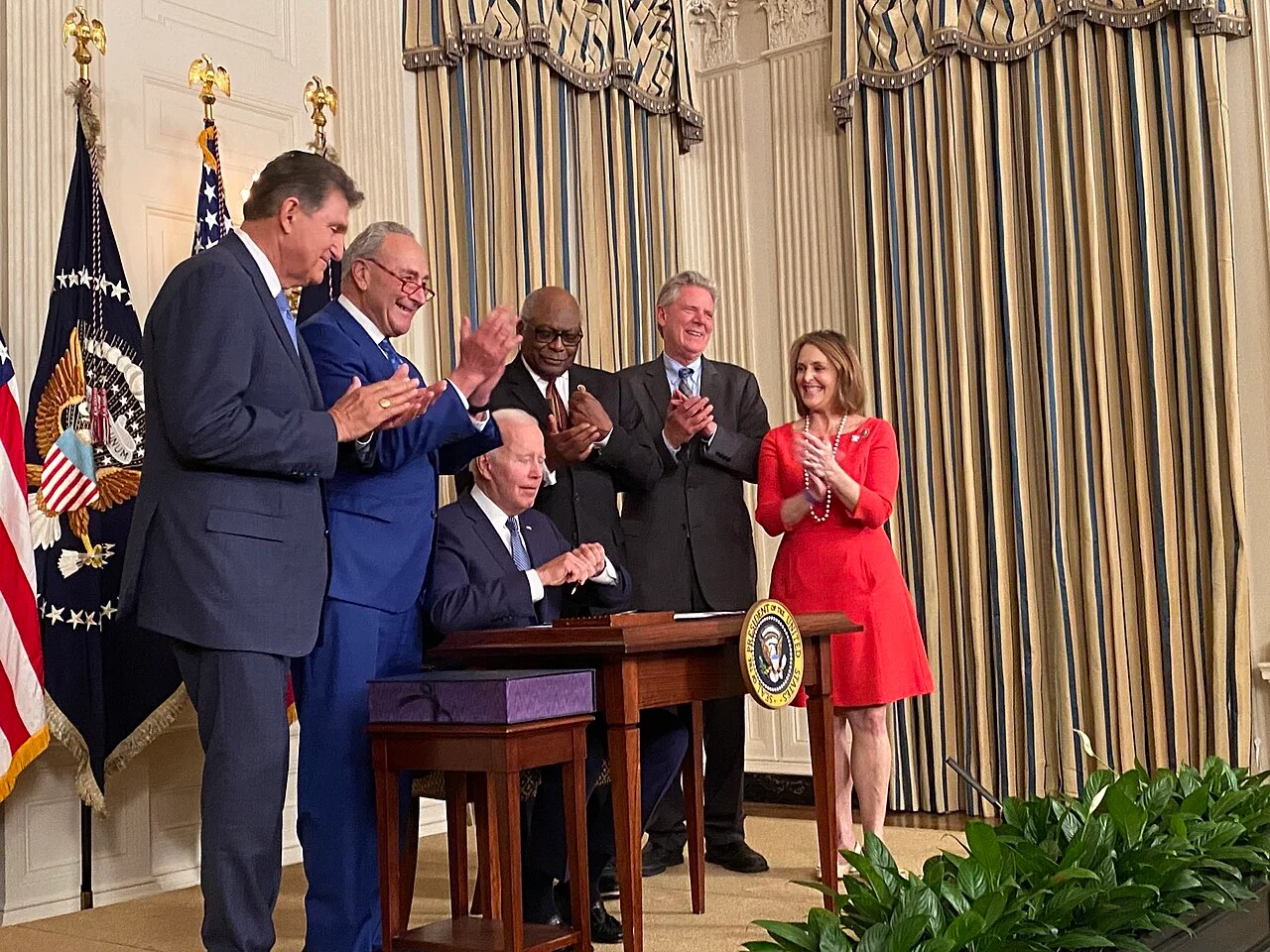
The Fifth Circuit’s Chance to Expose the Inflation Reduction Act’s Unconstitutionality
Despite the mounting evidence of harm, the Medicare Drug Price Negotiation Program remains law — and the Justice Department continues to defend it in federal court.