Kneecapping Powell, Undermining the Rule of Law

A weaponized justice system is extremely dangerous under any administration.
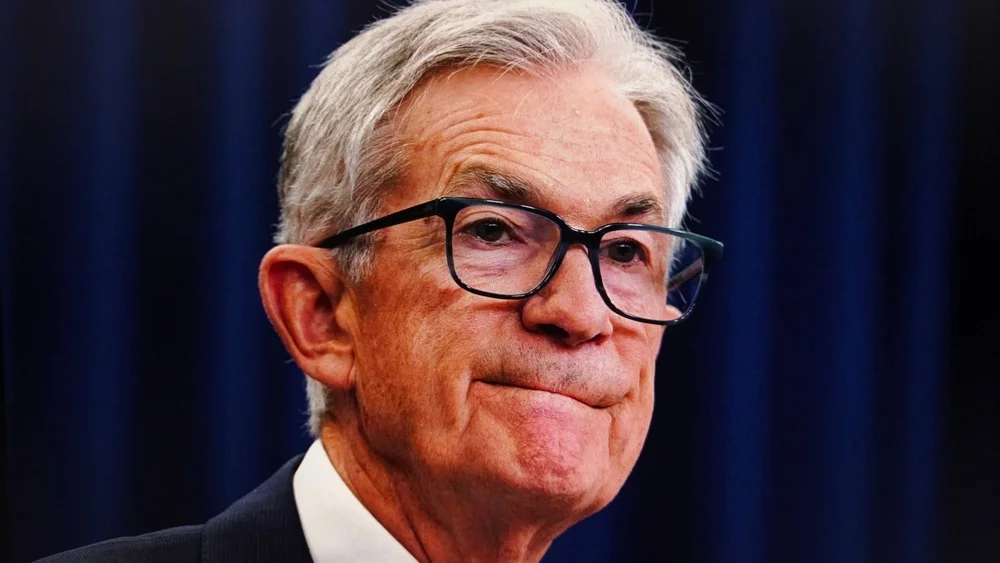
The U.S. Department of Justice has initiated a criminal investigation into the Federal Reserve. On Sunday January 11, 2026, Federal Reserve Chair Jerome Powell announced that, two days beforehand, the U.S. Department of Justice had issued grand jury subpoenas related to Powell’s testimony last June 25 before the Senate Banking Committee pertaining to a multi-year project that Powell was overseeing to renovate the Federal Reserve’s Washington, D.C., headquarters. The renovations, which involve expanding and modernizing the 90-plus-year-old Marriner S. Eccles Building and another building on Constitution Avenue, are scheduled to be completed in 2027 and are way over budget, at about $700 million. Indeed, Powell himself has asked the Fed’s Inspector General, Michael Horowitz (formerly the DOJ’s IG), to determine whether any improprieties occurred.
The criminal investigation, which is being run out of the D.C. U.S. Attorney’s Office, followed a referral by Congresswoman Anna Paulina Luna (R-FL) on July 19 to the Justice Department. In her referral letter, Luna accused Powell of having twice lied under oath when he testified that the Eccles Building had “never had” a serious renovation and that he also misrepresented the size and scope of the project.
The Powell investigation is just the latest in a series of investigations targeting individuals who, to paraphrase Trump himself, were “not very nice” and were “nasty” to Trump. One could even say that the targeted individuals have exhibited extreme symptoms of Trump Derangement Syndrome. The list includes New York Attorney General Letitia James, former FBI Director James Comey, former FBI Director Chris Wray, U.S. Senator Adam Schiff (D-CA), former National Security Adviser John Bolton, former Director of National Intelligence James Clapper, Fulton County District Attorney Fani Willis, and many others. The President has been urging the U.S. Attorney General to aggressively pursue these investigations, and some in the White House are grumbling that she is not moving fast enough.
As is well known, President Trump has been highly critical of Powell, whose tenure as Fed Chair expires in May. Despite nominating Powell as Chair in 2017, Trump has said that he would love to fire Powell (although he hasn’t) and has called him “grossly incompetent.” While it is inconceivable that any indictment (and certainly no trial) would happen before May, Powell would remain on the Federal Reserve Board, albeit not as Chairman. An indictment, however, might also have a chilling effect on the next Chair and the Board of Governors' fellow members.
Powell responded by stating that he respects the rule of law and acknowledging that no one is above the law, including himself. But he urged the public to view “this unprecedented action” as part of “the broader context of the administration’s threats and ongoing pressure.” He claims that the stated purposes of the investigation are pretextual and that he is being threatened with criminal indictment as “a consequence of the Federal Reserve setting interest rates based on our best assessment of what will serve the public, rather than following the preferences of the President.” He further stated that he has always acted “without political fear or favor” and would continue to do so, and that the Fed would not be “be directed by political pressure or intimidation” when setting interest rates.
On Sunday night, Trump denied any knowledge of the subpoenas, saying, “I don’t know anything about it, but [Powell] is certainly not very good at the Fed, and he’s not very good at building buildings.” Trump said he “wouldn’t even think about” using subpoenas to pressure Powell into lowering interest rates. “What should pressure him is the fact that rates are far too high. That’s the only pressure he’s got.”
Whatever improprieties may be lurking under the surface at the Fed, Trump’s and Powell’s most public disagreement clearly centers over where to set interest rates. Trump and his sole appointee to the Fed Board of Governors so far in his second term, Stephen Miran, both favor artificially low interest rates. In truth, “lowering interest rates” is simply code for printing money. On paper, such loose monetary policy can stimulate economic activity in the short-run, but especially over the medium- and long-run, such large and arbitrary creation of money simply drives inflation, not real production. The kind seen both here in the 1970s and abroad in some of the most well-known economic catastrophes, such as the hyperinflation and deep poverty of the Weimar Republic and in Zimbabwe under Robert Mugabe. Certainly, Trump’s personal insults and war of words against Powell last year lend credibility to the idea that policy differences, and not the law, are the prime motivation for the investigation.
Look, we get it. From 2017 through 2024, Democrats treated Trump like a piñata. Trump was dogged throughout his first term with the so-called Russian collusion investigation, which, in the end, came to naught after Special Counsel Robert Mueller concluded that there was no there there, giving credence to Trump’s claim that the whole thing was a hoax and a witch hunt. President Trump was indicted four times after he left office — twice by Special Counsel Jack Smith and twice by state prosecutors. One was brought by Willis; it was dismissed before trial. The other was brought by Manhattan District Attorney Alvin Bragg, which resulted in a conviction despite a flimsy case riddled with a host of legal flaws in the prosecution, which should lead to a reversal on appeal.
Nor was lawfare limited to Donald Trump under the Biden administration. Many of the J6 defendants, who wrongfully entered the Capitol, but who were not carrying weapons and did not physically harm anyone, were overcharged, facing charges for seditious conspiracy rather than trespassing on federal property. Peaceful pro-life sidewalk counselors were charged with violating the Freedom of Access to Clinical Entrances Act, but not people who firebombed crisis pregnancy centers. The FBI branded “traditional” Catholic organizations as magnets for “potential domestic violence extremists” and targeted them for investigation.
We could go on and on, but you get the point. Suffice it say that Donald Trump and conservatives know the perils of lawfare all too well.
Perhaps the strategy is to give Democrats a “taste of their own medicine” and to make lawfare so painful that both parties reach the conclusion that mutual disarmament is the way to go? That process appeared to work when it came to repealing the Independent Counsel Act of 1978, a favorite weapon of Democrats until it was Bill Clinton’s ox that was gored by Independent Counsels Robert Fiske and Ken Starr. The Act expired in 1999 and was not reauthorized. R.I.P.
On a political front, it is worth keeping in mind that the Democrats’ foray into lawfare against Trump backfired badly. The same could happen to Trump. Senator Thom Tillis (R-NC) has indicated he will oppose the confirmation of any Federal Reserve nominee until this matter is fully resolved. Other Senators might follow suit. Further, while there is an informal practice of Fed Chairs resigning when their tenure as Chair expires, that is not required, and Powell still has two years remaining on his appointment.
While we are not offering a definitive opinion about the underlying merits of any of the cases currently being pursued by the Justice Department (except to note that previous indictments of Comey and James were dismissed by federal judges; the Department plans to appeal those decisions), this is a dangerous game and the optics and potential ramifications of this course of action are bad. If the President wishes to try to fire Powell for cause, as he has Federal Reserve Governor Lisa Cook, or if he wishes to challenge the independence of the Fed on constitutional grounds, that’s fine. But a criminal investigation?
Lavrentiy Beria, the ruthless head of Stalin’s Secret Police (the NKVD), infamously said, “Show me the man, and I’ll show you the crime.” Many of these investigations smack of that. Criminal prosecutions, of course, are in a whole different league from civil lawsuits, administrative proceedings, Congressional oversight hearings, and public pressure. A conviction can result in being imprisoned and labelled a felon with all the collateral consequences that follow, often including irreparable reputational harm.
Even if a case is ultimately dismissed or results in an acquittal, the financial and emotional toil can be devastating, which is why many say that “the process is the punishment.” After he was acquitted of corruption charges, Reagan’s Labor Secretary Ray Donovan asked (rhetorically), “Which office do I go to to get my reputation back?”
Powell, of course, has not yet been indicted. If he is, he will be presumed innocent and will be able to defend himself on the merits. He will also, no doubt, assert other defenses including selective or vindictive prosecution, although such arguments rarely result in dismissal of the charges.
There is a rich history of Presidents bristling at the decisions made by the Federal Reserve and criticizing Fed Chairs in public. Despite a healthy economy, Richard Nixon demanded that Fed Chairman Arthur Burns implement an expansionary monetary policy in the run-up to his 1972 campaign. Burns complied, which improved economic optimism and helped Nixon secure a landslide reelection with a 520-17 electoral college victory over George McGovern. But over the remainder of the decade, Burns and his brief successor, G. William Miller, lost control which resulted in what is considered the highest peacetime inflation in American history. The annualized inflation rate was over 14% in July 1979, when Miller left the Fed. It would take a decade to tame inflation through Paul Volcker’s term as Fed Chair, but only after it had wreaked havoc on the finances of most Americans. Since then, presidents have largely refrained from exerting significant pressure on the Fed regarding interest rates. That is until Trump’s second term.
This criminal investigation reverses that trend and takes things to a whole new level. The President and his allies have decried the weaponization of the Justice Department under the previous administration. They were right to do so. A weaponized justice system is extremely dangerous under any administration. It undermines respect for the rule of law, and no good can come from that.
John G. Malcolm is the Vice President of the Edwin Meese III Institute for the Rule of Law and Richard Stern is Vice President of the Plymouth Institute for Free Enterprise at Advancing American Freedom

Constitutionalism
Amicus Brief: Hon. William P. Barr and Hon. Michael B. Mukasey in Support of Petitioners
Former AGs Barr and Mukasey Cite Civitas in a SCOTUS Brief
Rational Judicial Review: Constitutions as Power-sharing Agreements, Secession, and the Problem of Dred Scott
Judicial review and originalism serve as valuable commitment mechanisms to enforce future compliance with a political bargain.
.avif)



.png)
.png)
.png)
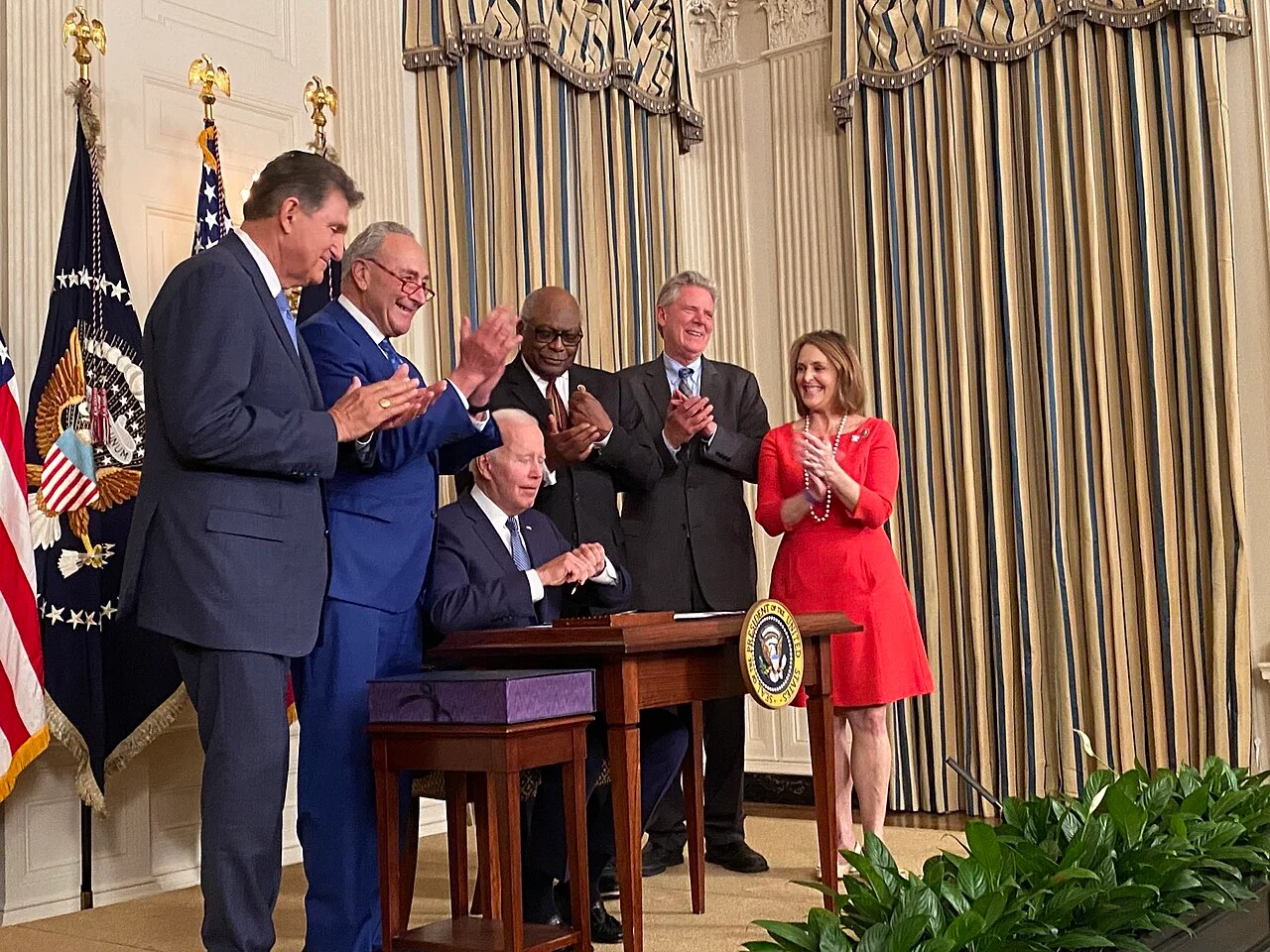
The Fifth Circuit’s Chance to Expose the Inflation Reduction Act’s Unconstitutionality
Despite the mounting evidence of harm, the Medicare Drug Price Negotiation Program remains law — and the Justice Department continues to defend it in federal court.