The Slippery Slope of Social Media Liability
A Los Angeles jury has handed down a verdict stating that Meta and Google are held liable for a young woman’s psychological harm allegedly linked to social media use—along with a $6 million damages award. But what legal theory could possibly justify it? Richard Epstein dissects the case, from the limits of Section 230 to the growing push to impose liability on platforms for user behavior. Epstein explains why the ruling rests on shaky ground, how it collides with longstanding principles of tort law, and why—if upheld—it could expose tech companies to catastrophic, system-wide liability. The conversation ranges from contributory liability and First Amendment concerns to the deeper question: who is responsible when harm flows through a network? A sharp, fast-moving analysis of a case that could reshape the legal architecture of the internet.
The Libertarian
Constitutionalism
Amicus Brief: Hon. William P. Barr and Hon. Michael B. Mukasey in Support of Petitioners
Former AGs Barr and Mukasey Cite Civitas in a SCOTUS Brief

Rational Judicial Review: Constitutions as Power-sharing Agreements, Secession, and the Problem of Dred Scott
Judicial review and originalism serve as valuable commitment mechanisms to enforce future compliance with a political bargain.
.avif)





.png)
.png)
.png)
.png)
Farewell to the President’s New East Wing
Both Congress and the President have acted in violation of the public trust doctrine.
The Constitution and Birthright Citizenship: A Rejoinder to Professor Yoo
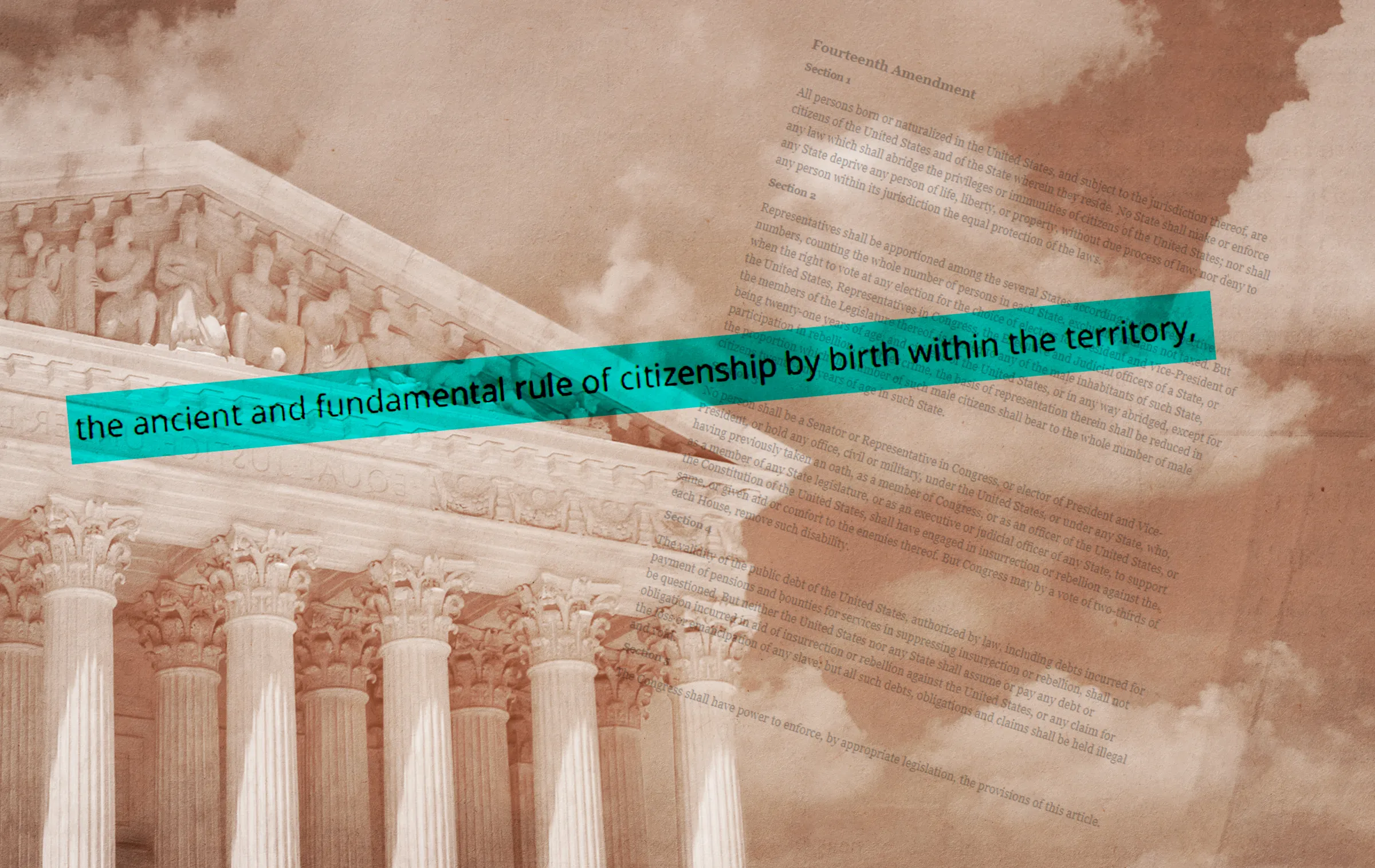
Foreigners can come to America and become “Americans” not by their mere presence on American soil but by embracing the principles upon which this country was founded.




Get the Civitas Outlook daily digest, plus new research and events.