Why Can’t We Have a Real Filibuster?

Senator Mike Lee’s (R-UT) call to revive the talking filibuster is a call to restore the cost-benefit analysis that was attached to the filibuster before it significantly strengthened the minority’s hand. But does it bring a host of unintended consequences?
The Senate has officially begun debate on the SAVE Act, which President Trump recently called the Republican Party’s “No. 1 priority.” The bill would require voters to show proof of citizenship and a photo ID to vote in federal elections. (The House has already passed the measure.)
Support for the bill is near-unanimous among Senate Republicans, but they are divided over how the Senate should consider and vote upon it. Senator Mike Lee (R-UT) has been perhaps the most outspoken advocate for reviving the “talking filibuster” to increase the cost of using the filibuster to obstruct the majority, but stop short of nuking the filibuster altogether.
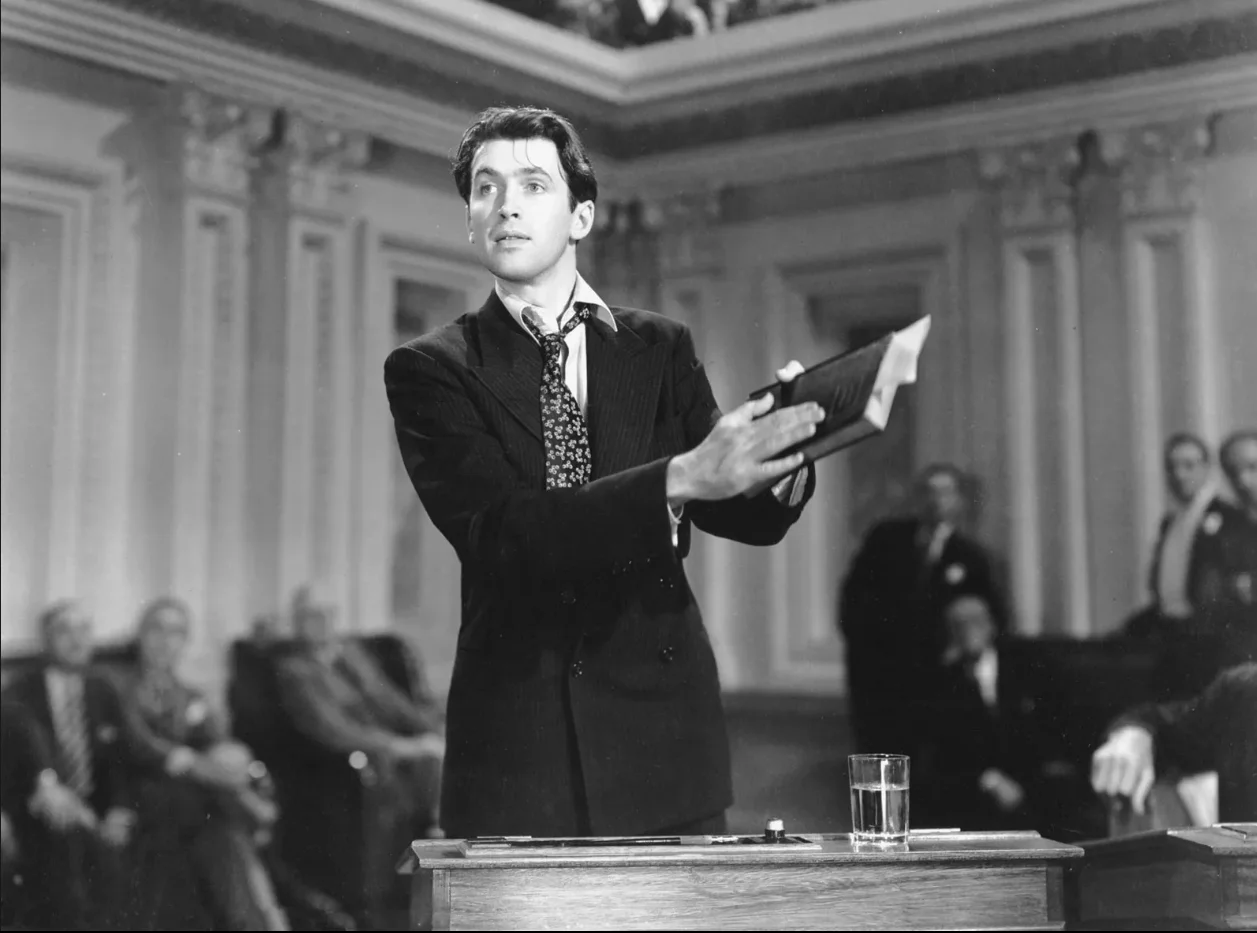
What is the talking filibuster? It refers to the traditional method of filibustering, famously depicted in films like Mr. Smith Goes to Washington. It required the person(s) filibustering to actually speak on the floor of the Senate for the duration of the filibuster. Strom Thurmond filibustered the 1957 Civil Rights Act (a weaker civil rights law that predated the 1964 Civil Rights Act) by speaking for over 24 hours on the Senate floor.
These talking filibusters have provided some of the most memorable and dramatic scenes in the Senate’s history. Robert LaFollette, the famous senator from Wisconsin, filibustered a measure in 1908 for over 18 hours – at that time, a record. He carried on his filibuster during a significant heat wave, ordering glasses of eggnog to give him the strength to continue. After drinking from one of the glasses, he proclaimed that it was poisoned and ordered it to be taken away. According to some analyses, the glass contained enough poison (whether by design or by natural causes) that it would have killed LaFollette had he continued drinking. LaFollette continued filibustering for several hours after drinking the contaminated eggnog but ultimately yielded the floor.
The important thing to note about these and other famous filibusters is that senators had to actually remain on the floor to obstruct the passage of legislation, and therefore, these filibusters were eventually overcome. The talking filibuster did not allow a minority to block legislation – it forced the majority to delay, perhaps to bargain with the minority, but it did not give the minority all the cards.
A fateful change in Senate rules in the 1970s transformed the use of the filibuster. The number of filibusters began to increase considerably in the 1960s, leading then-Majority Leader Mike Mansfield to propose reforming the process in 1972. His reforms, ultimately adopted, introduced a “two-track” system for enacting legislation. This system enabled a filibuster to block one track while leaving the other open for the Senate to continue conducting business. By reducing the cost associated with filibustering, this change in the rules has dramatically strengthened the minority’s hand – so much so that it is common today to assume that 60 votes are needed to pass anything in the Senate that can’t be jammed into a reconciliation bill or considered under special rules.
Senator Lee’s call to revive the talking filibuster is a call to restore the cost-benefit analysis that was attached to the filibuster before it significantly strengthened the minority’s hand. It would enable the Senate to be more responsive to elections – a fact which would sometimes support Republican causes, and sometimes support Democratic causes, as the fight over “Build Back Better” reminds us. Thus, it would strengthen Congress as an institution, an important benefit in a time so dominated by presidentialism.
But Majority Leader John Thune (R-SD) described one important consequence of restoring the talking filibuster, and it’s a consequence that the SAVE Act’s most fervent supporters need to bear in mind. As Thune explained to Bret Baier on Fox News recently:
What it would force us to do in the Senate is vote on all kinds of Democrat amendments, whether Epstein or blocking President Trump’s tariffs or, you know, Obamacare subsidies. You can go right down the list, war powers, abortion, there are a whole bunch of votes that…we would be forced to take, not only really hard votes for a lot of our colleagues, but also votes that in the end, some of which would pass and go on to the bill.
Thune’s point is that a return to the talking filibuster would also create an open amendment process, allowing the minority party to offer any amendment to the SAVE Act and force a vote on it. (Amendments in the Senate are usually not required to be germane to the underlying bill.) It would, in essence, sacrifice the majority party’s procedural control over the Senate agenda, and in so doing, it would hand two valuable opportunities to the minority party: 1) the opportunity to force “messaging votes” that can be used in the upcoming elections, and 2) the opportunity to change the provisions of the SAVE Act itself. (James Wallner argues that unlimited amendments, so Thune’s view is contested.)
If Democrats succeed in changing the provisions of the SAVE Act, the amended bill would have to be passed by the House, which may vote to strip those amendments, and the process would end up back where it started.
Thune’s caution is really a reflection of a broader historical trend in both the House and the Senate in recent decades. Beginning in the 1980s, when both the House and the Senate followed procedures that were far more open (allowing more debate and amendments), minority parties began using the opportunity to offer amendments more for messaging than for policy. The majority parties typically responded by closing the process, preventing these votes from being forced.
Then-Speaker Nancy Pelosi (D-CA) brought this trend to its peak during the early years of the Obama administration. As Joshua Huder explains, she was “the first Speaker in U.S. history to fail to consider a single bill under an open amendment process.” In the Senate, majority leaders such as Harry Reid (D-NV) used the practice of “filling the amendment tree” to prevent Republicans from offering strategic amendments. Both chambers became increasingly majoritarian and less deliberative.
This pattern is well established by now: minority parties complain about being shut out of the process when they are out of power, but find that they have to govern the same way when they become the majority, if they want to prevent the minority from hijacking the agenda.
One final example helps to illustrate the difficulty: the end of the “motion to recommit.” This motion was used for over a century in the House of Representatives to give the minority party the chance to offer a final amendment to a bill after the House passed it. In 2019, after House Democrats enacted a gun control measure, House Republicans used the motion to recommit to offer one last amendment: if an illegal immigrant attempts to purchase a gun, Immigration and Customs Enforcement (ICE) must be notified. This amendment was ultimately passed because a few dozen House Democrats, mostly from swing districts, ultimately joined Republicans in voting for the provision.
Democrats responded by abolishing the motion to recommit – once again, opting to close the process in response to strategic amendments.
In short, the recent history of both the House and the Senate illustrates the likely effect of opening the amendment process. The minority party will propose strategic amendments to score points in the next election, and/or divide the majority party’s coalition to insert its own proposals into the underlying legislation. Returning to the talking filibuster, in other words, provides Senate Democrats with the opportunity to introduce amendments that will garner the support of a few moderate Republicans representing purple and blue states. (Though now it appears that the Senate may avoid this outcome by using a different process to consider the SAVE Act, as Wallner explains.)
The history of congressional reform is the history of unintended consequences. Progressives in 1910 overthrew the Speaker and, unwittingly, established the rule of the conservative committee-chair “barons.” Liberal Democrats overthrew those barons in the mid-1970s and, unwittingly, handed large portions of the electorate to the Republican Party. Perhaps it would be ultimately a healthy thing for our republic if the Senate returned to a more open process, but those who favor it for policy reasons should be aware of the likely side effects their medicine may induce.
Joseph Postell is Associate Professor of Politics at Hillsdale College.

Politics
%20Richard%20Samuelson%20%20-%20Is%20American%20Nationalism%20Still%20Creed-able_-1.jpg)
Is American Nationalism Still Creed-able?
We are not there now, but there is reason to worry that the United States is in danger, if we are not careful, of ceasing to be a nation with the principles of 1776 at its core.

National Civitas Institute Poll: Americans are Anxious and Frustrated, Creating a Challenging Environment for Leaders
The poll reveals a deeply pessimistic American electorate, with a majority convinced the nation is on the wrong track.
.webp)
%20(1).avif)


The Democrats Are a Menace to America’s Jews
Abdul El-Sayed’s victory in Michigan’s Democratic primary is an ominous sign.

The G7 Is Failing To Address Global Imbalances
The G7 was not created to issue an endless procession of carefully calibrated communiqués.


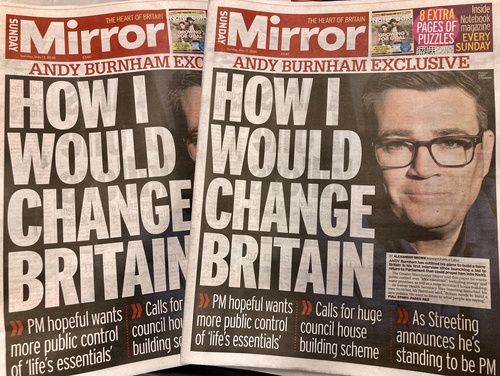
Can Britain’s Next Prime Minister Escape the Net Zero Trap?
Britain has burned through five Prime Ministers and is paying some of the highest electricity prices in the world.

The Scanner at the Gate: Europe’s China Policy Litmus Test
China’s industrial policy is entering Europe through public procurement—and reshaping sensitive markets from within.
Confronting the New Antisemitism
"The postwar effort 'to rebrand Judaism as a religion' has made it impossible for American Jews to understand what they are facing today, because what we are facing today is an attack on the idea of Jewish peoplehood.”
“Democratic” Socialism Is Undemocratic
By promoting class hatred, suppressing private initiative, and seeking enhanced control of our lives, today’s democratic socialists undermine patriotism and individual initiative—two qualities that have long distinguished the United States from other major nations.

