The Arc of Justice Alito
Eleven Questions with Peter S. Canellos, author of Revenge for the Sixties: Sam Alito and the Triumph of the Conservative Legal Movement.
Today, journalist Peter Canellos will publish his new book, Revenge for the Sixties: Sam Alito and the Triumph of the Conservative Legal Movement, on Justice Alito’s rise to the top of the conservative legal movement. I posed eleven questions to Peter to tease out some of the more revealing insights from the book.
Josh Blackman: ’Tis the season of Alito. In the span of six months, we will see Justice Alito’s autobiography, your excellent new book, and a book about the Justice from Mollie Hemingway. I take it that you and Mollie did not coordinate your publication deadlines, and neither of you were aware of Justice Alito’s autobiography. Why do you think the time now is right for so many Alito books?
Peter Canellos: Samuel Alito will go down in history as a consequential Supreme Court justice. His life story is emblematic of the forces that motivated and shaped the conservative legal movement, which is now the dominant force in American law. How we, as a country, got to this point is an extraordinary story in itself. But in the wake of the Dobbs decision, Alito’s centrality to the movement has become even more evident. You’re right that there was no coordination or even awareness of these different books. I don’t know much about them – including whether Alito’s own book, which is not coming out until October, will lean heavily into his life story or be more focused on his jurisprudence. But I think there is room for multiple takes on this epic tale, perhaps appealing to different audiences, and I hope the books reinforce one another, convincing readers that we are indeed having an Alito Moment.
JB: Let’s jump back to the beginning. In the 1950s, Trenton, New Jersey, was a conservative blue collar suburb of Philadelphia with a large Catholic population, many of whom were Italian. One of the defining features of being a conservative is trying to conserve that which was. Or, as President Trump might say, America was great, became less than great, and that greatness must be restored. What values did Trenton instill in a young Sam Alito that Justice Alito values today? Relatedly, could you discuss how the decisions of the Warren Court impacted the Alito family? This was one of the more fascinating tidbits from Alito’s early life in your book.
PC: Justice Alito strongly identifies with a story of struggle that is familiar to many children and grandchildren of European immigrants, including myself. His father and grandparents came to America seeking opportunity, faced hardships and prejudice (a daily reality for Italian Americans in the Chambersburg section of Trenton, where his parents grew up), and then overcame them by dint of hard work and sacrifice. This is a narrative that spans generations. His parents worked extra jobs to put themselves through college and graduate school. Alito and his sister had it much easier, but were intensely aware that they were carrying the hopes and dreams of their parents and grandparents. And Alito fulfilled his family’s expectations to a spectacular degree: top of his high-school class, editor of the school newspaper, winner of multiple citizenship prizes.
But this is not, in my opinion, a MAGA story about lost greatness. The Alitos believed in upward mobility. Despite their very devout Catholicism, his parents preferred public education. Each, at various points, worked in public schools. So did Alito’s uncle. Moving beyond Chambersburg was a goal to be strived for, not an occasion for sadness or regret. Nonetheless, Justice Alito has spoken in interviews of his disappointment at what he sees as the run-down condition of Trenton, and even as far back as high school, he was faced with the destruction of a large swath of the city in the race riots that followed Rev. Martin Luther King Jr.’s assassination. Now, when Alito bemoans the fate of Chambersburg, he does so with a tone of nostalgia. It was the place where Italians put down roots, created an ethnic enclave, and established businesses like the Italian Peoples Bakery & Deli. It’s widely noted that Alito, as a jurist, has a strong sense of tradition. He believes traditions should be enshrined in the Constitution, as long as they were in place at the time of the framing. It’s a deeply sentimental, atavistic vision that grew out of his identification with his family’s immigrant tale.
A later part of that tale is his parents feeling buffeted by the demands of the Warren Court. His mother, Rose, used Bible passages in her classes as a public-school teacher in Hamilton Township. But the Warren Court ruled such teachings unconstitutional, on the grounds that they alienated non-believers. His father, as the research chief for the New Jersey legislature, was handed the politically freighted task of equalizing the populations of state House and Senate districts, the result of another Warren Court decision demanding equal apportionment. Alito recalled lying in bed listening to the clicking of his father’s slide rule as he struggled with the Herculean task.
JB: Justice Thomas attended Yale Law School between 1971 and 1974. Justice Alito attended Princeton University from 1968 to 1972, and then Yale Law School from 1972 to 1975. Justice Sotomayor attended Princeton University from 1972 to 1976, then Yale Law School from 1976 to 1979. It is remarkable that a third of the present Supreme Court members overlapped at two of the leading educational institutions in the country. All three came in with very different backgrounds, all three studied in the same hallowed halls, all three came out with very different outlooks, yet all three wound up with the same job. Can you reflect on the intellectual climate at Princeton and Yale in the 1970s and how they set Thomas, Alito, and Sotomayor on very different paths to the Supreme Court?
PC: The tumult of Alito’s years at Princeton was striking: He entered as part of the last all-male class; women arrived his sophomore year, and with them came a lot of discussions about premarital sex and abortion; and then there were the violent protests that followed President Nixon’s incursion into Cambodia in the spring of 1970. Alito was an ROTC member when the corps got kicked off campus. He was an eager student when exams were cancelled in the wake of protests, including a bombing of the ROTC headquarters. He said at his confirmation hearing, “I saw some very smart people and very privileged people behaving irresponsibly . . .” This period reinforced his conservative values and put him directly at odds with the liberals and reformers of his own generation.
By the time Sonia Sotomayor made her way to Princeton in the fall after Alito graduated, the campus was much quieter. She felt she was a pioneer and was conscious of criticism of “affirmative action students.” But she was honored with the university’s highest undergraduate award, and went on to believe that her life’s journey began when she got to Princeton. She came away with much more positive feelings overall than Alito.
Thomas’s evolution was different. When he and Alito overlapped at Yale Law School, Thomas wasn’t considered a conservative at all. Only later did he embrace his inner conservatism.
I think you’re right to note that it’s striking that Supreme Court justices of all stripes come from so few institutions. The conservative legal movement sometimes bemoans liberal elitism, but the Federalist Society has cultivated its own form of elitism. The Supreme Court is an Ivy League institution.
JB: Both a young John Roberts and a young Samuel Alito served in the Reagan Justice Department. But Roberts entered as a political appointee, climbing the ranks from Special Assistant to the Attorney General to Associate White House Counsel. By contrast, Alito entered the government as a civil servant. Between 1977 and 1981, he served as an Assistant United States Attorney in New Jersey. His boss was the Chief of Appeals, Mary Anne Barry Trump, the sister of the future President. But in 1981, he joined the Solicitor General’s Office. How did a civil servant come to the attention of the Solicitor General Rex Lee? In 1986, Alito moved over to the Office of Legal Counsel under Chuck Cooper. How did he get that position? How did Attorney General Meese influence Alito?
PC: Rex Lee didn’t view himself as a conservative activist. His greatest pride as solicitor general was his strong record of winning cases before the Supreme Court. During his years in the U.S. Attorney’s office of New Jersey, Alito proved to be an adept appellate lawyer. He had the kind of pure legal acumen that Lee wanted in his office.
During the second Reagan Administration, however, the tide turned significantly. The new Attorney General, Ed Meese, wanted only conservatives in his inner circle. Alito lacked the political bona fides of other Meese aides. Chuck Cooper, who had served in the more activist Civil Rights Division, earned Meese’s trust as a conservative. And Cooper had found Alito to be a rare ally in the solicitor general’s office; the two men agreed on the need to push civil rights law in a more conservative direction. So when Cooper became the head of Meese’s Office of Legal Counsel, he decided that he needed Alito as his top deputy. But he had to prove to Meese that Alito was really a conservative. Cooper coached Alito through a letter explaining the roots of his conservatism, which Cooper then shared with Meese’s team as evidence of Alito’s ideological correctness. In the letter, Alito made some startling assertions, including that he was a member of Concerned Alumni of Princeton, which opposed admitting women. The letter helped Alito get the job in the Office of Legal Counsel, but later it would almost derail his Supreme Court nomination.
JB: While working in the Solicitor General’s Office, Alito would argue twelve cases before the United States Supreme Court. Did his style of answering questions preview his style of asking questions? Alito’s most significant impact came in a case that he didn’t argue. Can you talk about how Alito would have litigated Thornburgh v. American College of Obstetricians & Gynecologists (1986), a landmark abortion case?
PC: When the Thornburgh case came before the Supreme Court, Rex Lee had been replaced by a more activist solicitor general in Charles Fried. Fried was eager to assert the Reagan administration’s opposition to Roe v. Wade. At issue was a Pennsylvania law that required a 24-hour waiting period for abortions during which patients were given information about the procedure and potential alternatives. In a top-secret memo, Alito advised Fried that the court wasn’t prepared to overturn Roe v. Wade. It might, however, look kindly on a defense of the Pennsylvania law based on the “undue burden” test that Justice O’Connor had articulated in earlier cases. Was it really an undue burden to provide women with materials to help them make an informed consent? Fried rejected Alito’s advice, and the court struck down the Pennsylvania law as an unwarranted intrusion on abortion rights. Intriguingly, O’Connor dissented, suggesting that Alito’s advice might have been sound, after all.
JB: In 1987, at the tail end of the Reagan Administration, Alito was appointed as United States Attorney for the District of New Jersey. How did he reach that powerful position at the young age of 37? Describe Alito’s leadership style. Did he make any mistakes in that position?
PC: Alito attained the U.S. Attorney’s job by combining support from Ed Meese with that of New Jersey’s two Democratic senators, Bill Bradley and Frank Lautenberg. The state’s Republican leadership favored another candidate. Alito quickly won the respect of the office with his low-key diligence; he personally argued a case against a suspect who allegedly shot an FBI agent while being questioned. This was the era when Rudy Giuliani, who held the same position as Alito across the Hudson River in the Southern District of Manhattan, was engaging in flamboyant stunts to boost his image as a crime fighter. Alito would have none of it. Though his record was strong overall, his office lost a major Mafia case during Alito’s tenure. Two defendants later admitted bribing a juror. Undaunted, Alito’s team went on to score several significant victories against organized crime.
JB: In 1990, at the age of 40, Alito was nominated to the Third Circuit Court of Appeals. Did Alito seek this position? Did he have to be persuaded to take it? Perhaps the most significant case Alito participated in on the Court of Appeals was Planned Parenthood v. Casey. Can you tie the thread between Thornbrugh, Casey, and three decades later, Dobbs?
PC: While Alito enjoyed being U.S. attorney, he filed papers with George H.W. Bush’s Justice Department several months in advance of his nomination to the Third Circuit. He would go on to serve for 15 years. He built a solidly conservative record, with a number of opinions that, in hindsight, foreshadowed his work on the Supreme Court. None was more controversial than his opinion in Casey that laws requiring women to notify their spouses before obtaining abortions did not impose an “undue burden.” This could be seen as an extension of his views in the Thornburgh case, when he recommended that the Reagan administration take an incremental approach to overruling abortion rights – chipping away rather than directly overturning Roe v. Wade.
Alito’s argument on spousal notification wasn’t entirely persuasive; he acknowledged that some women would face strong opposition from their husbands, but that a provision that affected only a small number of people shouldn’t be considered an undue burden. Though he based his circuit-court opinion on Supreme Court opinions by Justice O’Connor, she voted to strike down the spousal notification law. Alito’s conservative opinion in Casey was an early signal of his skepticism about abortion rights generally, which led directly to Dobbs.
JB: During President George W. Bush’s first term, there would not be any Supreme Court vacancies. But in 2005, two vacancies arose in rapid succession. Can you explain why Judge Alito was not a finalist for the O’Connor seat that originally went to Roberts? I presume that most readers are familiar with the story of how Harriet Miers’s nomination fell apart. Did Justice Alito or his surrogates engage in any sort of advocacy to lobby for the seat?
PC: George W. Bush put great store in personal rapport and his own gut instincts. He didn’t hit it off with Alito. The two men were very different. Their oil-and-water personalities showed in a Saturday-morning encounter in the White House family quarters between a stiff, suit-clad Alito and the casual president in his running shoes with his dog Barney nipping at his heels. Even a mutual love of baseball didn’t bridge the gap. By contrast, Bush felt a strong rapport with Roberts, who was outgoing and effusive. This stung Alito because at the time, Alito had served 13 years longer than Roberts as a circuit-court judge. Alito felt he had blown his last chance for the Supreme Court. He was already 55. Then came the death of Chief Justice Rehnquist and Roberts’ nomination to the chief’s position. When Bush chose Harriet Miers for the reopened O’Connor seat, it was a second rebuff to Alito. But then fortune shifted to his side. Conservatives slammed Miers for her lack of credentials as a constitutional lawyer, forcing her from contention. They demanded a proven jurist with impeccable conservatism. Alito, with his 15 years on the circuit-court bench, fit the bill.
JB: In the early years, some Democrats seemed to think that Chief Justice Roberts would be the bigger threat and that Justice Alito would be more restrained. Indeed, in the early years, Roberts and Alito tended to vote in a very similar fashion. But at some point, they diverged. Roberts became more of a centrist, and Alito moved to the right. What do you think caused that split? How did the Obamacare ruling contribute to this shift? What about the passing of Justice Scalia and the arrival of President Trump?
PC: I think the differing views of the two nominees were visible in their confirmation hearings. Roberts unambiguously called Roe v. Wade “settled law”; Alito equivocated, advising that the doctrine of stare decisis did not rule out overturning long-term precedents. Roberts said the court should revisit past decisions only in extraordinary circumstances; it wasn’t enough simply to believe a case had been wrongly decided. Alito did not express such reservations. In those answers and more, Roberts indicated he would be more of an institutional steward of the Supreme Court, concerned with upholding the court’s reputation. Alito seemed less concerned with the court’s image in society. In the end, Roberts was confirmed 78-22; Alito’s vote was 58-42. Clearly, many Democrats were fearful of Alito’s conservative voting record.
It’s true, however, that the extent of Alito’s conservatism – and the activist component of his desire to strike down laws that he felt violated free exercise of religion – didn’t appear until later in his tenure. It often takes a few years for justices to assert themselves. I think the most important Obamacare ruling in Alito’s career was Hobby Lobby, when he authored the opinion allowing business owners to deny contraception coverage to employees on religious grounds if the workers had alternative means of obtaining it. That was in 2014. Thereafter, the opportunity for more sweeping conservative decisions grew significantly when Brett Kavanaugh took Anthony Kennedy’s seat, and Barrett replaced Ginsburg.
JB: In 2022, Justice Alito wrote the majority opinion in Dobbs. I’ve described that opinion as the equivalent of an inside straight. So many things had to go right to get to Dobbs: Justice Scalia was replaced by Justice Gorsuch; Justice Kennedy by Justice Kavanaugh; Justice Ginsburg by Justice Barrett; the draft opinion was leaked, but no votes flipped; there was an unsuccessful assassination attempt on Justice Kavanaugh. Can you put the Dobbs case in context as the capstone of Alito’s career?
PC: For many legal conservatives, the defeat of Roe v. Wade was the great white whale. Both the academic critique of Roe as the ultimate example of judicial overreach and the political backing of the anti-abortion movement were crucial to the success of the conservative legal movement. In the end, Alito delivered the movement’s biggest victory. It was a career-capping moment. The majority opinion reflected a lot of Alito’s personal history and values – from quoting John Hart Ely, the Yale professor whose attack on Roe influenced him as a young student at that very university, to his use of forceful, robust, and at times judgmental language. (“Roe was on a collision course with the Constitution from the day it was decided.”)
JB: I have long been a fan of your work. I thoroughly enjoyed your biography of Justice John Marshall Harlan, an icon of mine. How would you compare Harlan and Alito? Both are traditionalists who were not afraid to dissent alone. They are both deeply committed to the Constitution and try to understand its original meaning, with a dash of pragmatism. Yet, I suspect, Harlan’s legacy will be viewed far more favorably by elites than that of Alito.
PC: For 40-plus years after his death, John Marshall Harlan was virtually forgotten. Felix Frankfurter famously called him “an eccentric exception.” Views of Harlan started to change when attitudes toward race evolved more in Harlan’s direction – particularly after Brown v. Board of Education. Only then did his lonely stance against the Plessy ruling start to look so majestic. As you’ve noted, Harlan is now that very rare historical figure who attracts equal admiration from the left and right.
Based on Harlan’s unusual trajectory, one might suggest that Alito’s reputation will turn on how Americans view the social causes he addressed. His expansive interpretation of free exercise of religion has often been deployed against government efforts to promote acceptance of same-sex marriage and the LGBTQ+ community. If society continues to grow more supportive of such relationships, Alito could be regarded as a backward-looking justice, clinging to traditions that were increasingly outmoded. If, however, society evolves toward a concept of diversity that includes widely divergent social and religious views, often in direct opposition to each other, Alito might be viewed more generously. Finally, there’s the issue of abortion. Could the Supreme Court flip again? The bottom line is we don’t know how people 100 years from now will view their own challenges, so it’s hard to predict what they might think of ours. Will the Alito Moment endure? It’s tough to say.
Josh Blackman holds the Centennial Chair of Constitutional Law at the South Texas College of Law Houston, is a contributing editor to Civitas Outlook, and is an adjunct fellow at the Manhattan Institute.

Constitutionalism
Amicus Brief: Hon. William P. Barr and Hon. Michael B. Mukasey in Support of Petitioners
Former AGs Barr and Mukasey Cite Civitas in a SCOTUS Brief

Rational Judicial Review: Constitutions as Power-sharing Agreements, Secession, and the Problem of Dred Scott
Judicial review and originalism serve as valuable commitment mechanisms to enforce future compliance with a political bargain.
.avif)





.png)
.png)
.png)
.png)
.png)
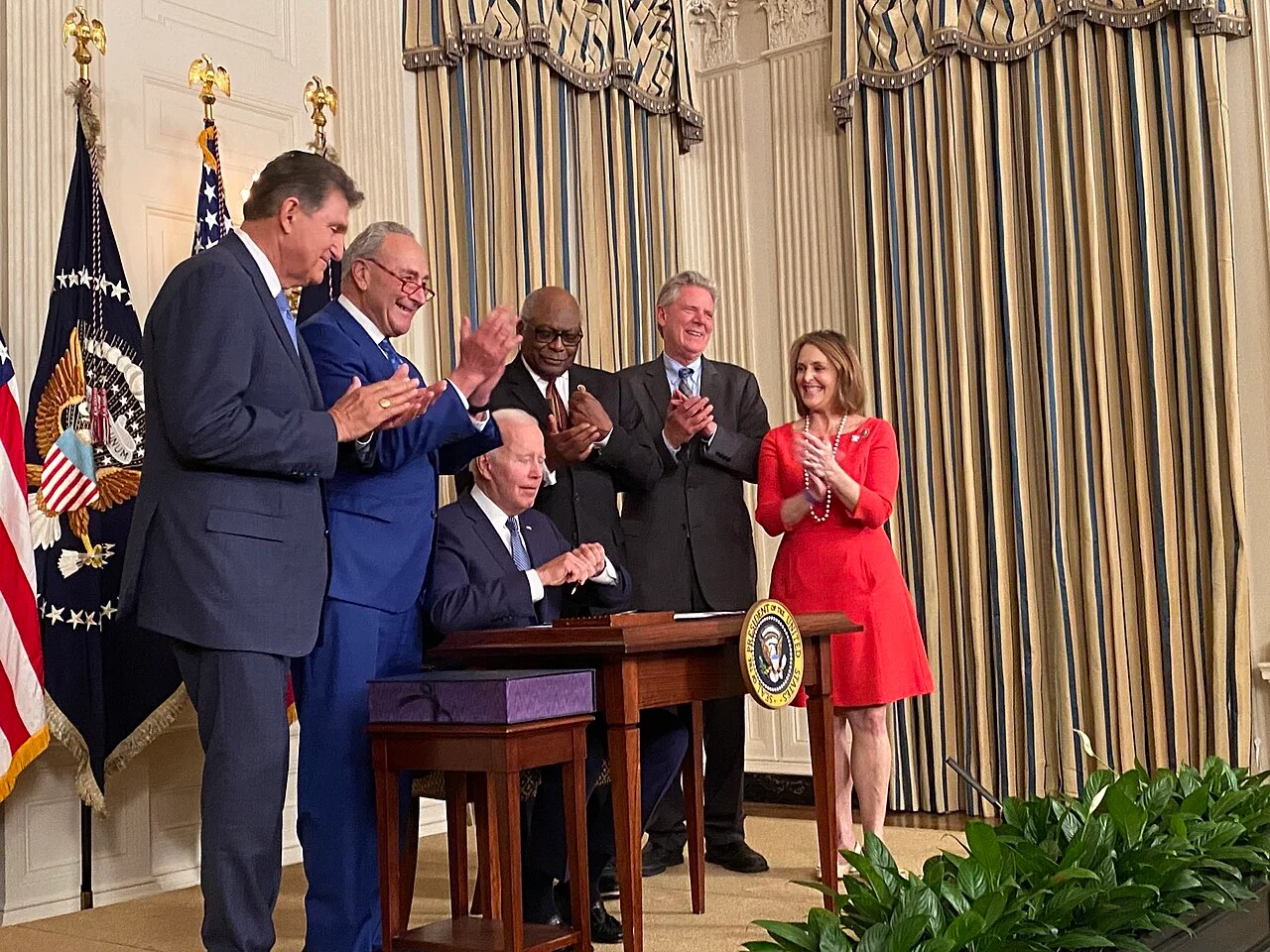
The Fifth Circuit’s Chance to Expose the Inflation Reduction Act’s Unconstitutionality
Despite the mounting evidence of harm, the Medicare Drug Price Negotiation Program remains law — and the Justice Department continues to defend it in federal court.