Roundup at The Supreme Court
Charles C. W. Cooke and Richard Epstein break down the Supreme Court’s Roundup v. Monsanto decision, arguing that the case was widely miscast as a simple fight between big business and cancer victims. Epstein explains why the real issue was federal preemption under FIFRA, the limits of state-law warning-label lawsuits, and the danger of letting juries override regulatory judgments on complex scientific questions. Along the way, he surveys the evolution of product liability law, the risks of over-litigation, and why different products—from pesticides to vaccines—may require very different legal treatment.
The Libertarian
Can the President Declare a Trade ‘Emergency’? On the Supreme Court’s Tariff Case
Richard Epstein delves into one of the most consequential Constitutional questions of our time: can the president unilaterally impose tariffs under emergency powers?
Is Gerrymandering Unconstitutional?
Gerrymandering is back in the headlines — and this time, the political map wars in Texas and California are colliding with the courts, the Constitution, and the future of American democracy.
Constitutionalism
Amicus Brief: Hon. William P. Barr and Hon. Michael B. Mukasey in Support of Petitioners
Former AGs Barr and Mukasey Cite Civitas in a SCOTUS Brief

Rational Judicial Review: Constitutions as Power-sharing Agreements, Secession, and the Problem of Dred Scott
Judicial review and originalism serve as valuable commitment mechanisms to enforce future compliance with a political bargain.
.avif)





.png)
.png)
.png)
.png)
Farewell to the President’s New East Wing
Both Congress and the President have acted in violation of the public trust doctrine.
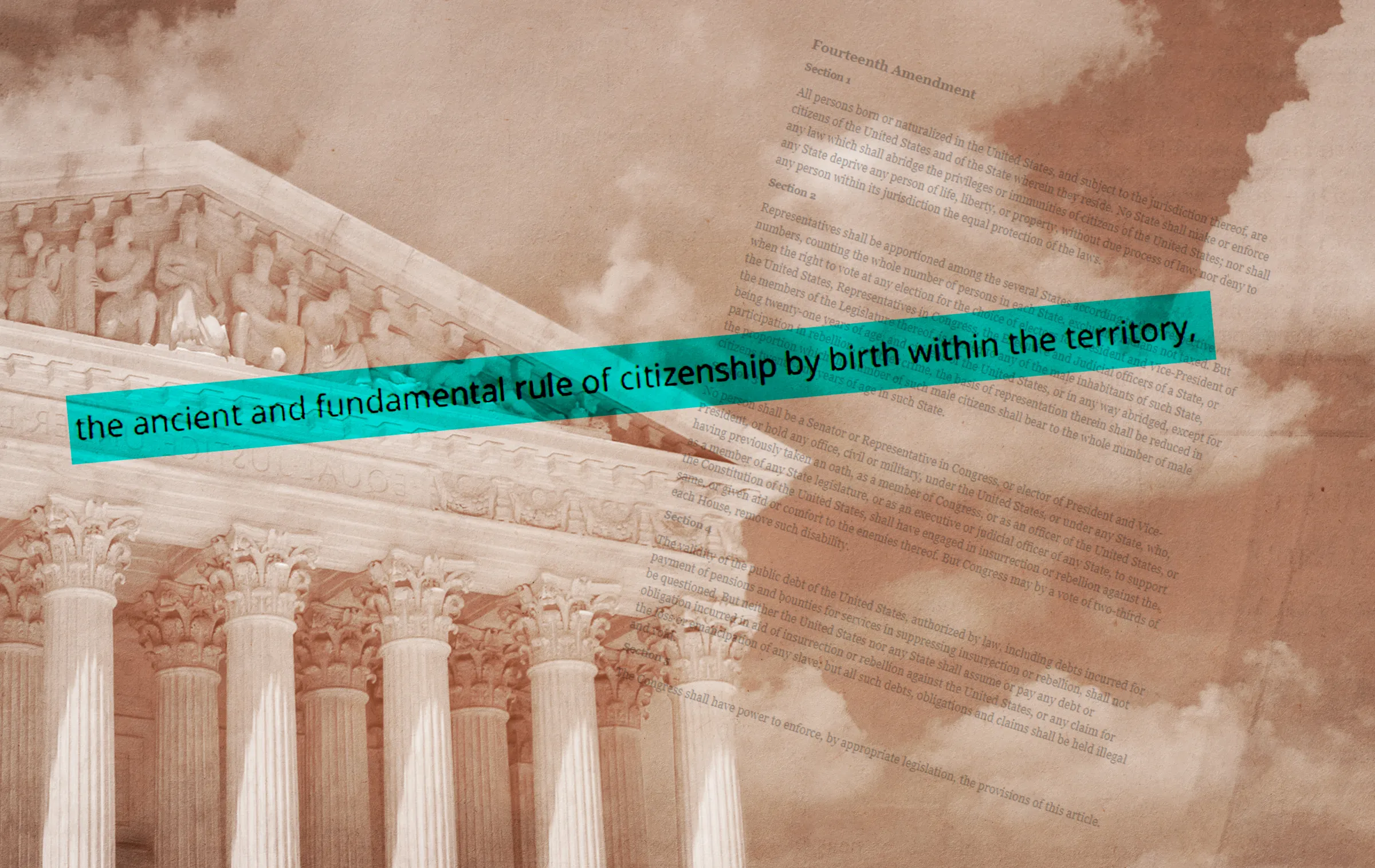
The Constitution and Birthright Citizenship: A Rejoinder to Professor Yoo
Foreigners can come to America and become “Americans” not by their mere presence on American soil but by embracing the principles upon which this country was founded.


Get the Civitas Outlook daily digest, plus new research and events.