.jpg)
Full-Spectrum Education Choice


The new state education-choice initiatives have the potential to address the nation's elementary- and secondary-school learning crisis.
Historic changes are underway in American elementary and secondary education. As of this writing, 19 states have established K-12 education-choice programs for all resident children. Altogether, nearly half of the nation's school-aged children will be eligible for publicly funded programs that give their parents the freedom to choose the best learning environment for them.
These changes come at an opportune time. The latest National Assessment of Educational Progress (NAEP) results revealed historically poor test scores among the nation's students. Nearly one-in-three American 12th graders scored "below basic" in reading, while almost half scored "below basic" in mathematics. The average reading scores were the lowest reported since the government began administering the NAEP exam in 1992. All of this raises alarming questions about students' readiness to attend college, join the workforce, and participate in civic life in adulthood.

Politics
%20Richard%20Samuelson%20%20-%20Is%20American%20Nationalism%20Still%20Creed-able_-1.jpg)
Is American Nationalism Still Creed-able?
We are not there now, but there is reason to worry that the United States is in danger, if we are not careful, of ceasing to be a nation with the principles of 1776 at its core.
National Civitas Institute Poll: Americans are Anxious and Frustrated, Creating a Challenging Environment for Leaders
The poll reveals a deeply pessimistic American electorate, with a majority convinced the nation is on the wrong track.
.webp)
%20(1).avif)


Rail Giants Hate the $71 Billion Merger. The Rest of Us Should Love It
Based on the record, the case for approving the merger is even stronger than when it was first announced.

The Democrats Are a Menace to America’s Jews
Abdul El-Sayed’s victory in Michigan’s Democratic primary is an ominous sign.



Can Britain’s Next Prime Minister Escape the Net Zero Trap?
Britain has burned through five Prime Ministers and is paying some of the highest electricity prices in the world.
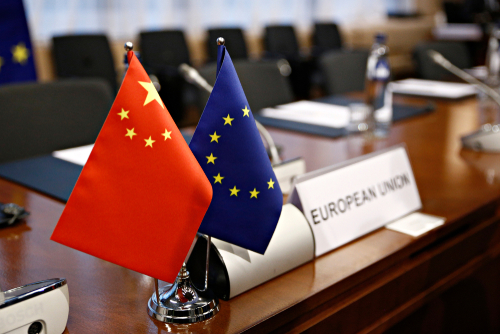
The Scanner at the Gate: Europe’s China Policy Litmus Test
China’s industrial policy is entering Europe through public procurement—and reshaping sensitive markets from within.

Confronting the New Antisemitism
"The postwar effort 'to rebrand Judaism as a religion' has made it impossible for American Jews to understand what they are facing today, because what we are facing today is an attack on the idea of Jewish peoplehood.”

“Democratic” Socialism Is Undemocratic
By promoting class hatred, suppressing private initiative, and seeking enhanced control of our lives, today’s democratic socialists undermine patriotism and individual initiative—two qualities that have long distinguished the United States from other major nations.

