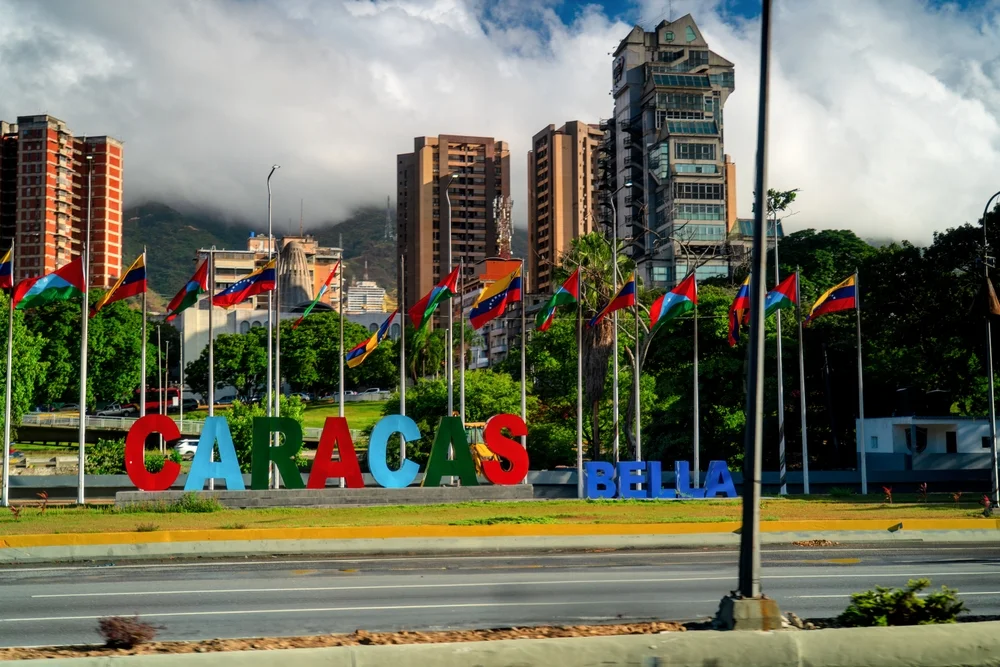
Can Venezuela be Lifted from Its Trap?

The challenge for Venezuela's economic recovery is complex, long-term, and urgent, given that its society and state will transition from a broken foundation.
Editor's Note: This essay is part of our Venezuela Symposium.
January 3, 2026, could mark a profound change in expectations for Venezuela's economic program. This may even lead to the question of whether we are in the presence of "Irrational Exuberance", a term popularized by Alan Greenspan (1996) and later developed by Robert Shiller (2000), describing the "disconnection of economic fundamentals" and what is expected of a nation’s economy. We might similarly wonder what the Venezuelan economy can achieve in the short and medium term, given its socialist evolution over the past decades.
The first thing to consider is the great transformation the Venezuelan economy underwent at the beginning of the 2000s. It was a profound change in the political economy that had governed that society during 2/3 of the twentieth century: the agreement of society, summarized in the constitution, laws, and institutions, ceased to be in force at the beginning of this century. That change -maintained in force until now- has redrawn a new institutionality, transparency, and rights between the State and society, or the lack of them.
It is worth noting that the Venezuelan economy was an example of growth and stability between the 1950s and 1970s – prior to the nationalization of the oil industry – and managed to multiply GDP per capita by 4.3x, surpassing, during that period, the growth of all Latin American economies. This allowed the economy to reach a GDP per capita of $4.8K at the beginning of the current century, surpassing those of economies such as Peru and the Dominican Republic, both with macroeconomic stability and spectacular growth in the last two decades.
After more than two decades of statist transformation of the economy, Venezuela woke up on January 3, 2026, with the following conditions of its economy:
- Oil production fell in 20 years from 3.6 million barrels per day to 900 thousand barrels per day, a contraction of 75 percent of its production, reflecting limitations in the extraction capacity of the natural resource, both in infrastructure, investment, and financing.
- The GDP in 2012 was approximately 372 billion dollars, making it the 4th largest economy in Latin America. After more than a decade, the economy is 75 percent of its 2012 size, making it the smallest in all Latin America. A contraction of this magnitude has been experienced only by economies in armed conflict. No economy in the region has experienced a contraction as severe as this one.
- Electricity sector infrastructure with limited capacity to cover domestic demand.
- Sovereign foreign debt and PDVSA (state oil company) in default.
- Inflation at the end of 2025 is above 400% per year.
What is evident is that the institutional arrangement that has been imposed during the last two decades in Venezuela has had what the literature on development economics defines as "Economic Disaster", showing an economy with limited capacities for recovery and economic growth.
The main engine of the Venezuelan economy is natural resources, mainly oil, with the world's largest proven oil reserves, approximately 303 billion barrels. A recovery in oil production of +100 thousand barrels per day each year can boost the economy by 1.5 percent of GDP, but this requires significant long-term investments that currently lack financing.
The possibility that the Venezuelan economy will be the same size as in 2012 in twenty years requires sustained growth of 8 percent per year or, in thirty years, growth rates of 5.2 per year per year or, in forty years, growth of 3.9 percent, but – for this to occur the infrastructure, investment, financing and an institutional arrangement of the economy that generates the incentives for this to happen are needed.
In conclusion, the challenge for Venezuela's economic recovery is complex, long-term, and urgent, with the need for transformations in the political economy that remain unclear, given that its society and state will transition from a broken foundation.
Alejandro Molina is the former Dean and Professor of Economics at Universidad Científica del Sur, and he has held C-suite positions in international investment in Venezuela (prior to the crisis) and abroad.

Politics
%20Richard%20Samuelson%20%20-%20Is%20American%20Nationalism%20Still%20Creed-able_-1.jpg)
Is American Nationalism Still Creed-able?
We are not there now, but there is reason to worry that the United States is in danger, if we are not careful, of ceasing to be a nation with the principles of 1776 at its core.

National Civitas Institute Poll: Americans are Anxious and Frustrated, Creating a Challenging Environment for Leaders
The poll reveals a deeply pessimistic American electorate, with a majority convinced the nation is on the wrong track.
.webp)
%20(1).avif)


New York’s War on its Jews
It can happen on any street corner or at any transit stop and increasingly does: a young man with a yarmulke is assaulted for no apparent reason.

Rail Giants Hate the $71 Billion Merger. The Rest of Us Should Love It
Based on the record, the case for approving the merger is even stronger than when it was first announced.


Can Britain’s Next Prime Minister Escape the Net Zero Trap?
Britain has burned through five Prime Ministers and is paying some of the highest electricity prices in the world.
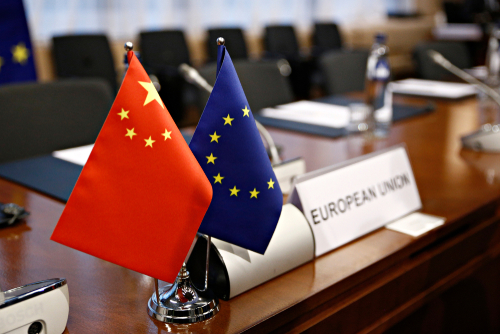
The Scanner at the Gate: Europe’s China Policy Litmus Test
China’s industrial policy is entering Europe through public procurement—and reshaping sensitive markets from within.

Confronting the New Antisemitism
"The postwar effort 'to rebrand Judaism as a religion' has made it impossible for American Jews to understand what they are facing today, because what we are facing today is an attack on the idea of Jewish peoplehood.”
“Democratic” Socialism Is Undemocratic
By promoting class hatred, suppressing private initiative, and seeking enhanced control of our lives, today’s democratic socialists undermine patriotism and individual initiative—two qualities that have long distinguished the United States from other major nations.

