Major Questions Doctrine and Its Bipartisan History

The major questions doctrine has been applied in an evenhanded manner.
The U.S. Supreme Court recently ruled against the Trump Administration’s tariffs. A plurality of the Court, led by Chief Justice Roberts, grounded that decision in the major questions doctrine (MQD) — the rule that Congress must speak clearly before the Executive Branch may possess authority to regulate issues of vast economic and political significance.
I’ve seen it suggested that the tariffs case shows that the MQD applies to Republican administrations, too. That symmetry of application cuts against the idea that “the major question doctrine is nothing more than a partisan excuse to strike down rules only supported by Democrats.”
I agree that the MQD needs to be applied in an evenhanded manner. I disagree, however, that this is a new development.
The idea that the MQD applies only to Democratic priorities, not Republican ones, rests on a misunderstanding of the doctrine and its history. If one’s starting point is West Virginia v. EPA, decided by the Court in 2022, then yes, the tariffs case is the first time that the U.S. Supreme Court has used the words “major questions doctrine” as a reason to rule against a Republican president. But 2022 should not be the starting point.
Chief Justice Roberts’ discussion of the MQD in West Virginia is worth reading. There, the Court held that the EPA was not authorized to impose “generation-shifting” emissions caps on power plants. The Court explained that, given the “extraordinary” nature of EPA’s assertion of authority, it was not enough for the agency merely to have a “colorable textual basis” for a policy. Rather, “in certain extraordinary cases, both separation of powers principles and a practical understanding of legislative intent make us ‘reluctant to read into ambiguous statutory text’ the delegation claimed to be lurking there,” and “[t]he agency instead must point to ‘clear congressional authorization’ for the power it claims.”
That analysis prompted sharp dissent from Justice Kagan, who argued that far from being compelled by precedent, “[t]he Court has never even used the term ‘major questions doctrine’ before.” In Biden v. Nebraska, which rejected the Biden Administration’s efforts to forgive hundreds of billions of dollars’ worth of student debt under the MQD, Kagan went even further and labeled the MQD as “made up.”
In West Virginia, Roberts responded to Kagan’s contention, explaining that the MQD description “took hold because it refers to an identifiable body of law that has developed over a series of significant cases all addressing a particular and recurring problem: agencies asserting highly consequential power beyond what Congress could reasonably be understood to have granted. Scholars and jurists have recognized the common threads between those decisions. So have we.” To support that point, Roberts identified numerous cases over decades where the Court has applied the MQD without mentioning the words “major questions doctrine.”
And that leads me to my point: One of the most significant MQD cases is Gonzales v. Oregon from 2006. The “Gonzales” in that caption is Alberto Gonzales, and the policy at issue concerned the George W. Bush Administration’s approach to assisted suicide under the Controlled Substances Act. (If you want more of the background, I wrote about Gonzales in one of my first law review articles.)
In 1994, Oregon legalized assisted suicide. In 2001, the Bush Administration concluded: “that using controlled substances to assist suicide is not a legitimate medical practice and that dispensing or prescribing them for this purpose is unlawful under the CSA.”
Oregon challenged the federal government’s rule. Under the CSA, the Attorney General may, through rulemaking, add to the CSA schedules of controlled substances “any drug or other substance” so long as he “finds that such drug or other substance has a potential for abuse” and makes “findings” that the drug or substance satisfies the requirements of the various schedules. He or she also “may deny, suspend, or revoke” a physician’s registration necessary for prescribing drugs if “the physician’s registration would be ‘inconsistent with the public interest.’”
The Bush Administration concluded that using Schedule II drugs for assisted suicide is “inconsistent with the public interest.” On the statute’s face, Congress appeared to delegate broad authority. Yet the Court did not buy it: “If the Attorney General’s argument were correct, his power to deregister necessarily would include the greater power to criminalize even the actions of registered physicians, whenever they engage in conduct he deems illegitimate.” The Court added: “The idea that Congress gave the Attorney General such broad and unusual authority through an implicit delegation in the CSA’s registration provision is not sustainable.”
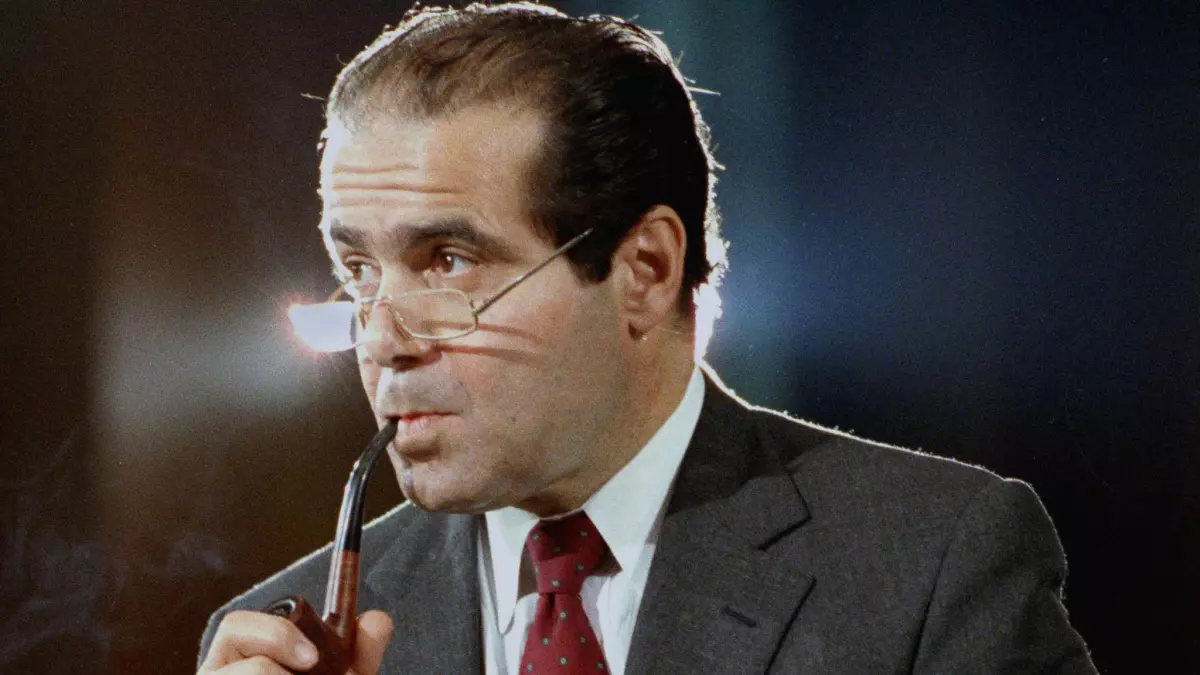
Of course, one can disagree with the Court’s analysis in Gonzales — Justice Scalia, in dissent, certainly did. One can also disagree with the Court’s analysis in the tariffs case — Justice Kavanagh, in dissent, did at length. And one can disagree in cases like West Virginia and Nebraska, too — again, Justice Kagan did. One can even disagree with the whole idea of a MQD. There is room for academic debate.
My more modest point here is that MDQ analysis is not new, much less does it cut against only one political party. In fact, even apart from Gonzales, one of the most significant MQD cases of all is King v. Burwell, where the Court used to the MQD to uphold the federal government’s ongoing ability to establish “exchanges” under the Affordable Care Act, in the teeth of contrary statutory text. To be sure, King is a peculiar MQD case because it was intimately tied to Chevron deference, which no longer exists. As Cass Sunstein explained in 2021 (notably, before West Virginia), “there are two major questions doctrines,” with “[t]he weak version [being] a kind of ‘carveout’ from Chevron deference when a major question is involved,” while “[t]he strong version” instead “operates as a clear statement principle, in the form of a firm barrier to certain agency interpretations.” But the idea that the court only applies these doctrines against the left does not hold up.
True, it might turn out that the MQD tends to be more harmful on net to certain policies than others. But that would not tell us whether the Court is biased; much less whether the MQD should exist. After all, perhaps one party violates the MQD more often. Or perhaps one side of the ideological aisle is less willing to assert MQD arguments, either because they don’t believe in the doctrine or because they fear the boomerang effect of establishing more MQD precedent. Such questions merit analysis. Simply looking at the number of applications, however, is not enough.
Administrative law is important because it provides the framework for so many significant fights about policy. Unfortunately, it is also often misunderstood.
Aaron L. Nielson is a senior fellow at the Civitas Institute and holds the Charles I. Francis Professorship in Law at the University of Texas at Austin School of Law.

Constitutionalism
Amicus Brief: Hon. William P. Barr and Hon. Michael B. Mukasey in Support of Petitioners
Former AGs Barr and Mukasey Cite Civitas in a SCOTUS Brief

Rational Judicial Review: Constitutions as Power-sharing Agreements, Secession, and the Problem of Dred Scott
Judicial review and originalism serve as valuable commitment mechanisms to enforce future compliance with a political bargain.
.avif)







.png)
.png)
.png)
The Fifth Circuit’s Chance to Expose the Inflation Reduction Act’s Unconstitutionality
Despite the mounting evidence of harm, the Medicare Drug Price Negotiation Program remains law — and the Justice Department continues to defend it in federal court.