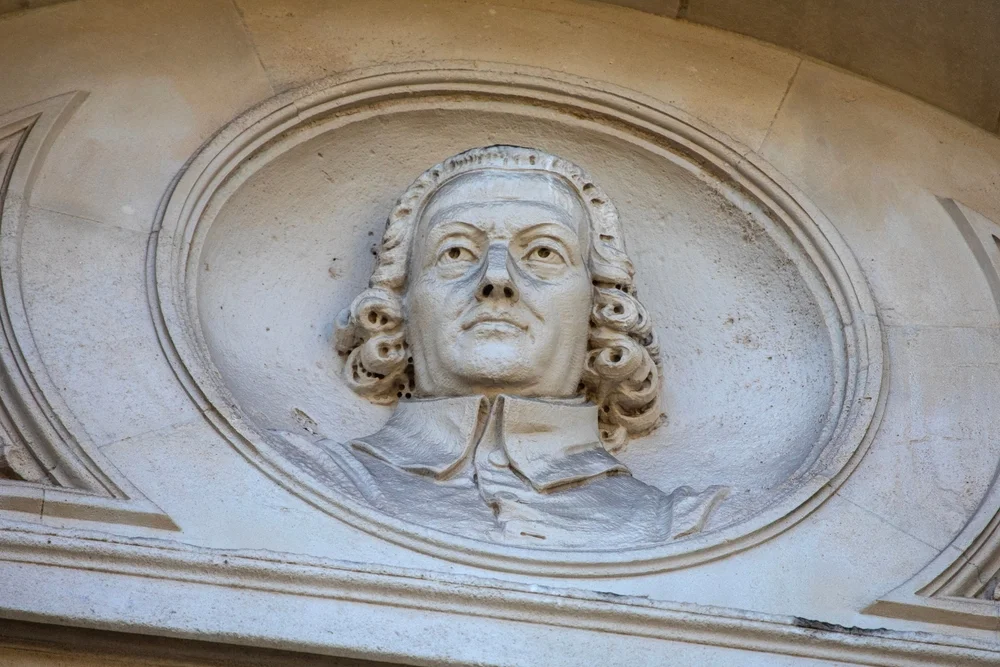
Adam Smith’s The Wealth of Nations Turns 250

With freedom of trade, Smith saw an opportunity for modernity to inherit and cement the worthy Athenian legacy of rational moral life.
On the Nature and Causes of the Wealth of Nations was published this month in 1776. Not only did it give us economic measures like GDP, but upon its release, Adam Smith’s volume shaped policy debates, and this has never stopped. Ronald Reagan, Margaret Thatcher, and Alan Greenspan are just some recent notables who took bearings from Smith. In his day, Smith offered a path between reaction and revolution, and today, a path between the national conservatism of the Trump administration and its post-liberal critics.
A professor of moral philosophy, Smith sought a path to right order marked “not by the clamorous importunity of partial interests, but by an extensive view of the general good.” Between tribalism and utopia, The Wealth of Nations proposed “freedom of trade” as a way for persons to communicate their aspirations in a manner worthy of human dignity. In Smith’s political economy, government makes no laws privileging companies; restricting peoples’ economic choices, such laws both harm the poor and stymie “natural liberty.”
Many likely find the thought of a 1000-page book intimidating. Perhaps some worry that its reputation as foundational to economics must mean the volume is technical, full of tables and charts, and likely a bit dull. In fact, The Wealth of Nations is a great read, and instead of economics, you can think of it as a philosophy of civilizations; a philosophy of history that stands as one of the greatest achievements of Western humanism. To list just a few topics, its pages are packed with the history of childbirth, colonization, education, fashion, machines, slavery, and war. Economics is part of a larger project of political anthropology: What is the character of peoples inside a civilization devoted to commerce rather than war (the Ancients) or religion (the Middle Ages)?
Two recent contending speeches illustrate the continuing relevance of The Wealth of Nations. In February 2026, at Munich, US Secretary of State Marco Rubio regretted that for too long the West “embraced a dogmatic vision of free and unfettered trade.” Instead of Smith’s idea that the domestic and foreign should link through an open circulation of goods, ideas, and people, Rubio urged a fresh parochialism. Westerners should “renew the greatest civilization in human history” by reengaging “the Christian faith of their ancestors as a sacred inheritance.” We need, he warned, a new, clear-eyed alliance to face down “barbarians”: “the alliance that we want is one that is not paralyzed into inaction by fear – fear of climate change, fear of war, fear of technology. Instead, we want an alliance that boldly races into the future.”
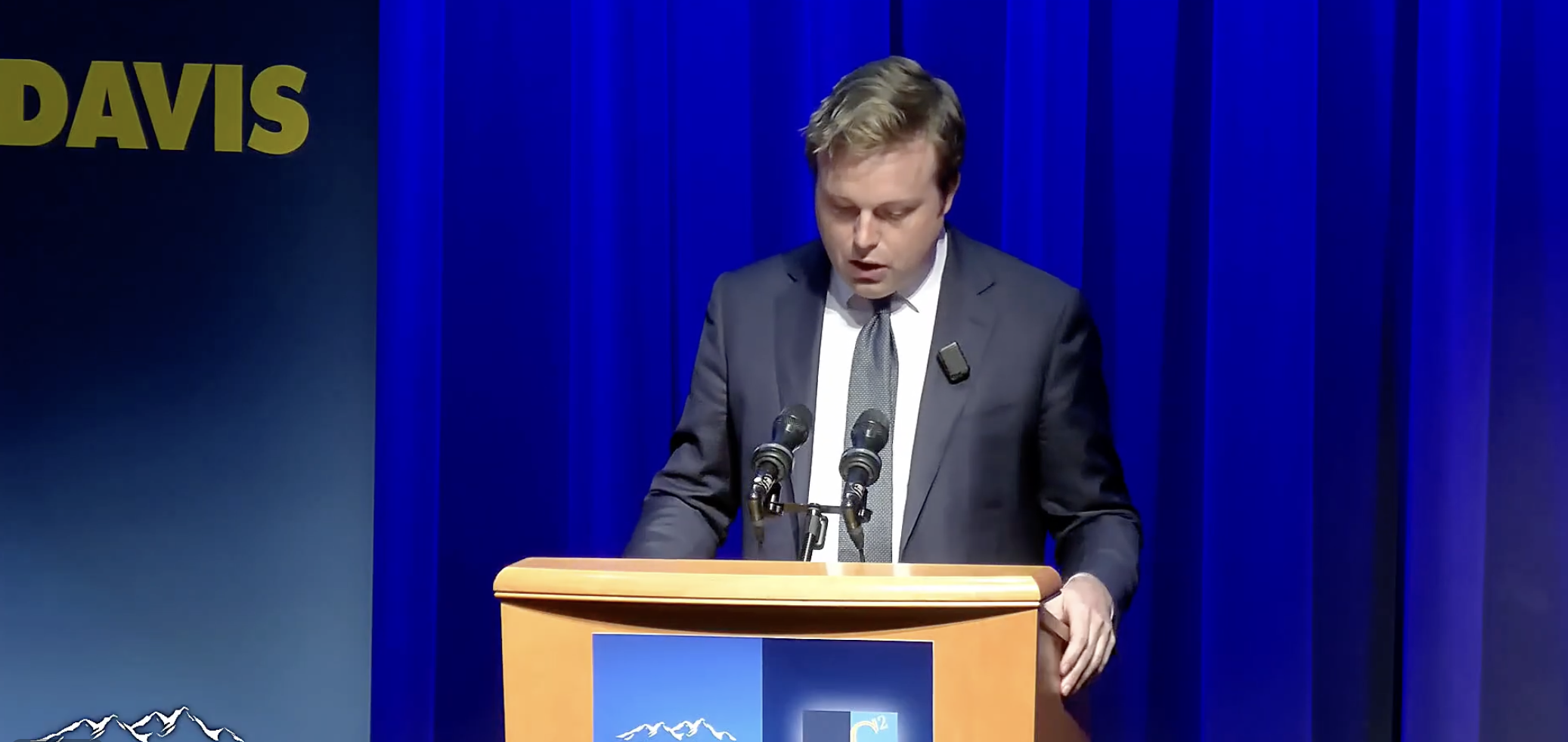
Disturbed that natural liberty is being replaced by the coordinates of war and religion, the Canadian Prime Minister, Mark Carney, warned at Davos 2026 that “a world of fortresses will be poorer, more fragile and less sustainable.” Reflecting on the Trump administration’s turn away from “genuine co-operation,” Carney sketched how “great powers have begun using economic integration as weapons. Tariffs as leverage. Financial infrastructure as coercion. Supply chains as vulnerabilities to be exploited.” Given his doctorate in economics from Oxford and his former role as Governor of the Bank of England, it is unsurprising that Carney reaffirmed Smith when mercantilism threatened again.
It is no exaggeration, then, that at age 250, The Wealth of Nations remains the framework of contemporary politics. And the reason? Smith’s is the most complete probing we have of commercial civilization.
Aged 25, Smith (1723-1790) began teaching at Edinburgh, where he gave a series of lectures on rhetoric. After moving to Glasgow, he continued to give his Lectures on Belles Lettres and Rhetoric for the next 15 years until he left academia. The lectures are a survey course on humanism, in which Smith introduces his students to ancient historians, biographers, philosophers, and rhetoricians, as well as modern poets and philosophers, such as Milton and Shaftesbury. Devoting hours of class time to Thucydides, Demosthenes, Caesar, and Cicero, Smith proposed the thesis that every man is an orator.
This is the thesis of The Wealth of Nations. Economies grow with the division of labor, which Smith argues is a “consequence of a certain propensity in human nature… to truck, barter, and exchange one thing for another.” This propensity is “the necessary consequence of the faculties of reason and speech” and thus, as he says about the division of labor in his Lectures on Jurisprudence, “the real foundation of it is that principle to persuade which so much prevails in human nature.” Successful trading depends on buyers and sellers communicating how their desires best align.
And our desires? “After food, clothing and lodging are the two great wants of mankind.” Smith places himself in the French physiocrat school, amongst those he calls “the economists.” The French proposed that land is the root of value. Smith partially agrees, contending that cloth is the first tradable product derived from land. Regarding the other products, he says that food is consumed at home and that lodging materials are not easily transported. Smith modifies the physiocrats, however, criticizing them for ignoring the original role of machines in value generation. To explain, he gives the example of the price of cloth in ancient Rome. The discussion enables him to set out a principal marker of modernity, the way commerce intensifies communication; the way it puts speech at the heart of political life.
Ancient fashion was static: in Rome, the toga lasted a thousand years. By contrast, Smith points out that modern fashion is fluid. In Rome, cloth was made by slaves, so no thought was given to the efficiencies of machinery. Smith infers its high cost from the known exorbitant cost of dye. Smith reasons, “the disproportion would have been too great between the value of the accessory and that of the principal.” Slavery was outlawed in Western Europe, and machines started to make cloth cheaply. Once cheap clothing allowed everyone to dress up, the rich inaugurated a signature of modernity – trends. Rapidly shifting design norms left poorer folks unable to keep up with the fashionably wealthy. This argument trades on the idea that people watch, imitate, and judge one another, a concept Smith developed as the spectator.
The spectator is basic to Smith’s theory of good order. About the Smithian spectator, the conservative moral philosopher, Aurel Kolnai says:
Society as a medium of morality means an infinitely open field of virtual accountability, of reciprocal inspectorship as it were, between men and their fellow-men, a tribunal extending beyond all particular group limits, with the correlate of self-judgement expected from everyone’s part.
As Smith points out, fashion is the principal way we are set inside an “open field of virtual accountability.” People look at us mediated by our clothing and accessories.
One of the most remarkable of all contemporary phenomena – and Smith can explain it well – is the carrying of an iPhone in the hand. Like clothes, the design language of Apple products – and we can add cars, kitchens, vacations, collectibles, and even the dog breeds we love – speaks to others of our ambition and status in life. The iPhone was launched in 2007, and we are already up to iPhone 17. Beyond “keeping up with the Joneses,” a principal driver of these rapid iterations is improving camera quality. With a cell phone ever-ready, people chronicle their lives, publishing their autobiographies on social media sites. Phones abounding, we are both a chatty and a judgy people. This feeds the “reciprocal inspectorship” of the moral spectator.
To appreciate the full political implication of the cell phone industry, consider Smith’s arresting formulation of liberty in The Wealth of Nations: modern liberty – unlike ancient liberty, reliant on slavery – depends on the fashion for diamond buckles on shoes. Smith mentions eighteenth-century men of stature who had collections of buckles and wore various decorative pieces appropriate for weddings, Christenings, Easter, Christmas, and other historic occasions. The city of Birmingham in England manufactured millions annually. The bejeweled buckles worn by George Washington at his 1789 inauguration were of British manufacture. The decorative buckles were a form of speech.
As Smith explains, to afford a variety of glamorous buckles, large landholders had to divide and lease their land to tenant farmers, granting them long leases in exchange for cash. Law archives document that rights grow out of property ownership, and thus, he predicts that with land democratization, rights will expand. He predicted that the rule of law, and thus justice, would consolidate around the commercial energy unleashed by long-term leases. As communication intensified, entire peoples would be brought into the speech of contracts and decorations. Therewith, the scope of the “reciprocal inspectorship” would expand. Cell phones confirm Smith’s prediction.
The Wealth of Nations grew out of Smith’s lectures on humanism, and as Thucydides relates in The Peloponnesian War, the taciturn Spartans, coming to parley in Athens, would adopt the volubility of Athenian democracy. With freedom of trade, Smith saw an opportunity for modernity to inherit and cement the worthy Athenian legacy of rational moral life.
Graham McAleer is lay member of the Judicial Ethics Committee of the State of Maryland and author, most recently, of Tolkien, Philosopher of War (CUA Press, 2024).

Economic Dynamism


.jpg)

.jpg)


.jpg)


Social Mobility Wins
When people live within an environment offering good jobs, good education, social networks, and a culture of self-improvement and hard work, they experience progress in a way that undercuts the philosophical rationale that socialists need to justify the policies they advocate.
Kevin Warsh and the Future of Fed Communication
Warsh is right that the Federal Reserve should not speak so loudly that it hears only its own echo.