The Revenge of the Supply-Siders

If the administration ignores opportunities to unleash production for everyone, the revenge of the supply-siders will be completed by a blue wave in November 2026.
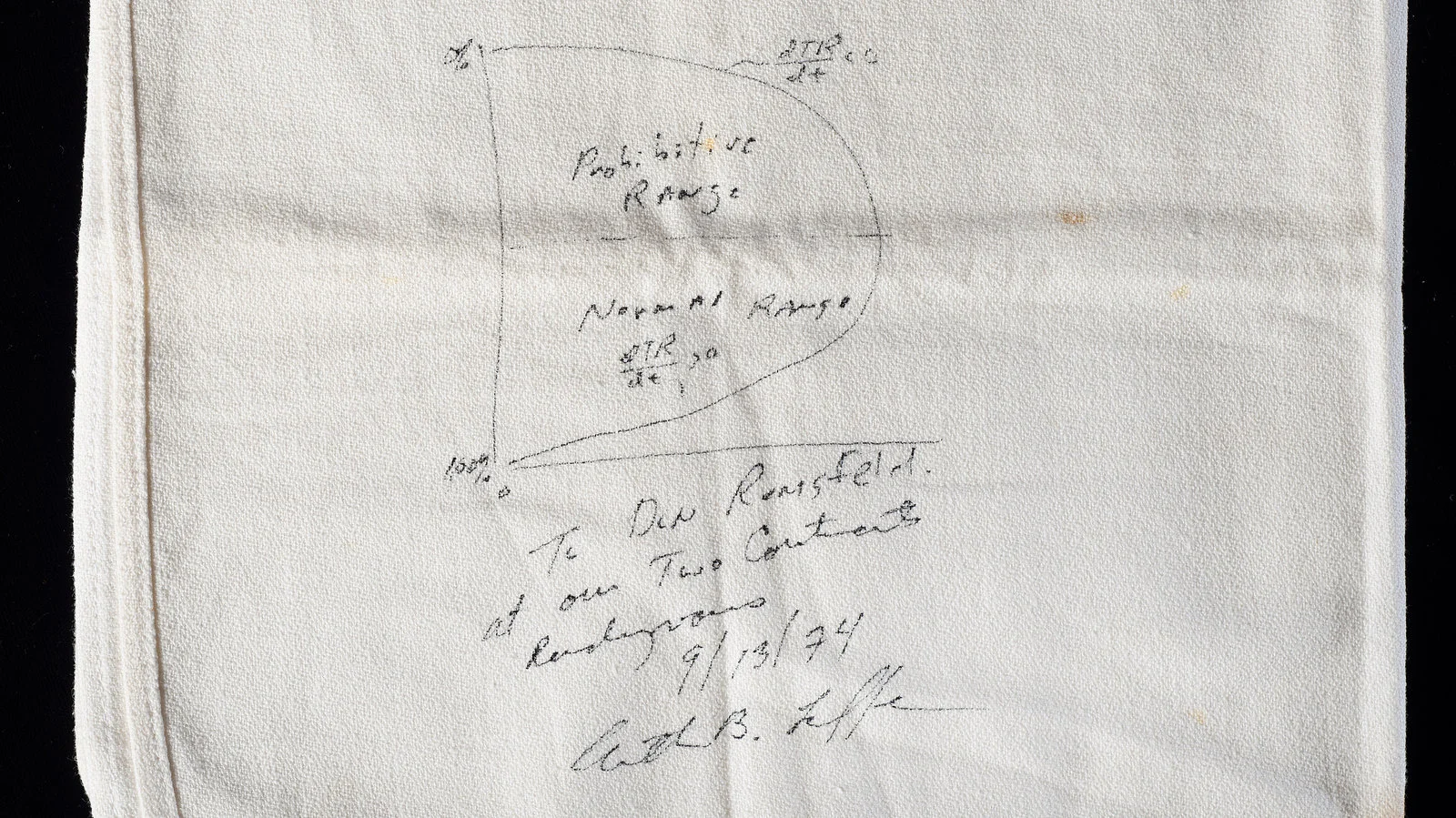
Supply-side economists Stephen Moore and Art Laffer came to prominence during the Reagan years for arguing that prosperity arises from greater production (supply) rather than from Keynesian notions of managing demand. They emphasized lower tax rates to spur more economic activity and, ironically, more tax revenue. They argued for less regulation to unleash prosperity.
Though never popular with the political left, supply-side ideas have been criticized in recent years by the political right, who put in its place a surging populist economic nationalism. Oren Cass and authors at the American Compass, the American Conservative, and American Affairs, have attacked libertarian economics or “neo-liberalism” for supposedly giving the American worker a raw deal, empowering China’s rise, and hollowing out American manufacturing.
Despite the dubious claim that U.S. government policy over the last forty years can be characterized as particularly neoliberal or libertarian, the populist industrial policy juggernaut of special tax breaks, subsidies, and selective protectionism continues to roll on. We are living under the most protectionist trade regime since the Smoot-Hawley tariffs of the 1930s. President Trump and his cabinet are making “deals” and creating programs to revitalize this or that industry, yet failing to boost overall manufacturing. Every passing month shows that supply-side economics cannot be ignored.
Consider which companies and industries boomed in 2025. Those most closely tied to supply-side policies of deregulation, lower taxes, and cheaper inputs, such as tech companies, the AI ecosystem, and data centers, have done quite well. Sectors that have faced anti supply-side policies, such as tariffs or status quo tax and regulatory regimes, have struggled.
Large corporations making large capital investments benefit most from the new depreciation expensing rules in the Big Beautiful Bill. They also benefit from regulatory fast-tracking. They can weather the uncertain tariff regime and higher input prices across their diversified supply chains better than their small-business competitors.
So the stock market has soared, even as bankruptcies have increased by over 10% from 2024, unemployment has increased, and consumer sentiment has declined. Job growth in 2025 has been limited across most sectors, except for those favored by supply-side policies.
But the supply-siders are getting their revenge.
The November elections sent shockwaves throughout the populist right, and “affordability” has become the new watchword in D. C. It turns out that prices have not fallen across the board. In fact, inflation remains elevated at three percent as of September. Trump has partially conceded the merits of supply-side theory by reducing tariffs on bananas, coffee, and nearly 200 other agricultural products a few weeks ago.
Anemic job growth (already below average monthly growth in 2023 and 2024) and rising unemployment will be the next shoe to drop. Tech companies, energy production, data center construction, and corporate America cannot buoy the entire economy, as tens of millions of people do not work in those sectors.
Retail, housing, services, agriculture, manufacturing, and numerous other industries have been disrupted by anti-growth tariffs and remain constrained by policy uncertainty. Indices measuring U. S. manufacturing have shown declines in output throughout 2025. This tracks with low job growth.
Trump would do well to heed his supply-side advisers again and avoid the populist Keynesian shortcuts of stimulus checks or easy money. Some administration officials have exaggerated the amount of tax money that will be refunded in 2026, now that tips and overtime are no longer taxed. And Trump has floated the idea of tariff “dividend” checks. Such Keynesian approaches will stoke inflation rather than prosperity.
Savings from not paying taxes on tips or overtime may not be substantial, but even if substantially more income is refunded in April, it will do little to boost production. These refunds will give some people a minor temporary bump in purchasing power, pushing prices up slightly as more money chases the existing stock of goods. And the refunds will be “paid” for by the federal government borrowing more money, which also creates inflationary pressure. No taxes on tips and overtime was always a giveaway to score political points, not a pro-growth economic policy.
Instead of micromanaging the economy or stoking demand, the administration should lead with supply-side economics principles. Deregulate everything, not just big tech. Lower taxes for everyone, not just corporations, by reducing tariffs. And stop making “deals” that reward companies and CEOs for their political connections rather than for serving customers well.
Much can be done to boost employment, wage growth, and prosperity in 2026 – but it all comes from easing and unshackling the supply side while ignoring the short-sighted recommendations of industrial policy and trade protectionism.
If the administration ignores opportunities to unleash production for everyone, the revenge of the supply-siders will be completed by a blue wave in November 2026. Then most of their proposed reforms will no longer be within reach.
Paul Mueller is a Senior Research Fellow at the American Institute for Economic Research.

Economic Dynamism


.jpg)



.jpg)




.jpg)


Social Mobility Wins
When people live within an environment offering good jobs, good education, social networks, and a culture of self-improvement and hard work, they experience progress in a way that undercuts the philosophical rationale that socialists need to justify the policies they advocate.
Kevin Warsh and the Future of Fed Communication
Warsh is right that the Federal Reserve should not speak so loudly that it hears only its own echo.