From Energy Repression to Energy Dominance

Congress and the executive branch must terminate the energy repression regime for good.
Editor's Note: Part of Civitas Outlook's Energy Policy Symposium
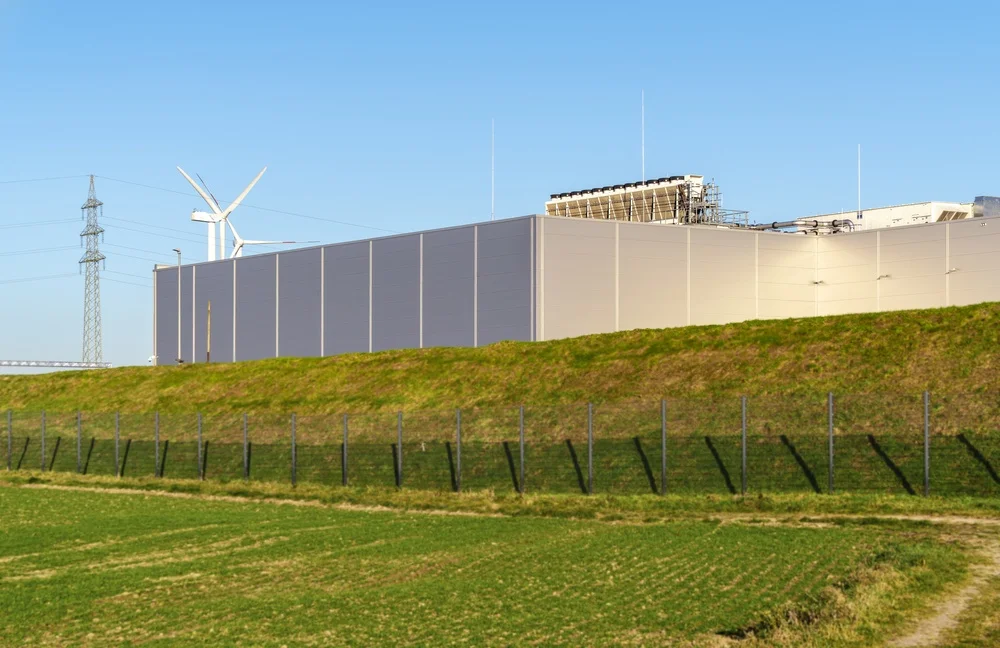
Even the most powerful computers on earth have no idea how much energy America will need for the next generation. In fact, these computers use so much energy themselves that they’ve made it harder to predict electricity demand, even over the short term.
The past will certainly not serve as a reliable guide for us. For many decades now, the American energy sector has suffered under a regime of energy repression. An unprecedented combination of private sector capital and government deregulation could inaugurate a new era of energy dominance. On the other hand, backlash against AI and partisan retribution could keep us stuck in stagnation.
For the past two decades, American demand for both electricity and gasoline held flat. Growth in total factor productivity and per capita GDP also lagged. This combination is unsurprising; progress in energy tends to go hand in hand with broader economic progress.
In fact, the era of energy repression began in the 1970s, when per capita energy consumption stagnated. Since 1989, the nation’s nuclear capacity has been stagnant, with only three new reactors built since 2000, and many more shut down.
There are many indirect causes that nudged America into energy stagnation, from geopolitics to demographic change to the rise of the environmental movement. The efficient cause, however, was a system of state and federal regulation that imposed substantial burdens on power plants, electricity markets, vehicles, pipelines, and other sectors.
You might explain these trends through improved energy efficiency: we simply learned to do more with less. That definitely is part of the story. Yet since productivity growth also lagged during the era, it’s clear that the efficiency gains alone were insufficient to overcome five decades of accumulated regulatory burdens.
One major exception to the general trend was the fracking boom. From 2007 to 2019, hydraulic fracturing (fracking) rapidly increased U.S. oil and gas production, turning the U.S. into a net energy exporter for the first time since 1952 and lowering the cost of natural gas and oil for U.S. consumers. Fracking, however, did not translate into a significant increase in energy use. It merely shifted the composition of US consumption, with natural gas replacing coal generation, and the US relying more on domestic than on foreign sources to meet its energy needs.
Exiting this era of energy repression will therefore require drastic policy change. Thankfully, there are signs of hope. Support for nuclear energy has increased both inside the beltway and in public opinion polls. And some elected Democrats are wisely backing away from the party’s most harmful climate policies. It is possible, though, that rising electricity prices, the data center backlash, climate activism, and cycles of partisan retribution will return us to the energy repression regime.
Americans do not often associate “innovation” with “oil and gas,” but the numbers do not lie. According to Bloomberg, “Productivity in the oil and gas extraction sector almost tripled in the 10 years ending in 2022, compared with a near-doubling in some tech-driven industries.” As the industry increasingly incorporates AI, these productivity gains are likely to continue.
The question is whether the rest of America can catch up with its dynamic oil and gas sector. The solutions to today’s energy problems, therefore, will not be found in the Permian Basin or in the Marcellus shale.
For example, artificial intelligence is driving electricity demand to spike across the US, with Virginia and Texas leading the way. Projections of future electricity demand are highly uncertain, but the Department of Energy expects an additional 100 gigawatts of peak capacity by 2030, about half of which will come from data centers.
The Trump administration has made meeting AI’s energy demands a top priority. For example, the One Big Beautiful Bill Act (OBBBA) cut green subsidies, increased leasing, lowered royalty fees for oil and gas, and introduced some favorable tax changes. California’s electric vehicle mandate was rescinded through the Congressional Review Act. The Trump administration also formed the National Energy Dominance Council and appointed former energy executive Chris Wright to lead the Department of Energy. The Environmental Protection Agency and Department of Energy both announced ambitious deregulatory agendas, most prominently including a reconsideration of the “endangerment finding,” the government scientific finding that authorizes federal regulations of greenhouse gases.
All of this is a welcome and necessary change from the Biden administration. On the other hand, these policies alone will not be sufficient.
The next Democratic administration will attempt many of the same policies as Biden. Electricity bills and artificial intelligence will also be hot button political issues going forward, in ways that they were not during most of the Biden administration. Democrats, and even some Republicans, are now exploiting AI data centers as a populist issue.
The most important policy objectives fall into four buckets:
1.) Congressional legislation to limit abuse of the Clean Air Act. Most ambitiously, this will overrule the Massachusetts v. EPA precedent and the Obama EPA’s endangerment finding, thereby precluding most federal regulation of greenhouse gas emissions. Short of that, it’s possible to forestall much executive branch overreach with legislation that explicitly bans the EPA from common regulatory schemes that skirt Congressional intent (for example, Congress could more explicitly define “adequately demonstrated” and “best system of emissions reduction”, and ban the incorporation of electric vehicles into the fleet for the purpose of vehicle GHG regulations).
2.) Federal preemption of climate litigation: Climate lawsuits have begun to proliferate over the past several years in the states. These may seem frivolous, but the stakes are high, with some researchers claiming trillions in total climate damages, attributed to fossil fuel companies. Some advocates of climate litigation have made clear that they’re using litigation to impose a backdoor carbon tax. This is an affront to the US Constitution. Taxes aimed at addressing international issues must be enacted through federal legislation, not pursued through litigation at the state level.
3.) Electricity market innovation, including “Consumer Regulated Electricity”. The current utility model, in all its guises, is poorly suited to the era of rapid, uncertain load growth. This suggests the need for experimenting with new models. Consumer Regulated Electricity (CRE) is one example. It allows electricity market experimentation to occur in parallel to the existing grid. Under CRE, private grids can be formally exempted from state and federal utility regulation. This model offers advantages for both industry and normal citizens. Data centers could connect to power faster through deregulated private grids, and their developers can afford to pay higher start-up costs. Ratepayers will be insulated from the risk associated with uncertain new load additions.
4.) Broad permitting reform, including for pipelines. This final category is the closest to completion among the four. Progress has recently stalled in Congress.
Regardless, the only way to stop the cycle of retribution is to pass new legislation that limits the ability of regulators and NGOs to block projects. We do not know how much energy America will need in the future. But with these four policies, we can ensure it produces and uses much more than it does now. Congress and the executive branch must terminate the energy repression regime for good.
Russ Greene is the Executive Director of the Prime Mover Institute.

Economic Dynamism


.jpg)



.jpg)



.jpg)


Social Mobility Wins
When people live within an environment offering good jobs, good education, social networks, and a culture of self-improvement and hard work, they experience progress in a way that undercuts the philosophical rationale that socialists need to justify the policies they advocate.
Kevin Warsh and the Future of Fed Communication
Warsh is right that the Federal Reserve should not speak so loudly that it hears only its own echo.