
Thank You, Ben

Ben Sasse gave us a gift selflessly and courageously, sharing his fears, sorrows, resolution, and acceptance of a fate that awaits us all, but might come for him far sooner than he deserves.
In the run-up to Christmas, most of us trudge through shopping malls or scour Amazon looking for the perfect gifts for loved ones, friends, or Secret Santa recipients. Perhaps adults attend Tchaikovsky’s The Nutcracker with their sons and daughters at a local theatre, read Charles Dickens’ immortal novella A Christmas Carol, or watch one of the many wonderful modern-day versions of that timeless classic on television. Perhaps children are “nestled all snug in their beds” with “visions of sugar-plumbs danc[ing] in their heads.” People of all ages are thinking of Kris Kringle and hoping that he found them to be good little boys, girls, and grown-ups throughout the year. Each one has a plan, some quite elaborate, about how to spend the holidays with family and friends, presents and figgy pudding.
Yet, in the immortal words of Mike Tyson, everyone has a plan until they get hit in the face. Recently, life hit former U.S. Senator and University of Florida president Ben Sasse with a haymaker that would have felled a sequoia. He got hit, but he didn’t get knocked down. Impressively, and quite importantly, he responded with the determination, tenacity, courage, and grace of a warrior-poet and champion.
On December 23, 2025, Ben announced that he has a terminal disease. In his own words, “Last week I was diagnosed with metastasized, stage-four pancreatic cancer, and am gonna die.”
A cancer diagnosis itself is enough to terrify any recipient. But, in the world of cancer, the pancreatic version is one of the worst, particularly if it’s reached Stage 4, which means that it has spread elsewhere in the body. Ben acknowledged the horror of those words: “Advanced pancreatic is nasty stuff; it’s a death sentence.” Not exactly the Christmas present that anyone wants. Even Krampus wouldn’t be so cruel.
Ben, however, did not refuse to face his challenge, nor was he forlorn about his fate. He confronted both head-on. As he put it, “I already had a death sentence before last week too — we all do.” Combining his well-earned scholarly flair with the average man’s street lingo — “Death is a wicked thief, and the bastard pursues us all” — Ben acknowledged the one certainty in life: Someday, we will depart it. Still, he noted that there were events that he and we hope to see — such as watching one’s offspring become responsible adults with their own families, and “bear-hug[ing] this motley crew of sinners and saints,” a description that he affectionately used for his wife and children — that he now likely won’t be able to enjoy at all or for much longer.
Nonetheless, Ben refused to engage in “vague hallmark-happy spirituality,” using terms that we “lazily” call “‘hope’” or “‘optimism.’” No, as Ben declared: “A well-lived life demands more reality — stiffer stuff,” even during Advent, the season promising us the eternal life that Isaiah prophesied. Revealing his empathy for the servicemembers who protect us in the face of their own possible deaths — those “rough men [who] stand ready in the night to visit violence on those who would do us harm” — he vowed “during advent, even while still walking in darkness, . . . [to] shout our hope—often properly with a gravelly voice soldiering through tears.”
The warrior in Ben also refused to give cancer any quarter. “I’m not going down without a fight.” Noting the “jawdropping advances science has made the past few years in immunotherapy and more,” he vowed to live “the process of dying,” going full blast as long as God allows. “We’re zealously embracing a lot of gallows humor in our house, and I’ve pledged to do my part to run through the irreverent tape.”
Before signing off, Ben did more than describe his own mission for the foreseeable future. He offered us “peace” and God “great gratitude.” Quoting Isaiah, Ben wrote that “[t]he people walking in darkness have seen a great light; on those living in the land of deep darkness a light has dawned. . . . For to us a son is given.” A son who died to give us eternal life, the greatest present of all.
I’m not from Nebraska or Florida. I’m not a political junkie. I’m not a colleague or friend of Ben’s. I’m just a guy who read his courageous epistle to us all and was moved by his willingness to teach us a lesson that we know but often forget — sometimes accidentally or negligently, and sometimes rather conveniently: At some point, one Christmas will be our last. Ben gave us a priceless gift by reminding us of that unavoidable, unalterable fact. Ben gave us that gift selflessly and courageously, sharing his fears, sorrows, resolution, and acceptance of a fate that awaits us all, but might come for him far sooner than he deserves. Ben blew right past Denial, Anger, Bargaining, and Depression, arriving at Acceptance in the time it took him to write a story of life and death. It could not have been easy, but he did it for us.
Christians look at Good Friday, not Christmas, as the time of death. Christians treat Christmas as the herald of a salvation-to-come and Easter Sunday as the promise of everlasting life. But wherever that eternity might be, it won’t be here. Wherever we go, we don’t come back. Ben knows this, and, in sharing what he knows, he offered us a way to face the inevitable with resolve, courage, and grace. Ben’s earlier life in politics, education, and elsewhere might not have taught us how to live a long, happy, fulfilling life, but his beautifully written message from a few days ago taught us how to live each day, including the day we die. The latter is as important as the former.
You gave me a great gift, Ben: the reminder that, because life is finite, whatever good we can do for others must be our daily task, to help others in need. The ones who are ill, crippled, weak, alone, or dying. The ones who need someone to show the same concern that even Ebeneezer Scrooge learned to share.
Maybe someday I’ll be able to thank you in person for your gift, whether on this side of the great divide or the other. Until then, let me just say, “Thank you, Ben. God bless you and yours, now and always.”
Paul J. Larkin is a Senior Legal Fellow in the Meese Institute for the Rule of Law at Advancing American Freedom

Pursuit of Happiness
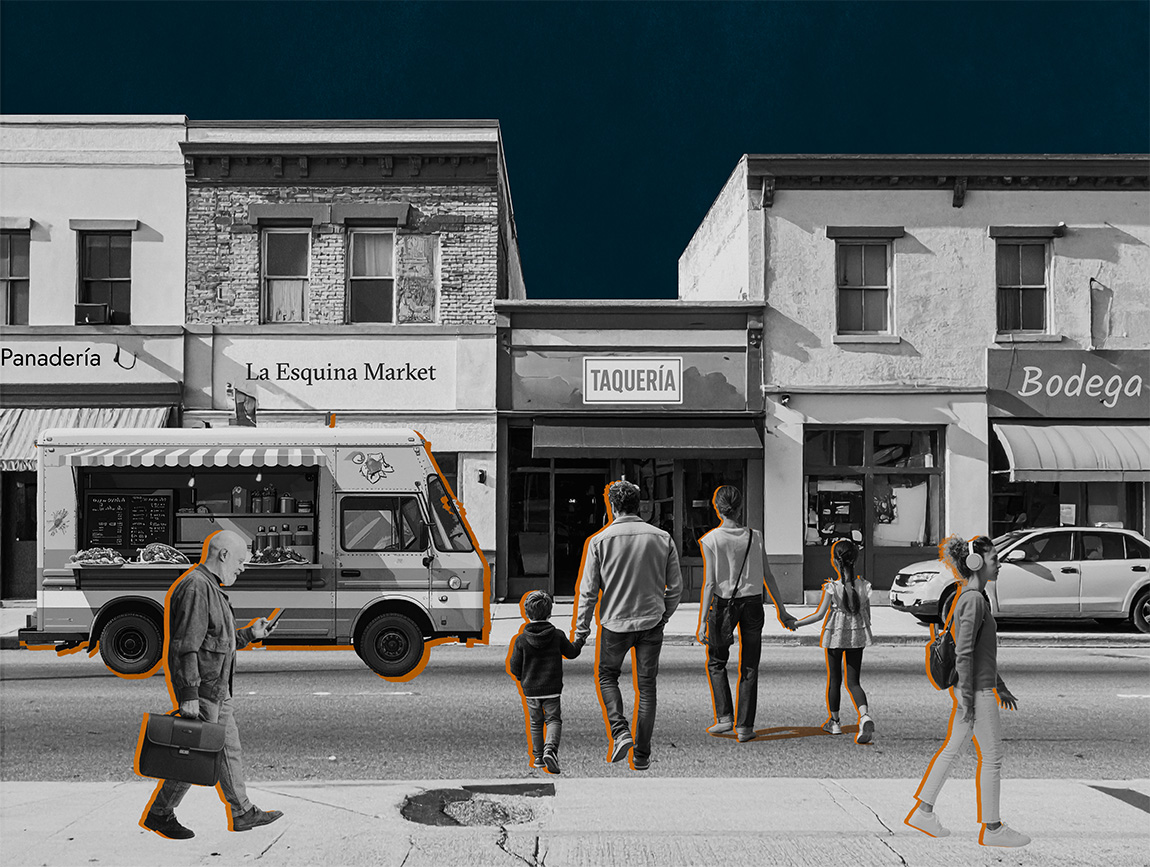
The Rise of Latino America
In The Rise of Latino America, Hernandez & Kotkin argue that Latinos, who are projected to become America’s largest ethnic group, are a dynamic force shaping the nation’s demographic, economic, and cultural future. Far from being a marginalized group defined by oppression, Latinos are integral to America’s story. They drive economic growth, cultural evolution, and workforce vitality. Challenges, however, including poverty, educational disparities, and restrictive policies, threaten their upward mobility. Policymakers who wish to harness Latino potential to ensure national prosperity and resilience should adopt policies that prioritize affordability, safety, and economic opportunity over ideological constraints.









.png)

.jpg)

