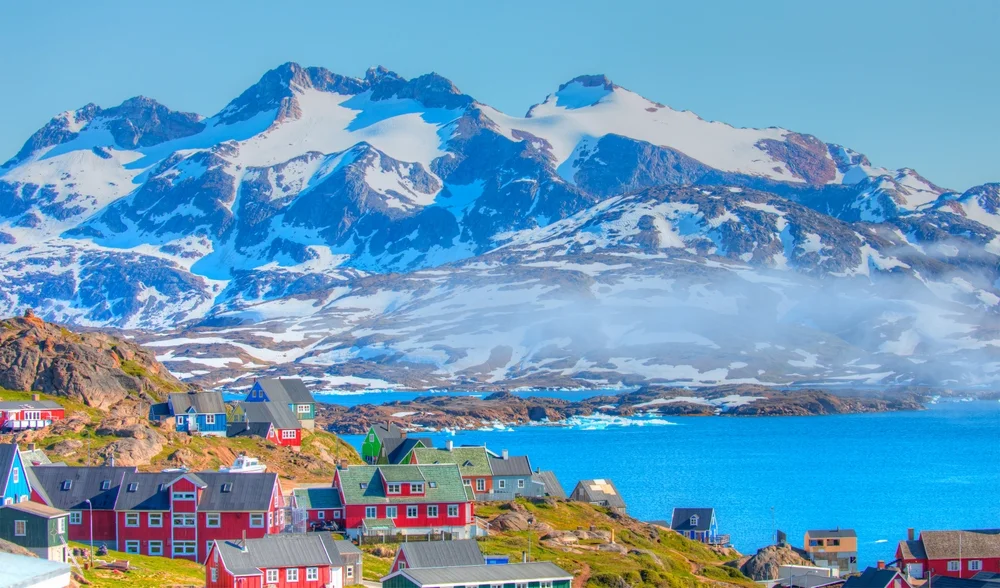
Trump's Greenland Aggression
.avif)
What do Trump's Greenland escapades mean for the future of American global leadership?
One of the unanticipated difficulties of writing about Donald Trump is that he does not hesitate to change his positions on a dime, even if it makes the lives of writers like me difficult. This introduction, written at the eleventh hour, reflects his welcome change of heart captured by this headline: "Trump backs down at Davos: says deal framework reached.” It is, of course, a “great” deal for Trump wholly without regard to its content. And one hopes that the early threats of force and tariffs were driven back for good by a unified European force. But the episode was so foolhardy that I have decided to publish the second rendition of this paper as a reminder of what could happen if a frustrated Trump should find some novel reason to backtrack from his recent tactical retreat. So here goes.
In his malicious caper against Greenland, Denmark, and NATO, President Donald Trump has managed to compress three massive misconceptions about American relations with Greenland into a single ill-conceived sentence. “I may put a tariff on countries if they don’t go along with Greenland, because we need Greenland for national security.” First error: his now-habitual misuse of the word “I.” It reveals his claim for having complete power to decide which actions are taken by the United States, without regard for any constitutional question of how this nation’s foreign affairs powers are distributed between the President and the Congress. His position comes out of his familiar playbook. The principles of separation of powers are fine for ordinary times, but not for emergencies. Yet so long as he has it within his power to create an emergency — in this instance by having, at least before his rambling DAVOS attack on all his allies, to seize by force, if necessary, all of Greenland, there is a perpetual state of emergency. Hence, that threat is for the moment shelved, but the structural risk remains: there is always sufficient reason to allow Trump to threaten to use, or indeed to use, force against law-abiding sovereigns foolish enough to resist his blandishments—should he change his mind.
The second blunder is his claim to have the power to unilaterally impose whatever tariffs he thinks necessary on whomever he thinks necessary, including, of course, the many nations in NATO who rightly regard his blustering as a gross abuse of American power. Right now, the Supreme Court is poised to decide the tariff case Trump v. V.O.S. Selections. The question is whether IEEPA, the International Emergency Economic Powers Act, which in Section 1701 provides that the President’s statutory powers “may only be exercised to deal with an unusual and extraordinary threat with respect to which a national emergency has been declared for purposes of this chapter and may not be exercised for any other purpose.” Trump wrongly claims that he is allowed to find an emergency sufficient to authorize his worldwide system of tariffs to deal with an alleged 90-year-old economic emergency of negative trade balances with individual trading partners. That topic was at least economic, even if the supposed emergency was pure pretense, and thus, this action is done for some “other purpose.”
In this instance, there is no economic pretense at all, given that Trump’s tariff threat, now made good with a 10 percent tax on eight European nations, including Germany, France, and, of course, both Denmark and Norway. Ironically, now all of them are more than justified in this topsy-turvy tariff world to impose tariffs on American goods to offset Trump’s illegal exactions — a well-known game of dual ruin. Thus, no matter which way V.O.S. Selections comes out, these Trump tariffs should be non-starters that will be voided by the American courts.
Ideally, the Supreme Court in VOS will go out of its way to condemn Trump’s actions as an obvious abuse of his power to increase the chances that lower courts will stop him in his tracks with the preliminary injunction that was not issued the last time around. And for good measure, it should observe that, as stated below, there is no alternative path that he could use to impose such tariffs without getting the consent of Congress or some independent agency. Otherwise, fresh judicial decisions take time, and the risk here is that Trump can wreak havoc long before the legal questions are sorted out, given his flimsy claim that he was right all along. He benefits here from his own unscrupulousness by shooting first and asking questions later — only for the first time, this will be against an ally, not a foe
The situation would have rapidly turned for the worse if Trump had followed through on his threat to use force. Even at Davos, Trump states for the record that he thinks that Russia and/or China will take over Greenland if the United States does not move first. But that seems utterly remote now that Denmark and its NATO partners have arrived in force in Greenland to defend, perhaps more than symbolically, against an invasion from one of their own NATO partners. In addition, a bipartisan delegation of American Congressmen and Senators, obviously appalled by Trump’s actions, has traveled to Greenland to reassure our allies that Trump is not the only voice coming from the United States. It is, therefore, just bizarre to think that these allies would disappear into the night if Russia and China came knocking at Greenland’s door if Trump backed off. Indeed, in line with the original NATO design, Denmark and Greenland have made it clear that they welcome American forces on their territory for mutual defense purposes, including Trump’s Golden Dome project, which hardly requires that he claim sovereignty over the island.
Of course, ownership would grant him convenient access to Greenland’s rich store of minerals, while running roughshod over the political institutions put in place by the local population. Right now, he is playing that desultory game in Venezuela by keeping the democratically elected government at arm’s length while dealing, not with Nobel Peace Prize Winner, Maria Corina Machado, but with Delcy Rodriguez, now proclaimed to be Venezuela’s interim president. He thinks he can get a better deal from her (while wearing Machado’s medal, which she surrendered in exchange for a mess of political porridge. It is Venezuela that is the long-term loser.
The situation is not only indefensible from a strategic and political point of view. It also could have opened up a can of legal issues that would have presaged the entire dissolution of NATO, given that any such blatant land grab would have counted as a gross violation of NATO’s core treaty obligation, which is contained in Article 5 of that Treaty, which states:
The Parties agree that an armed attack against one or more of them in Europe or North America shall be considered an attack against them all and consequently they agree that, if such an armed attack occurs, each of them, in exercise of the right of individual or collective self-defence recognised by Article 51 of the Charter of the United Nations, will assist the Party or Parties so attacked by taking forthwith, individually and in concert with the other Parties, such action as it deems necessary, including the use of armed force, to restore and maintain the security of the North Atlantic area.
In April 1949, no one thought the attack on one NATO nation would come from another member of the Alliance. But here, any such actions by Trump's actions would have counted as a threat against another NATO member, which all other members would have been obliged to treat as an attack on themselves. There is not a syllable about this deadly overlap in the NATO Treaty, nor is there an easy way to handle any such problem. How could the rest of NATO expel the United States? Article 13 allows any nation to withdraw with one year’s notice. Does that explicitly allow for the expulsion of a nation that has attacked fellow nations with aggressive force? At this time, Trump (it is hard to say the US) has apparently backed off from that outcome by offering to negotiate on any issue. But that promise only counts as a stall tactic unless the United States unconditionally backs off its demand that it take over the island if Greenland and Denmark refuse to budge. The Trump negotiations will be a ignore the fundamentals if they only cover three issues: how much the US should pay Greenland and Denmark to acquire ownership of the territory; the status of the newly acquired territory under American law; and what treaty protections exist, if any, for remaining Greenlanders and Danes. All these three would count for a sham because they would assume that Greenland and Denmark had capitulated on the fundamental demand to turn over the Territory.
So now the question remains, what can be done on the American side to stop the juggernaut? One obvious point is that to date the Congress has not authorized, or even debated, his action. No matter how complex the modification of the rules, the initial decision calls for Congress to declare and then authorize the president to be Commander-in-Chief. It has always been recognized that in the case of a direct attack on the United States, its people, or property, the president need not wait for congressional authorization to fight back. And in cases of indeterminate enemies, authorizations for the use of military force are uneasily regarded today as reasonable substitutes for the declaration of war, even though it delegates to the President, within limitations, a power that was initially exclusively within the province of Congress.
But there is no such authorization of this sort that should allow Trump to disregard his treaty obligations under NATO and the United States’s general obligation under public international law. There is not the slightest pretext of self-defense when the United States threatens to impose a unilateral executive takeover by invading a NATO ally, even if the professed goal is greater security against Russia and China.
Next, there could be an effort by the president to report on his escapades within 60 days of the venture's onset under the highly controversial 1973 War Powers Resolution, which would be utterly useless in this context because this controversy will not last that long. So the best response is that Congress must first develop a spine to address exaggerated claims about the “unitary executive.” It can pass a new war powers resolution (which will be vetoed) with healthy majorities to take a presidential veto out of play, which might well read:
(1) The Congress, exercising its power to declare war, hereby announces that no such authorization, either express or implied, has been, or should be given, to the high-handed actions of President Trump, and further it also declares that the President does not have the power to abrogate any treaty, including NATO, except in those cases in which public international law principles would justify that action. When such does not happen, it is the sense of the current Congress that President Trump’s illegal actions constitute high crimes and misdemeanors under Article II, Section 4, that require its removal from office.
(2) The Congress of the United States hereby declares that any such acquisition of Greenland by any coercive or voluntary regime is void and of no effect, and that it is the sense of the current Congress that any future President is hereby authorized to return Greenland to its former status and award appropriate compensation for all damages caused by the United States’s illegal occupation of Greenland.
The point of this proposal is to make it crystal clear that the President speaks only for himself and his actions should not survive once he loses his unilateral powers of action. Hopefully, it will be a strong enough statement to induce Trump to beat a graceful retreat from this madcap adventure. But if it does not, it could serve as a powerful weapon to launch litigation in some international treaty, or an impeachment or other kind of suit against the action. e.g., legislation that undoes it after the 2026 election. But, somehow, starting now, there has to be a red line in the sand against aggression by the United States led by its renegade president.
Richard A. Epstein is a senior research fellow at the Civitas Institute.

Politics
%20Richard%20Samuelson%20%20-%20Is%20American%20Nationalism%20Still%20Creed-able_-1.jpg)
Is American Nationalism Still Creed-able?
We are not there now, but there is reason to worry that the United States is in danger, if we are not careful, of ceasing to be a nation with the principles of 1776 at its core.
National Civitas Institute Poll: Americans are Anxious and Frustrated, Creating a Challenging Environment for Leaders
The poll reveals a deeply pessimistic American electorate, with a majority convinced the nation is on the wrong track.
.webp)
%20(1).avif)


.jpg)
Can Britain’s Next Prime Minister Escape the Net Zero Trap?
Britain has burned through five Prime Ministers and is paying some of the highest electricity prices in the world.
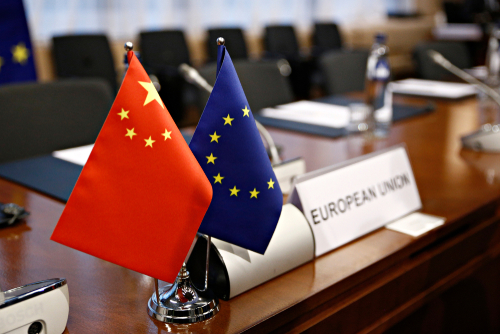
The Scanner at the Gate: Europe’s China Policy Litmus Test
China’s industrial policy is entering Europe through public procurement—and reshaping sensitive markets from within.

Confronting the New Antisemitism
"The postwar effort 'to rebrand Judaism as a religion' has made it impossible for American Jews to understand what they are facing today, because what we are facing today is an attack on the idea of Jewish peoplehood.”
“Democratic” Socialism Is Undemocratic
By promoting class hatred, suppressing private initiative, and seeking enhanced control of our lives, today’s democratic socialists undermine patriotism and individual initiative—two qualities that have long distinguished the United States from other major nations.

