
Canada’s Crises

Canada faces a number of constitutional challenges in the wake of Trudeau's resignation.
Canada’s problems did not dissolve with the resignation of Prime Minister Justin Trudeau on March 14, 2025. Under his leadership (2015-2025), Canada experienced what has been called a “lost decade,” a term that brings to mind the recent economic stagnation in Japan and Italy. Unlike Japan and Italy, Trudeau’s lost decade featured not only stagnant growth but also flatlining living standards and soaring housing prices. Americans are somewhat familiar with the dismal economic record and colorful scandals of the Justin Trudeau era, but they are probably less familiar with the looming constitutional crises Trudeau helped create. Unfortunately, President Trump is likely to wade into these conflicts, making matters even worse.
During Trudeau’s premiership, tensions flared between the provinces and the federal government, particularly Alberta and Saskatchewan and Ottawa, but also with Quebec. The federal government managed to unite Alberta and Quebec as they reacted to perceived incursions into their respective jurisdictions. At the same time, constitutional questions about indigenous rights simmered in courtrooms while Prime Minister Trudeau tried to ride a wave of rising concerns about Canada’s past indigenous policies.
These crises are now Prime Minister Mark Carney’s problem.
Carney won the 2025 election by cleverly positioning himself as the “elbows up” candidate with the private sector experience necessary to deal with President Donald Trump and his threats of annexation and tariffs. To defeat the Conservative Party’s Pierre Poilievre, who was poised for a historic victory if Trudeau had held on, Carney tacked to the center, especially on economic questions (e.g., promising to rescind the federal “carbon tax”), while focusing on the threat of Trump. The strategy paid off as baby boomer Canadian voters over 60, the voting block most concerned with Trump, went for the Liberals by a 19 point increased vote share compared with the 2021 election. Younger Canadians, who are more concerned with economic decline and being locked out of the housing market than with Trump’s bluster, strongly favored the Conservatives. Yet the baby boomers’ numbers and the collapse of the federal New Democratic Party gave the Liberals a minority government.
To understand the pickle Carney finds himself in, we need to unpack the constitutional crises he inherited from Trudeau. This may help Americans understand the tumultuous future in store for Canada.
Trudeau’s Bungled Federalism
Trudeau was elected in 2015 on a promise to offer “sunny ways” as a contrast with Conservative Prime Minister Stephen Harper, a phrase that the famous Liberal Prime Minister Wilfred Laurier used in 1895 to justify sacrificing francophone minority-language rights in Manitoba. Whereas Laurier used the term to suggest a diplomatic approach to federalism that respected provincial autonomy (very much part of the Liberal Party brand up until the mid-twentieth century), Trudeau quickly abandoned any such pretense of allowing provincial rights to stand in the way of his policy objectives. Like his father, Pierre Trudeau, he became embroiled in several constitutional battles to centralize power away from recalcitrant provinces. He did this primarily in the areas of environmental policy and rights questions.
Trudeau fils campaigned on environmental reform, especially to combat climate change. Along with a tanker ban on British Columbia’s coast that effectively killed any chance of new pipelines from Alberta to Asian markets, the signature environmental policy enacted by Trudeau’s government was the “Carbon Tax,” or the Greenhouse Gas Pollution Pricing Act. The policy was intentionally designed not to constitute a direct consumption tax (which, much like Obamacare, would have been less constitutionally suspect) but rather created a regulatory regime whereby a Minister could set a minimum threshold for carbon consumption charges (along with a separate output-based pricing system for industrial emissions) and then apply it to any provinces that failed to meet the threshold. In other words, it granted the federal minister the power to impose a baseline carbon tax on provinces that failed to introduce their own carbon taxes that met federal standards.
Under the Canadian Constitution Act 1867 (section 92.13), the provinces have robust and exclusive powers over “property and civil rights”, and so it was quite controversial to have a federal policy imposing a pricing scheme on nearly every part of the economy under provincial jurisdiction. The carbon tax was challenged by provincial governments that sent “reference questions” (abstract questions directly asked to the courts) to their provincial courts of appeal, asking whether the law was within federal power. The federal government had argued that the law was within the “Peace, Order, and Good Government” (POGG) clause (section 91), notwithstanding the fact that POGG had traditionally been interpreted as allowing temporary federal power over emergency matters, and residual matters of “national concern” that cannot be achieved by provincial powers.
The “national concern” branch of POGG had not been used much and was considered a risky gamble, but the federal government won two of the three provincial reference cases (the Alberta Court of Appeal denounced the law as a “constitutional Trojan horse”). The federal government then won, with the carbon tax upheld by a 6-3 majority at the Supreme Court of Canada. Justice Brown’s dissent on the Supreme Court argued that the law was “constitutionally impossible” to justify under the “national concern” branch of POGG, which requires a matter to be beyond provincial authority and capacity, because it presupposed that provinces had authority over carbon pricing.
Trudeau capitalized on this victory. The federal Parliament also enacted the Impact Assessment Act (IAA), which would have allowed federal review of the environmental impact of “designated projects,” including projects squarely within provincial jurisdiction insofar as they had any effects on areas of federal jurisdiction. If the carbon tax was the Trojan Horse, then the IAA was Odysseus hiding inside. Fortunately, the Supreme Court struck down the “designated projects” part of the IAA, but signaled that it remained open to a less aggressive federal assessment scheme. Meanwhile, more Greeks poured out of the Trojan Horse as the federal government sought to mandate “net zero” Clean Electricity Regulations, an Emissions Cap, and an “assault style weapons” firearms compensation scheme. All of these policies faced significant pushback, especially in Alberta and Saskatchewan, but notably, some were opposed by more progressive provincial governments eager to protect their sovereignty.
Trudeau also clashed with Quebec’s nationalist government over language rights and secularism. In 2019, Quebec Premier François Legault’s Coalition Avenir Quebec (CAQ) enacted An Act Respecting the Laicity of the State (Loi 21), which prohibited certain public servants from wearing religious symbols. Quebec developed from a Catholic nationalist province into a secular nationalist province after the “quiet revolution” (la Révolution tranquille) of the 1960’s. Loi 21 is clearly an attempt to legislate French-style secularism in a province that once relied on the Catholic Church to deliver many social services (e.g., in education and hospitals). In 2022, Legault also introduced a law to amend Quebec’s “provincial Constitution” to add the following sections to the Canadian Constitution (Loi 96):
“90Q.1. Quebecers form a nation.
“90Q.2. French shall be the only official language of Quebec. It is also the common language of the Quebec nation.”
Anticipating criticisms that this fails to respect Canada’s constitutional amendment procedures, Quebec’s Minister of Justice sent a bilingual copy of the Canadian Constitution to every constitutional expert in the country, including the new amendments (including yours truly). Quebec also included the Charter of Rights and Freedoms’ “notwithstanding clause” in both laws to avoid having them potentially struck down for violating constitutional rights.
This secularizing and linguistic nationalist project runs directly contrary to Pierre Trudeau’s ideal of a “multicultural” Canada where diverse religious groups are celebrated, and French and English are both official languages protected across the country. Trudeau père also opposed including the notwithstanding clause in the Charter and was forced to accept it as a compromise by provinces skeptical about federally appointed courts striking down their laws. It was unsurprising then when Justin Trudeau attacked Quebec’s laws, with special ire for the invocation of the notwithstanding clause as a betrayal of his father’s vision for Canada. He also attacked Ontario and Saskatchewan for daring to use the clause to avoid having other provincial laws (e.g., back-to-work legislation, limits on campaign finance, funding for non-Catholics at Catholic schools, and parental permission requirements for minor students changing pronouns) struck down. Trudeau even publicly mused about sending a reference to the Supreme Court to judicially “limit” the notwithstanding clause.
Separatism in Alberta and Quebec
Trudeau’s policies drew significant pushback from the provinces. He even managed to ignite (or reignite) the fire of separatism in Alberta and Quebec. Prime Minister Carney now has to deal with these flaring tensions.
In Alberta and Saskatchewan, Trudeau’s environmental policies were widely seen as nothing less than an open attack on the oil and gas industry and an invasion of provincial jurisdiction. For many Albertans, it was déjà vu, given that in 1980, Pierre Trudeau had enacted a National Energy Program (NEP) that set price controls, increased federal royalty shares, and even created nationalization mechanisms on oil and gas production to lower oil prices for Eastern Canadians after the oil crises of the 1970’s. Western resentment soared even higher after Justin Trudeau’s government proposed carbon tax exemptions for oil-heated homes, found almost exclusively in Liberal voting areas of Atlantic Canada and unheard of on the frozen Canadian prairies. The Supreme Court had only upheld the carbon tax as a national pricing scheme, and so its constitutional rationale also became more questionable with de facto regional exemptions.
In response to this federal aggression, Alberta’s United Conservative Party (UCP), led by Premier Jason Kenney, challenged Trudeau’s environmental policies in the courts. After Kenney resigned in 2022, the UCP elected Danielle Smith leader and premier. Smith’s campaign included the promise to enact a Sovereignty Act, an idea that she drew from a more radical proposal and then reformed to fit a constitutionally orthodox form. The Sovereignty Act enabled Alberta’s legislature to pass resolutions condemning federal laws and actions as unconstitutional or harmful to Alberta’s interests and to instruct the Premier and her ministers in ways of dealing with the federal initiative. As provinces are “equally sovereign” with the federal Parliament, premiers already held the power to refuse to allow provincial officials to cooperate with or follow federal programs and laws, but the Sovereignty Act turned this into a more democratic and pedagogical exercise of extra-judicial constitutional interpretation. My coauthor, Jesse Hartery, and I defended the law's constitutionality and have so far been vindicated. Alberta has issued three Sovereignty Act resolutions against Trudeau's Clean Electricity Regulations in 2023, the Emissions Cap Regulations in 2024, and in 2025, instructing police not to enforce or implement a federal gun seizure program.
Even before Trudeau’s resignation, these resolutions appeared to have some impact, as the Clean Energy Resolution seems to have helped force Ottawa to move its “net zero” electricity goal from 2030 to 2050. Mark Carney has now suspended the Clean Energy regulations, promised not to implement the Emissions Cap as part of an “Alberta-Canada Memorandum of Understanding”, and committed to making a bitumen pipeline from Alberta to the West Coast a priority. In the background of all this, Elections Alberta has now approved an independence referendum question that looks likely to gain just under 178,000 signatures. It looks increasingly likely that in October 2026, Albertans will vote on the question:
Do you agree that the province of Alberta should cease to be a part of Canada to become an independent state?
Around 20-30 percent of Albertans say that they support separation, but that number could go up depending on what happens in relations between Ottawa and Alberta (and it’s possible the number could get closer to 50 percent if some Albertans vote strategically to intimidate Ottawa). The problem for Smith is that a significant portion of her UCP base are separatists, while many Alberta conservatives are federalists who want a better deal for their province within Confederation. Smith has publicly declared her support for remaining in Canada and has tried to use the MOU with Ottawa to show her base that she has made progress in extracting concessions, but she was booed at the UCP convention in December 2025 when she touted the MOU. The party base may be right to be skeptical about Ottawa’s promised pipeline, given that Carney has made it clear that it will require the consent of British Columbia (currently run by the anti-pipeline New Democratic Party premier David Eby) and First Nations.
The charismatic leader of the separatist Parti Québécois (PQ), Paul St-Pierre Plamondon, has expressed support for Alberta’s separatists, even meeting with them and condemning “federal abuses of power.” Plamondon and his party are committed to holding another independence referendum in Quebec (remain won 50.58% to 49.42% for leave in 1995). Polling suggests Plamondon looks set to win a majority government in the next provincial election, which will be held by October 2026. However, support for Quebec separatism hovers around 33 percent, just slightly higher than in Alberta. What should worry Ottawa is that Plamondon clearly has a combative yet winsome political style (in both languages) that could shift support in favor of “oui” to independence.
Support for the PQ is high due to Plamondon’s appeal and the ruling CAQ’s mismanagement of key issues in the Quebec provincial government, but it is also likely a result of frustration with Ottawa. The PQ is seen as a safe bet by provincial voters for fighting for Quebec’s autonomy, and a Plamondon government will not hesitate to defend provincial jurisdiction against Ottawa. In its desperation to save its polling numbers, the CAQ has followed up its secularism and nationalist language laws with an even bolder proposal, partly inspired by Alberta Sovereignty Act. The Québec Constitution Act 2025, among other things, reaffirms secularism and that French is the official language of Quebec while also prohibiting the use of public funds to challenge provincial laws, renaming the Lieutenant Governor of Quebec the “Officer of Québec” and enabling the Parliament of Quebec to declare federal laws unconstitutional. The PQ has attacked the law as a useless half-measure.
Notwithstanding Notwithstanding
In the midst of all this, the Supreme Court of Canada is now hearing two cases, English Montreal School Board v Quebec (Hak) and UR Pride v Saskatchewan, where litigants are asking the Court to make Charter rights declarations about provincial laws that invoke the notwithstanding clause. The Quebec case challenges the Loi 21 secularism law, while the UR Pride case seeks judicial declarations on a Saskatchewan law requiring parental consent before schools can change the names and pronouns of students under 16. Alberta has followed Saskatchewan in enacting its own more expansive laws regarding gender ideology by invoking the notwithstanding clause, and has unsurprisingly faced legal challenges.
One reason this is so dramatic is that the whole purpose of the notwithstanding clause was to ensure that democratically elected legislatures could enact legislative views on rights to override judicial review. When the provinces were negotiating the enactment of the Charter with Pierre Trudeau in the lead-up to 1982, the majority of them were suspicious that federally appointed courts would use the Charter to make controversial rights policy in provincial jurisdiction. The provinces only agreed to a Charter (and Quebec did not consent to any of the 1982 constitutional changes) because the notwithstanding clause allowed them to check the power of courts.
Another reason for the drama is that Mark Carney’s federal government has now made good on Justin Trudeau’s musings about setting limits on the notwithstanding clause by explicitly arguing that the clause should be read as not permitting renewal of the notwithstanding clause if it is found to “irreparably impair” a Charter right. The federal Minister of Justice Sean Fraser, famous for mismanaging the immigration and housing files as a minister under Justin Trudeau, has not only argued for the judicial review of laws invoking part of the constitution designed to check judicial review, but also for limits on renewals of the clause not found anywhere in the text. There are strong arguments that the text of section 33 prohibits substantive judicial review, and there are no textual limits on renewals of the clause apart from the need to renew within five years to avoid expiration. Five provinces signed a letter calling the federal arguments a “complete disavowal of the constitutional bargain that brought the Charter into being” and demanding that the Prime Minister withdraw them.
All of this is to say that there are several constitutional crises in Canada that could grow far worse. If a pipeline is not under construction by the time of the Alberta independence referendum in October 2026, it may be harder for Premier Smith to make the case for staying in Canada, and moderate voters may be tempted to vote leave to intimidate Ottawa. President Trump’s officials have met with Alberta separatists, and that does not bode well for national unity as Canada continues to grapple with its trade war. Trump could interfere in any referendum by promising to recognize an independent Alberta or grant it statehood, although these moves could backfire on separatists too (Trump’s rhetoric undoubtedly helped to drive voters over 60 to back the Liberals and elect Mark Carney in 2025).
And it is difficult to predict how the outcome of the Alberta referendum, or a Supreme Court decision that denounces and perhaps even limits Quebec’s use of the notwithstanding clause, could impact a future Quebec referendum. Carney may yet profit from all this if national unity questions push older voters even more firmly into his camp. But if Canada goes up in flames, he can say he didn’t start the fire.
Geoffrey Sigalet is the Director of the UBC Research Group for Constitutional Law and an Assistant Professor of Political Science at the University of British Columbia's Okanagan Campus.

Politics
%20Richard%20Samuelson%20%20-%20Is%20American%20Nationalism%20Still%20Creed-able_-1.jpg)
Is American Nationalism Still Creed-able?
We are not there now, but there is reason to worry that the United States is in danger, if we are not careful, of ceasing to be a nation with the principles of 1776 at its core.
National Civitas Institute Poll: Americans are Anxious and Frustrated, Creating a Challenging Environment for Leaders
The poll reveals a deeply pessimistic American electorate, with a majority convinced the nation is on the wrong track.
.webp)
%20(1).avif)


.jpg)
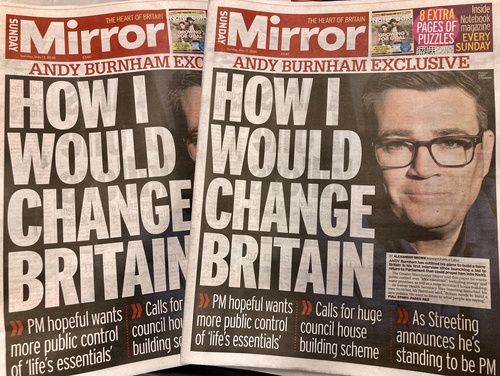
Can Britain’s Next Prime Minister Escape the Net Zero Trap?
Britain has burned through five Prime Ministers and is paying some of the highest electricity prices in the world.
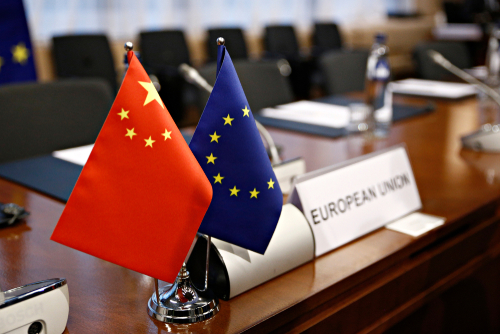
The Scanner at the Gate: Europe’s China Policy Litmus Test
China’s industrial policy is entering Europe through public procurement—and reshaping sensitive markets from within.

Confronting the New Antisemitism
"The postwar effort 'to rebrand Judaism as a religion' has made it impossible for American Jews to understand what they are facing today, because what we are facing today is an attack on the idea of Jewish peoplehood.”
“Democratic” Socialism Is Undemocratic
By promoting class hatred, suppressing private initiative, and seeking enhanced control of our lives, today’s democratic socialists undermine patriotism and individual initiative—two qualities that have long distinguished the United States from other major nations.

