The Not-So Reckless Attack on Iran
.avif)
With Ayatollah Ali Khamenei dead, the worst possible outcome is better than the status quo ante.
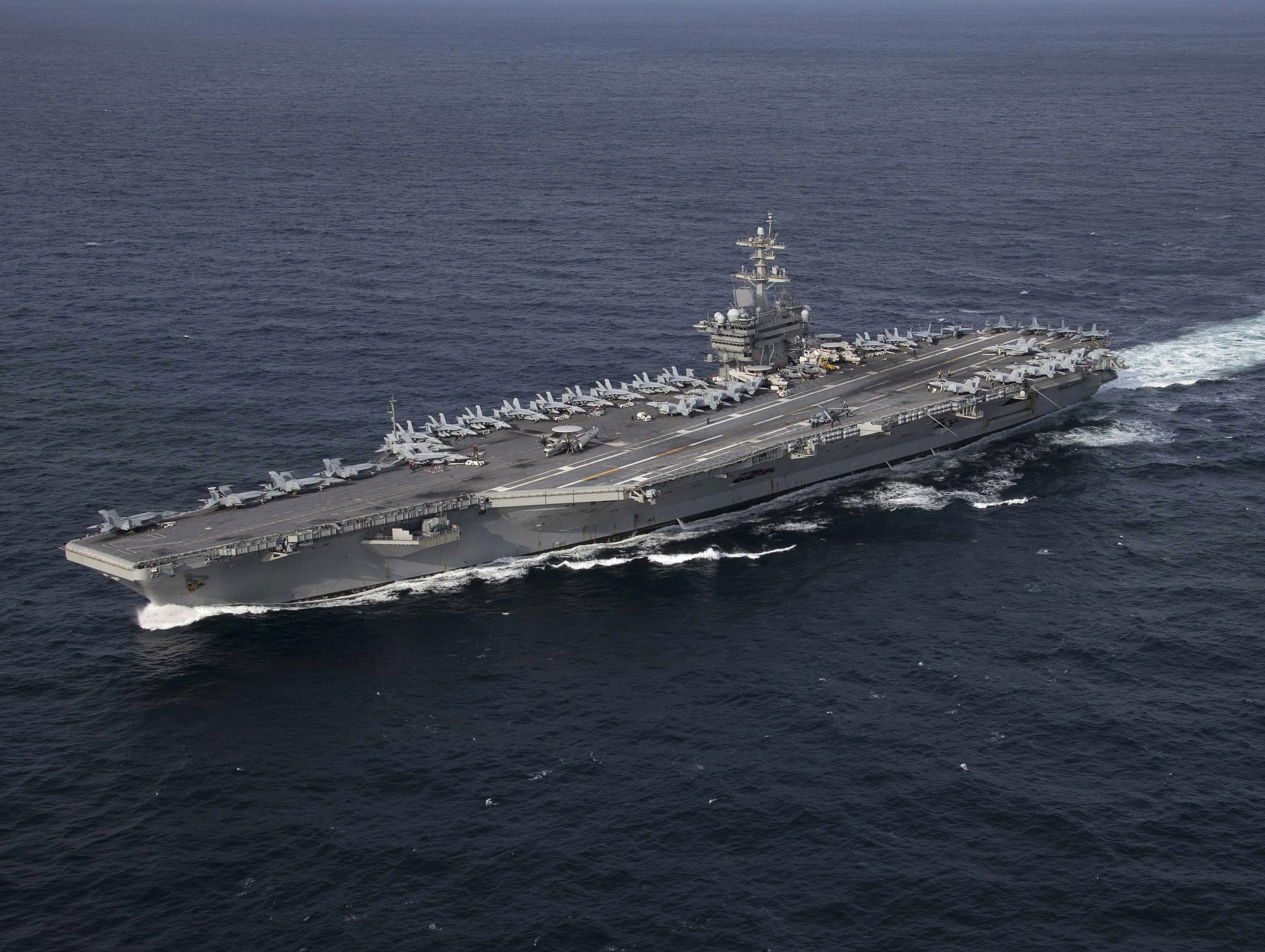
Now that the United States and Israel have launched a large-scale preemptive attack against multiple sites in Iran with the explicit purpose of bringing about regime change in Iran, the question on everyone’s lips is what will happen next. My own answer takes two parts: No one quite knows, but with the death of the Ayatollah, the worst possible future outcome is better than the status quo ante. After all, right now, large numbers of Iranians are dancing on his grave after the announcement of his death, and Iranians across the globe have joined in these celebrations. Nonetheless, the extensive commentary written after the strikes began has vigorously taken the opposite position. New York politicians like Chuck Schumer, AOC, and Zohran Mamdani bash the decision as leading to an endless quagmire. The media commentary savages the attack by using the word “reckless,” which includes the usual suspects who use that term, including the New York Times, The New Yorker, and The Guardian, who claim that the attack is “reckless” because no one knows where it will lead. But the term reckless is not properly applied to aggressive actions that seek to upend the status quo. An independent judgment has to be made as to whether the risks are large in relation to the projected rewards.
So start with the negotiations. The critics of the attack, like the Council on Foreign Relations, start with a rosy analysis of Iranian intentions. It then concludes by praising the Iranian Foreign Minister Abbas Araghchi for stating that “progress” has been made through the “most intense” negotiations to date, but who nonetheless refused proposals to suspend Iran’s nuclear enrichment programs. The Minister was just “trying to be imaginative in addressing U.S. concerns.” More than one sucker is born every day. That is not the way to evaluate another stall tactic, like those in use for many years, given that Araghchi was not prepared to say that Iran no longer regarded the United States as the embodiment of Satan. The proper response from the United States was to set a date after which it would act militarily, no further questions asked, unless a definitive agreement to dismantle had been reached beforehand. Treat any feeble sign of some future concession as probative, and a day of reckoning will never come for mass slaughter on the streets of Iran — a humanitarian matter that does not figure significantly in the condemnations of the US and Israel. Who knows when the clock ran out after 1980, but the Trump team was right to conclude that the time for negotiation was over.
In taking this position, the United States and Israel were immediately faced with the objection that their intervention was premature because there was no risk of an imminent attack from a crippled Iran that was still licking its own wounds. There is little doubt that, in the face of an imminent attack, any nation is entitled to take military action to mitigate the risk, even if it is often unclear whether any such force is proportionate or excessive. But the converse does not follow: Just because a risk is not imminent does not imply that no military action may be taken. That issue was faced in the U.S. domestic market during the Cold War, when the question was whether the United States could arrest and punish individuals whose conduct did not pose what Justice Oliver Wendell Holmes had called in 1919 a clear and present danger of some illegal action. This pointed answer was given in Dennis v. United States (1951): “[These] words cannot mean that, before the Government may act, it must wait until the putsch is about to be executed, the plans have been laid and the signal is awaited.”
Even if such action is not barred, it is also not required, so the question is whether the United States and Israel make the right decision in light of the evident risks. To The Guardian, and many others, the negative answer comes down to one word, “chaos.” Why? Their first point is that with the Ayatollah now dead, the animosity toward the West will only intensify in key places, so that they are attacked, notwithstanding its short-term success. The action thus faces long-term responses that already include attacks not only on Israel and U.S. assets, but on places like Qatar, the United Arab Emirates, Bahrain, and Jordan. But that counts as good news. None of these nations, including Qatar, can now be regarded as allies of Iran, but as its enemy. Hence, the question is just who will mount these various attacks that the Iranian government promises, now that at least 40 other top Iranian officials have been killed during these attacks. Sites in Israel have been hit once and will be hit again, with some collateral damage. Yet with the Iranian regime in disarray, with its top operatives killed, the Iranian government does not have either the leadership or resources to mount any sustained military response to the forces arrayed against it.
Compare this to earlier policies. One of the great fallacies of the Biden approach to Iran was sadly encapsulated in this phrase: “You got a win. Take the win.” That was April 2024. It rested on the false view that each act of escalation would lead to a similar response from the other side, with ever-greater risks of world instability. Were that true, then incremental movements would lead in the long term to a win for Iran, whose large population could outlast the Israelis in any war of attrition. But Biden’s prescription is only true for small blows that leave the wartime capacities of the other side intact. But the initial Israeli strike against Hezbollah with pagers and phones was not incremental, but a body blow that took out much of the group’s leadership and military material, so that their Iranian proxies did not have the resources to respond in kind. That is even more true for Iran: Even though the regime has gone to great lengths to restore its missile capabilities, it probably lags further behind than its enemies, given the immense advances in the West that allow cheap weapons to take out once highly cost-effective drone and missile attacks. The military gap will widen, not narrow. Nor will it be bridged by any technical or material assistance from Russia or China. The Russians have their hands full with the war in Ukraine, and, based on zero information, it seems likely that various exchanges of intelligence and material between Israel and Ukraine have helped and will help both sides. China, for its part, faces its own internal economic problems and political instability, making it virtually impossible for it to intervene in a war far from its borders. It thus faces an additional vulnerability if the new Iranian regime cuts out, or is forced to cut out, further oil shipments to China at below-market prices. Right now, there is ample reason to believe that, in the short term, Iran may have the capacity to stop oil shipments through the Gulf of Hormuz, through which much oil flows from Saudi Arabia, Iraq, the UAE, and Kuwait. But by the same token, Iran can no longer ship its oil to the Chinese at bargain prices. And even in the short term, it is clear that the Western forces should have sufficient dominance and the ability to seriously hamper Iranian efforts to control those waters, as its relative strength is battered by further attacks. Hence, in the medium term, the Strait should be made more secure, which will aid the West.
Nor is it likely that some political coalition will form to reverse the tide of war through the United Nations or any other hub of diplomatic activity. France, Germany, and the United Kingdom have thus far stayed on the sidelines, remaining content to urge Trump to return to the negotiating table, albeit long after it could do much good. But their recitation of Iranian misdeeds — developing nuclear and missile programs, destabilization abroad, and brutalization at home — makes it likely that these three key players will be happy to free ride on the U.S. and Israeli actions, while steering free of conflict. They have thus taken themselves out of the game as a serious counterweight to the two nations that put large stacks of chips on the table.
No one, of course, can be confident of the future. But once the dancing in the streets has stopped and the regime is overthrown, the hard work begins. The war in Iraq in 2003 was far easier, but the whole situation turned south because the United States had no real plan on how to police the peace and return the economy to its vital strength. The creation of an independent local force in Iran, backed by the United States (perhaps without Israel), is needed to counter the Revolutionary Guards. It also has a better chance of succeeding in a nation that has far fewer tribal animosities than Afghanistan and Iraq. But that task will be much easier if the new government pursues aggressive market reforms to get the economy moving again. The process is far messier and far faster than government controls. But there is no faster way to destroy a government than with an unsavory mix of government ownership of key industries, coupled with price controls on the rest. No one should deny the risks of reform. But neither should they ignore the bloodthirsty deeds, economic despotism, and chaos under the Ayatollah’s thumb.
Richard Epstein is a senior research fellow at the Civitas Institute at the University of Texas at Austin.

Politics
%20Richard%20Samuelson%20%20-%20Is%20American%20Nationalism%20Still%20Creed-able_-1.jpg)
Is American Nationalism Still Creed-able?
We are not there now, but there is reason to worry that the United States is in danger, if we are not careful, of ceasing to be a nation with the principles of 1776 at its core.

National Civitas Institute Poll: Americans are Anxious and Frustrated, Creating a Challenging Environment for Leaders
The poll reveals a deeply pessimistic American electorate, with a majority convinced the nation is on the wrong track.
.webp)
%20(1).avif)

The G7 Is Failing To Address Global Imbalances
The G7 was not created to issue an endless procession of carefully calibrated communiqués.

Immigration Alone Won't Solve Canada's Population Decline
Rather than looking abroad for solutions, we should ensure young Canadians have a hopeful future





Can Britain’s Next Prime Minister Escape the Net Zero Trap?
Britain has burned through five Prime Ministers and is paying some of the highest electricity prices in the world.
The Scanner at the Gate: Europe’s China Policy Litmus Test
China’s industrial policy is entering Europe through public procurement—and reshaping sensitive markets from within.

Confronting the New Antisemitism
"The postwar effort 'to rebrand Judaism as a religion' has made it impossible for American Jews to understand what they are facing today, because what we are facing today is an attack on the idea of Jewish peoplehood.”
“Democratic” Socialism Is Undemocratic
By promoting class hatred, suppressing private initiative, and seeking enhanced control of our lives, today’s democratic socialists undermine patriotism and individual initiative—two qualities that have long distinguished the United States from other major nations.

