The Iran War and the Future of the American Right

The Iran War has brought on the unintended diminishment of the new right’s influence in the Republican Party.
For at least the last decade, isolationist messaging has dominated the GOP. John McCain and John Bolton were frequently dismissed by the populist base as neocons for suggesting we should bomb Iran. As recently as the 2024 primaries, Nikki Haley was labeled by her opponents as a warmonger for foreign policy proposals that look rather tame compared to the reality of Trump’s second term.
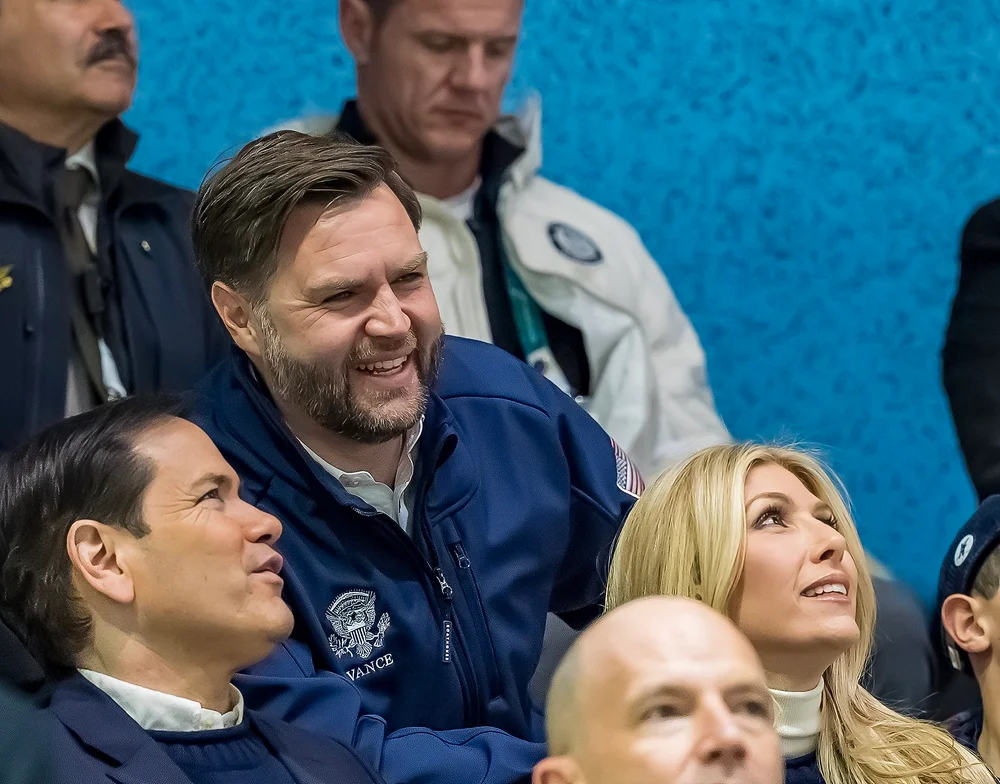
If one observes Trump closely, his approach to Iran was not entirely unexpected. Trump was no dove in his first term, and he has always been somewhat hawkish about Iran. But there was tension between his decision to go to war in Iran and the isolationist rhetoric of popular MAGA influencers and their champion, Vice President J.D. Vance. This war, in fact, creates a problem for Vance, whose popularity always relied on the support of influencers like Tucker Carlson and Steve Bannon, two figures who represent a portion of MAGA that some call the “woke right.” By creating a division between that faction and Trump’s loyal following, the war in Iran has delivered a decisive blow to that clique’s influence over the GOP base; it also struck a blow to the influence of other “new right” groups, such as the postliberals and national conservatives. This new situation seems poised to open the door to many surprising developments in conservatism and the GOP.
Before the Iran War, Vance’s dominance in prognostications for the 2028 GOP presidential nomination was already waning, as was the influence of the new right. The first indication of decline was in the events surrounding Tucker Carlson’s friendly interview with antisemite Nick Fuentes, followed by Kevin Roberts’ refusal to distance the Heritage Foundation from Carlson and Vance’s dismissal of the whole issue, which triggered a gradual decline in Vance’s support among both potential donors and primary voters. The revelation of Steve Bannon’s many emails with Jeffrey Epstein, which made clear beyond any doubt that Bannon was tied to and had a lengthy record of supporting Epstein, was a second major blow to the new right. Vance, who had supported Bannon a long time before that, had little to say about it.
The Iran War was the third major blow. The woke right influencers and adjacent “new right” groups like the national conservatives and postliberals have, for the most part, been highly critical of the war, despite overwhelming support by the GOP base. Trump has called out Carlson, pushed out Carlson’s ally Joe Kent, and supported conservative MAGA influencers like Mark Levin, who are adamantly opposed to Carlson and the woke right. Trump also purportedly floated the idea of backing Marco Rubio to a room of wealthy donors, who overwhelmingly favored Rubio over Vance. A straw poll at the most recent CPAC found 53 percent of participants picked Vance for the nomination, and 35 percent picked Rubio, in a room of die-hard Trump supporters (96 percent approved of President Trump). This is a radical shift from a year prior, when the poll had Vance at 61 percent and Rubio at only 3 percent. If Rubio is climbing that much among MAGA hardliners, he is bound to perform much better among the portion of the primary electorate that are mostly conservative independents who voted for Nikki Haley in 2024, and who barely show up in polls of registered Republicans.
Recent events reveal that Trump’s base is not as isolationist as many perceived. There were signs even before the Iran War, where a healthy percentage of Republicans favored aid for Ukraine and sanctions on Russia, and showed no real support for the U.S.’s withdrawal from world affairs. Nonetheless, so long as the isolationists in the party were loyal to Trump, they were part of the team. That friendly rapport began to crack with Operation Midnight Hammer. Many of these influencers, like Carlson and Bannon, have long been suspected of being paid by foreign influencers — if that is true, insofar as Trump is acting against those foreign influences, they can no longer go along with him. For others on the new right, isolationism is caught up in a Deep State conspiracy theory that believes America’s adversaries are important for keeping Western countries in check. Conspiracy theorizing may be a problem among MAGA, but few of them would take it that far.
As for Vance, maintaining his lead or even recovering his reputation following the war will require him to distance himself from the postliberal and “woke right,” perhaps by reinventing himself on a model that is closer to that of Rubio. Vance remains steadfastly loyal to the man most responsible for his political success, Tucker Carlson. But figures like Carlson were successful in manipulating MAGA only as long as they stayed loyal to President Trump; now that they have been exposed in MAGA’s eyes, they are unlikely to ever recover their former status.
Whether Vance or his allies are responsible, it also cannot help Vance that there have been so many leaks in recent weeks, apparently aimed at distancing him from the consequences of the war. That cannot make Trump happy, whose endorsement is likely decisive. It also will not make ordinary Trump-supporting Republicans happy. One gets the sense that Vance drastically overestimates the influence of the new right on ordinary Republican voters. If he does not adjust, Vance will continue to err in his attempt to appease a loud but unrepresentative minority of the party.
The Path Out for the GOP Is through Incremental Changes
Those of us who believe in America, those of us who believe in its Constitution, those of us who believe in a rule of law, cannot help but fear the direction of national politics in recent years. In a two-party system, we need both parties to respect these ideals because each will be in charge roughly half the time. The trends are, nonetheless, troubling.
As for the GOP, purists might reject incremental improvements because they are not full solutions. Yet, the history of politics reveals few opportunities for puritan politics to succeed. Marco Rubio had a choice between staying in Trump’s cabinet and improving it or leaving it in much worse shape. It might be unclear whether it was better for Marco Rubio to stay or go, but it is clearly better for the country if he stays.
The two major parties will remain, and so will much of their electorates. Conscientious Republicans and Democrats can get more like-minded people to show up to primaries, and that will make a difference, but in general elections, they will still have to work with coalitions of people who do not share their ideals. Since conscientious conservatives are unlikely to find a purist solution to this predicament, the only viable path is incremental improvement. Trump’s base moving away from the new right and toward voices that are more supportive of the American experiment is a positive development. That helps America, and given America’s disproportionate influence, it also helps the world.
Supporters of Trump’s decision to go to war with the Iranian regime argue that the bombing of Iranian military targets has weakened the Iranian regime and its ability to harm the US and its allies. This war could end a despotic America-hating regime. But what the war has also imposed is the unintended diminishment of the new right’s influence in the Republican Party. Politics in America is never settled, and the shape and depth of the conservative movement, and its influence on the GOP, is no exception. The future, as some have said, takes a long time to happen. But we know that its political destination is anything but determined.
Thomas D. Howes is chief of The Vital Center, founder of the Reagan Caucus and Reagan Caucus Action, and a lecturer in politics at Princeton University. He is co-authoring, with James M. Patterson, a book to be published by the Acton Institute titled Why Postliberalism Failed.

Politics
%20Richard%20Samuelson%20%20-%20Is%20American%20Nationalism%20Still%20Creed-able_-1.jpg)
Is American Nationalism Still Creed-able?
We are not there now, but there is reason to worry that the United States is in danger, if we are not careful, of ceasing to be a nation with the principles of 1776 at its core.
National Civitas Institute Poll: Americans are Anxious and Frustrated, Creating a Challenging Environment for Leaders
The poll reveals a deeply pessimistic American electorate, with a majority convinced the nation is on the wrong track.
.webp)
%20(1).avif)


Proxy Firms Don’t Have to Disclose Conflicts. That Should Change
The firms whose advice can move those votes bear no comparable duty for the advice itself. States can close that gap by applying an enduring standard from the Supreme Court.
Texas May Soon Have More People Than California — Here’s Why
California natives are voting with their feet.


.jpg)