
California’s Green Policies Destroy Blue-Collar Jobs

The problem here lies not with racism, or lack of reparations, as Newsom and “progressives” insist, but with their own policies, which devastate minority communities.
Gavin Newsom complains of “faux outrage” over his comments to a largely black audience in Atlanta about his SAT scores, in which he implied a shared lack of ability.
No state makes more of its “enlightened” stance on racial justice than California. But few states do worse.
Governor Newsom and his Sacramento claque have embraced reparations for the descendants of slaves. They are also working overtime to preserve affirmative action policies, despite the electorate’s widespread rejection.
But Newsom’s racial rhetoric is, as the leftist site Jacobin suggests, nothing more than “pure rhetorical posturing.”
For example, the reparations promise new free tuition and housing subsidies to anyone who can prove they are descendants of slaves — but there’s little to no money behind this feint.
California’s adoption of such “reparations,” recently also embraced in San Francisco, also seems a bit absurd, given that it was never a slave state.
California, like every state, is burdened by a racist past, but much of this was aimed at what were larger populations — first Native Americans, then old Californios (descendants of Mexican/Spanish settlers) and, most of all, Asians, who were banned from landownership and were subject to brutal pogroms, the worst occurring in Los Angeles.
But the greatest irony is that both Latinos and African Americans do worse in California than in “unenlightened places” like Texas and Florida.
The key difference in California has been the imposition of draconian environmental regulations, which have devastated industries like construction, manufacturing, and logistics.
It’s what attorney Jennifer Hernandez calls “the green Jim Crow.”
Read the full article on New York Post.

Politics
%20Richard%20Samuelson%20%20-%20Is%20American%20Nationalism%20Still%20Creed-able_-1.jpg)
Is American Nationalism Still Creed-able?
We are not there now, but there is reason to worry that the United States is in danger, if we are not careful, of ceasing to be a nation with the principles of 1776 at its core.
National Civitas Institute Poll: Americans are Anxious and Frustrated, Creating a Challenging Environment for Leaders
The poll reveals a deeply pessimistic American electorate, with a majority convinced the nation is on the wrong track.
.webp)
%20(1).avif)

.jpg)





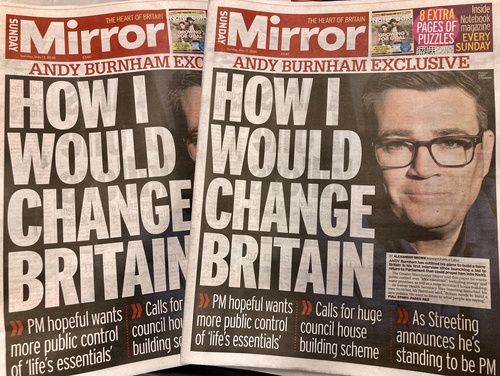
Can Britain’s Next Prime Minister Escape the Net Zero Trap?
Britain has burned through five Prime Ministers and is paying some of the highest electricity prices in the world.

The Scanner at the Gate: Europe’s China Policy Litmus Test
China’s industrial policy is entering Europe through public procurement—and reshaping sensitive markets from within.

Confronting the New Antisemitism
"The postwar effort 'to rebrand Judaism as a religion' has made it impossible for American Jews to understand what they are facing today, because what we are facing today is an attack on the idea of Jewish peoplehood.”
“Democratic” Socialism Is Undemocratic
By promoting class hatred, suppressing private initiative, and seeking enhanced control of our lives, today’s democratic socialists undermine patriotism and individual initiative—two qualities that have long distinguished the United States from other major nations.

