.jpg)
The Fall of Fauci

Fauci has met his reckoning, but the cautionary tale will always be important.
Dr. Anthony Fauci’s fall from grace is now the cautionary tale that many of us have been telling since early 2020. It starts with entrusting broad powers to a single person who, in this case, called himself “the science” while actually disavowing it, and with the well-being of the American public, to increase his own wealth and power.
It is estimated that Fauci’s net worth exceeds $12.5 million. His diaries, released to the public two weeks ago, boast of appearing on magazine covers, attending A-list parties, being fawned over by the media, and having donuts named after him. They also claim he’s the reason governors locked down their states. What a towering image.
Fauci’s diaries show that he was the main force behind cultivating that image. The roots go back more than 40 years, when he became head of the National Institute of Allergy and Infectious Diseases (NIAID).
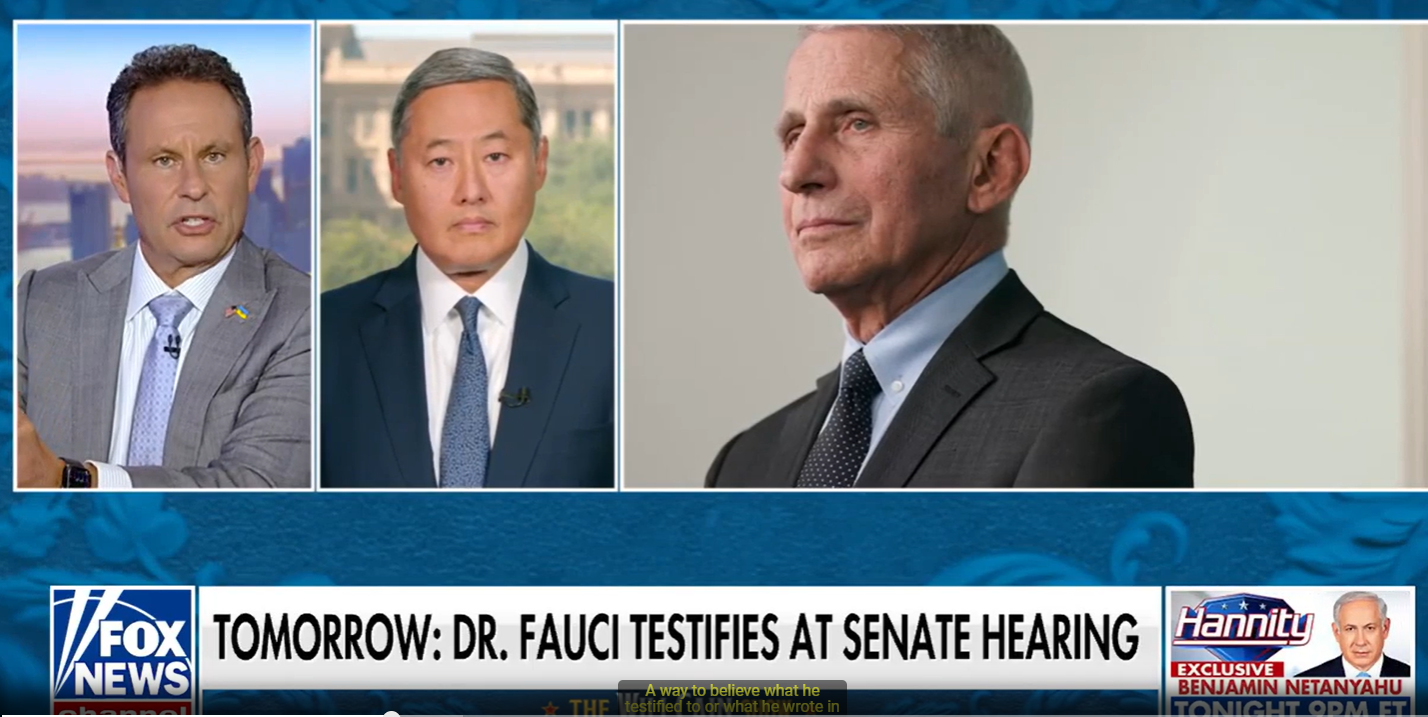
But no more. In last week’s hearing before the Senate Homeland Security Committee, it all came crumbling down in full public view.
Fauci’s Reversals
This comes as little surprise to those of us who were early skeptics of Fauci. When he burst onto the national stage in February 2020, it wasn’t his first appearance at a national press briefing. He also botched the AIDS crisis of the early 1980s, ignoring careful scientific work early in the outbreak and misconstruing evidence to start the myth that HIV could be transmitted by simple contact. “As within a family household,” he said. The media naturally ran with this scary narrative.
As Covid played out in early 2020, some of us began noticing the same patterns. Fauci often made sweeping scientific assertions of “fact” without support or even bothering to look up—evidence to substantiate them. He soon began contradicting himself, even against absolute assurances he had made just a few weeks prior, while insisting there was no contradiction.
In January 2020, for example, Fauci insisted that China-style lock downs could never come to the United States. “I can’t imagine shutting down New York or Los Angeles,” he assured, “because historically when you shut things down it doesn’t have a major effect.” By early March, he was reversing himself, telling the Sunday morning shows that he’d like to see aggressive measures including a 14-day lockdown.
Days later on March 20, sharing the podium with President Trump, he brandished the now infamous “15 Days to Slow the Spread” guidance card and endorsed New York Governor Mario Cuomo’s “rather strong” measures. “I want to say I strongly support what he’s doing,” Fauci said from the podium.
By April 2, exasperated, he told CNN that he “didn’t understand” why every U.S. state wasn’t yet locked down. “I just don’t understand why we’re not doing that. We really should be.” Years later, he would deny any culpability for these actions, telling the New York Times: “Show me a school that I shut down and show me a factory that I shut down. Never. I never did.”
His contradictions extended to the science itself, not just policy. On March 28, 2020, he aggressively claimed that people who recover from Covid-19 have immunity. “I’d be willing to bet anything,” he said, citing no scientific evidence.
Less than a year later, after many of us argued that naturally acquired immunity should be part of a viable path forward without additional lockdowns, Fauci reversed course. In sworn testimony, not coincidentally under questioning from Senator Rand Paul, Fauci insisted that reinfections posed an imminent threat, justifying keeping restrictions in place as late as 2022.
Despite carving out camera time for himself with platitudes like “follow the science,” he cherry-picked the data at best. One of his most important early claims was the link between new cases and later hospitalizations and deaths. In early April, he cited a 14-day lag period to suggest why hospitalizations and deaths might persist even after a new surge of cases begins to decline.
But as the virus spread and began infecting less vulnerable populations, the causal chain from cases to hospitalizations to deaths was weakening. This was the message from Scott Atlas and from some of our own work as early as July 2020, suggesting that the virus was possibly becoming more virulent but less fatal.
Unfazed, by July Fauci was invoking the lagged cases rule to criticize states for reopening too soon. And by August he was exchanging emails with other pro-lockdown colleagues, describing Atlas as “dangerous” and trying to sideline him from the White House COVID task force.
A Malicious Turn
Then there was the malicious side of Anthony Fauci.
He not only had a habit of ignoring the science that contradicted his power trip. He also came down hard on those of us who used science to propose a better way. This is where the story of the Great Barrington Declaration (GBD) fits into Fauci’s cautionary tale.
In October 2020, the GBD voiced widespread objections to the serious harms wrought by lockdowns. It expressed “grave concerns about the damaging physical and mental health impacts of the prevailing” policies. It advocated targeted measures that prioritize those more vulnerable, while lifting restrictions on everyone else so they can take informed precautions while otherwise mostly going about their normal lives.
The GBD’s warnings came at a crucial and prescient moment in the pandemic. Early critics of the document insisted that the lockdown policies of the spring were a thing of the past, and that future policy responses would chart a more moderate course. Fauci even circulated one of these articles to his team – an October 7 opinion article in Wired Magazine, contending that when the GBD’s authors “declare their opposition to lockdowns, they are quite literally arguing with the past.” Within a month of the GBD, many of these same voices were clamoring for lockdowns again. And then the lockdowns returned with the Fall 2020 “second wave” – primarily in blue states that had resisted relaxing their original COVID emergency declarations, and in multiple countries around the world. Fauci hedged his bets by stating that the public no longer had an appetite for a national lockdown, then joined the chorus behind local level “surgical type of restrictions which are the functional equivalent of a local lockdown” in November 2020.
The GBD was written spontaneously after a day-long conference among infectious disease epidemiologists and public health scientists. It was authored by Drs. Jay Battacharya (Stanford University), Sunetra Gupta (Oxford University), and Martin Kulldorf (Harvard University). To date, it has been translated into 40-plus languages and signed by over 55,000 scientists and nearly one million others.
But it could have been smothered.
As FOIA requests would reveal more than a year later, Fauci and NIH Director Francis Collins essentially put out a hit on the GBD. Just days after its release, Collins wrote to Fauci. “There needs to be a quick and devastating published takedown of its premises. I don’t see anything like that online yet – is it underway?”
Those same FOIA materials show Fauci’s team getting to work, collecting opposition research on the GBD, trashing it in the media, and calling its authors “fringe epidemiologists.” When we told their hit story, which went viral, the beginning of the end for Fauci had commenced.
More emails released just this week pull back the curtain on Fauci again, this time showing him desperately trying to shut down his opposition. In August 2026, we received a new batch of more than 8,000 pages of records from the inboxes of Fauci and his top NIH lieutenants – the product of a FOIA request that had been pending for almost five years. These new documents confirmed the depth of Fauci’s scheming to bury the GBD and penalize its supporters within the White House COVID task force, such as Scott Atlas.
In an October 15, 2020, email, Fauci compared supporters of the GBD to “AIDS denialists”—ironic, given that he himself had spread false information about HIV. The same day, Fauci’s emails brag of hitting the national press “very strongly against the ‘Great Barrington Declaration’”, warning that “Scott Atlas may try to counter this” and pleading with the White House coronavirus task force Deborah Birx to “please speak out for me” at the task force’s weekly call, which he missed due to a medical appointment. Another email to Birx recounts “a long talk with Jared [Kushner] tonight about Scott Atlas. I really laid it on him, but he still does not completely understand… You have got to speak with Jared and confirm what I said that this guy is killing people.”
Most revealing of all, we come full circle to Fauci’s own diaries. On October 6, 2020, just two days after the GBD, Fauci wrote to several contacts in the White House that “I strongly suggest that Dr. Atlas be removed from the Task Force and quite frankly from the White House itself.” A week later, as Fauci and Collins were waging their “take down” campaign, Fauci reached out to his contacts in the opinion press. One of them was Gregg Gonsalves, a pro-lockdown epidemiologist at Yale University who had become a fanatical opponent of the GBD in the media. Fauci bragged about his campaign against Atlas to Gonsalves on October 14, writing, “I am trying to get this jerk shut down by working from within the White House.” Much to the NIH official’s chagrin, though, the White House was no longer interested in his internal politicking on the task force.
These new records reveal what was really going on. Fauci loved power and relished celebrity. He lied to keep both going for as long as he could sustain the COVID crisis, and he appears to have gotten rich doing so. He went vehemently after those of us who exposed his contradictions, deliberately misconstruing the GBD as a blind quest for herd immunity, and calling its authors the “3 stooges.”
Duplicity abounds in these records. In a telling diary entry from August 2020, Fauci privately confessed that Atlas “says that he is not in favor of ‘let it rip’ to develop herd immunity.” That same line – “let it rip” would soon become Fauci’s favorite slur against the GBD as he intentionally misconstrued its arguments. By then, his “take down” campaign was in full swing in the media and – as we now know – in the political channels he was attempting to exploit behind the scenes within the White House bureaucracy.
Not Just About Fauci
Fauci’s story may be as unique as his performance last week before the Senate Homeland Security Committee. Perhaps only he could appear before Congress with a presidential pardon in his pocket and still plead the Fifth Amendment some 111 times, to every question asked, from details on his handling of scientific evidence to something as simple as the color of his tie.
Yet it is important to remember these specifics and to have them memorialized in the historical record. The greater the scope of authority granted to a single individual, by circumstance or deliberate action, the more important scrutiny and accountability become. In Fauci’s case, the utmost scrutiny is not only appropriate but also sends a signal to whoever might find themselves in a position to wield such wide authority from a government post. Expect scrutiny and accountability.
This isn’t, or shouldn’t be, just about Fauci. There were others during the pandemic whose culpability differs in degree but not in kind. It also sends a signal to voters and the public, perhaps to hit pause before allowing such a concentration of broad powers. Fauci has met his reckoning, but the cautionary tale will always be important.
Phillip W. Magness is a Senior Fellow at the Independent Institute and the David J. Theroux Chair in Political Economy.
David J. Theroux was Founder, President and Chief Executive Officer of the Independent Institute and Publisher of The Independent Review.
Edward J. López is a Senior Fellow and Director of the Center on Innovation and Entrepreneurship at the Independent Institute. He is also Professor of Economics and BB&T Distinguished Professor of Capitalism at Western Carolina University.

Politics
%20Richard%20Samuelson%20%20-%20Is%20American%20Nationalism%20Still%20Creed-able_-1.jpg)
Is American Nationalism Still Creed-able?
We are not there now, but there is reason to worry that the United States is in danger, if we are not careful, of ceasing to be a nation with the principles of 1776 at its core.
National Civitas Institute Poll: Americans are Anxious and Frustrated, Creating a Challenging Environment for Leaders
The poll reveals a deeply pessimistic American electorate, with a majority convinced the nation is on the wrong track.
.webp)
%20(1).avif)


New York’s War on its Jews
It can happen on any street corner or at any transit stop and increasingly does: a young man with a yarmulke is assaulted for no apparent reason.

Rail Giants Hate the $71 Billion Merger. The Rest of Us Should Love It
Based on the record, the case for approving the merger is even stronger than when it was first announced.

Can Britain’s Next Prime Minister Escape the Net Zero Trap?
Britain has burned through five Prime Ministers and is paying some of the highest electricity prices in the world.

The Scanner at the Gate: Europe’s China Policy Litmus Test
China’s industrial policy is entering Europe through public procurement—and reshaping sensitive markets from within.
Confronting the New Antisemitism
"The postwar effort 'to rebrand Judaism as a religion' has made it impossible for American Jews to understand what they are facing today, because what we are facing today is an attack on the idea of Jewish peoplehood.”
“Democratic” Socialism Is Undemocratic
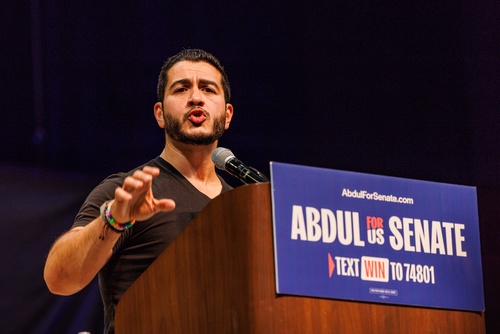
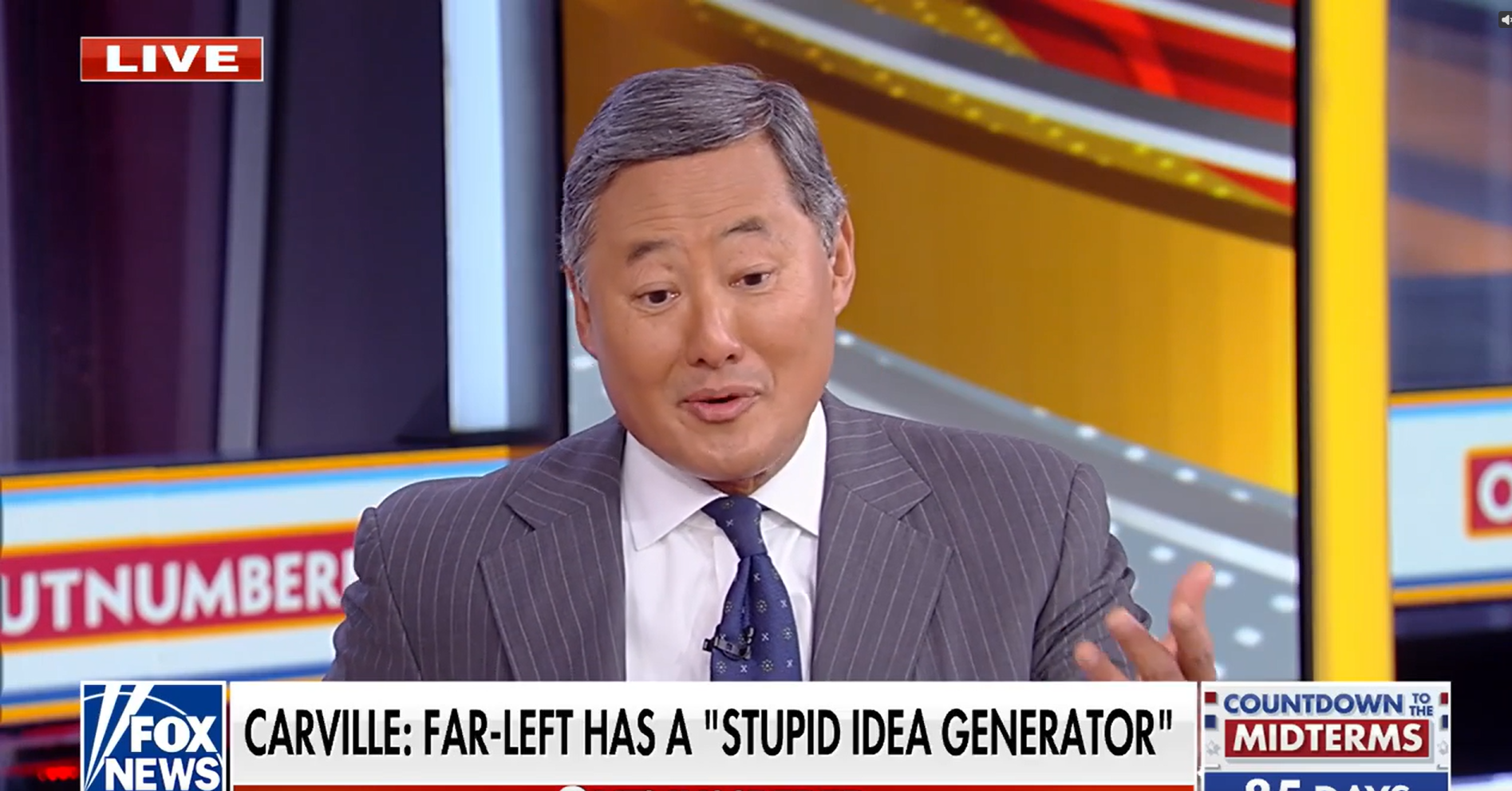
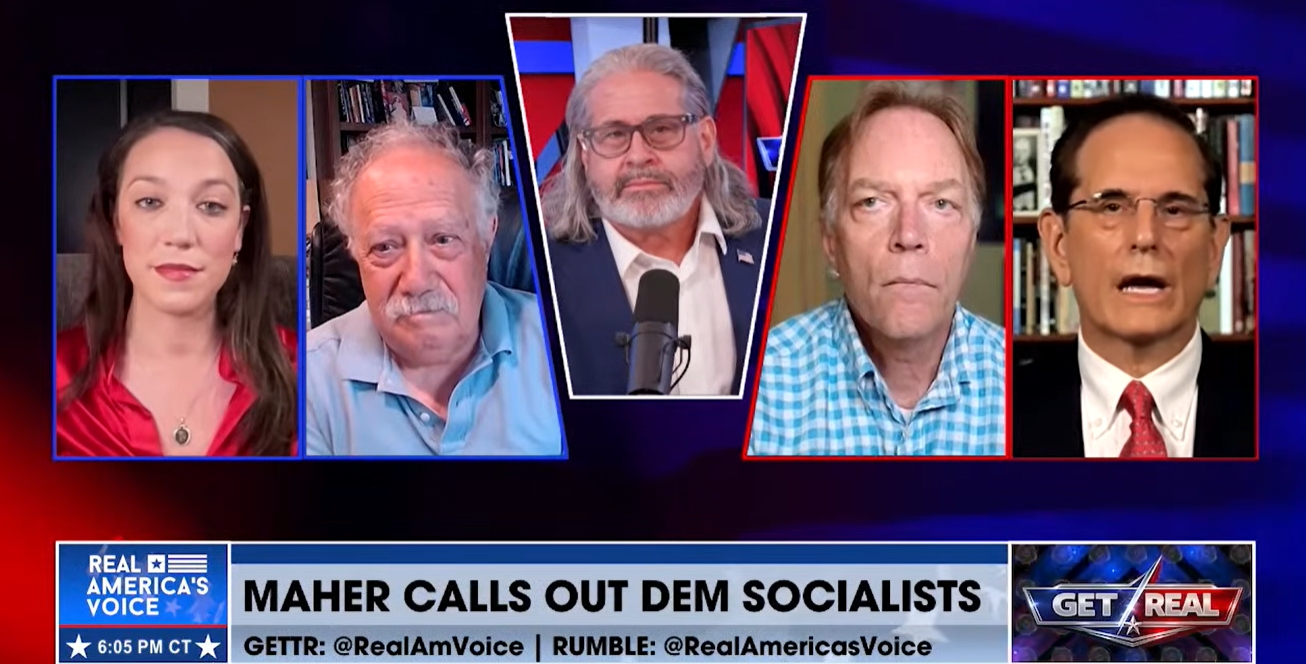
By promoting class hatred, suppressing private initiative, and seeking enhanced control of our lives, today’s democratic socialists undermine patriotism and individual initiative—two qualities that have long distinguished the United States from other major nations.

